
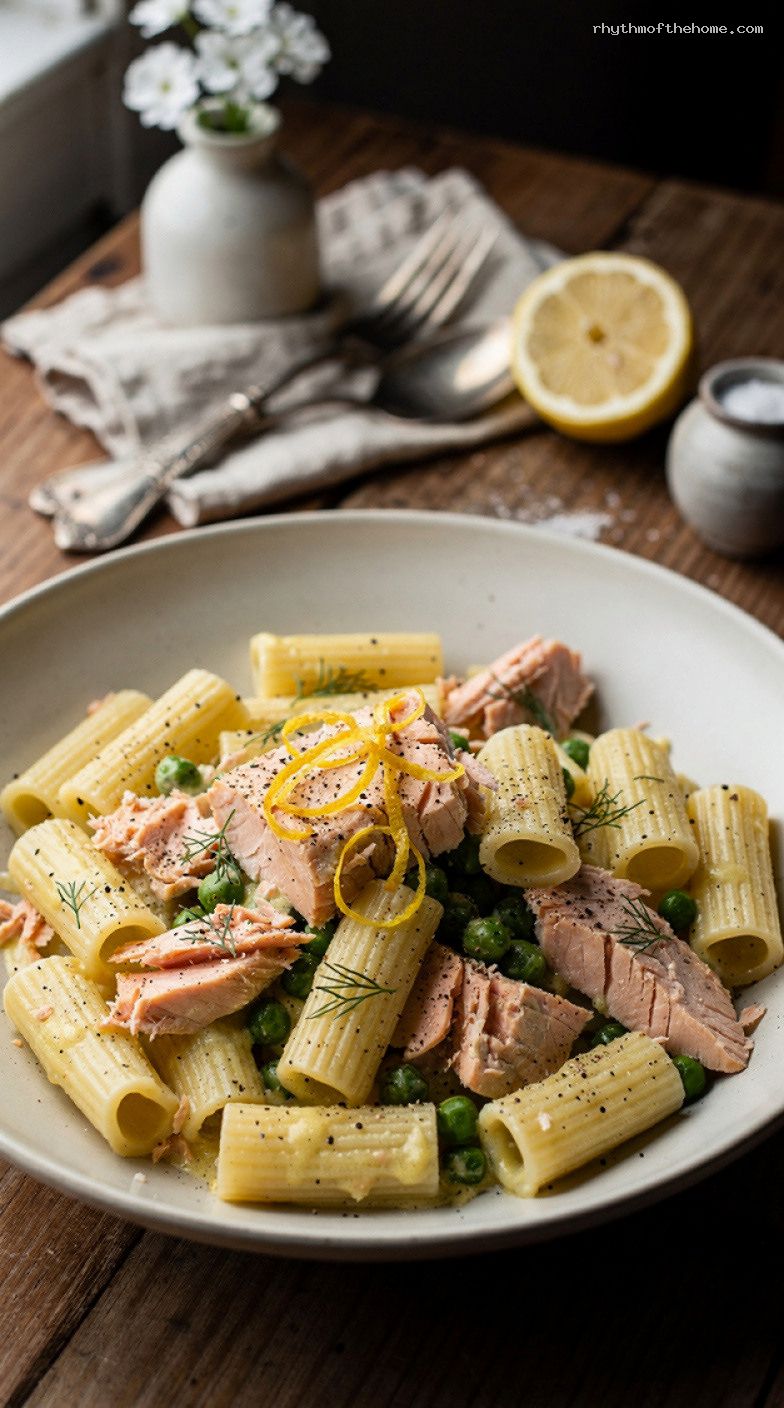
Quick Recipe Version (TL;DR)
Quick Ingredients
- 12 oz (340 g) penne or rigatoni
- 1 cup (145 g) frozen peas
- 2 (5 oz / 142 g) cans salmon, drained (about 10 oz / 284 g drained)
- 3 tbsp (42 g) unsalted butter
- 2 cloves garlic, minced
- 1 tsp lemon zest + 3 tbsp (45 ml) fresh lemon juice
- 2 tbsp fresh dill, chopped (or 2 tsp dried dill)
- 1/2 cup (120 ml) heavy cream or 3 oz (85 g) cream cheese
- 1/2 tsp fine salt (plus 1 tbsp for pasta water)
- 1 1/2 tsp freshly ground black pepper, plus more to finish
- 1/4 to 1/2 cup (60 to 120 ml) reserved pasta water
Do This
- 1) Boil a large pot of water; salt it with 1 tbsp salt.
- 2) Cook 12 oz pasta until al dente; add peas for the last 2 minutes. Reserve 1/2 cup pasta water, then drain.
- 3) Melt butter over medium-low heat; cook garlic 30 seconds.
- 4) Stir in lemon zest, lemon juice, dill, and cream (or cream cheese) until smooth, loosening with pasta water as needed.
- 5) Gently fold in drained canned salmon; warm 1 to 2 minutes (do not aggressively stir).
- 6) Toss pasta and peas with sauce; finish with lots of black pepper and serve hot.
Why You’ll Love This Recipe
- Fast, pantry-friendly dinner that tastes bright and fresh thanks to lemon and dill.
- Canned salmon turns into a cozy, restaurant-style pasta with almost no effort.
- The sauce is creamy but balanced, with plenty of black pepper for a grown-up kick.
- Peas add sweetness and color, making it feel like a complete meal.
Grocery List
- Produce: 1 lemon, 2 garlic cloves, fresh dill (optional but recommended)
- Dairy: unsalted butter, heavy cream (or cream cheese)
- Pantry: pasta (penne or rigatoni), canned salmon, frozen peas, salt, black pepper
Full Ingredients
Pasta & Vegetables
- 12 oz (340 g) penne or rigatoni
- 1 cup (145 g) frozen peas
- 1 tbsp (15 g) fine salt, for the pasta water
Salmon
- 2 (5 oz / 142 g) cans salmon, drained (about 10 oz / 284 g drained)
- Optional: Remove any large skin or bones if desired (they are safe to eat; mash them in for extra calcium).
Creamy Lemon-Dill Sauce
- 3 tbsp (42 g) unsalted butter
- 2 cloves garlic, minced
- 1 tsp lemon zest (from 1 lemon)
- 3 tbsp (45 ml) fresh lemon juice
- 2 tbsp fresh dill, chopped (or 2 tsp dried dill)
- 1/2 cup (120 ml) heavy cream or 3 oz (85 g) cream cheese
- 1/2 tsp fine salt, plus more to taste
- 1 1/2 tsp freshly ground black pepper, plus more to finish
- 1/4 to 1/2 cup (60 to 120 ml) reserved pasta water, as needed to loosen the sauce
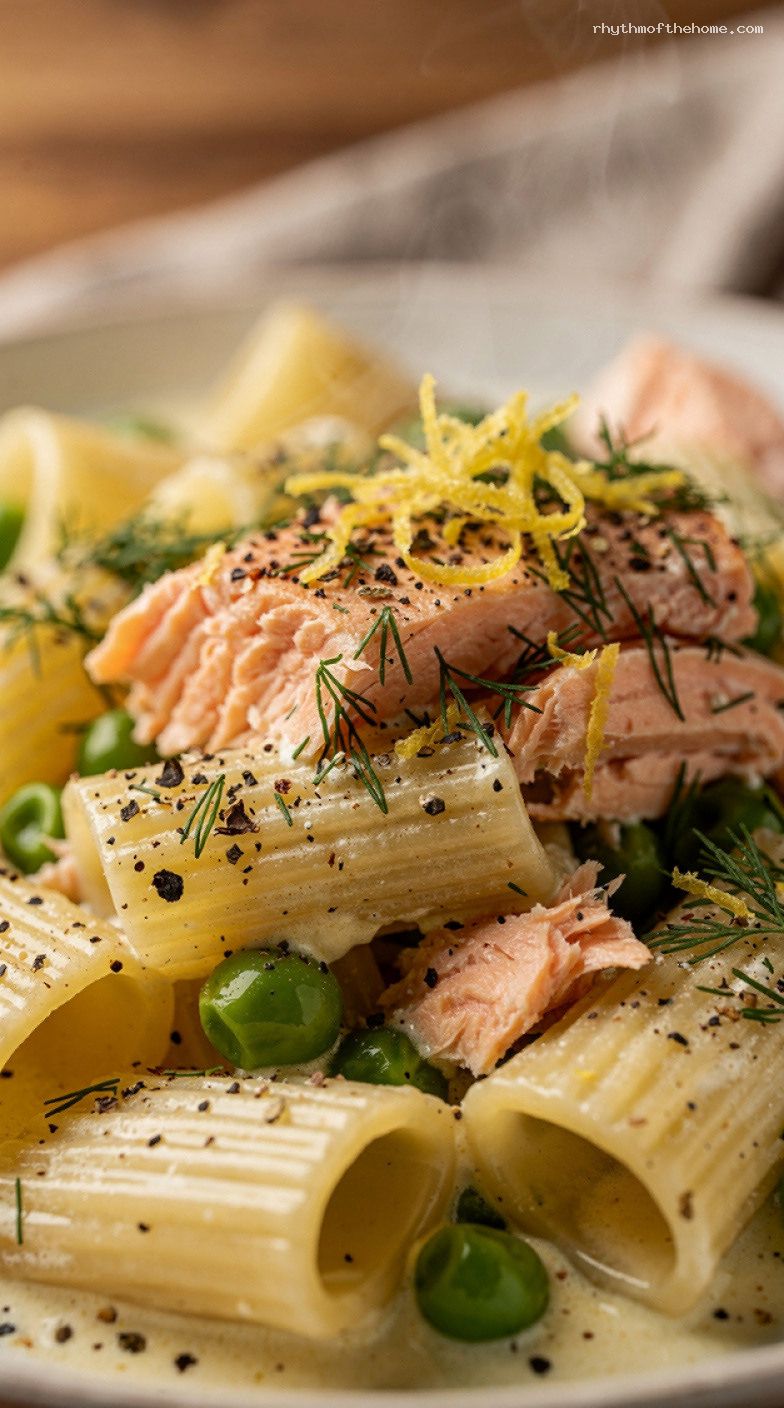
Step-by-Step Instructions
Step 1: Get the pasta water boiling
Fill a large pot with water (about 4 to 5 quarts / 4 to 5 liters) and bring it to a full boil over high heat. Once boiling, add 1 tbsp fine salt. This is your main chance to season the pasta itself.
Step 2: Cook the pasta and peas
Add 12 oz (340 g) pasta to the boiling water and cook until al dente (typically 10 to 12 minutes, or follow your package timing).
2 minutes before the pasta is done, stir in 1 cup (145 g) frozen peas so they heat through but stay bright green.
Before draining, reserve 1/2 cup (120 ml) of the starchy pasta water. Drain the pasta and peas, and set aside.
Step 3: Start a gentle butter-garlic base
Return the empty pot to the stove (no need to wash it) and set it over medium-low heat. Add 3 tbsp (42 g) butter and let it melt.
Add 2 minced garlic cloves and cook for 30 seconds, stirring constantly, just until fragrant. Keep the heat moderate so the garlic doesn’t brown.
Step 4: Build the lemon-dill cream sauce
Stir in 1 tsp lemon zest, 3 tbsp (45 ml) lemon juice, and 2 tbsp fresh dill (or 2 tsp dried).
Add 1/2 cup (120 ml) heavy cream and stir until the sauce looks silky, about 1 minute. If using 3 oz (85 g) cream cheese instead, add it now and whisk/stir until it melts smoothly, adding 2 to 4 tbsp of reserved pasta water as needed to help it loosen.
Step 5: Warm the canned salmon gently
Add the drained canned salmon to the sauce. Use a spoon to break it into large flakes (not tiny shreds). Warm for 1 to 2 minutes over low heat until the salmon is heated through.
Tip: Keep the heat low and the stirring gentle to avoid a fishy smell and to keep the salmon pieces tender.
Step 6: Toss pasta, peas, and sauce together
Add the drained pasta and peas back into the pot. Toss until everything is evenly coated.
If the sauce feels too thick, add reserved pasta water 1 tbsp at a time (up to 1/2 cup / 120 ml) until it’s glossy and clings to the pasta.
Step 7: Season boldly and serve
Season with 1/2 tsp fine salt (more to taste) and 1 1/2 tsp freshly ground black pepper. Taste and adjust lemon, salt, and pepper to your liking.
Serve hot and finish each bowl with even more black pepper and a pinch of extra dill or lemon zest if you like.
Pro Tips
- Reserve more pasta water than you think you need. The sauce thickens quickly as it cools; a splash of hot pasta water brings it back to silky.
- Use low heat once dairy is in the pot. Gentle heat helps prevent the sauce from separating, especially with lemon juice.
- Flake the salmon in big pieces. It looks prettier and feels more “fresh salmon” than “mixed-in fish.”
- Black pepper is part of the flavor, not just a garnish. Freshly ground pepper makes this dish.
- Fresh dill is best here. If using dried dill, rub it between your fingers before adding to wake up the aroma.
Variations
- Extra-bright: Add 1 tbsp capers (drained) and an extra 1 tbsp lemon juice right before serving.
- Greens swap: Replace peas with 3 cups (90 g) baby spinach; stir it in at the end until just wilted (about 1 minute).
- Lighter sauce: Use 1/2 cup (120 ml) half-and-half instead of heavy cream and add 2 tbsp (30 ml) extra pasta water for a silky finish.
Storage & Make-Ahead
Store leftovers in an airtight container in the refrigerator for up to 3 days. Reheat gently in a saucepan over low heat or in the microwave at 50% power in 30-second bursts, stirring between bursts. Add 1 to 3 tbsp water (or milk/cream) to loosen the sauce as it warms. For best texture, cook the pasta fresh when possible; however, you can mix the sauce in advance and refrigerate it for up to 24 hours, then warm gently and toss with freshly cooked pasta.
Nutrition (per serving)
Approximate, based on 4 servings: 560 calories, 33 g protein, 23 g fat, 58 g carbohydrates, 4 g fiber, 720 mg sodium.

Leave a Reply