
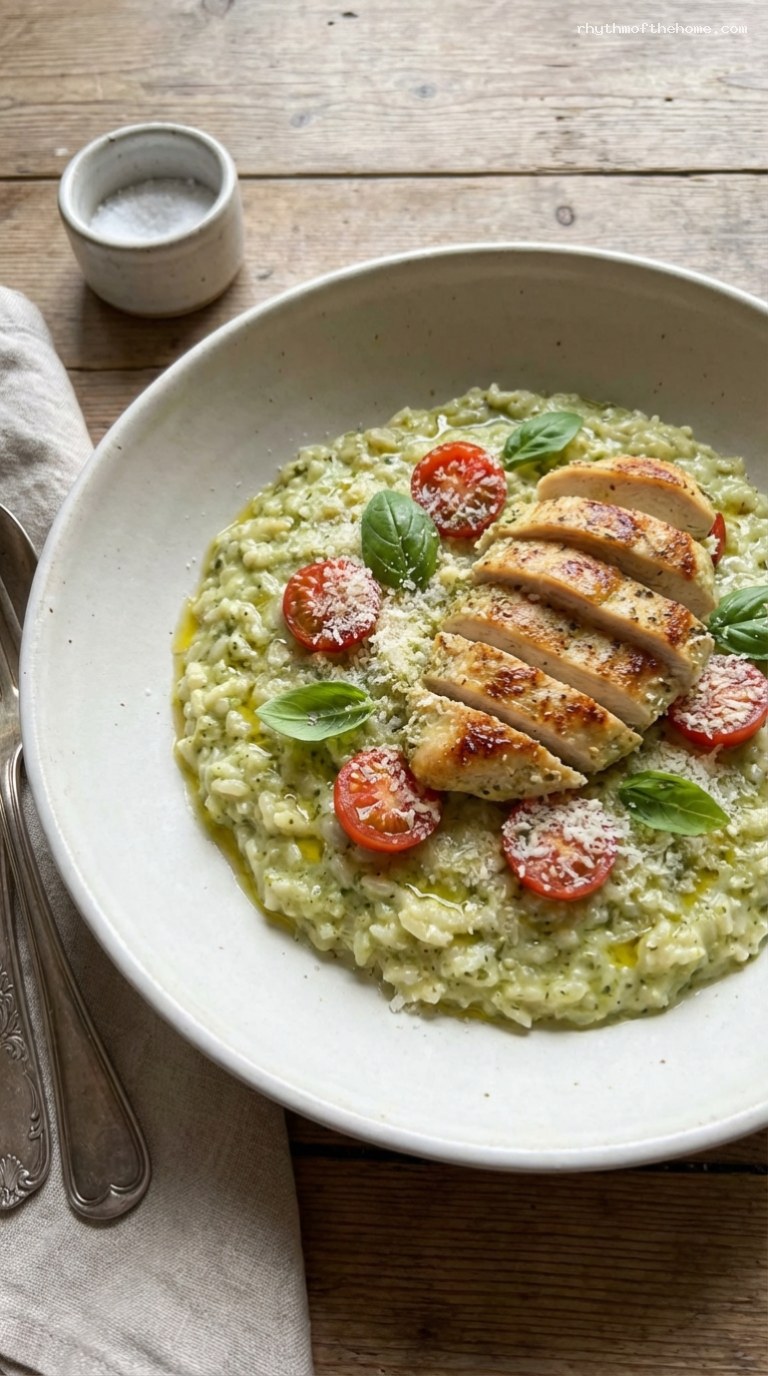
Quick Recipe Version (TL;DR)
Quick Ingredients
- 1 lb (450 g) boneless, skinless chicken breasts, cut in bite-size pieces
- 4 1/2 cups (1.1 L) low-sodium chicken broth
- 1 1/2 cups (300 g) Arborio rice
- 1 small yellow onion, finely diced + 2 garlic cloves, minced
- 1/2 cup (120 ml) dry white wine (or extra broth)
- 1/3 cup (80 g) basil pesto
- 1 cup (150 g) cherry tomatoes, halved
- 1/2 cup (50 g) finely grated Parmesan cheese
- 3 tbsp olive oil + 2 tbsp butter, divided
- Salt, black pepper, optional 2 tbsp heavy cream, fresh basil for garnish
Do This
- 1. Warm broth in a saucepan over low heat; keep it just barely simmering.
- 2. Season chicken with salt and pepper; sear in 1 tbsp olive oil over medium-high heat until golden and cooked through, 6–8 minutes total. Set aside.
- 3. In a wide pan, heat 2 tbsp olive oil and 1 tbsp butter. Soften onion 5 minutes, then add garlic for 30 seconds.
- 4. Stir in Arborio rice; toast 1–2 minutes. Add wine and cook until mostly absorbed.
- 5. Add hot broth a ladle at a time, stirring often and waiting until mostly absorbed before adding more, 18–20 minutes.
- 6. When rice is creamy and al dente, stir in remaining 1 tbsp butter, chicken, pesto, cherry tomatoes, Parmesan, and cream (if using). Season to taste and serve hot with extra Parmesan and basil.
Why You’ll Love This Recipe
- Creamy, comforting risotto with bright basil pesto makes a rich but fresh-tasting main dish.
- Seared chicken adds satisfying protein and savory flavor in every bite.
- Cherry tomatoes bring sweetness and color, balancing the richness of Parmesan and butter.
- All cooked on the stovetop in under an hour, using simple, easy-to-find ingredients.
Grocery List
- Produce: Small yellow onion, garlic, cherry tomatoes, fresh basil (for garnish), lemon (optional, for serving)
- Dairy: Unsalted butter, Parmesan cheese, heavy cream (optional)
- Pantry: Boneless, skinless chicken breasts, Arborio rice, low-sodium chicken broth, basil pesto, olive oil, dry white wine (or extra broth), salt, black pepper
Full Ingredients
For the Chicken
- 1 lb (450 g) boneless, skinless chicken breasts, cut into 1-inch (2.5 cm) pieces
- 1/2 tsp kosher salt
- 1/4 tsp freshly ground black pepper
- 1 tbsp olive oil
For the Risotto
- 4 1/2 cups (1.1 L) low-sodium chicken broth
- 2 tbsp olive oil
- 2 tbsp unsalted butter, divided
- 1 small yellow onion, finely diced (about 1 cup / 130 g)
- 2 cloves garlic, minced
- 1 1/2 cups (300 g) Arborio rice (or other risotto rice such as Carnaroli)
- 1/2 cup (120 ml) dry white wine (such as Pinot Grigio or Sauvignon Blanc), or extra broth
- 1/2 tsp kosher salt, plus more to taste
- 1/4 tsp freshly ground black pepper, plus more to taste
For Finishing & Serving
- 1/3 cup (80 g) basil pesto (store-bought or homemade)
- 1 cup (150 g) cherry or grape tomatoes, halved
- 1/2 cup (50 g) finely grated Parmesan cheese, plus extra for serving
- 2 tbsp heavy cream (optional, for extra creaminess)
- Fresh basil leaves, for garnish
- Extra-virgin olive oil, for drizzling (optional)
- Lemon wedges, for serving (optional, for brightness)
Step-by-Step Instructions
Step 1: Warm the Broth
Pour the chicken broth into a medium saucepan and place it over low heat. Allow it to come to a very gentle simmer, then keep it on low so it stays hot but does not boil vigorously. Warm broth helps the rice cook evenly and keeps your risotto creamy instead of gummy.
Keep a ladle nearby; you will be adding the hot broth to the rice a little at a time. If the broth ever starts to boil hard, turn the heat down. If it cools off too much, turn it back up briefly.
Step 2: Season and Sear the Chicken
Pat the chicken pieces dry with paper towels. Sprinkle evenly with 1/2 teaspoon kosher salt and 1/4 teaspoon black pepper, tossing to coat. In a large, wide, heavy pan (a sauté pan or Dutch oven works well), heat 1 tablespoon olive oil over medium-high heat until shimmering but not smoking.
Add the chicken in a single layer. Let it cook undisturbed for 2–3 minutes so it develops a golden sear, then stir and continue cooking for another 3–5 minutes, until the pieces are lightly browned on the outside and cooked through (internal temperature 165°F / 74°C). Transfer the chicken to a plate and set aside, leaving any browned bits in the pan for extra flavor.
Step 3: Start the Risotto Base
In the same pan used for the chicken, reduce the heat to medium. Add 2 tablespoons olive oil and 1 tablespoon of the butter. Once the butter has melted, add the diced onion and a pinch of salt. Cook, stirring occasionally, for about 5 minutes, until the onion is soft and translucent but not browned.
Add the minced garlic and cook for 30 seconds, stirring constantly, until fragrant. Do not let the garlic brown, as it can become bitter. This onion-garlic mixture forms the aromatic base that flavors the entire risotto.
Step 4: Toast the Rice and Deglaze with Wine
Add the Arborio rice to the pan. Stir to coat all the grains with the oil and butter, scraping up any browned bits from the bottom of the pan. Toast the rice for 1–2 minutes, stirring frequently, until the edges of the grains look slightly translucent. This step helps the rice keep a pleasant bite and develop a nutty flavor.
Pour in the white wine (or an equal amount of hot broth if you prefer to skip the wine). Stir constantly, scraping the pan, until most of the liquid has been absorbed, 1–2 minutes. You should hear a gentle simmer, not a vigorous boil. Adjust the heat as needed.
Step 5: Add the Broth Gradually and Stir
Ladle in about 1/2 to 3/4 cup of the hot broth, just enough to barely cover the rice. Stir gently and frequently, encouraging the rice to release its starch into the liquid. When the liquid has mostly been absorbed and the bottom of the pan is visible when you drag your spoon across (about 3–4 minutes), add another ladle of hot broth.
Continue this cycle of adding broth and stirring over medium to medium-low heat for 18–20 minutes. Adjust the heat so you maintain a gentle simmer. The mixture should always look loose and creamy, never dry. Taste a grain of rice at around 18 minutes: it should be tender but still have a slight firmness in the center (al dente). If it is too firm, continue adding broth and cooking a few more minutes.
Step 6: Finish with Chicken, Pesto, Tomatoes, and Cheese
When the rice is al dente and the consistency is loose and creamy, stir in the remaining 1 tablespoon butter. Return the cooked chicken and any juices from the plate to the pan. Add the basil pesto, cherry tomatoes, Parmesan cheese, and heavy cream (if using). Stir gently but thoroughly so everything is evenly combined and the pesto tints the risotto a light green.
Let the risotto cook for 1–2 more minutes, just until the chicken is warmed through and the tomatoes slightly soften but still hold their shape. If the risotto looks too thick, stir in a splash more hot broth until it is creamy and spoonable, like a thick porridge that slowly spreads on a plate.
Step 7: Taste, Adjust, and Serve
Turn off the heat and taste the risotto. Add more salt and black pepper if needed; the Parmesan and pesto are salty, so season carefully. If you like a brighter flavor, squeeze in a little fresh lemon juice and stir again.
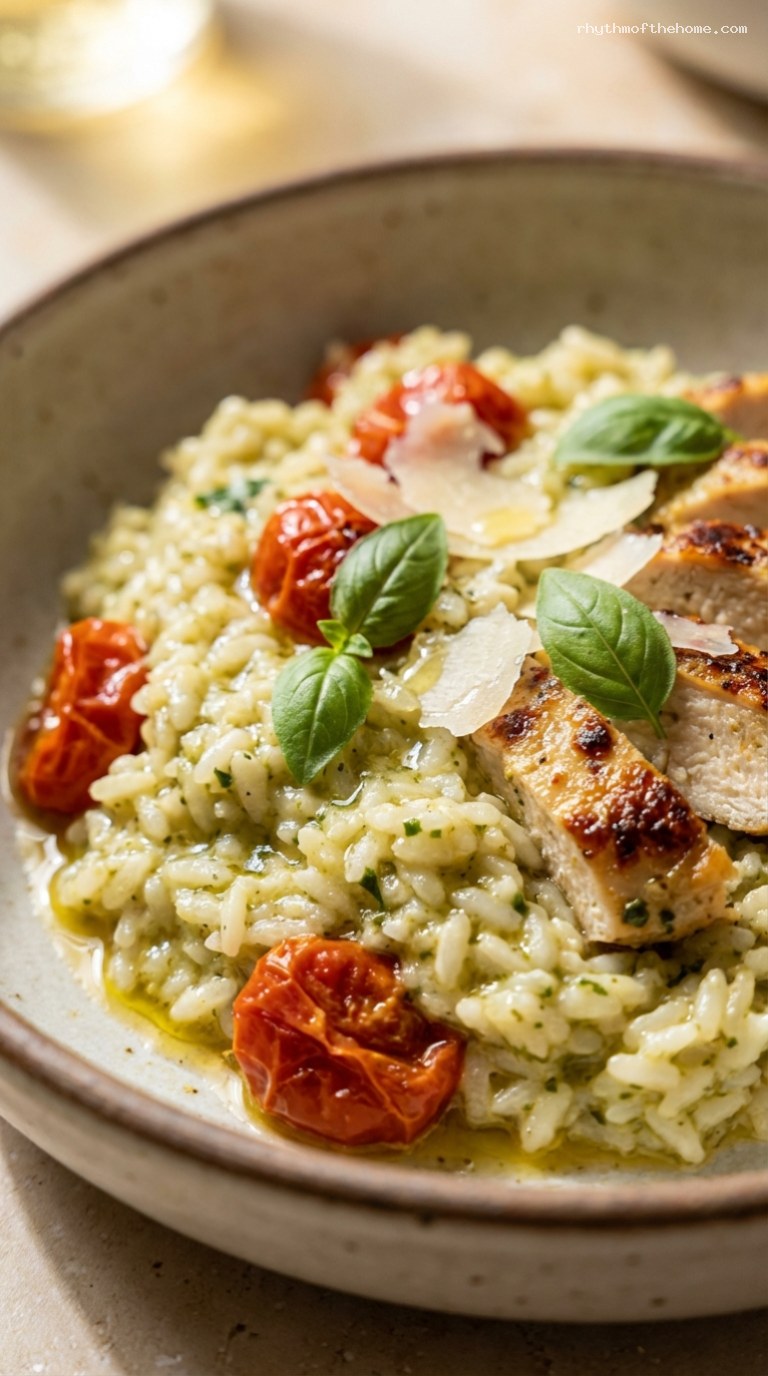
Spoon the risotto into warm shallow bowls. Drizzle with a little extra-virgin olive oil if desired. Top with extra grated Parmesan and scatter fresh basil leaves over the top. Serve immediately while hot and creamy. Risotto thickens as it sits, so enjoy it right away for the best texture.
Pro Tips
- Use the right rice: Arborio or Carnaroli rice is essential; the high starch content creates that classic creamy texture.
- Keep the broth hot: Adding cold broth slows cooking and can make the rice uneven. A gentle simmer on a back burner is ideal.
- Stir, but not nonstop: Frequent stirring releases just enough starch, but you do not need to stir every second. Aim for a good stir every 30–45 seconds.
- Adjust consistency at the end: Risotto should be loose and creamy, not stiff. If it clumps, add a bit more hot broth and stir before serving.
- Add pesto off high heat: Stir in the pesto toward the end over low or no heat to keep its fresh basil flavor and bright color.
Variations
- Chicken and spinach pesto risotto: Stir in 2 cups (60 g) fresh baby spinach with the pesto and tomatoes; cook just until wilted.
- Roasted vegetable version: Skip the chicken and fold in roasted zucchini, bell peppers, or asparagus for a meatless main.
- Creamier deluxe version: Increase the heavy cream to 1/3 cup (80 ml) and the Parmesan to 3/4 cup (75 g) for an ultra-rich, special-occasion risotto.
Storage & Make-Ahead
Risotto is best served fresh, but leftovers can still be delicious. Cool any remaining risotto quickly, then transfer it to an airtight container and refrigerate for up to 3 days. To reheat, add a splash of chicken broth, water, or cream to a saucepan with the cold risotto. Warm gently over low to medium-low heat, stirring often, until creamy again and heated through. You can also reheat in the microwave with a bit of added liquid, stirring halfway. Avoid freezing; the texture of the rice becomes mealy once thawed. You can, however, prep ahead by dicing the onion and chicken, and measuring out the rice and broth up to 1 day in advance. Store the chicken in the refrigerator and the dry ingredients at room temperature, then cook just before serving.
Nutrition (per serving)
Approximate values per serving (1/4 of the recipe): 580 calories; 35 g protein; 56 g carbohydrates; 22 g fat; 9 g saturated fat; 75 mg cholesterol; 1350 mg sodium (will vary with broth, pesto, and salt); 2 g fiber; 4 g sugar. These numbers are estimates and will change depending on the exact products and brands you use.

Leave a Reply