
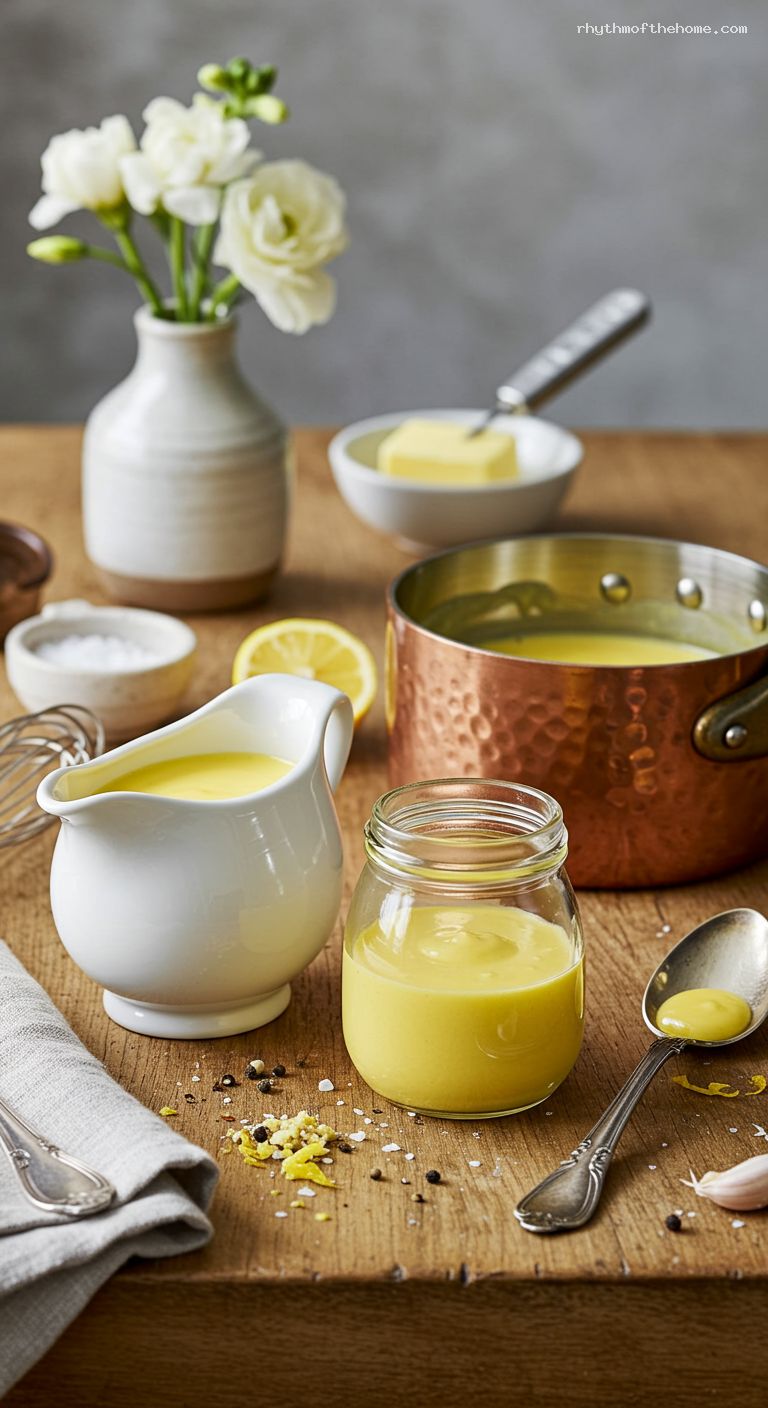
Quick Recipe Version (TL;DR)
Quick Ingredients
- 3 large egg yolks
- 1 tablespoon fresh lemon juice, plus more to taste
- 1 teaspoon water (plus 1–2 teaspoons as needed to thin)
- 1/2 cup (113 g) unsalted butter, melted and warm (120–130 F / 49–54 C)
- 1/4 teaspoon kosher salt
- Pinch cayenne or white pepper
- Optional: 1/2 teaspoon Dijon mustard (extra stability)
Do This
- 1. Set up a bain-marie: bring 1 inch of water to a gentle simmer (about 180 F / 82 C).
- 2. Melt butter and keep it warm at 120–130 F (49–54 C).
- 3. Whisk yolks, lemon juice, water (and Dijon if using) in a heatproof bowl until foamy.
- 4. Place bowl over the steam and whisk constantly to 150–155 F (65–68 C), 2–4 minutes.
- 5. Slowly stream in warm butter while whisking until thick, glossy, and smooth.
- 6. Season with salt and cayenne; thin with warm water or more lemon to taste.
- 7. Hold warm (120–130 F / 49–54 C) up to 1 hour; do not let it boil.
Why You’ll Love This Recipe
- Classic, restaurant-quality hollandaise with simple home-kitchen technique.
- Silky, glossy texture that clings beautifully without being heavy.
- Foolproof temperature cues to avoid curdling or breaking.
- Easy to adjust: brighter, spicier, or richer with small tweaks.
Grocery List
- Produce: 1 large lemon
- Dairy: 1 stick (1/2 cup / 113 g) unsalted butter; 3 large eggs
- Pantry: Kosher salt, cayenne or white pepper, optional Dijon mustard
Full Ingredients
Classic Hollandaise
- 3 large egg yolks
- 1 tablespoon fresh lemon juice, plus more to taste
- 1 teaspoon water (plus 1–2 teaspoons warm water as needed to thin)
- 1/2 cup (113 g) unsalted butter, melted and warm (target 120–130 F / 49–54 C)
- 1/4 teaspoon kosher salt, or to taste
- Pinch cayenne or white pepper
Optional (for stability and flavor)
- 1/2 teaspoon Dijon mustard
- 1/2 teaspoon finely grated lemon zest
Step-by-Step Instructions
Step 1: Set up a gentle bain-marie
Fill a medium saucepan with about 1 inch of water and bring it to a gentle simmer over medium-low heat. Aim for approximately 180 F (82 C). Place a heatproof bowl (stainless steel or glass) over the pan to confirm the bottom does not touch the water. Keep the heat low and steady; you want steam, not a rolling boil.
Step 2: Warm the butter
Cut 1/2 cup (113 g) unsalted butter into pieces and melt it in a small saucepan or microwave-safe cup. Keep it warm, ideally at 120–130 F (49–54 C). If you like, skim off any foam and leave the watery milk solids at the bottom for a cleaner, more stable butter stream.
Step 3: Build the yolk base
In your heatproof bowl, whisk together the egg yolks, 1 tablespoon lemon juice, 1 teaspoon water, and Dijon if using. Whisk off the heat for 30–60 seconds until slightly foamy and lighter in color.
Step 4: Gently cook to ribbon stage
Set the bowl over the simmering water. Whisk constantly, moving the bowl on and off the steam as needed to control heat. Cook until the yolks are thickened, creamy, and reach 150–155 F (65–68 C), about 2–4 minutes. You should see light “ribbons” falling from the whisk. Do not exceed 160 F (71 C) or the yolks may scramble.
Step 5: Emulsify with warm butter
While whisking continuously, begin adding the warm butter a few drops at a time. Once the sauce starts to thicken and look glossy, switch to a thin, steady stream. Keep the bowl warm but not hot. If it thickens too quickly, whisk in 1–2 teaspoons warm water. Stop before the milky solids at the bottom of the butter container (optional) to keep the sauce extra smooth.
Step 6: Season and adjust
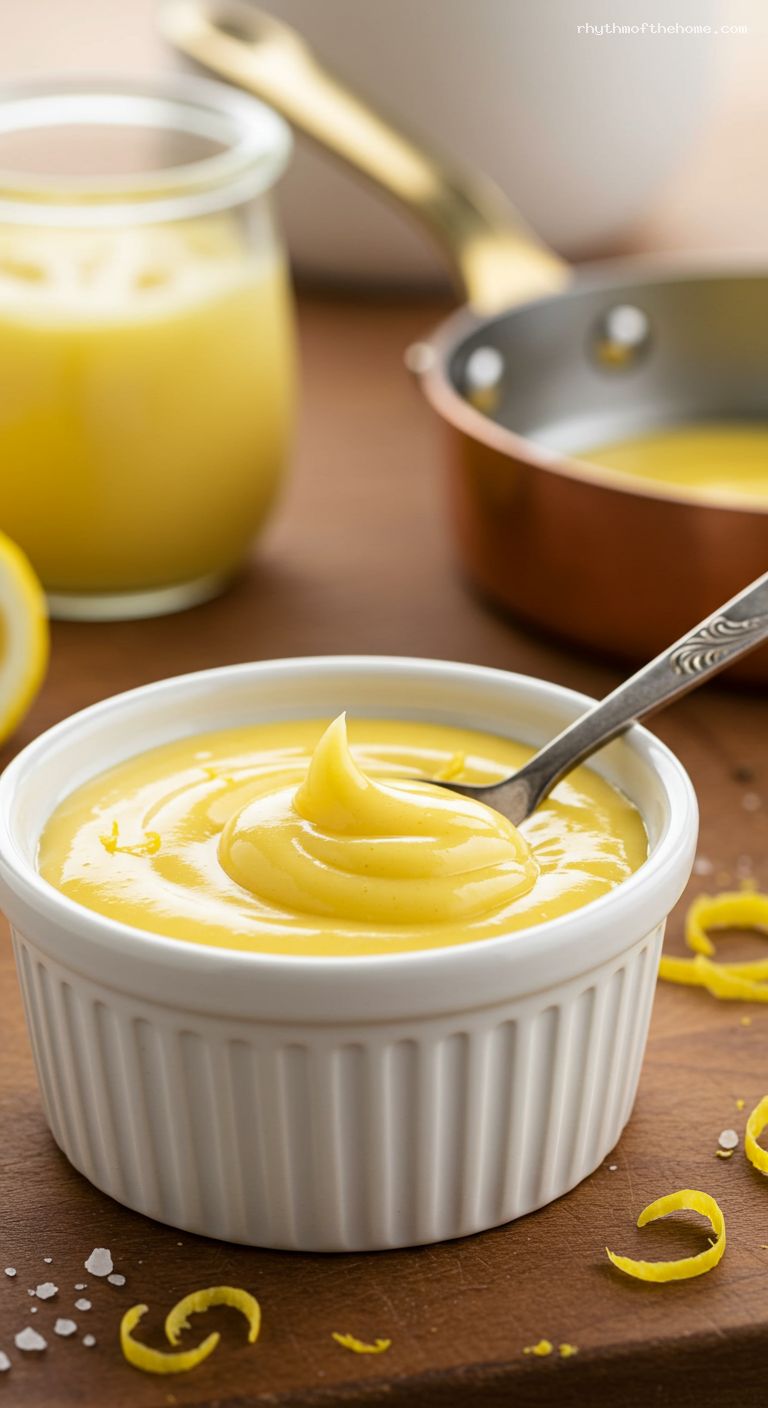
Whisk in the salt and a pinch of cayenne or white pepper. Taste and add more lemon juice for brightness or a splash of warm water to loosen to a pourable, nappe consistency. The finished sauce should be silky, glossy, and just thick enough to coat a spoon.
Step 7: Hold warm or rescue if needed
Hold the sauce at 120–130 F (49–54 C) for up to 1 hour in a warm bowl, insulated mug, or thermos. Never let it boil. If it separates, whisk 1 teaspoon warm water in a clean bowl, then slowly whisk in the broken sauce. For a stubborn break, whisk 1 new egg yolk with 1 teaspoon water, then gradually whisk in the broken sauce to re-emulsify.
Pro Tips
- Temperature is everything: keep yolks at 150–155 F (65–68 C) while building the emulsion; keep butter 120–130 F (49–54 C).
- Stabilize with a damp towel under your bowl to keep it from moving as you whisk.
- Clarified butter increases heat tolerance and yields an ultra-smooth sauce.
- Too thick? Whisk in warm water or lemon juice, 1 teaspoon at a time, off the heat.
- No thermometer? Watch for ribbons and a glossy, thick but pourable consistency that coats a spoon.
Variations
- Béarnaise: Replace lemon with 1 tablespoon reduction of white wine vinegar, shallot, and tarragon; finish with chopped tarragon.
- Smoky Lemon: Add a pinch of smoked paprika and lemon zest for a subtle smoky-citrus note.
- Lime-Chile: Swap lemon for lime juice and season with a pinch of ancho or Aleppo pepper.
Storage & Make-Ahead
Hollandaise is best fresh. You can hold it warm at 120–130 F (49–54 C) for up to 1 hour. For brief make-ahead, transfer to a pre-warmed insulated mug or thermos. Do not refrigerate and reheat; the emulsion can break and food safety becomes a concern. If you must rewarm within 1 hour, whisk gently over a warm bain-marie with 1–2 teaspoons warm water. Do not freeze.
Nutrition (per serving)
Approximate per 2 tablespoons: 125 calories; 13 g fat; 1 g carbohydrates; 1 g protein; 170 mg sodium. Values will vary with seasoning and exact butter amount.

Leave a Reply