
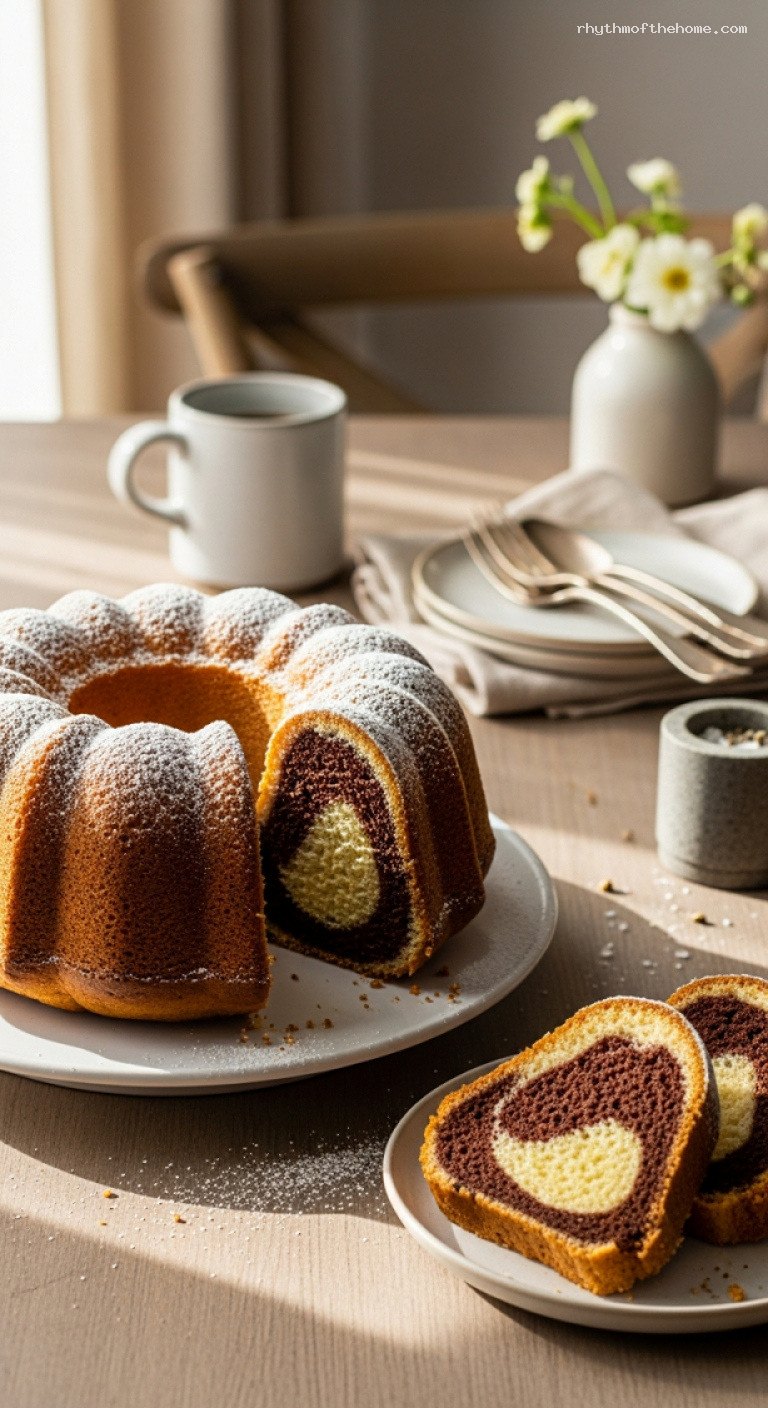
Quick Recipe Version (TL;DR)
Quick Ingredients
- 200 g unsalted butter, softened (plus extra for pan)
- 200 g granulated sugar
- 1 tsp vanilla extract
- 1 pinch fine salt
- 4 large eggs, room temperature
- 250 g all-purpose flour
- 2 tsp baking powder
- 125 ml milk, plus 2–3 tbsp extra for chocolate batter
- 18 g (3 tbsp) unsweetened cocoa powder
- 1–2 tbsp breadcrumbs or flour for dusting pan
- Powdered sugar, for dusting (optional)
- Optional flavor extras: 1 tbsp dark rum, 1 tsp finely grated lemon zest
Do This
- 1. Preheat oven to 175°C / 350°F (top/bottom heat) and generously butter a 22–24 cm (9–10 inch, 10–12 cup) bundt or Gugelhupf pan; dust with breadcrumbs or flour.
- 2. Cream butter, sugar, vanilla, salt (and optional lemon zest) until very pale and fluffy, 3–5 minutes.
- 3. Beat in eggs one at a time, mixing well and scraping the bowl after each addition.
- 4. Whisk flour and baking powder, then mix into the batter alternately with the 125 ml milk just until smooth.
- 5. Spread about 2/3 of the batter into the prepared pan. To the remaining 1/3, add cocoa and 2–3 tbsp milk (and optional rum); mix until smooth.
- 6. Spoon chocolate batter over vanilla batter, swirl a few times with a knife or skewer for a marble effect. Bake 45–55 minutes until a skewer comes out clean.
- 7. Cool 15 minutes in pan, then turn out onto a rack. Cool completely and dust generously with powdered sugar before slicing.
Why You’ll Love This Recipe
- Classic German coffee-cake: tender, buttery crumb with that nostalgic vanilla–chocolate swirl.
- Everyday ingredients, one bowl for the base batter, and no complicated techniques.
- Beautiful marbled slices that look impressive with very little extra effort.
- Stays moist for several days, perfect for make-ahead baking and lunchbox treats.
Grocery List
- Produce: 1 lemon (for optional zest)
- Dairy: Unsalted butter, milk, eggs
- Pantry: All-purpose flour, granulated sugar, powdered sugar, unsweetened cocoa powder, baking powder, vanilla extract, salt, breadcrumbs (or extra flour for the pan), optional dark rum
Full Ingredients
For the Bundt Pan
- 1–2 tbsp unsalted butter, very soft (for greasing)
- 1–2 tbsp fine dry breadcrumbs or all-purpose flour (for dusting)
For the Vanilla and Chocolate Batter
- 200 g unsalted butter, softened to room temperature
- 200 g granulated sugar (about 1 cup)
- 1 tsp vanilla extract
- 1 pinch fine salt
- Optional but traditional:
- 1 tsp finely grated lemon zest
- 1 tbsp dark rum (for the chocolate portion)
- 4 large eggs, room temperature
- 250 g all-purpose flour (about 2 cups, spooned and leveled)
- 2 tsp baking powder
- 125 ml milk (1/2 cup), preferably whole or 2%
For the Chocolate Swirl
- 18 g unsweetened cocoa powder (3 tbsp, Dutch-process or natural)
- 2–3 tbsp milk (to loosen the chocolate batter)
For Finishing
- 2–3 tbsp powdered sugar, for dusting
Step-by-Step Instructions
Step 1: Prepare the pan and preheat the oven
Preheat your oven to 175°C / 350°F (top/bottom heat, not fan). Position a rack in the lower-middle of the oven so the bundt pan will sit roughly in the center when baking.
Generously grease a 22–24 cm (9–10 inch, about 10–12 cup) bundt or Gugelhupf pan with the very soft butter. Use a pastry brush or your fingertips to work butter into every crease and pattern of the pan; this helps the cake release cleanly. Add 1–2 tbsp fine breadcrumbs or flour and rotate the pan, tapping and turning until the entire inside is lightly coated. Tap out any excess over the sink. Set the prepared pan aside.
Step 2: Cream the butter, sugar, and flavorings
In a large mixing bowl (or the bowl of a stand mixer fitted with the paddle attachment), add the softened butter, granulated sugar, vanilla extract, salt, and, if using, lemon zest. Beat on medium-high speed for 3–5 minutes, scraping down the sides once or twice, until the mixture is very pale, fluffy, and slightly increased in volume. This step incorporates air into the batter, which gives the Marmorkuchen its tender crumb.
Step 3: Beat in the eggs
Add the eggs one at a time, beating well after each addition. Mix on medium speed for about 30 seconds per egg, scraping down the bowl as needed. The batter may look slightly curdled after the second or third egg; that is normal and will smooth out once you add the flour. Just be sure the eggs are fully blended in and the mixture looks thick and glossy before moving on.
Step 4: Add the dry ingredients and milk
In a separate bowl, whisk together the flour and baking powder to distribute the leavening evenly. With the mixer on low speed, add about one third of the flour mixture to the butter-egg mixture and mix just until you no longer see dry flour. Add half of the 125 ml milk and mix briefly. Repeat with another third of the flour, the remaining milk, and finally the last third of flour.
Stop mixing as soon as the batter is smooth and uniform. Overmixing at this stage can make the cake dense. The finished batter should be thick, smooth, and spreadable, not runny.
Step 5: Create the chocolate batter
Spoon roughly two thirds of the batter into a second bowl; this will be your vanilla portion. Leave about one third of the batter in the mixing bowl for the chocolate swirl.
To the smaller portion of batter (about one third), sift in the cocoa powder to avoid lumps. Add 2–3 tbsp milk and, if you like, 1 tbsp dark rum. Stir or mix on low speed just until the cocoa is fully incorporated and the batter loosens to a similar consistency as the vanilla batter. If it feels very stiff, add another teaspoon of milk. You now have one bowl of pale vanilla batter and one bowl of deep brown chocolate batter.
Step 6: Layer, marble, and bake
Give the prepared bundt pan a quick check to ensure it is still well coated. Spoon the vanilla batter evenly into the bottom of the pan, smoothing it gently with a spatula into an even layer. Try not to scrape the greased sides of the pan as you spread.
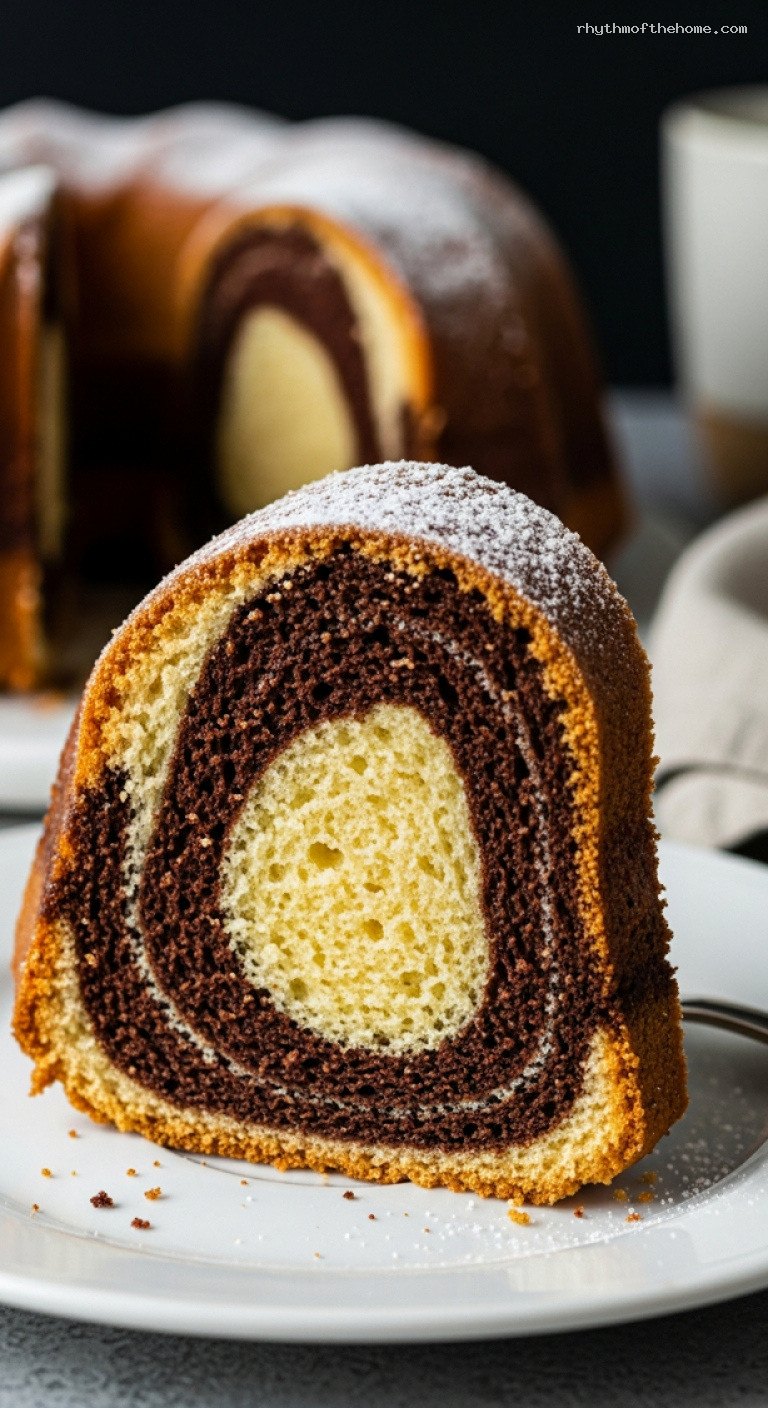
Next, spoon the chocolate batter over the vanilla layer in dollops, going all the way around the pan. Using the handle of a spoon, a long skewer, or a butter knife, gently swirl the two batters together. Insert the tool about halfway into the batter and make 3–5 slow, looping figure-eight motions or spirals around the pan. Do not over-swirl, or the colors will blend instead of forming clear marbled ribbons.
Place the pan in the preheated oven and bake for 45–55 minutes. Start checking at 45 minutes: insert a wooden skewer or thin knife into the thickest part of the cake. It should come out mostly clean with a few moist crumbs but no wet batter. The top will be golden with some deeper brown patches where the chocolate batter reaches the surface.
Step 7: Cool, release, and serve
Remove the pan from the oven and place it on a cooling rack. Let the cake rest in the pan for 10–15 minutes; this allows it to firm up slightly and pull away from the edges, making it easier to unmold. Do not leave it in the pan much longer than 20 minutes, or condensation may form and stick the cake to the pan.
After the brief cooling time, place a wire rack or serving plate over the pan and carefully invert the whole thing. Gently lift the pan straight up; the cake should release cleanly. If it hesitates, give the pan a few firm taps on the counter while inverted, then try lifting again.
Let the cake cool completely, at least 1 hour, before dusting the top generously with powdered sugar. Slice with a serrated knife to reveal the beautiful vanilla-and-chocolate marble pattern. Serve plain, with coffee or tea, or alongside lightly sweetened whipped cream.
Pro Tips
- Use room temperature ingredients. Soft butter and room-temperature eggs blend more easily, creating a smoother batter and better rise.
- Cream thoroughly, then mix gently. Beat the butter and sugar well for fluffiness, but once flour is added, mix only until combined to avoid a dense cake.
- Do not over-swirl. A few deliberate figure-eight motions are enough; too much swirling will turn the batter muddy instead of marbled.
- Know your pan. Heavy, light-colored metal bundt pans brown most evenly. Very dark pans may bake faster; start checking a little earlier.
- Test for doneness in several spots. Because the cake is tall, insert your skewer in more than one place to make sure the center is fully baked.
Variations
- Lemon-vanilla marble cake: Double the lemon zest (2 tsp) and omit the rum. Add an extra 1 tsp vanilla for a bright, fragrant contrast to the chocolate swirls.
- Nutty marble cake: Fold 50 g (about 1/2 cup) finely chopped toasted hazelnuts or almonds into the vanilla batter before marbling for extra flavor and texture.
- Loaf-pan Marmorkuchen: Bake the batter in two greased and lined 23 x 13 cm (9 x 5 inch) loaf pans instead of a bundt pan; reduce baking time to about 35–40 minutes, checking early.
Storage & Make-Ahead
Once completely cooled, store the Marmorkuchen covered at room temperature for up to 3 days. A cake dome, inverted bowl, or well-wrapped platter works well and helps keep the crumb moist. For longer storage, wrap individual slices tightly in plastic wrap and place in an airtight container or freezer bag; freeze for up to 2–3 months. Thaw slices at room temperature for 30–60 minutes, or briefly warm them in a low oven (about 150°C / 300°F) for 5–10 minutes for a just-baked feel. You can also bake the cake a day ahead; in fact, many German home bakers find the flavor improves slightly by the next day. Dust with fresh powdered sugar just before serving.
Nutrition (per serving)
Approximate values per slice (1 of 12): about 310 calories; 14 g fat; 6 g saturated fat; 42 g carbohydrates; 24 g sugars; 5 g protein; 1 g fiber; 220 mg sodium. These numbers are estimates and will vary based on exact ingredients, brands, and portion sizes, as well as optional additions like rum or nuts.

Leave a Reply