
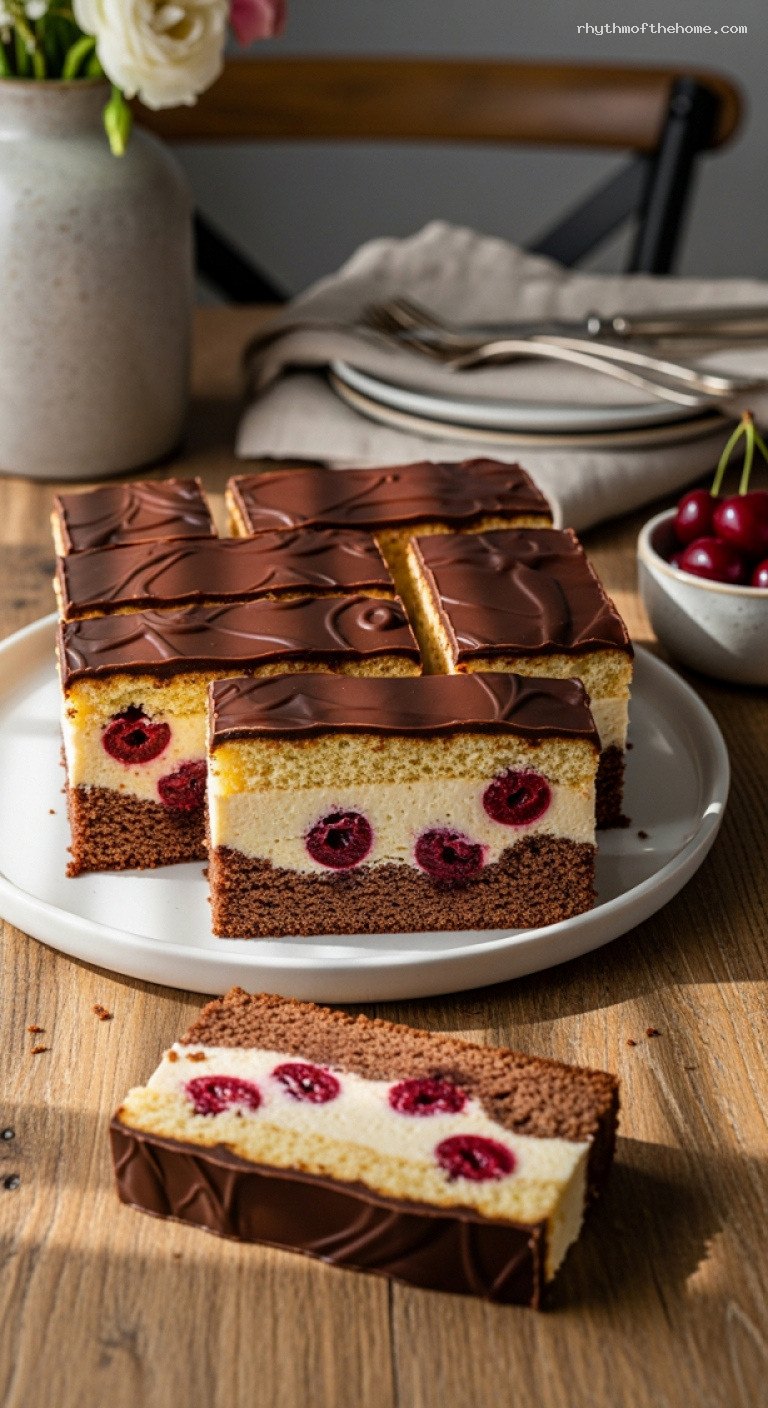
Quick Recipe Version (TL;DR)
Quick Ingredients
- 1 large jar (about 680 g / 24 oz) sour cherries, drained (about 350–400 g drained)
- Cake: 250 g unsalted butter (soft), 220 g sugar, 1 tsp vanilla, 4 large eggs, 300 g all-purpose flour, 2 tsp baking powder, 1/4 tsp salt, 3 tbsp milk, 2 tbsp unsweetened cocoa + 1–2 tbsp extra milk
- Vanilla pudding base: 500 ml whole milk, 100 g sugar, 40 g cornstarch, 1 tsp vanilla, pinch of salt
- Buttercream: 250 g unsalted butter (very soft)
- Chocolate glaze: 200 g dark chocolate (50–60% cocoa), 80 g unsalted butter, 1–2 tsp neutral oil (optional, for extra gloss)
Do This
- 1. Preheat oven to 180°C / 350°F. Line a 23×33 cm (9×13 inch) pan. Drain and pat dry the sour cherries.
- 2. Beat butter, sugar, and vanilla; add eggs one by one. Fold in flour, baking powder, salt, and milk. Spread 2/3 of batter in pan; mix remaining batter with cocoa and extra milk, then dollop and spread on top.
- 3. Press cherries evenly into the batter. Bake 30–35 minutes until golden and a toothpick comes out clean. Cool completely.
- 4. Cook milk, sugar, cornstarch, vanilla, and salt into a thick pudding. Cover surface and cool to room temperature.
- 5. Beat soft butter until fluffy, then beat in cooled pudding a spoonful at a time to make buttercream. Spread evenly over cooled cake; chill 20–30 minutes.
- 6. Melt chocolate with butter (and oil, if using) until smooth. Pour over cold buttercream and tilt pan to cover. Let glaze begin to thicken, then gently create waves with a fork if you like.
- 7. Chill until the chocolate is set, then slice into neat squares with a warm sharp knife.
Why You’ll Love This Recipe
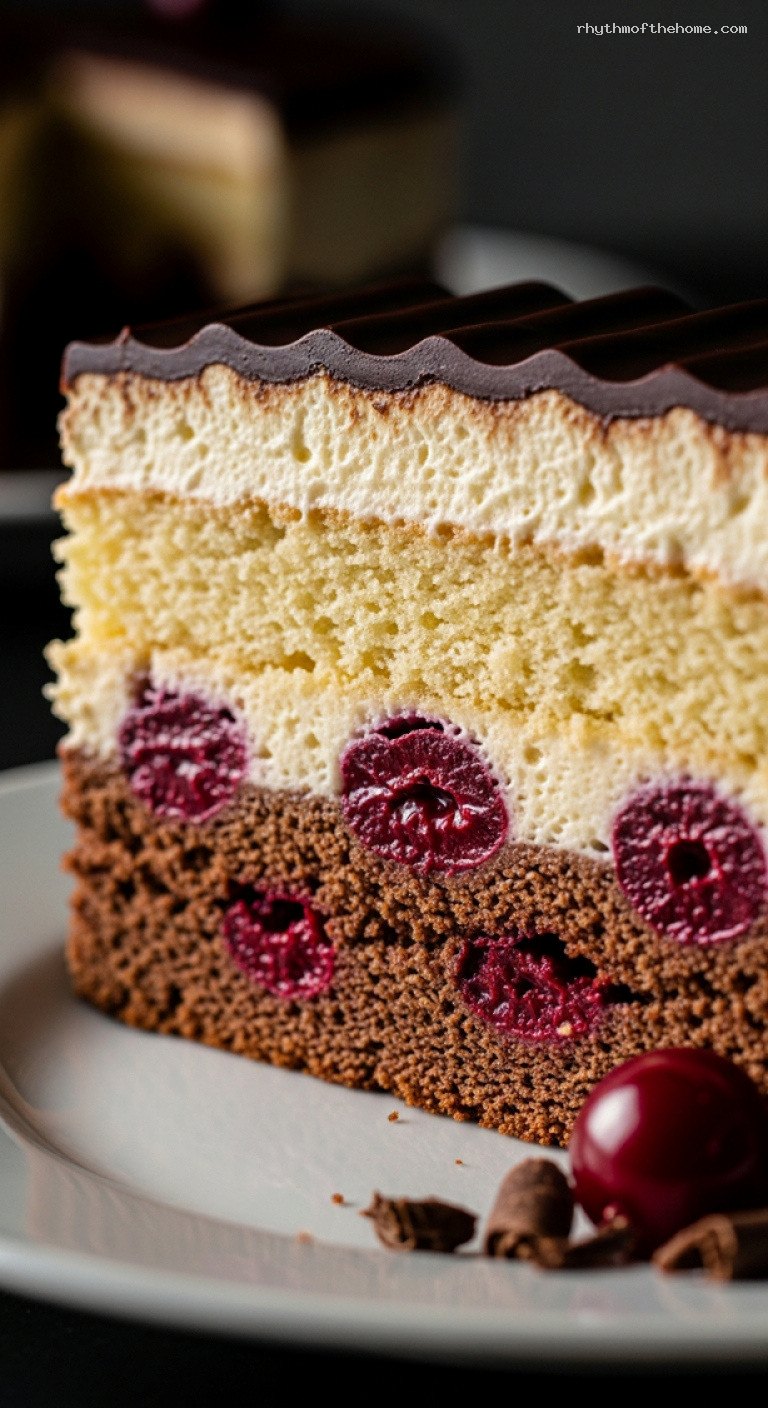
- Classic German bakery flavor at home: buttery marbled cake, tart cherries, silky vanilla buttercream, and a glossy chocolate top.
- The striking layered “wave” look makes it perfect for birthdays, holidays, and coffee gatherings.
- Everything is baked in one pan, so it is impressive yet practical and easy to serve to a crowd.
- Great make-ahead dessert: it slices beautifully and tastes even better the next day.
Grocery List
- Produce: 1 large jar of sour cherries (morello or similar, packed in light syrup or juice)
- Dairy: Unsalted butter, whole milk, eggs
- Pantry: Granulated sugar, all-purpose flour, baking powder, fine salt, unsweetened cocoa powder, cornstarch, vanilla extract, dark chocolate, neutral oil (optional)
Full Ingredients
For the Vanilla–Chocolate Cake Base
- 250 g unsalted butter, softened, plus a little extra for greasing the pan (about 1 cup)
- 220 g granulated sugar (about 1 cup + 2 tablespoons)
- 1 teaspoon vanilla extract
- 4 large eggs, at room temperature
- 300 g all-purpose flour (about 2 1/2 cups, spooned and leveled)
- 2 teaspoons baking powder
- 1/4 teaspoon fine salt
- 3 tablespoons milk, at room temperature (about 45 ml)
- 2 tablespoons unsweetened cocoa powder (about 15 g)
- 1–2 tablespoons additional milk, as needed, to loosen the cocoa batter
For the Cherry Layer
- 1 large jar sour cherries (about 680 g / 24 oz), well drained and patted dry (about 350–400 g drained weight)
For the Vanilla Pudding Buttercream
- 500 ml whole milk (about 2 cups + 2 tablespoons)
- 100 g granulated sugar (about 1/2 cup)
- 40 g cornstarch (about 1/3 cup)
- 1 teaspoon vanilla extract
- 1 small pinch fine salt
- 250 g unsalted butter, very soft but not melted (about 1 cup + 1 tablespoon)
For the Glossy Chocolate Glaze
- 200 g dark chocolate (50–60% cocoa), finely chopped
- 80 g unsalted butter, cut into cubes (about 6 tablespoons)
- 1–2 teaspoons neutral oil (such as sunflower, canola, or grapeseed), optional for extra shine and a softer bite
Step-by-Step Instructions
Step 1: Prepare the pan, oven, and cherries
Grease a 23×33 cm (9×13 inch) rectangular baking pan with a thin layer of butter. Line the base with a sheet of baking parchment, leaving a slight overhang on two sides to help lift the cake out later. Lightly grease the parchment too.
Preheat your oven to 180°C / 350°F (160°C fan). Position a rack in the middle of the oven so the cake bakes evenly.
Open the jar of sour cherries and drain them well in a sieve. Gently pat them dry with paper towels to remove excess moisture. Set aside while you prepare the cake batter. Excess liquid can make the cake soggy, so take a moment to get them fairly dry.
Step 2: Make the vanilla cake batter
In a large mixing bowl, beat the softened butter and sugar together with a hand mixer or stand mixer (paddle attachment) on medium-high speed for 3–4 minutes, until very light and creamy. Scrape down the sides of the bowl once or twice.
Add the vanilla extract, then beat in the eggs one at a time. Mix well after each egg so the mixture looks smooth and fluffy. If it looks slightly curdled, do not worry; the flour will bring it back together.
In a separate bowl, whisk together the flour, baking powder, and salt. Add these dry ingredients to the butter mixture in two additions, mixing on low speed just until combined each time. Pour in the 3 tablespoons of milk and mix briefly until you have a thick, smooth batter. Do not overmix.
Step 3: Create the “waves” with light and dark batters and cherries
Scoop about two-thirds of the vanilla batter into the prepared pan and spread it out evenly with an offset spatula or the back of a spoon. Try to get it into all four corners with a level surface.
To the remaining third of the batter still in the bowl, sift in the cocoa powder. Add 1–2 tablespoons of additional milk and mix until fully combined. The cocoa batter should be similar in thickness to the vanilla batter; add a tiny splash more milk if it feels too stiff.
Dollop the chocolate batter over the vanilla layer in several spoonfuls, then gently spread it into a thin, patchy layer. You do not need to completely cover the vanilla batter; the uneven distribution helps create the marbled “Danube wave” effect in the cross-section.
Now scatter the drained cherries evenly over the top, pressing each cherry lightly into the batter with your fingers. They should sit partly submerged; during baking they will sink in slightly and help form the characteristic wavy pattern inside the cake.
Step 4: Bake and cool the cake base
Place the pan in the preheated oven and bake for 30–35 minutes, until the top is lightly golden and springs back when gently pressed in the center. A toothpick inserted into the light part of the cake should come out clean or with a few moist crumbs, but no wet batter.
Remove the pan from the oven and place it on a wire rack. Let the cake cool in the pan for at least 45–60 minutes, until it is only slightly warm. For the buttercream to sit properly, the cake should be fully cooled to room temperature before frosting.
Step 5: Cook and cool the vanilla pudding for the buttercream
While the cake cools, make the pudding base. In a medium saucepan (off the heat), whisk together the sugar, cornstarch, and salt. Gradually whisk in the milk, ensuring there are no lumps. Stir in the vanilla extract.
Place the saucepan over medium heat. Cook, whisking constantly, until the mixture thickens and comes to a gentle bubble, 4–7 minutes depending on your stove. Once bubbling, continue to cook for another 30–60 seconds to fully cook out the cornstarch taste, whisking the whole time. The pudding should be quite thick, almost like a soft custard.
Transfer the hot pudding to a shallow bowl. Press a piece of plastic wrap or baking parchment directly onto the surface to prevent a skin from forming. Allow it to cool at room temperature until it is completely cool but still pliable, 30–45 minutes. Do not refrigerate it; if it is too cold while the butter is soft, the buttercream can become grainy.
Step 6: Make the vanilla buttercream and frost the cake
Once the pudding has cooled to room temperature, check that the butter is very soft but not melted. In a large bowl, beat the butter with a mixer on medium-high speed for 3–4 minutes until pale and fluffy.
Briefly whisk the cooled pudding to loosen it. Then, with the mixer on medium speed, add the pudding to the butter one heaped tablespoon at a time, beating well after each addition. Scrape down the bowl occasionally. This slow addition is important; it helps the pudding and butter emulsify into a smooth, silky buttercream without splitting.
When all the pudding is incorporated, continue beating for another 1–2 minutes until the buttercream looks thick, smooth, and spreadable.
Make sure the cake base is fully cool. If the top is very domed, you can gently press it down or trim it so the surface is level, but this is usually not necessary for Donauwelle. Spread the vanilla buttercream over the cake in an even layer, smoothing the top as much as you can with an offset spatula. Refrigerate the pan for 20–30 minutes to firm up the buttercream before adding the chocolate glaze.
Step 7: Add the glossy chocolate glaze and create the “Danube” look
Place the chopped dark chocolate and cubed butter in a heatproof bowl. Set the bowl over a saucepan with a few centimeters of simmering water (do not let the bowl touch the water), or melt gently in short bursts in the microwave. Stir frequently until the chocolate and butter are completely melted and the mixture is smooth and glossy. If using, stir in 1–2 teaspoons of neutral oil for extra shine and a slightly softer set.
Let the glaze cool for 5–10 minutes; it should still be pourable but not piping hot. Pour the glaze over the chilled buttercream in the center of the pan, then gently tilt and rotate the pan to let the chocolate flow to the edges, covering the buttercream in an even layer. Use a small spatula only if needed to nudge the chocolate into the corners; working gently helps keep the buttercream layer undisturbed.
For a classic smooth top, simply leave the glaze as is and let it set. For a more decorative “wave” pattern on top, wait until the chocolate has started to thicken slightly but is not yet fully firm (about 10–15 minutes in a cool kitchen), then lightly drag the tips of a fork or a cake comb across the surface in loose curves to mimic flowing water. Do not press down too hard; you are just shaping the chocolate, not the buttercream underneath.
Return the cake to the refrigerator and chill until the glaze is fully set, at least 45–60 minutes. To serve, use the parchment overhang to lift the cake from the pan, and cut into 16 squares with a sharp knife warmed briefly under hot water and wiped dry between cuts. This helps keep the layers neat and the chocolate from cracking.
Pro Tips
- Temperature matching is key: For the buttercream, the pudding and butter should be about the same, cool room temperature. If one is too cold or too warm, the mixture can look grainy.
- Dry the cherries well: Excess liquid from the jar will make the cake wet and can cause gaps between layers. Patting the cherries dry helps them sit cleanly in the batter.
- Do not rush the cooling: If the cake or pudding is even slightly warm, the buttercream can turn runny and the chocolate glaze can melt into it. Allow enough time for everything to cool properly.
- Use good-quality chocolate: Since the glaze is a major flavor, choose a smooth dark chocolate (around 50–60% cocoa) that you enjoy eating on its own.
- Warm the knife for clean slices: Dip a sharp knife in hot water, wipe it dry, and then cut. Repeat between each cut for bakery-smooth portions.
Variations
- Kirsch version: Toss the drained cherries with 1–2 tablespoons of kirsch (cherry brandy) before adding them to the batter, and add 1 tablespoon kirsch to the buttercream for an adult-only twist.
- Lighter glaze: For a thinner, slightly softer topping, replace 30–40 g of the dark chocolate with milk chocolate, or add an extra teaspoon of neutral oil.
- Nutty Donauwelle: Fold 50 g (about 1/2 cup) finely chopped toasted hazelnuts or almonds into the vanilla batter for extra texture and flavor, and sprinkle a few on top of the chocolate before it fully sets.
Storage & Make-Ahead
Store Donauwelle covered in the refrigerator for up to 4 days. Because of the buttercream, it should not be kept at room temperature for long periods. For best texture and flavor, remove the cake from the fridge about 20–30 minutes before serving so the buttercream can soften slightly.
This cake is an excellent make-ahead dessert. You can bake the cake base and add the cherries a day in advance, then wrap the pan well and store it at room temperature. Prepare the pudding and buttercream, frost, and glaze the next day, or complete the whole cake the day before serving. The flavors meld and the layers firm up, making it even easier to slice neatly.
Individual slices can be wrapped tightly and frozen for up to 2 months. Thaw overnight in the refrigerator, then bring to cool room temperature before serving. Note that the chocolate glaze may lose a little shine after freezing but will still taste delicious.
Nutrition (per serving)
Approximate values per piece (1 of 16): about 530–560 calories, 33 g fat, 21 g saturated fat, 52 g carbohydrates, 1–2 g fiber, 34–36 g sugar, 7–8 g protein, and around 220–260 mg sodium. These numbers are estimates and will vary based on the specific brands and exact quantities you use.

Leave a Reply