
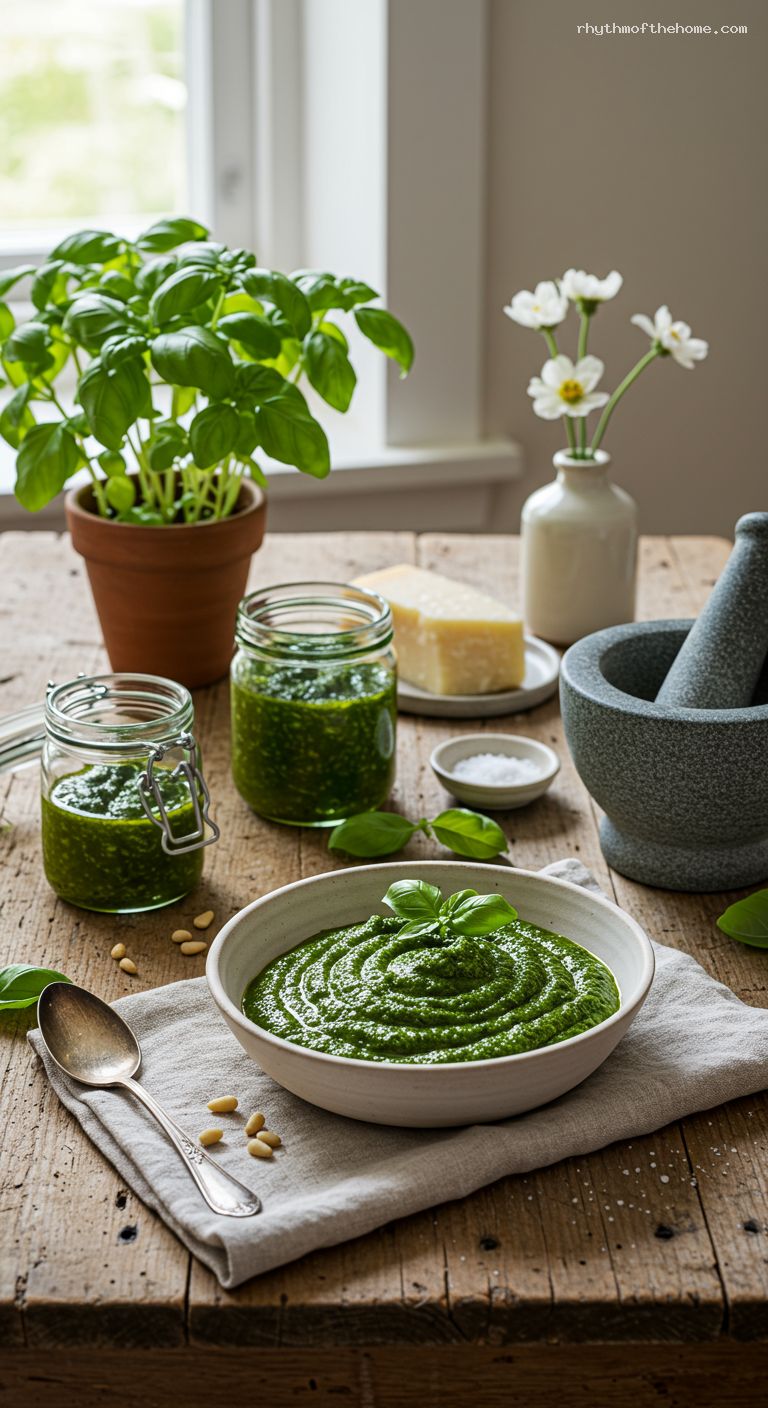
Quick Recipe Version (TL;DR)
Quick Ingredients
- 2 cups packed fresh basil leaves (60 g)
- 1/3 cup pine nuts or walnuts, toasted (50 g)
- 2 medium garlic cloves (8–10 g), roughly chopped
- 1/2 cup finely grated Parmigiano-Reggiano (45 g)
- 1/2 cup extra-virgin olive oil (120 ml)
- 1 tbsp fresh lemon juice (15 ml)
- 1/4 tsp fine sea salt, plus more to taste
- 1/8 tsp freshly ground black pepper
Do This
- 1. Toast nuts in a dry skillet over medium heat, stirring, 3–5 minutes; cool.
- 2. Pulse nuts and garlic in a food processor until finely chopped.
- 3. Add basil, salt, and pepper; pulse to a coarse, bright-green paste.
- 4. With the machine running, stream in olive oil until just combined.
- 5. Pulse in cheese and lemon juice; avoid over-processing.
- 6. Adjust thickness with 1–2 tbsp cold water or more oil; season to taste.
- 7. Use right away or store with a thin layer of oil on top.
Why You’ll Love This Recipe
- Classic, bright basil flavor with a garlicky kick and nutty richness.
- Ready in 15 minutes with simple, fresh ingredients.
- Versatile sauce for pasta, sandwiches, grilled chicken, roasted vegetables, or dipping.
- Freezes beautifully, so you can capture summer basil for months.
Grocery List
- Produce: Fresh basil (2 packed cups), garlic (2 cloves), 1 lemon
- Dairy: Parmigiano-Reggiano (block to grate, about 45 g for the sauce)
- Pantry: Pine nuts or walnuts, extra-virgin olive oil, fine sea salt, black pepper
Full Ingredients
Classic Basil Pesto
- 2 cups packed fresh basil leaves (about 60 g), well dried
- 1/3 cup pine nuts or walnuts, toasted (50 g)
- 2 medium garlic cloves (8–10 g), roughly chopped
- 1/2 cup finely grated Parmigiano-Reggiano (45 g)
- 1/2 cup extra-virgin olive oil (120 ml), preferably mild-fruity
- 1 tbsp fresh lemon juice (15 ml)
- 1/4 tsp fine sea salt, plus more to taste
- 1/8 tsp freshly ground black pepper
- 1–2 tbsp cold water (optional, to thin)
Optional Garnishes & Finishing
- Extra basil leaves
- Toasted pine nuts (a few for topping)
- Extra grated Parmigiano-Reggiano
- Drizzle of olive oil
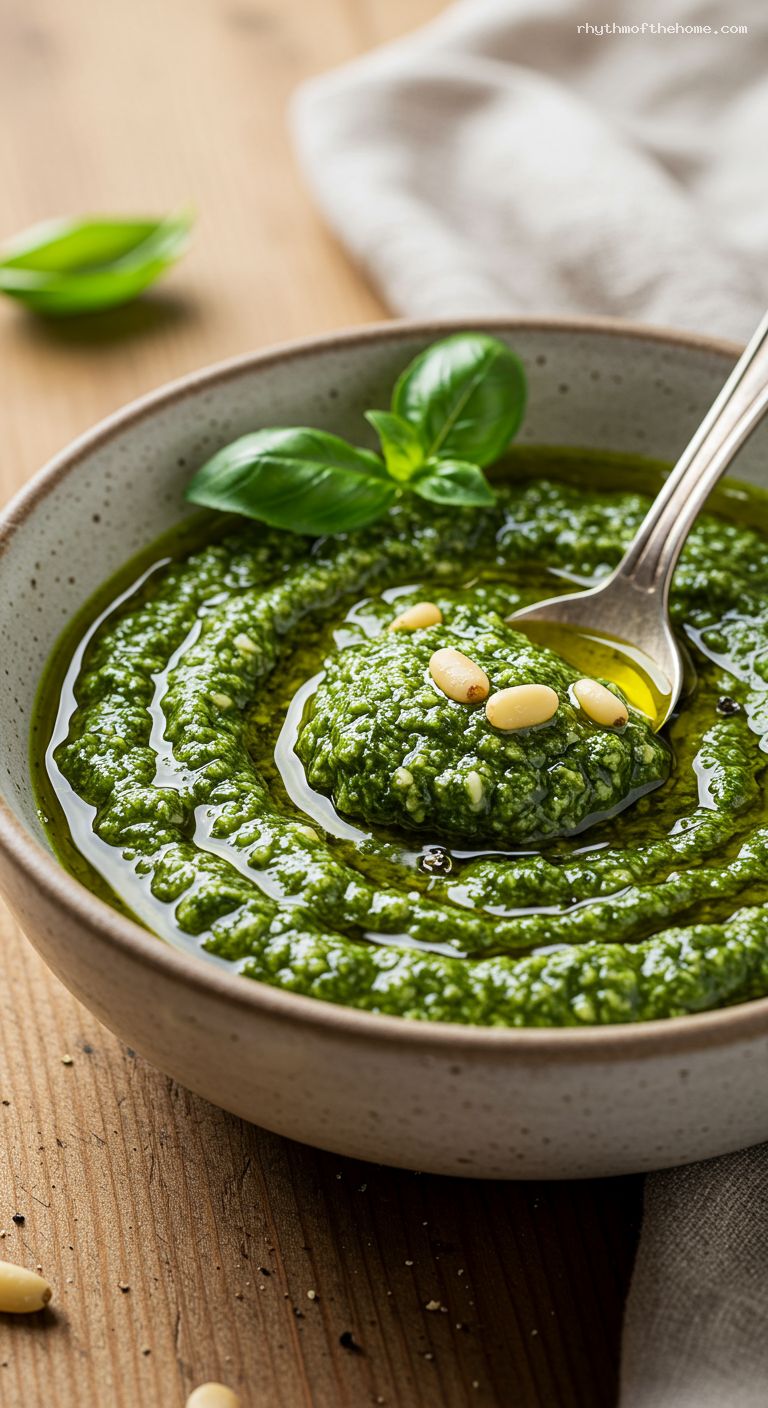
Step-by-Step Instructions
Step 1: Prep and dry the basil
Rinse the basil leaves and spin them very dry, or pat gently with clean towels. Excess water can dull the flavor and color of the pesto, so aim for leaves that are completely dry. Roughly tear any large leaves so they pack evenly in the processor.
Step 2: Toast the nuts for depth
Place pine nuts or walnuts in a dry skillet over medium heat. Toast, stirring frequently, until golden and fragrant, 3–5 minutes. Transfer to a plate to cool completely. Alternatively, toast on a baking sheet at 350°F (175°C) for 6–8 minutes, shaking halfway through.
Step 3: Chop nuts and garlic
Add the cooled nuts and chopped garlic to a food processor. Pulse in short bursts until finely chopped but not pasty. Scrape down the sides so everything processes evenly.
Step 4: Add basil and seasonings
Add the basil, salt, and pepper. Pulse in short bursts until the basil is finely chopped and forms a coarse, vibrant green paste. Avoid running the processor continuously to prevent heat buildup, which can darken the pesto.
Step 5: Stream in the olive oil
With the processor running, slowly stream in the olive oil just until the mixture looks glossy and combined. You want a slightly textured sauce, not a completely smooth puree. Pause and scrape down the sides as needed.
Step 6: Fold in cheese and lemon
Add the Parmigiano-Reggiano and lemon juice. Pulse a few times to incorporate. Taste and adjust salt and pepper. If the pesto seems thick, blend in 1–2 tbsp cold water or a splash more oil for a looser consistency.
Step 7: Serve or store
Use immediately, or transfer to a clean jar. Smooth the top and pour a thin layer of olive oil over the surface to minimize browning. Seal and refrigerate. Stir before using.
Pro Tips
- Keep it cool: Chill your processor bowl and blade for 10 minutes to help the pesto stay bright green.
- Cheese matters: Grate Parmigiano-Reggiano very fine (Microplane) so it blends smoothly without over-processing.
- Don’t over-blend: Use short pulses. Heat and over-processing can turn pesto bitter and dull in color.
- Balance the oil: A mild, fruity extra-virgin olive oil lets basil shine; very peppery oils can overpower.
- Traditional method: For the most aromatic pesto, use a mortar and pestle—pound garlic and salt, then nuts, then basil, then cheese, then stir in oil.
Variations
- Walnut–Pecorino Pesto: Swap pine nuts for walnuts and replace half the Parm with Pecorino Romano for a bolder, saltier edge.
- Vegan Pesto: Omit the cheese and add 3–4 tbsp nutritional yeast; increase lemon juice to 1.5 tbsp for brightness.
- Nut-Free Pesto: Use toasted pumpkin seeds or sunflower seeds (50 g) for similar body and a subtly toasty flavor.
Storage & Make-Ahead
Refrigerate in a small jar, smoothing the surface and covering with a thin layer of olive oil. Keeps 4–5 days in the fridge. For longer storage, freeze up to 3 months: portion into ice cube trays, freeze solid, then store cubes in a freezer bag. Thaw overnight in the refrigerator and stir in a squeeze of fresh lemon and a drizzle of olive oil to refresh. Avoid boiling pesto; warm gently or stir into hot foods off heat.
Nutrition (per serving)
Approximate per 2 tbsp: 190 calories; 20 g fat (4 g saturated); 2 g carbohydrates; 0.5 g fiber; 3 g protein; 210 mg sodium.

Leave a Reply