
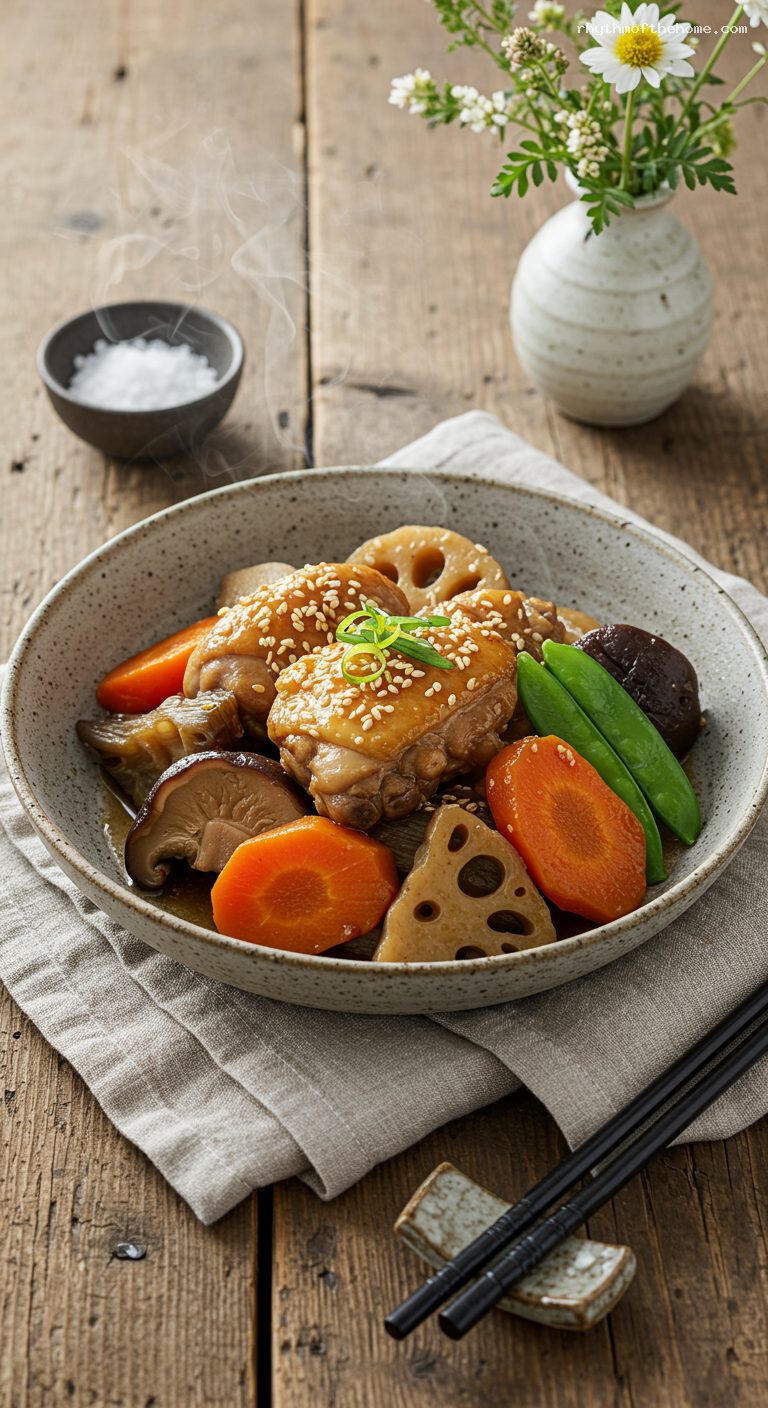
Quick Recipe Version (TL;DR)
Quick Ingredients
- 1 lb (450 g) boneless, skin-on chicken thighs, cut in 1-inch pieces
- 7 oz (200 g) lotus root, peeled and sliced
- 1 medium burdock root (150 g), cut rangiri
- 2 carrots (200 g), cut rangiri
- 6 dried shiitake, soaked 30 min in 1.5 cups warm water
- 7 oz (200 g) konnyaku, scored and parboiled
- 1 tbsp neutral oil; 3 thin ginger slices (optional)
- 1.5 cups (360 ml) dashi (use shiitake soaking liquid + water)
- 3 tbsp soy sauce; 3 tbsp mirin; 2 tbsp sake; 1 tbsp sugar
- 1 tsp toasted sesame oil; sesame seeds; snow peas (optional)
Do This
- 1. Soak shiitake 30 minutes; strain soaking liquid through a fine filter for the dashi.
- 2. Prep veg: cut lotus and burdock; keep in water (lotus with a splash of vinegar). Cut carrots. Score and parboil konnyaku 2–3 minutes.
- 3. Brown chicken in 1 tbsp oil over medium heat 4–5 minutes; add ginger. Add lotus and burdock; toss 2 minutes.
- 4. Add dashi + sake + sugar; bring to a boil, skim. Add mirin + soy.
- 5. Cover with a drop-lid (otoshibuta) and simmer 10 minutes at a gentle simmer, about 90–95°C / 195–203°F.
- 6. Add carrots, shiitake, and konnyaku; cover and simmer 10 minutes more until tender.
- 7. Remove lid; reduce 5–7 minutes until glossy. Finish with sesame oil and seeds; rest 10 minutes before serving.
Why You’ll Love This Recipe
- Traditional Japanese home-style comfort: savory-sweet, glossy, and deeply satisfying.
- Make-ahead friendly—flavors improve overnight and it packs beautifully for bento.
- Balanced textures: crisp-tender lotus root, earthy burdock, silky konnyaku, juicy chicken, and plump shiitake.
- Weeknight-easy: one pot, simple techniques, and pantry-friendly seasonings.
Grocery List
- Produce: Lotus root, burdock root (gobo), carrots, dried shiitake, ginger (optional), snow peas or green beans (optional), yuzu or lemon zest (optional)
- Dairy: None
- Pantry: Konnyaku (yam cake), soy sauce, mirin, sake, sugar, neutral oil, sesame oil, dashi (or kombu/dashi packets), white sesame seeds, vinegar
Full Ingredients
Chicken & Vegetables
- 1 lb (450 g) boneless, skin-on chicken thighs, trimmed and cut into 1-inch (2.5 cm) pieces
- 7 oz (200 g) lotus root (renkon), peeled and cut into 1/4–1/3-inch (7–8 mm) half-moons; soak in water with 1 tsp vinegar
- 1 medium burdock root (gobo), about 5 oz (150 g), scrubbed (peel lightly if tough) and cut rangiri into 3/4–1-inch pieces; soak 5 minutes
- 2 medium carrots (about 7 oz/200 g), peeled and cut rangiri into 3/4-inch pieces (or cut flower shapes)
- 6 dried shiitake (about 1 oz/30 g), soaked 30 minutes in 1.5 cups warm water; stems removed; soaking liquid reserved and strained
- 7 oz (200 g) konnyaku (yam cake), scored, rubbed with 1 tsp salt, rinsed, cut into 1-inch triangles, parboiled 2–3 minutes
- 1 tbsp neutral oil (canola, rice bran, or grapeseed)
- 3 thin slices fresh ginger (optional)
- 6–8 snow peas or green beans, blanched and sliced on the bias for garnish (optional)
Braising Liquid
- 1 1/2 cups (360 ml) dashi (use strained shiitake soaking liquid, topped up with dashi or water)
- 3 tbsp (45 ml) soy sauce (koikuchi; or 2 tbsp koikuchi + 1 tbsp usukuchi for brighter color)
- 3 tbsp (45 ml) mirin
- 2 tbsp (30 ml) sake
- 1 tbsp (12 g) sugar
- 1/4 tsp fine salt, to taste (optional)
Finish
- 1 tsp toasted sesame oil
- 1 tsp toasted white sesame seeds
- Finely sliced yuzu zest or lemon zest (optional)
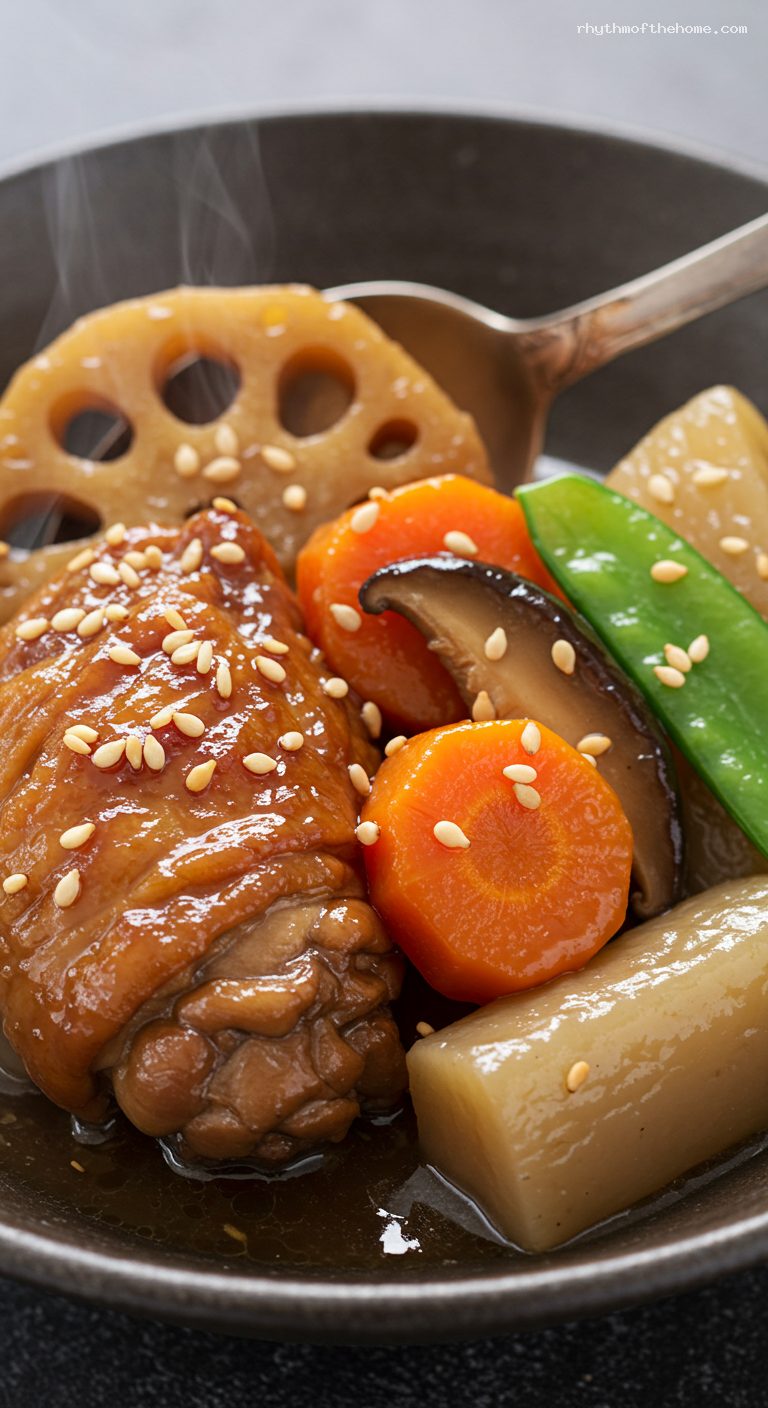
Step-by-Step Instructions
Step 1: Soak shiitake and prepare dashi
Place dried shiitake in a bowl with 1.5 cups warm water and soak for 30 minutes. Squeeze excess liquid from the mushrooms back into the bowl. Strain the soaking liquid through a fine filter or coffee filter to remove grit—this is umami-packed and will form part of your dashi. Top up to 1 1/2 cups (360 ml) with dashi or water if needed.
Step 2: Prep and treat the vegetables
Peel lotus root and slice into 1/4–1/3-inch half-moons; place in cold water with 1 tsp vinegar to keep it crisp and pale. Scrub burdock; cut rangiri (rolling diagonal cuts) into 3/4–1-inch pieces and soak 5 minutes to tame bitterness. Peel and cut carrots rangiri into 3/4-inch pieces (or cut flower shapes). Drain all vegetables well before cooking.
Step 3: Prepare the konnyaku
Score the surface of the konnyaku lightly in a crosshatch pattern, rub with 1 tsp salt, rinse, and cut into 1-inch triangles. Parboil in plain water for 2–3 minutes to remove odor, then drain thoroughly.
Step 4: Brown the chicken and start the pot
Heat 1 tbsp neutral oil in a wide, heavy pot (24–26 cm) over medium heat. Add chicken in a single layer, skin-side down, and sear until lightly browned, 4–5 minutes, stirring once or twice. Add ginger slices (if using). Stir in the drained lotus root and burdock and sauté 2 minutes to coat with fat.
Step 5: Build the braise and skim
Pour in the dashi along with sake and sugar. Bring to a boil over medium-high heat, then immediately reduce to a gentle simmer (about 90–95°C / 195–203°F). Skim foam and fat for a clean taste. Stir in the mirin and soy sauce, then place a drop-lid (otoshibuta) or a parchment circle directly on the surface. Simmer 10 minutes.
Step 6: Add remaining ingredients and braise until tender
Lift the drop-lid and add carrots, shiitake caps, and konnyaku. Replace the drop-lid and continue simmering at a gentle bubble until all vegetables are tender but still hold their shape, 10–12 minutes. Taste and add a pinch of salt if needed.
Step 7: Reduce to a glossy finish and rest
Remove the drop-lid, increase heat to medium, and cook uncovered, stirring occasionally, until the liquid reduces and coats everything with a shiny glaze, 5–7 minutes. Turn off heat, drizzle with 1 tsp sesame oil, and toss. Let the chikuzenni rest 10 minutes to absorb flavors, then garnish with sesame seeds and blanched snow peas or a whisper of yuzu zest.
Pro Tips
- Use a drop-lid (otoshibuta) or parchment—this minimizes agitation, helps even cooking, and promotes a beautiful glaze.
- Stage the vegetables: start harder roots first (lotus, burdock), add carrots, shiitake, and konnyaku later for perfect texture.
- Parboil konnyaku to remove odor and help it soak up flavor.
- Strain shiitake soaking liquid so grit doesn’t cloud the sauce—this also boosts umami.
- Chikuzenni improves after a rest; cool and rewarm for deeper, harmonious flavor.
Variations
- Vegetarian/Vegan: Omit chicken; add 7 oz (200 g) fried tofu (atsuage) or firm tofu cubes. Use kombu–shiitake dashi and a touch more soy to taste.
- Osechi-style Nishime: Add bamboo shoots and taro (satoimo), cut slightly larger; simmer gently to keep shapes intact.
- Citrus and Heat: Finish with a tiny dab of yuzu kosho or a few drops of citrus juice to brighten the glaze.
Storage & Make-Ahead
Cool completely, then refrigerate in an airtight container for up to 4 days—the flavor gets better on day 2. For bento, chill overnight and pack cold; it will come to room temperature by lunch. Freeze for up to 1 month; thaw in the refrigerator and reheat gently on the stovetop with a splash of water until piping hot (74°C / 165°F). The glaze may thicken as it chills; loosen with a spoonful of dashi or water during reheating.
Nutrition (per serving)
Approx. 360 kcal; 18 g fat; 28 g carbohydrates; 23 g protein; 5 g fiber; 780 mg sodium. Values are estimates and will vary with ingredient brands and reductions.

Leave a Reply