
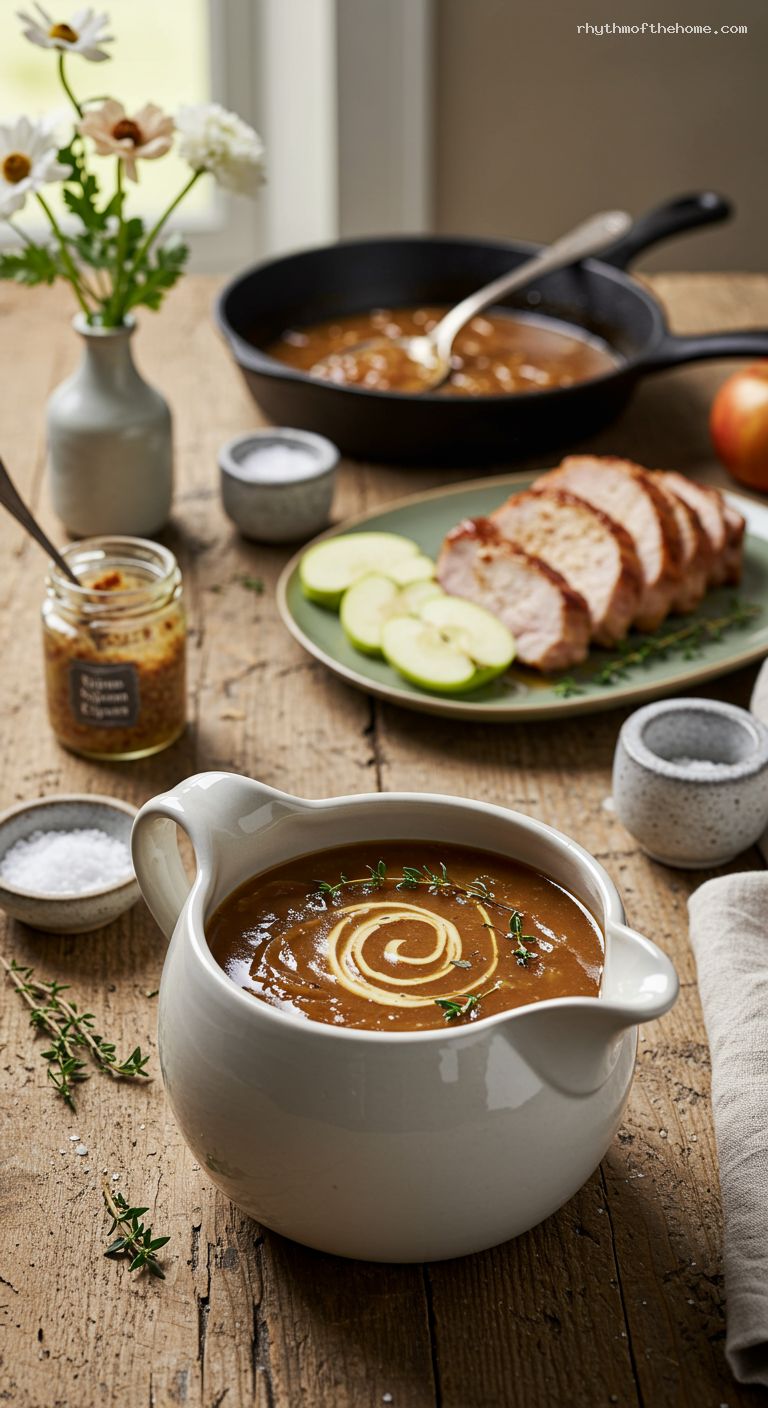
Quick Recipe Version (TL;DR)
Quick Ingredients
- 2 medium yellow onions (about 1 lb), thinly sliced
- 1 tbsp olive oil
- 2 tbsp unsalted butter, divided
- 1 cup fresh apple cider (not vinegar)
- 1/2 cup low-sodium chicken stock (or vegetable stock)
- 1 tbsp Dijon mustard
- 1 tsp fresh thyme leaves (or 1/2 tsp dried)
- 1 tsp apple cider vinegar (optional, for brightness)
- 1/2 tsp kosher salt, 1/4 tsp black pepper (plus more to taste)
- 1 tsp cornstarch + 1 tbsp cold water (optional thickener)
- 2–3 tbsp pan drippings from pork chops or roast chicken (optional)
Do This
- 1. Warm a 10–12 inch skillet over medium heat; add olive oil and 1 tbsp butter.
- 2. Add onions and 1/2 tsp salt; cook, stirring, until deep golden and jammy, 20–25 minutes.
- 3. Deglaze with apple cider; scrape up fond and reduce by half, 4–6 minutes.
- 4. Stir in stock, Dijon, thyme, pepper, and any pan drippings; simmer gently (190–200°F) 6–8 minutes.
- 5. For extra body, whisk in cornstarch slurry; simmer 30–60 seconds until glossy.
- 6. Off heat, swirl in remaining 1 tbsp cold butter; add cider vinegar to brighten. Adjust salt and pepper.
- 7. Serve rustic with onions or strain for smooth gravy. Keep warm on low.
Why You’ll Love This Recipe
- Deep, restaurant-style flavor from slow-caramelized onions and a splash of apple cider.
- Balanced savory-sweet profile that flatters pork chops, roast chicken, and weeknight vegetables.
- Pan-friendly technique you can make right after searing meat—no special equipment required.
- Flexible thickness: simmer to reduce or finish with a quick cornstarch slurry.
Grocery List
- Produce: 2 medium yellow onions, fresh thyme (or dried), optional parsley for garnish
- Dairy: Unsalted butter
- Pantry: Olive oil, fresh apple cider (non-alcoholic), low-sodium chicken or vegetable stock, Dijon mustard, apple cider vinegar, kosher salt, black pepper, cornstarch (optional), Worcestershire sauce (optional)
Full Ingredients
Caramelized Onion Cider-Dijon Pan Gravy
- 2 medium yellow onions (about 1 lb / 450 g), halved and thinly sliced
- 1 tbsp olive oil
- 2 tbsp unsalted butter, divided (1 tbsp for cooking, 1 tbsp to finish)
- 1 cup fresh apple cider (not apple cider vinegar)
- 1/2 cup low-sodium chicken stock (or vegetable stock)
- 1 tbsp Dijon mustard
- 1 tsp fresh thyme leaves (or 1/2 tsp dried thyme)
- 1 tsp apple cider vinegar (optional, for brightness)
- 1/2 tsp Worcestershire sauce (optional, for depth)
- 1/2 tsp kosher salt, plus more to taste
- 1/4 tsp freshly ground black pepper, plus more to taste
- 1 tsp cornstarch mixed with 1 tbsp cold water (optional, for thicker gravy)
- 2–3 tbsp pan drippings from pork chops or roast chicken (optional; reduce salt if using)
- Fresh thyme leaves or chopped parsley, for garnish (optional)
Step-by-Step Instructions
Step 1: Prep your ingredients
Thinly slice the onions. Measure the cider, stock, Dijon, thyme, and vinegar. If using pan drippings from recently cooked pork chops or roast chicken, pour off excess fat and reserve 2–3 tablespoons for the gravy. Have 1 tablespoon cold butter ready for finishing.
Step 2: Caramelize the onions low and slow
Heat a 10–12 inch heavy skillet (stainless or cast iron) over medium heat. Add olive oil and 1 tablespoon butter. When the butter foams, add onions and 1/2 teaspoon salt. Cook, stirring every 2–3 minutes, until the onions turn deep golden-brown and jammy, 20–25 minutes. If browning too fast, lower the heat to medium-low and add a splash of water to prevent scorching. Aim for rich mahogany color without burnt bits.
Step 3: Deglaze with apple cider
Increase heat to medium-high. Pour in the apple cider. It should bubble vigorously. Using a wooden spoon, scrape up the fond from the pan bottom. Reduce the cider by about half until syrupy, 4–6 minutes.
Step 4: Build the gravy with stock, Dijon, and thyme
Add the stock, Dijon, thyme, pepper, and Worcestershire (if using). If you have pan drippings, add them now. Bring to a gentle simmer at 190–200°F and cook, stirring occasionally, until the liquid reduces and lightly coats the back of a spoon, 6–8 minutes.
Step 5: Adjust thickness (optional)
If you prefer a slightly thicker, clingier gravy, whisk the cornstarch slurry together, then drizzle it into the simmering gravy. Cook 30–60 seconds until glossy and just thickened. Keep the simmer gentle—avoid a rolling boil which can dull the flavors.
Step 6: Finish and balance
Turn heat to low and swirl in the remaining 1 tablespoon cold butter until melted and the sauce looks silky. Stir in apple cider vinegar for brightness. Taste and adjust salt and pepper as needed.
Step 7: Serve, hold, or strain
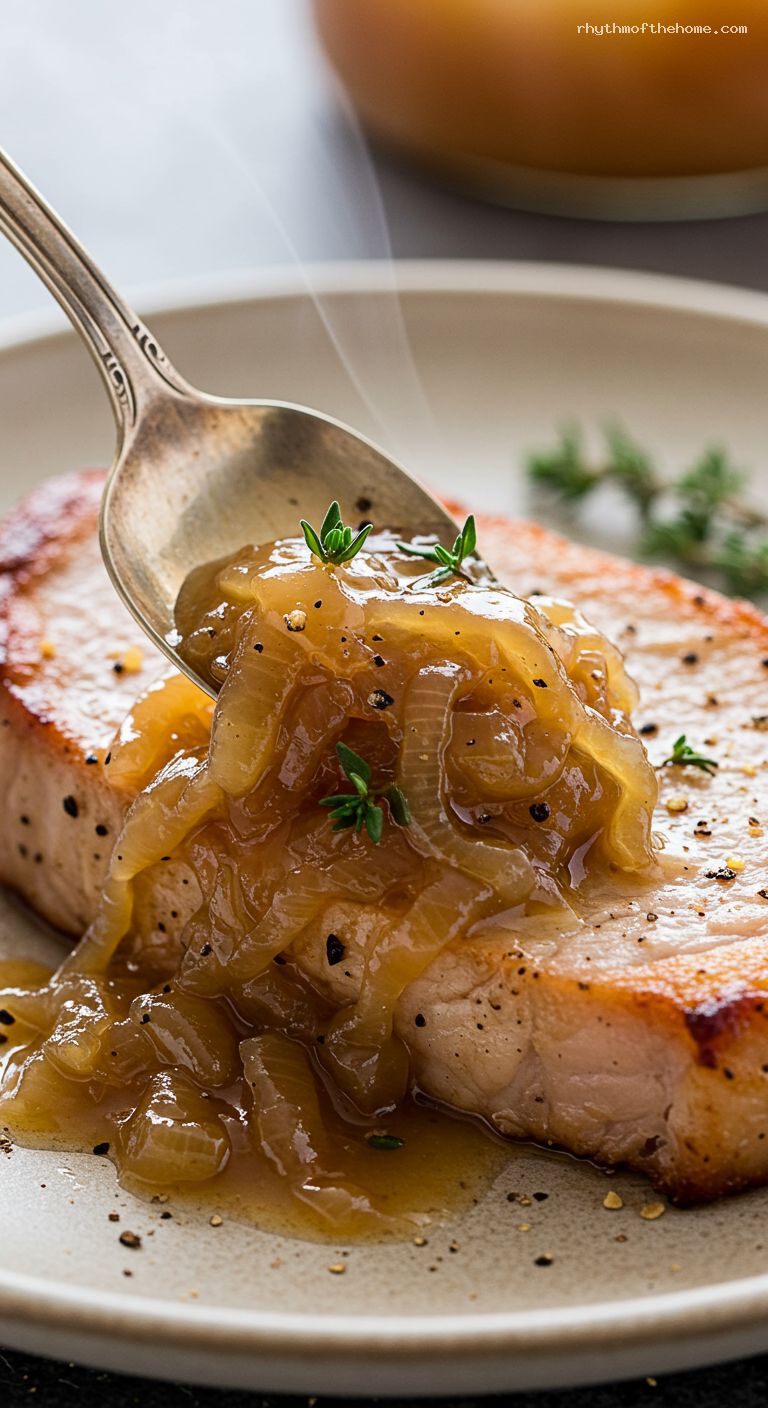
Serve rustic with the caramelized onions in the sauce, or strain through a fine-mesh sieve for a smooth, elegant gravy. Keep warm over low heat or in a 150°F holding oven until ready to serve. Spoon over pork chops, roast chicken, mashed potatoes, or roasted vegetables.
Pro Tips
- Use fresh, non-alcoholic apple cider for natural sweetness; avoid apple cider vinegar in place of cider.
- Resist rushing the onions—low, steady heat unlocks sweetness and deep flavor.
- Pan drippings add instant complexity; skim excess fat so the sauce doesn’t feel greasy.
- Finishing with cold butter (monter au beurre) gives a luxurious sheen without making the sauce heavy.
- If the pan starts to scorch while caramelizing, add 1–2 tablespoons water and scrape, then continue.
Variations
- Calvados Twist: Add 1–2 tablespoons Calvados with the cider for a subtle apple-brandy note.
- Maple-Sage: Swap thyme for 1 teaspoon chopped fresh sage and stir in 1–2 teaspoons pure maple syrup.
- Whole-Grain Mustard: Replace half the Dijon with whole-grain mustard for pops of texture.
Storage & Make-Ahead
Refrigerate in an airtight container up to 4 days, or freeze up to 2 months. Reheat gently over low heat, adding a splash of stock or water to loosen. If the sauce separates slightly when reheating, whisk vigorously or swirl in a teaspoon of cold butter to bring it back together.
Nutrition (per serving)
Approximate for 1/6 of recipe: 100 calories; 6 g fat (3 g saturated); 12 g carbohydrates; 7 g sugars; 1 g protein; 260 mg sodium. Values will vary with pan drippings and seasoning.

Leave a Reply