
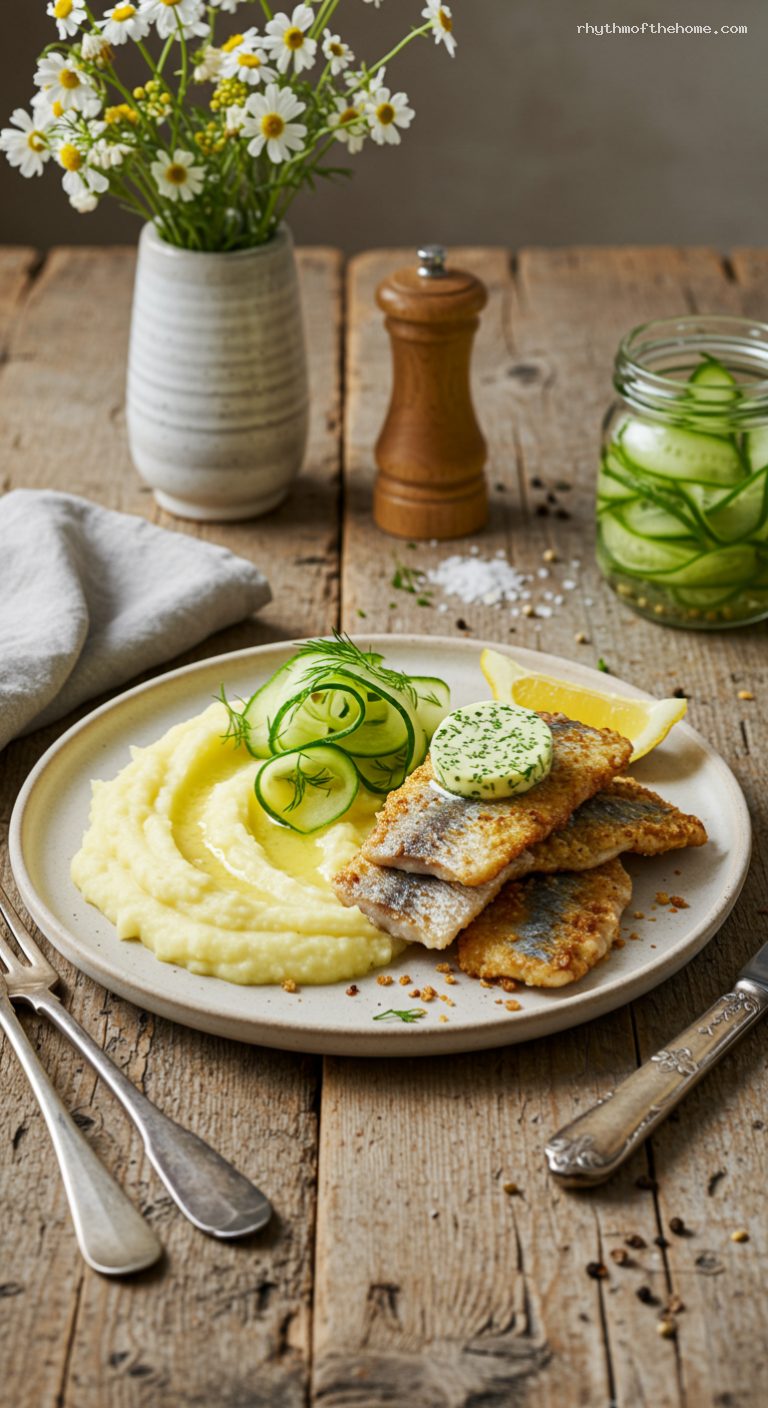
Quick Recipe Version (TL;DR)
Quick Ingredients
- 700 g Baltic herring fillets (about 16 small fillets)
- 50 g all-purpose flour (1/3 cup), 75 g fine breadcrumbs (3/4 cup), 1 tsp fine salt, 1/2 tsp ground white pepper
- 2 tbsp neutral oil + 2 tbsp butter for frying
- Parsley butter: 60 g unsalted butter (1/4 cup), 2 tbsp finely chopped parsley, 1 tsp lemon zest, 1 tsp lemon juice
- Mash: 1 kg floury potatoes, 40 g butter (3 tbsp), 120 ml whole milk (1/2 cup), 80 ml heavy cream (1/3 cup), 1 tsp salt, white pepper
- Quick pickles: 1 cucumber, 1 tsp salt, 120 ml water (1/2 cup), 60 ml white wine vinegar (1/4 cup), 25 g sugar (2 tbsp), 6 white peppercorns, 1 tbsp chopped dill
- To serve: Lemon wedges, extra parsley or dill
Do This
- 1. Salt sliced cucumber 10 minutes; whisk water, vinegar, sugar, and a pinch of salt; rinse, drain, and pour over cucumbers with dill. Steep 20 minutes.
- 2. Boil peeled potato chunks in salted water 12–15 minutes until tender; drain and steam dry.
- 3. Stir softened butter with parsley, lemon zest, lemon juice, and a pinch of salt; set aside.
- 4. Pat herring dry; season lightly. Mix flour and breadcrumbs; dredge fish thinly, shaking off excess.
- 5. Fry in batches in 1 tbsp oil + 1 tbsp butter per batch over medium-high heat, 1.5–2 minutes per side, until golden. Keep warm at 90°C/200°F.
- 6. Mash potatoes with butter; add warmed milk and cream until creamy. Season with salt and white pepper.
- 7. Plate mash, stack crispy herring, top with parsley butter, add pickled cucumbers and lemon wedges. Serve immediately.
Why You’ll Love This Recipe
- Classic Swedish comfort: crisp, buttery strömming with silky mash and bright, snappy cucumbers.
- Light, quick breading means fast cooking and maximum crunch.
- Parsley-lemon butter melts into the hot fish for effortless sauce.
- Mostly pantry staples; the pickles are ready in 20 minutes.
Grocery List
- Produce: 1 cucumber, 1 lemon, flat-leaf parsley, fresh dill (optional), 1 kg floury potatoes
- Dairy: Unsalted butter, whole milk, heavy cream
- Pantry: Baltic herring fillets, all-purpose flour, fine breadcrumbs (or rye breadcrumbs), white wine vinegar, sugar, neutral oil, white pepper, salt, whole white peppercorns
Full Ingredients
Butter-Fried Baltic Herring
- 700 g Baltic herring (strömming) fillets, skinned and pin bones removed (about 16 small fillets)
- 1/2 tsp fine salt + 1/4 tsp ground white pepper (to season fish)
- 50 g all-purpose flour (1/3 cup)
- 75 g fine breadcrumbs, ideally rye (3/4 cup)
- 2 tbsp neutral oil (rapeseed or canola), plus more as needed
- 2 tbsp unsalted butter, divided for frying
- Lemon wedges, to serve
Parsley Butter
- 60 g unsalted butter, softened (1/4 cup)
- 2 tbsp finely chopped flat-leaf parsley
- 1 tsp finely grated lemon zest
- 1 tsp fresh lemon juice
- 1/8 tsp fine salt
Creamy Potato Mash
- 1 kg floury potatoes (Russet, King Edward, or similar), peeled and cut into 4 cm chunks
- 40 g unsalted butter (3 tbsp)
- 120 ml whole milk, warmed (1/2 cup)
- 80 ml heavy cream, warmed (1/3 cup)
- 1 to 1 1/4 tsp fine salt (to taste)
- Pinch ground white pepper
Snappy Quick-Pickled Cucumbers
- 1 English cucumber (300–350 g), thinly sliced (2–3 mm)
- 1 tsp fine salt (for salting the cucumber)
- 120 ml water (1/2 cup)
- 60 ml white wine vinegar (1/4 cup)
- 25 g sugar (2 tbsp)
- 1/4 tsp fine salt
- 6 whole white peppercorns
- 1 tbsp finely chopped fresh dill
To Serve
- Lemon wedges
- Extra chopped parsley or dill (optional)
Step-by-Step Instructions
Step 1: Start the quick pickles
Toss the cucumber slices with 1 tsp salt in a bowl and let stand 10 minutes to draw out excess water. Meanwhile, whisk the water, vinegar, sugar, and 1/4 tsp salt until the sugar dissolves; add the white peppercorns. Rinse the cucumbers briefly, drain well, and pat dry. Combine with the brine and dill. Steep at least 20 minutes (they’ll stay crisp). Keep chilled until serving.
Step 2: Boil the potatoes
Place the potato chunks in a pot, cover with cold water by 2–3 cm, and add a generous pinch of salt. Bring to a boil over high heat, then reduce to a brisk simmer. Cook 12–15 minutes until very tender. Drain thoroughly, then return to the warm pot for 1–2 minutes to steam off moisture.
Step 3: Make the parsley butter
In a small bowl, stir together the softened butter, parsley, lemon zest, lemon juice, and a pinch of salt until smooth and flecked with green. Leave at cool room temperature so it melts readily on the hot fish.
Step 4: Season and bread the herring
Pat the fillets very dry with paper towels. Lightly season both sides with 1/2 tsp salt and 1/4 tsp white pepper. Mix the flour and breadcrumbs on a plate. Dredge each fillet in a thin coat, tapping off excess. Arrange on a tray.
Step 5: Fry the fillets in butter
Set a large skillet over medium-high heat. Add 1 tbsp oil and 1 tbsp butter. When the butter foams and smells nutty (the surface is around 180–190°C / 355–375°F), lay in a batch of fillets without crowding. Fry 1.5–2 minutes per side until deep golden with crisp edges. Transfer to a rack and keep warm in a low oven at 90°C / 200°F while you fry the remaining fish, adding the remaining oil and butter for the next batch.
Step 6: Mash the potatoes
Warm the milk and cream together until steaming (no boil). Mash the hot potatoes with the 40 g butter, then gradually work in the warmed milk/cream until creamy and smooth (use a masher or ricer). Season to taste with 1 to 1 1/4 tsp salt and a pinch of white pepper. Keep warm over very low heat or in the 90°C / 200°F oven.
Step 7: Plate and finish
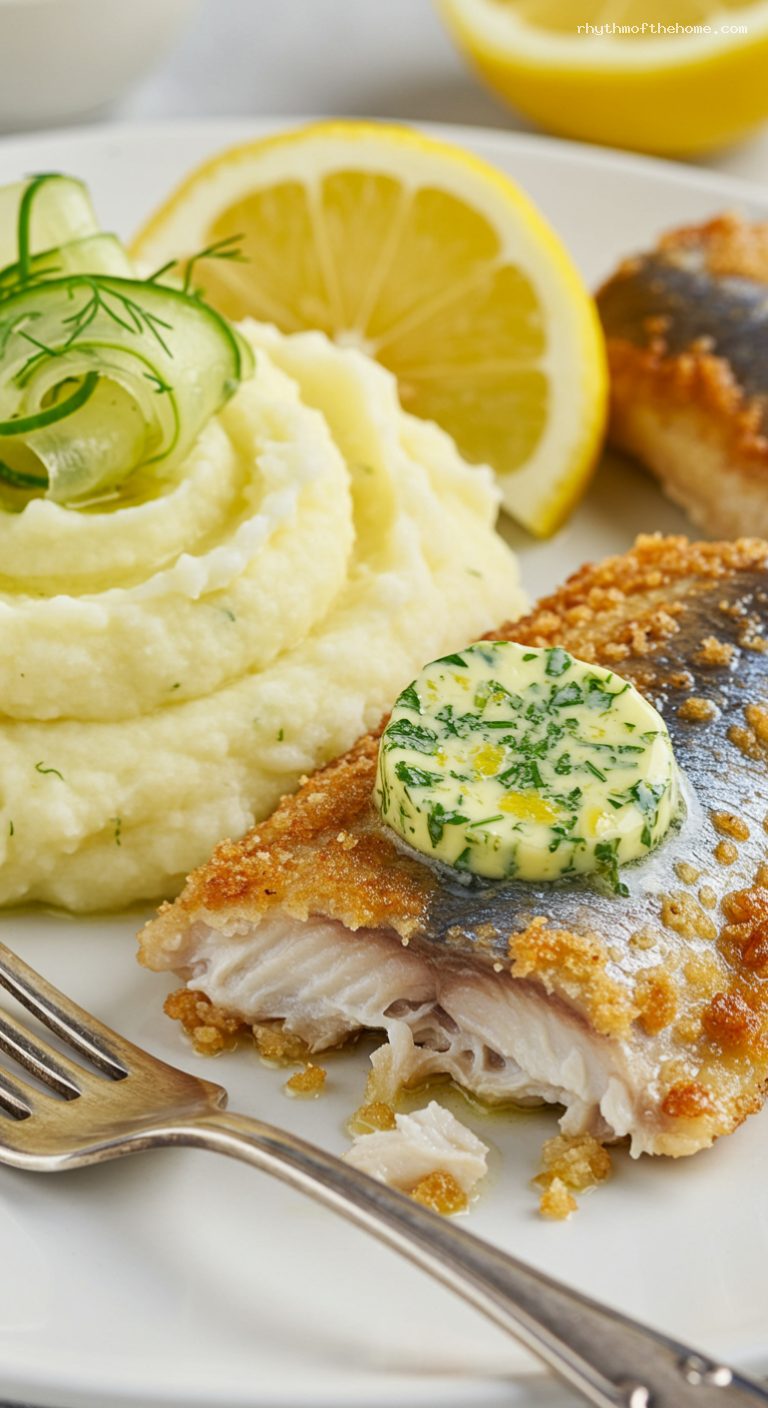
Spoon a generous pile of mash onto each plate. Stack the crisp strömming alongside. Top the fish with a pat of parsley butter so it begins to melt. Add a bright lemon wedge and a tangle of snappy pickled cucumbers. Scatter with extra parsley or dill if you like, and serve immediately.
Pro Tips
- Use rye breadcrumbs or crushed rye crispbread for a distinctly Swedish flavor and a light, toasty crunch.
- Mix butter with a little oil to prevent scorching; butter alone burns quickly at frying temperature.
- Keep the breading very thin—excess flour/breadcrumbs soften the crust and muddy the butter flavor.
- Warm milk and cream before adding to the potatoes; it keeps the mash silky and prevents gumminess.
- No strömming? Substitute small herring or fresh sardine fillets; adjust frying time if they are thicker.
Variations
- Herb swap: Blend chives and dill into the butter for a classic Scandinavian twist.
- Brown-butter caper finish: Spoon nutty browned butter with 1 tbsp capers over the fried fish instead of parsley butter.
- Open-face sandwich: Serve the fish on buttered rye with a smear of mustard, quick pickles, and a small scoop of mash on the side.
Storage & Make-Ahead
The quick pickles can be made up to 1 week ahead and kept refrigerated in their brine. Parsley butter keeps 1 week in the fridge or 3 months frozen (shape into a log and slice as needed). Mashed potatoes are best fresh but can be cooled, refrigerated up to 2 days, and reheated gently with a splash of milk. Fried fish is best the day it’s cooked; leftovers keep 1 day in the fridge—recrisp on a rack at 220°C / 425°F for 6–8 minutes.
Nutrition (per serving)
Approx. 820–900 kcal; 38–45 g protein; 74–86 g carbohydrate; 35–45 g fat; 2–3 g fiber; 900–1100 mg sodium. Estimates will vary based on actual oil/butter absorption and how much pickle brine is consumed.

Leave a Reply