
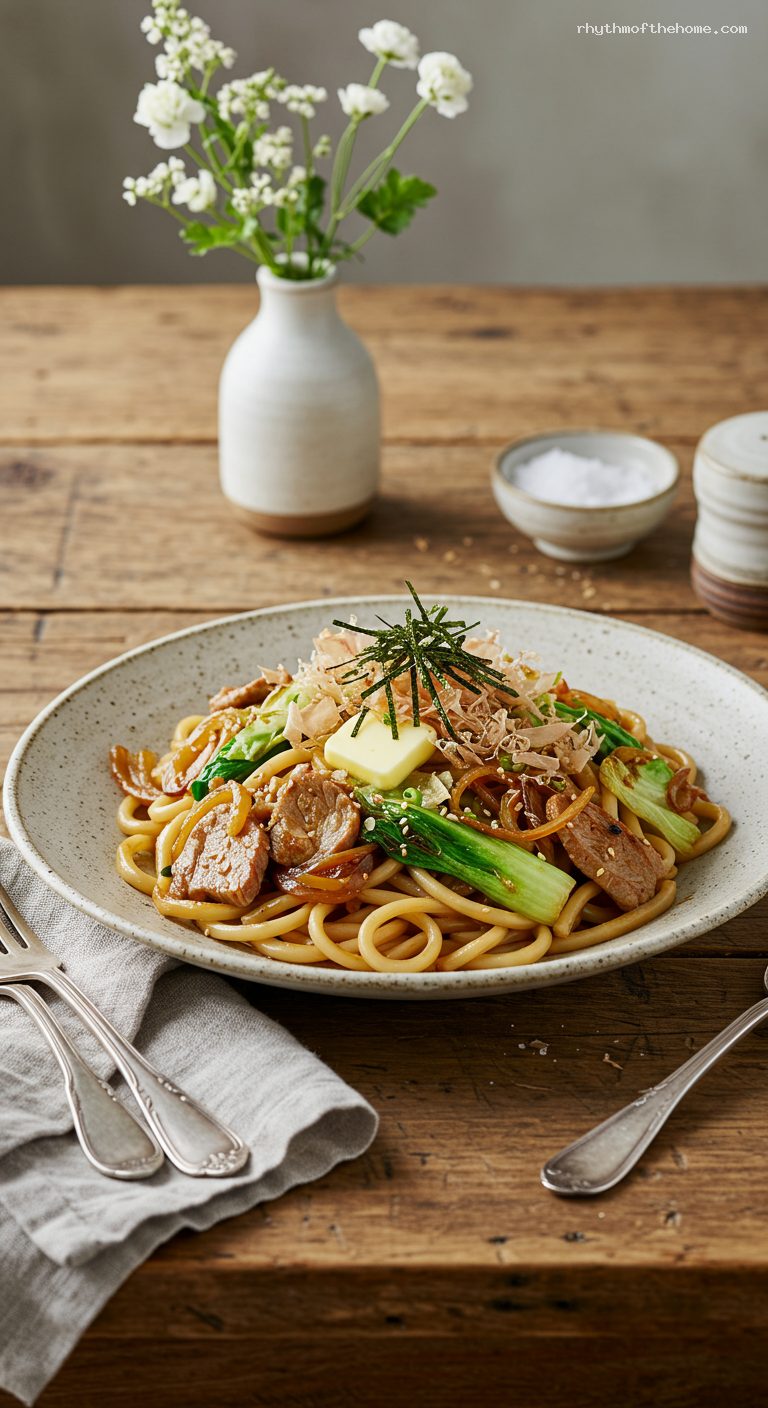
Quick Recipe Version (TL;DR)
Quick Ingredients
- 14 oz (400 g) fresh or frozen udon (or 8 oz/225 g dried)
- 8 oz (225 g) thinly sliced pork belly or shoulder
- 1 medium yellow onion, thinly sliced
- 2 cups (140 g) shredded green cabbage
- 2 garlic cloves, minced
- 1 tbsp (15 ml) neutral oil
- 1 tbsp (14 g) unsalted butter
- 3 tbsp (45 ml) soy sauce
- 2 tbsp (30 ml) mirin
- 1 tbsp (15 ml) sake or water
- 1 tsp (4 g) sugar
- 1/2 cup (120 ml) boiling water + 1/2 cup (5 g) katsuobushi (bonito flakes) for sauce
- 2 tbsp (2 g) katsuobushi, for topping; 2 scallions, thinly sliced (optional)
Do This
- 1) Steep 1/2 cup (5 g) katsuobushi in 1/2 cup boiling water for 5 minutes; strain. Simmer with soy, mirin, sake, and sugar 2–3 minutes to reduce to about 1/3 cup; keep warm.
- 2) Loosen udon: fresh/frozen 1–2 minutes in boiling water; dried 6–7 minutes. Drain, rinse briefly, toss with 1 tsp oil.
- 3) Heat a wok or 12-inch skillet on high (pan surface ~425°F/220°C) until lightly smoking. Add oil; sear pork 2–3 minutes until browned; remove.
- 4) Stir-fry onion 2 minutes; add cabbage 2 minutes; add garlic 30 seconds.
- 5) Add noodles; toss 60–90 seconds to pick up char. Return pork.
- 6) Add sauce; toss 60–90 seconds until glossy. Off heat, melt in butter. Plate; shower with katsuobushi and scallions.
Why You’ll Love This Recipe
- Classic street-style yaki udon with tender noodles, crisp cabbage, and sweet-savory onions.
- Deep, umami-rich soy–mirin–katsuobushi sauce that reduces to a glossy glaze.
- Finished with a pat of butter for richness and a lively shake of bonito flakes.
- Weeknight-fast: 30 minutes, one pan, pantry-friendly ingredients.
Grocery List
- Produce: Yellow onion, green cabbage, garlic, scallions (optional)
- Dairy: Unsalted butter
- Pantry: Udon noodles, thinly sliced pork, soy sauce, mirin, sake (or water), sugar, neutral oil, katsuobushi (bonito flakes)
Full Ingredients
Katsuobushi Soy–Mirin Sauce
- 1/2 cup (120 ml) boiling water
- 1/2 cup (5 g) katsuobushi (bonito flakes), plus more to finish
- 3 tbsp (45 ml) soy sauce
- 2 tbsp (30 ml) mirin
- 1 tbsp (15 ml) sake or water
- 1 tsp (4 g) granulated sugar
Stir-Fry
- 14 oz (400 g) fresh or frozen udon (2 packs), or 8 oz (225 g) dried udon
- 8 oz (225 g) thinly sliced pork belly or shoulder
- 1 tbsp (15 ml) neutral oil (canola, grapeseed, or sunflower), plus 1 tsp for noodles
- 1 medium yellow onion, halved and thinly sliced (about 8 oz/225 g)
- 2 cups (140 g) shredded green cabbage
- 2 garlic cloves, minced
To Finish & Garnish
- 1 tbsp (14 g) unsalted butter
- 2 tbsp (2 g) katsuobushi (bonito flakes), for topping
- 2 scallions, thinly sliced (optional)
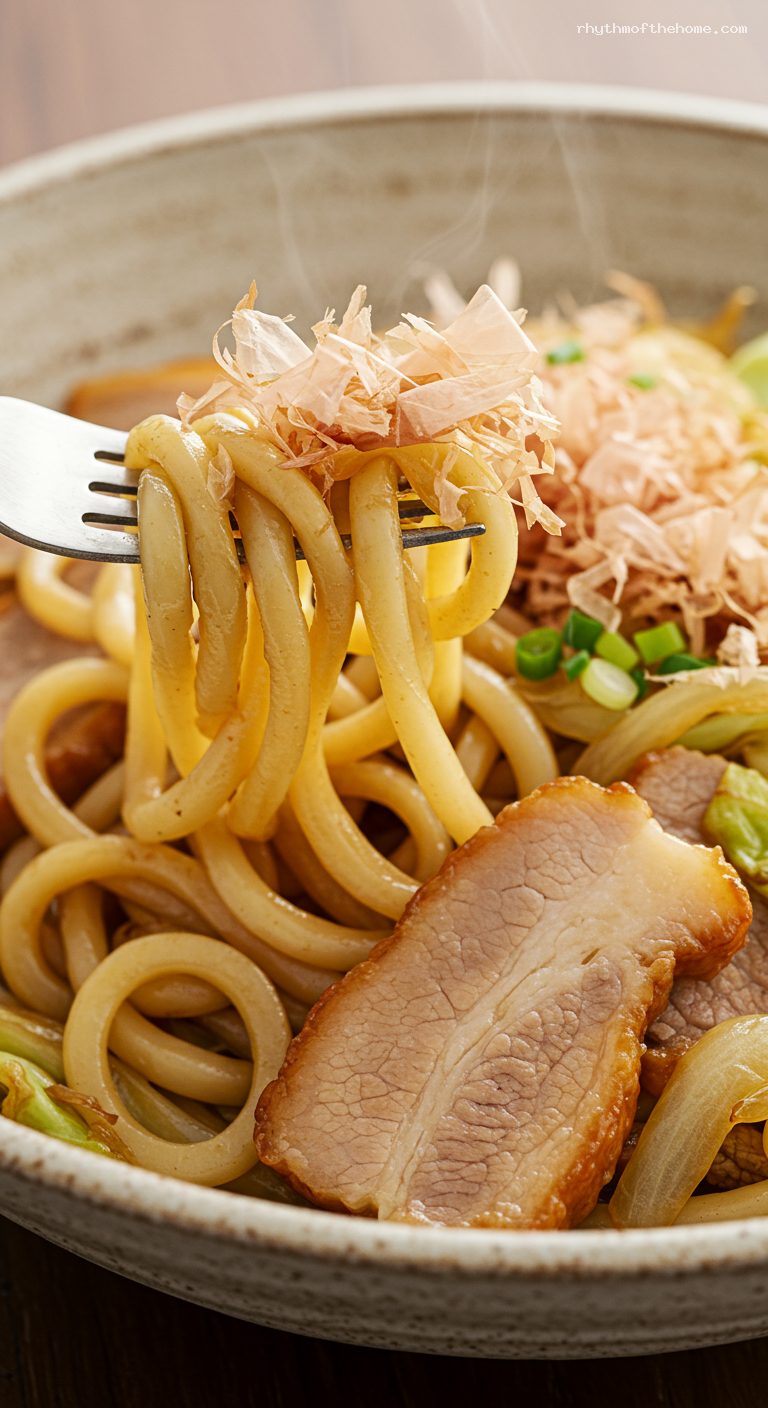
Step-by-Step Instructions
Step 1: Make the katsuobushi sauce concentrate
Pour 1/2 cup (120 ml) boiling water over 1/2 cup (5 g) katsuobushi in a heatproof cup. Steep for 5 minutes, then strain through a fine-mesh sieve, pressing gently to extract about 1/3 cup (80 ml) of bonito-infused liquid. Add the soy sauce, mirin, sake (or water), and sugar. Simmer in a small saucepan over medium heat for 2–3 minutes until slightly syrupy and reduced to about 1/3 cup (80 ml). Keep warm.
Step 2: Slice and season
Thinly slice the onion and shred the cabbage. Mince the garlic. Pat the pork dry and season lightly with a pinch of salt and black pepper (go easy—the sauce is salty). Keep everything within arm’s reach for fast cooking.
Step 3: Loosen the noodles
Bring a pot of water to a boil. For fresh or frozen udon, cook 1–2 minutes just to separate. For dried udon, cook 6–7 minutes until just shy of tender. Drain, rinse briefly to remove excess starch, and toss with 1 tsp oil to prevent sticking.
Step 4: Sear the pork hot and fast
Heat a wok or 12-inch skillet on high until lightly smoking (pan surface about 425°F/220°C; preheat 2–3 minutes). Add 1 tbsp oil and the pork in a single layer. Sear 2–3 minutes, stirring once, until browned with crisp edges and cooked through (internal 145°F/63°C). Transfer to a bowl.
Step 5: Stir-fry the onions and cabbage
In the same pan over high heat, add the onion and cook 2 minutes until translucent with charred spots. Add the cabbage and cook 2 minutes more, stirring occasionally so some edges char. Stir in the garlic and cook 30 seconds until fragrant.
Step 6: Char the noodles
Add the drained udon to the pan. Toss and press the noodles against the hot surface for 60–90 seconds to pick up a little color and smoky flavor.
Step 7: Sauce, butter, and finish with bonito
Return the pork to the pan. Pour in the warm sauce and toss 60–90 seconds until the noodles are evenly coated and glossy. Turn off the heat and stir in the butter until melted. Plate immediately and shower with 2 tbsp katsuobushi. Garnish with sliced scallions if using. Serve hot.
Pro Tips
- Steep-and-reduce for maximum umami: the quick bonito infusion plus a brief reduction gives a restaurant-style glaze.
- High heat matters: preheat the pan until it just smokes to prevent sticking and to get those tasty charred edges.
- Separate noodles before they hit the pan: a 1–2 minute blanch and a teaspoon of oil keeps them from clumping.
- Season pork lightly: the sauce carries plenty of salt; under-season the meat to balance.
- No flakes on hand? In a pinch, dissolve 1/2 tsp instant dashi (hondashi) in 1/2 cup hot water in Step 1.
Variations
- Chicken yaki udon: swap pork for 10 oz (280 g) thinly sliced chicken thigh; cook 3–4 minutes until browned.
- Vegetarian: use firm tofu (pressed, then torn into chunks) and make a quick shiitake or kombu broth in place of the bonito infusion.
- Spicy: add 1–2 tsp chili oil, tobanjan, or shichimi togarashi with the sauce.
Storage & Make-Ahead
Make the sauce up to 1 week ahead and refrigerate (reheat gently before using). Leftover yaki udon keeps 3 days in an airtight container; reheat in a skillet over medium heat with a splash of water (1–2 tbsp) to loosen the sauce. Add a small knob of butter to refresh the gloss if desired. Bonito flakes are best added just before serving.
Nutrition (per serving)
Approx. 720 calories; 28–34 g protein; 82 g carbohydrates; 28 g fat; 4 g fiber; 13 g sugars; 1,300–1,500 mg sodium. Calculated using 85% lean pork shoulder and fresh udon; values will vary with ingredients.

Leave a Reply