
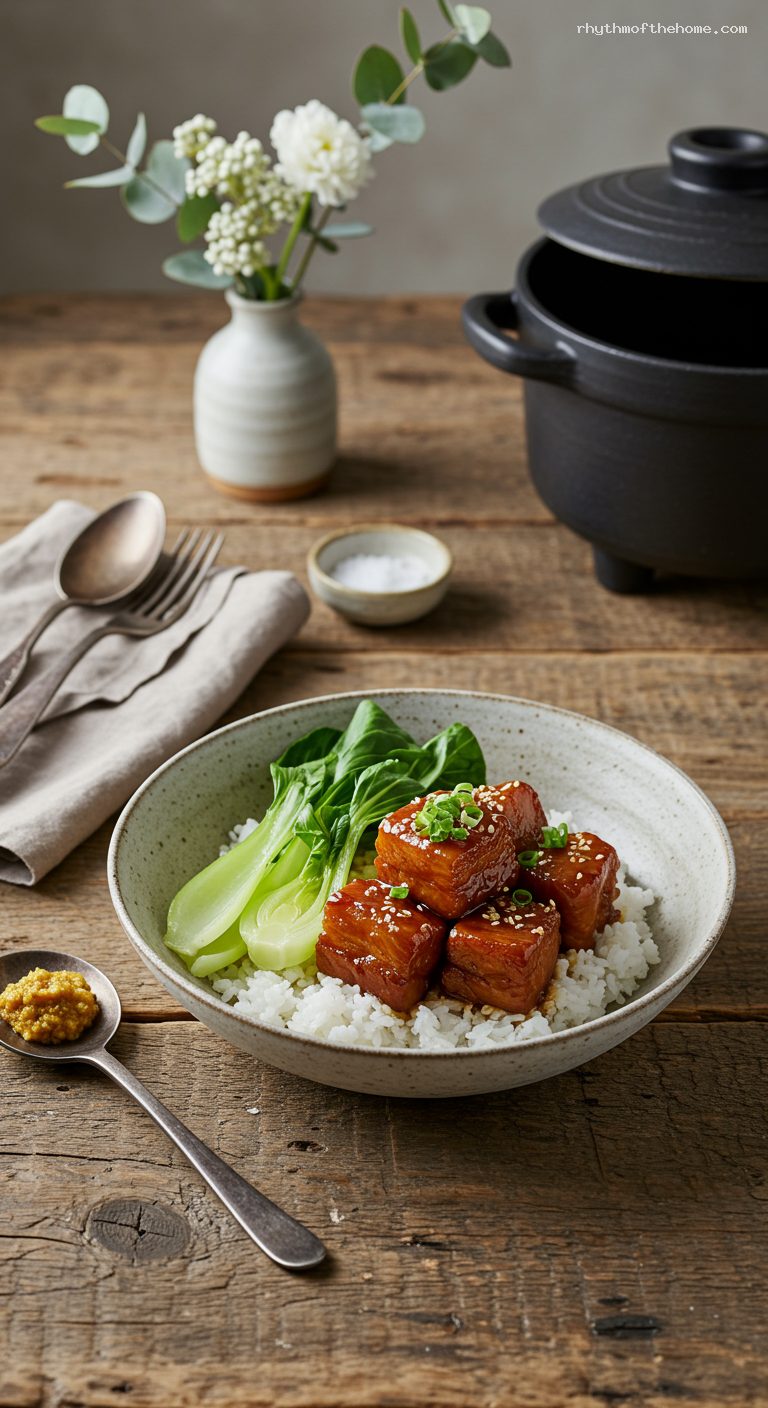
Quick Recipe Version (TL;DR)
Quick Ingredients
- 2 lb (900 g) pork belly, skin-on, cut into 2-inch (5 cm) cubes
- 1 tbsp neutral oil
- 2-inch (5 cm) ginger, sliced
- 6 scallions (green onions), whites and greens separated
- 1 cup (240 ml) sake
- 3/4 cup (180 ml) soy sauce (koikuchi)
- 1/2 cup (120 ml) mirin
- 3 tbsp (38 g) sugar
- 2 cups (480 ml) water or dashi, plus more as needed
- 12 oz (340 g) baby bok choy or spinach
- 1 tsp kosher salt (for blanching)
- 1.5 cups (285 g) Japanese short-grain rice (yields ~4 cups cooked)
- 2 tbsp Japanese hot mustard (karashi), for serving
Do This
- 1. Parboil pork 5 minutes in plenty of water; drain and rinse pork and pot.
- 2. Sear pork in 1 tbsp oil until lightly browned; add ginger and scallion whites.
- 3. Add sake and simmer 1 minute; add soy, mirin, sugar, and 2 cups water/dashi to almost cover.
- 4. Cover with a parchment drop-lid; gently simmer 2 to 2.5 hours, turning pieces every 30 minutes.
- 5. Remove pork; strain and skim fat; reduce sauce to a glossy glaze; return pork to coat.
- 6. Cook rice; blanch greens 45–60 seconds; plate pork over rice, add greens, garnish scallions, serve with hot mustard.
Why You’ll Love This Recipe
- Spoon-tender pork belly with a deep, glossy soy-sake-mirin glaze.
- Classic Japanese technique yields clean flavors and a beautiful, clear sauce.
- Balanced plate: rich pork, bright greens, fluffy rice, and a hit of hot mustard.
- Make-ahead friendly and even better the next day.
Grocery List
- Produce: Ginger, scallions (green onions), baby bok choy or spinach
- Dairy: None
- Pantry: Pork belly, sake, soy sauce, mirin, sugar, Japanese short-grain rice, neutral oil, kosher salt, Japanese hot mustard (karashi)
Full Ingredients
Pork Belly and Braising Liquid
- 2 lb (900 g) pork belly, skin-on, cut into 2-inch (5 cm) cubes
- 1 tbsp neutral oil (canola or grapeseed)
- 2-inch (5 cm) piece fresh ginger, sliced into 1/4-inch (6 mm) coins
- 6 scallions (green onions), white parts halved, green parts thinly sliced for garnish
- 1 cup (240 ml) sake
- 3/4 cup (180 ml) soy sauce (Japanese koikuchi)
- 1/2 cup (120 ml) mirin
- 3 tbsp (38 g) sugar (rock sugar if you have it)
- 2 cups (480 ml) water or dashi, plus more as needed to keep pork just covered
- 1 sheet parchment paper (for drop-lid/otoshibuta, optional)
Greens and Rice
- 12 oz (340 g) baby bok choy or spinach, trimmed
- 1 tsp kosher salt (for blanching water)
- 1.5 cups (285 g) Japanese short-grain rice, rinsed until water runs mostly clear
To Serve
- 2 tbsp Japanese hot mustard (karashi), or substitute 1 tbsp Dijon mixed with 1 tsp English mustard powder and 1 tsp water
- Reserved sliced scallion greens (from above)
Step-by-Step Instructions
Step 1: Parboil to Remove Impurities
Place the pork belly cubes in a large pot and cover with cold water by 2 inches (5 cm). Bring to a boil over high heat, then reduce to a lively simmer and cook for 5 minutes. Drain the pork in a colander, rinse the pieces under warm water, and rinse out the pot. This step removes scum and excess fat for a cleaner, clearer final sauce.
Step 2: Brown the Pork and Aromatics
Return the clean pot to medium-high heat and add 1 tbsp neutral oil. Pat the pork dry, then sear in batches until lightly browned on two or three sides, about 6–8 minutes total. Add the ginger slices and the white parts of the scallions; sauté 1 minute until fragrant.
Step 3: Build the Braise
Pour in the sake and simmer 1 minute to boil off the alcohol. Add soy sauce, mirin, sugar, and 2 cups (480 ml) water or dashi. The liquid should come just to the top of the pork; add a splash more water if needed. Bring to a gentle simmer (look for a few lazy bubbles), then place a parchment drop-lid directly on the surface and partially cover the pot with the lid.
Step 4: Low-and-Slow Simmer
Maintain a very gentle simmer at about 180–190°F (82–88°C) for 2 to 2.5 hours, turning the pork every 30 minutes. Add small amounts of hot water if the liquid drops below the meat. The pork is done when a skewer or chopstick slides through with little resistance. Oven option: Transfer the covered pot to a 300°F (150°C) oven for 2.5 hours.
Step 5: Skim, Strain, and Reduce to a Glaze
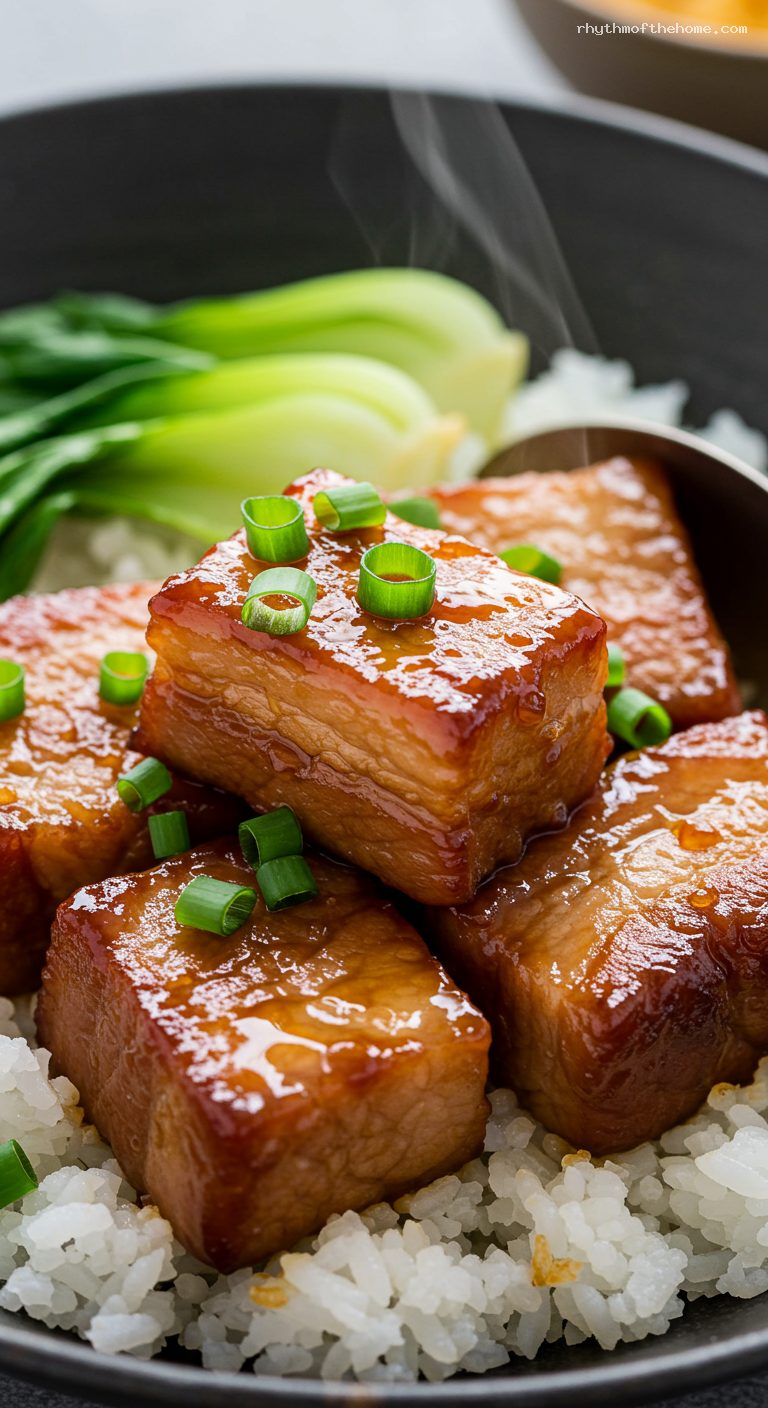
Transfer the pork to a bowl. Strain the braising liquid into a saucepan, pressing on solids; discard aromatics. Skim off fat (a ladle and paper towel help), then simmer the liquid over medium heat until reduced to about 1.5 cups (360 ml) and glossy, 10–15 minutes. Return the pork to the pan and gently tumble for 5 minutes to lacquer the pieces.
Step 6: Cook Rice and Blanch Greens
While the sauce reduces, cook the rinsed rice according to package directions or in a rice cooker (1.5 cups rice with 1.6 cups water is a typical ratio). For the greens, bring a large pot of water to a boil with 1 tsp salt. Blanch baby bok choy for 45–60 seconds (spinach 20–30 seconds), then drain and briefly rinse with cold water. Squeeze out excess water gently.
Step 7: Plate and Serve
Spoon hot rice into bowls. Nestle in 3–4 pieces of glazed pork and some blanched greens. Spoon extra sauce over the pork and rice. Garnish with the sliced scallion greens and serve a small dollop of karashi on the side. Eat a bite of pork, then follow with a tiny dab of mustard for a bright, nose-tingling finish.
Pro Tips
- Use a parchment drop-lid (otoshibuta) so the pork stays submerged and basted without breaking apart.
- Keep the simmer gentle; boiling will toughen the meat and cloud the sauce.
- For deeper umami, use dashi instead of water in the braise.
- Make it ahead and chill overnight; fat will solidify for easy removal and the flavor improves.
- Rock sugar melts slowly and gives the glaze a beautiful sheen, but granulated sugar works fine.
Variations
- Daikon and Soy Eggs: Add 1 lb (450 g) peeled daikon rounds for the last 45 minutes of braising. For eggs, add peeled soft-boiled eggs to the reducing sauce for 10 minutes to marinate and glaze.
- Pressure Cooker/Instant Pot: After Step 3, cook on High Pressure for 35 minutes; natural release 15 minutes. Reduce the strained liquid on the stove, then glaze as in Step 5.
- Alcohol-Free: Replace the 1 cup sake with 3/4 cup (180 ml) dashi plus 1/4 cup (60 ml) unsweetened apple juice and 1 tsp rice vinegar.
Storage & Make-Ahead
Refrigerate pork in its sauce for up to 4 days or freeze up to 3 months. Reheat gently on the stove with a splash of water until warmed through and the sauce is glossy. The dish improves after a night in the fridge; skim solidified fat before reheating. Keep mustard separate and add fresh before serving.
Nutrition (per serving)
Approximate with 1 cup cooked rice and greens: 930 calories; 58 g fat; 56 g carbohydrates; 33 g protein; 2 g fiber; ~2000 mg sodium. Actual values will vary based on trimming and how much sauce/fat you consume.

Leave a Reply