
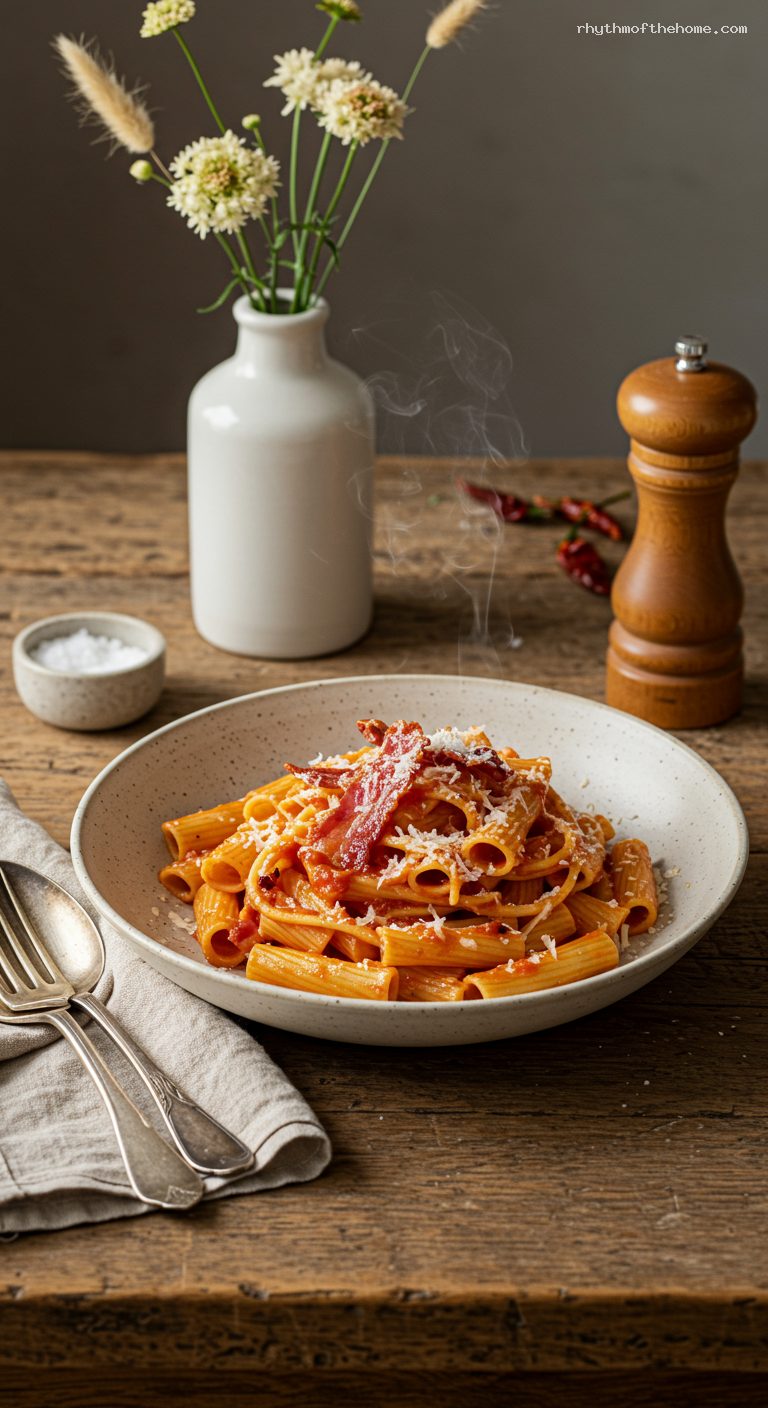
Quick Recipe Version (TL;DR)
Quick Ingredients
- 12 oz (340 g) bucatini
- 6 oz (170 g) guanciale, cut into 1/4-inch batons
- 1/2 cup (120 ml) dry white wine
- 1 can (28 oz/800 g) whole peeled San Marzano tomatoes, crushed by hand
- 1/2 tsp crushed red pepper flakes (adjust to taste)
- 1 cup (90 g) finely grated Pecorino Romano, plus more to serve
- 1 tsp extra-virgin olive oil (optional)
- Kosher salt and freshly ground black pepper
Do This
- 1. Bring 4 qt (3.8 L) water to a rolling boil (212°F/100°C); salt with 2 tbsp kosher salt.
- 2. Render guanciale in a large skillet over medium-low heat (pan ~300–325°F/150–165°C) 8–10 min until golden and crisp; spoon off all but 2 tbsp fat.
- 3. Deglaze with white wine; simmer 2–3 min until nearly evaporated and skillet is glossy.
- 4. Stir in crushed tomatoes and red pepper; simmer gently (about 200°F/93°C) 12–15 min until slightly thickened.
- 5. Cook bucatini until just shy of al dente (about 7–8 min); reserve 1 cup (240 ml) pasta water.
- 6. Toss pasta in sauce with 1/2 cup pasta water 1–2 min; off heat, vigorously mix in Pecorino to make a glossy emulsion. Season with black pepper.
- 7. Plate, top with a little reserved crisp guanciale (optional) and extra Pecorino; serve immediately.
Why You’ll Love This Recipe
- Classic Roman flavor: rich guanciale, bright tomatoes, and sharp Pecorino in perfect balance.
- Silky, glossy sauce that clings to every hollow strand of bucatini.
- Weeknight-friendly: pantry staples, 40 minutes, restaurant-level results.
- Techniques that matter: proper rendering, wine deglaze, and a cheese-emulsified finish.
Grocery List
- Produce: 1 small fresh red chili (optional, or use flakes)
- Dairy: Pecorino Romano
- Pantry: Bucatini, canned whole peeled San Marzano tomatoes, dry white wine, guanciale, extra-virgin olive oil, kosher salt, black pepper, crushed red pepper flakes
Full Ingredients
Sauce
- 6 oz (170 g) guanciale, cut into 1/4-inch (6 mm) batons
- 1 tsp extra-virgin olive oil (optional, only if your guanciale is very lean)
- 1/2 cup (120 ml) dry white wine
- 1 can (28 oz/800 g) whole peeled San Marzano tomatoes, crushed by hand
- 1/2 tsp crushed red pepper flakes (or 1 small fresh red chili, thinly sliced)
- Freshly ground black pepper, to taste (start with 1/2 tsp)
Pasta & Finish
- 12 oz (340 g) bucatini
- 4 qt (3.8 L) water + 2 tbsp kosher salt (for boiling)
- 1 cup (90 g) finely grated Pecorino Romano, plus more for serving
- Up to 1 cup (240 ml) reserved pasta cooking water
Step-by-Step Instructions
Step 1: Set up your pot and prep
Bring 4 quarts (3.8 L) of water to a rolling boil (212°F/100°C) in a large pot. Add 2 tablespoons of kosher salt. While the water heats, cut the guanciale into 1/4-inch (6 mm) batons and crush the tomatoes by hand in a bowl. Finely grate the Pecorino Romano and set it aside.
Step 2: Render the guanciale until crisp
Place a large, wide skillet over medium-low heat (pan surface about 300–325°F/150–165°C). Add the guanciale (and 1 teaspoon olive oil only if the guanciale is very lean). Cook, stirring occasionally, 8–10 minutes until the fat has rendered and the edges are golden and crisp. Spoon off excess fat, leaving 2 tablespoons in the pan. Reserve a small handful of crisp guanciale for garnish if you like.
Step 3: Deglaze with white wine
Increase the heat to medium. Pour in 1/2 cup (120 ml) dry white wine to deglaze, scraping up any browned bits. Simmer 2–3 minutes until the wine is mostly evaporated and the pan looks glossy and fragrant.
Step 4: Build and simmer the sauce
Stir in the crushed San Marzano tomatoes and the red pepper flakes. Reduce heat to maintain a gentle simmer (about 200°F/93°C) and cook 12–15 minutes, stirring occasionally, until the sauce slightly thickens and the fat is emulsified into the tomatoes. Season with several grinds of black pepper.
Step 5: Cook the bucatini
Add bucatini to the boiling water and cook until just shy of al dente, typically 1–2 minutes less than package time (about 7–8 minutes). Reserve 1 cup (240 ml) of pasta water before draining.
Step 6: Marry pasta and sauce
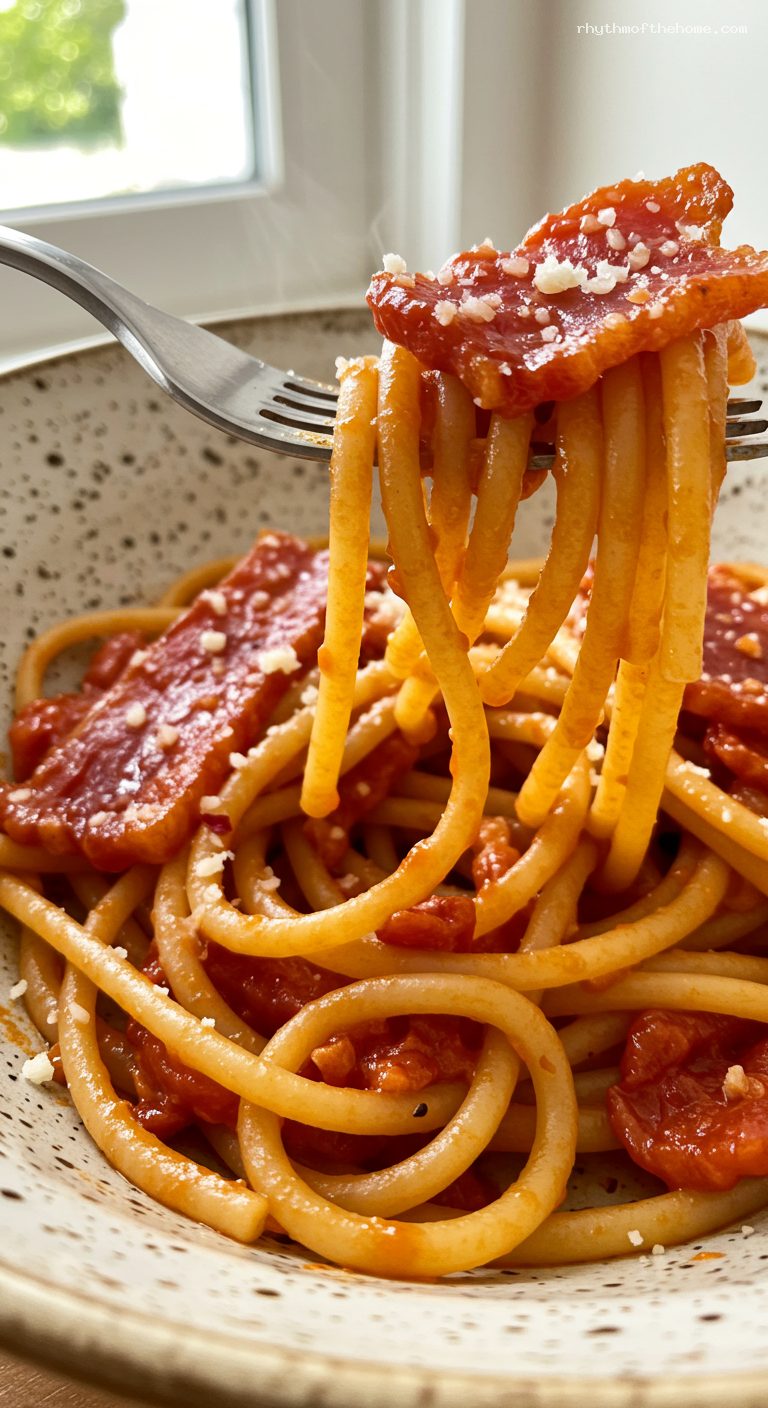
Transfer drained bucatini to the skillet with the sauce over medium heat. Add 1/2 cup (120 ml) pasta water and toss vigorously 60–90 seconds until the sauce loosens and coats the pasta. Remove the pan from heat and let it stand 15–20 seconds so it stops bubbling (important for the cheese to emulsify, not clump). Sprinkle in the Pecorino Romano in 2–3 additions, tossing or stirring quickly to form a glossy, creamy sauce. Add more pasta water a splash at a time if needed for a silky sheen.
Step 7: Finish and serve
Taste and adjust with black pepper and salt only if needed (Pecorino and guanciale are salty). Plate immediately, topping with the reserved crisp guanciale and extra Pecorino. Serve hot.
Pro Tips
- Control the simmer: A gentle bubble (about 200°F/93°C) prevents the tomatoes from tasting harsh and keeps the fat emulsified.
- Cheese off the heat: Always remove the pan from heat before adding Pecorino to avoid clumping and graininess.
- Salt carefully: The pasta water is salted, and both guanciale and Pecorino are salty; taste before adding any extra salt.
- Right cut, right crisp: Batons of guanciale render evenly and keep a pleasant chew; avoid ultra-thin slices which can over-crisp.
- Reserve pasta water: It is starchy and seasoned—your best tool for a glossy, perfectly thickened sauce.
Variations
- Pancetta Swap: If guanciale is unavailable, use pancetta. Reduce added salt slightly and consider a touch more black pepper for depth.
- Smoky Heat: Use a pinch of Calabrian chili paste or smoked chili flakes in place of standard red pepper for a different profile.
- Onion-Style Roman: For a Roman trattoria twist, soften 2 tablespoons finely minced onion in the rendered fat for 2–3 minutes before adding wine and tomatoes.
Storage & Make-Ahead
The sauce (without pasta or cheese) can be made up to 3 days ahead; cool, cover, and refrigerate. Reheat gently until barely simmering, then proceed with cooking the pasta and finishing with Pecorino. Fully assembled pasta is best eaten immediately; leftovers can be refrigerated up to 2 days and reheated gently with a splash of water, then refreshed with a little grated Pecorino. Crisp reserved guanciale in a dry skillet for 30–60 seconds before topping leftovers to revive texture.
Nutrition (per serving)
Approximate: 700 calories; 31 g fat; 67 g carbohydrates; 26 g protein; 4 g fiber; 1100 mg sodium. Values will vary based on brands and exact saltiness of guanciale and Pecorino.

Leave a Reply