
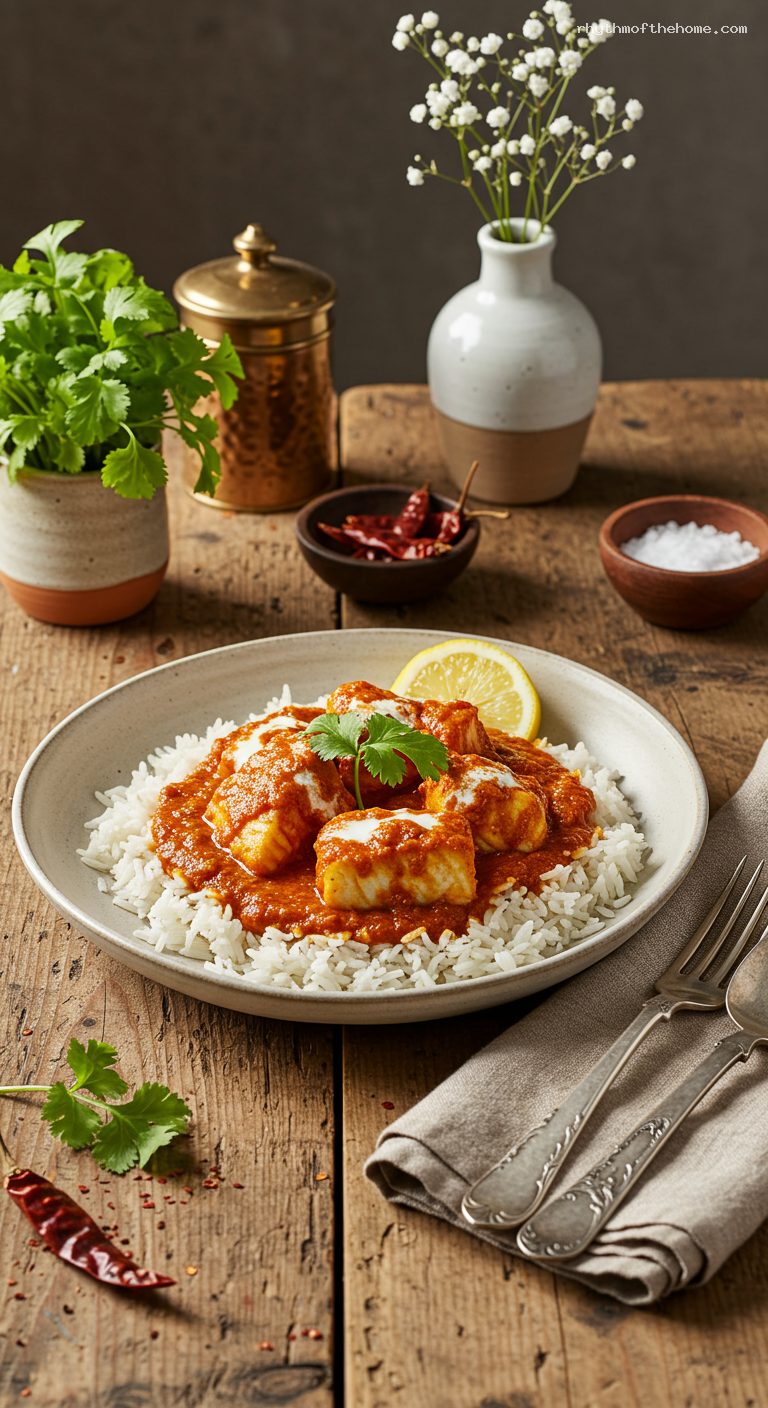
Quick Recipe Version (TL;DR)
Quick Ingredients
- 1.5 lb (680 g) firm white fish (cod, halibut, haddock), cut in 1-inch cubes
- Marinade: 1/2 cup (120 g) plain whole-milk yogurt, 1 tbsp lemon juice, 1 tbsp ginger-garlic paste, 1 tsp kosher salt, 1 tsp garam masala, 1 tsp ground coriander, 1/2 tsp turmeric, 1 tsp Kashmiri chili (or 1/2 tsp paprika + 1/4 tsp cayenne), 2 tbsp oil
- Sauce: 2 tbsp ghee, 2 tbsp butter, 1 large onion (10 oz/280 g) finely chopped, 1 tbsp ginger-garlic paste, 1 tsp cumin seeds, 1 tbsp tomato paste, 1.5 cups (360 ml) tomato puree, 1 tsp sugar, 1.5 tsp garam masala, 1 tsp ground cumin, 1 tsp ground coriander, 1/2 tsp turmeric, 1 tsp Kashmiri chili (or 1/2 tsp paprika), 1 tsp crushed kasoori methi, 1/2 cup (120 ml) heavy cream, 1/2 cup (120 ml) water, 1 to 1.5 tsp kosher salt
- Rice: 1 cup (200 g) basmati rice, 1.5 cups (360 ml) water, 1/2 tsp salt, 1 tsp ghee or butter
- Garnish: 1/4 cup chopped cilantro, lemon wedges
Do This
- 1. Marinate fish 20 minutes in yogurt, lemon, spices, and oil.
- 2. Rinse and soak basmati 20 minutes; cook with 1.5 cups water, salt, and ghee 12 minutes, rest 5 minutes.
- 3. Sauté onion in ghee and butter 8–10 minutes; add ginger-garlic and cumin seeds 1 minute.
- 4. Stir in spices and tomato paste 1 minute; add tomato puree, sugar, water, and salt; simmer 8–10 minutes.
- 5. Broil fish on High (rack 6 inches from heat) 6–8 minutes until lightly charred and 130–135°F.
- 6. Add cream and crushed kasoori methi to sauce; slide in fish and simmer 1–2 minutes to 145°F.
- 7. Taste, add lemon and salt if needed; serve over fluffed basmati, garnish with cilantro.
Why You’ll Love This Recipe
- Restaurant-level flavor at home: smoky broiled fish meets a silky, spiced tomato-cream sauce.
- Fast weeknight timing: fish cooks in minutes, and the sauce uses pantry spices.
- Balanced heat: Kashmiri chili brings color and gentle warmth without overwhelming spice.
- Flexible: swap in coconut milk for dairy-free or use salmon for a richer twist.
Grocery List
- Produce: 1 large onion, fresh ginger, garlic, lemon, cilantro
- Dairy: Plain whole-milk yogurt, heavy cream, butter (or ghee)
- Pantry: Firm white fish, basmati rice, tomato paste, tomato puree, oil, kasoori methi (dried fenugreek), garam masala, cumin seeds, ground cumin, ground coriander, turmeric, Kashmiri chili (or paprika and cayenne), sugar, kosher salt
Full Ingredients
Fish Tikka Marinade
- 1.5 lb (680 g) firm white fish (cod, halibut, haddock), cut into 1-inch cubes
- 1/2 cup (120 g) plain whole-milk yogurt
- 1 tbsp freshly squeezed lemon juice
- 1 tbsp ginger-garlic paste (or 1.5 tsp grated ginger + 1.5 tsp minced garlic)
- 1 tsp kosher salt
- 1 tsp garam masala
- 1 tsp ground coriander
- 1/2 tsp ground turmeric
- 1 tsp Kashmiri chili powder (or 1/2 tsp paprika + 1/4 tsp cayenne)
- 2 tbsp neutral oil, plus more for the rack
Masala Sauce
- 2 tbsp ghee
- 2 tbsp unsalted butter
- 1 large yellow onion (about 10 oz/280 g), finely chopped
- 1 tbsp ginger-garlic paste
- 1 tsp cumin seeds
- 1 tbsp tomato paste
- 1.5 cups (360 ml) tomato puree (passata)
- 1 tsp sugar (balances acidity)
- 1.5 tsp garam masala
- 1 tsp ground cumin
- 1 tsp ground coriander
- 1/2 tsp ground turmeric
- 1 tsp Kashmiri chili powder (or 1/2 tsp sweet paprika for milder)
- 1/2 cup (120 ml) water, plus more as needed
- 1/2 cup (120 ml) heavy cream
- 1 tsp kasoori methi (dried fenugreek leaves), crushed between fingers
- 1 to 1.5 tsp kosher salt, to taste
Rice and Serving
- 1 cup (200 g) basmati rice, rinsed until water runs clear
- 1.5 cups (360 ml) water
- 1/2 tsp kosher salt
- 1 tsp ghee or butter
- 1/4 cup chopped fresh cilantro, plus extra sprigs for garnish
- Lemon wedges, for serving
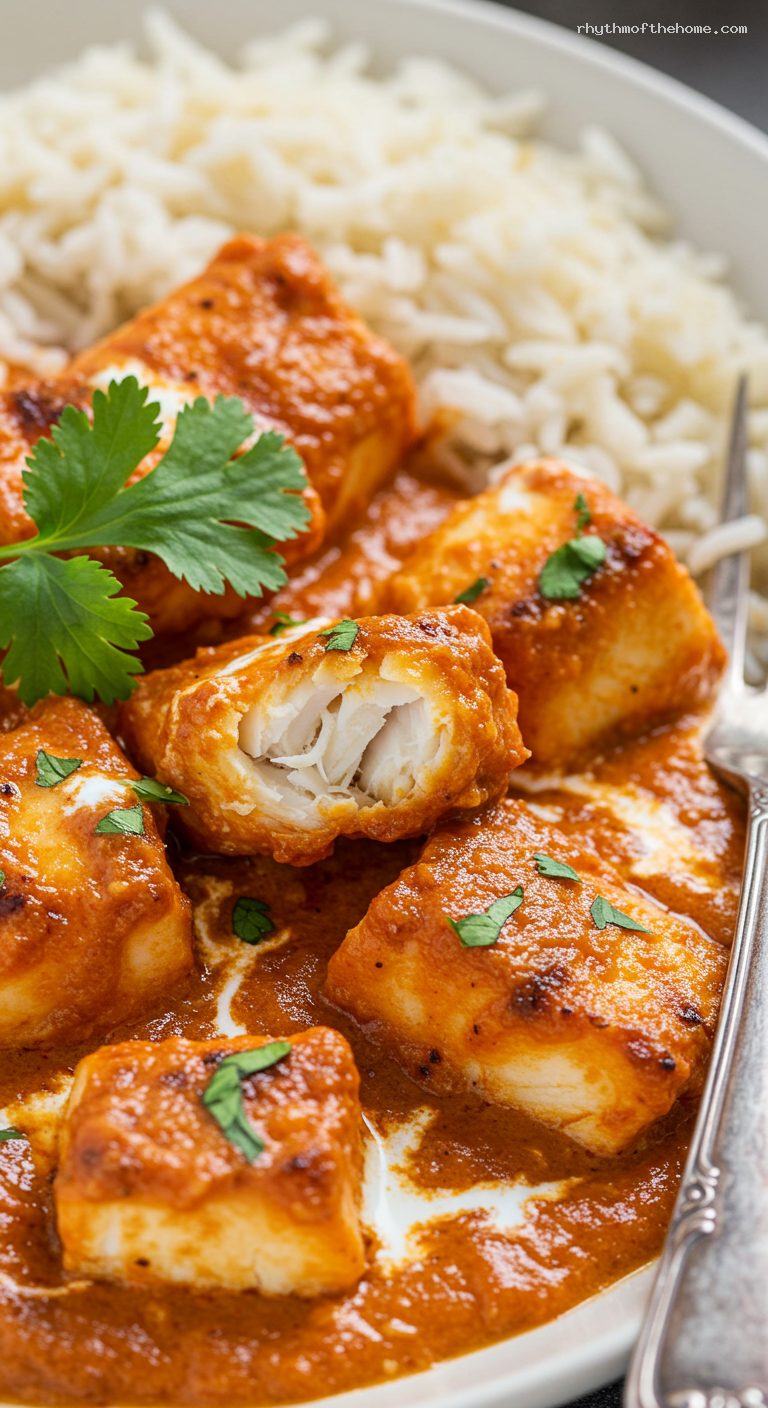
Step-by-Step Instructions
Step 1: Rinse and soak the basmati
Place the rice in a fine-mesh strainer and rinse under cold water, swishing with your fingers, until the water runs mostly clear (about 1 minute). Transfer to a bowl, cover with cool water, and soak for 20 minutes. This helps the grains cook long and separate.
Step 2: Marinate the fish
In a large bowl, whisk the yogurt, lemon juice, ginger-garlic paste, salt, garam masala, ground coriander, turmeric, Kashmiri chili, and oil. Add the fish cubes and gently turn to coat evenly. Cover and marinate 20 minutes at room temperature (or up to 2 hours in the refrigerator). Do not exceed 2 hours or the acid can start to cure the fish.
Step 3: Start the masala base
In a wide skillet or Dutch oven, heat the ghee and butter over medium heat. Add the onion and a pinch of salt; cook, stirring occasionally, until soft and golden at the edges, 8–10 minutes. Add the ginger-garlic paste and cumin seeds; cook until fragrant, 60 seconds.
Step 4: Build the sauce
Stir in the tomato paste and cook 1 minute. Add tomato puree, sugar, garam masala, ground cumin, ground coriander, turmeric, Kashmiri chili, water, and 1 tsp kosher salt. Simmer uncovered over medium-low, stirring occasionally, until thickened and glossy, 8–10 minutes. If it reduces too fast, add a splash of water. Turn heat to low and keep warm.
Step 5: Cook the rice
Drain the soaked rice. In a small pot, bring 1.5 cups water to a boil with 1/2 tsp salt and 1 tsp ghee. Stir in rice, return to a gentle boil, then cover and reduce heat to low. Cook 12 minutes. Turn off heat and rest, covered, 5 minutes, then fluff with a fork.
Step 6: Preheat the broiler and prepare the pan
Position an oven rack 6 inches below the broiler element. Preheat broiler to High (about 500–550°F) for at least 5 minutes. Line a rimmed sheet pan with foil for easy cleanup and place a lightly oiled wire rack on top. Arrange the marinated fish in a single layer, letting excess marinade drip off.
Step 7: Broil the fish tikka
Broil 6–8 minutes, rotating the pan halfway, until the fish is lightly charred in spots and opaque at the edges. The internal temperature should be around 130–135°F; it will finish in the sauce. If your broiler is very strong, check at 5 minutes to avoid overcooking.
Step 8: Finish the sauce and bring it together
Stir the cream into the sauce, bring to a gentle simmer, and crush the kasoori methi between your fingers directly into the pan. Taste and adjust salt. Slide in the broiled fish and simmer 1–2 minutes until just cooked through and flaky (145°F). Squeeze in a little lemon to brighten. Serve over fluffed basmati rice, shower with chopped cilantro, and add extra sauce on top.
Pro Tips
- For best char with minimal sticking, oil the rack well and let excess marinade drip off before broiling.
- Kashmiri chili gives vibrant color with moderate heat; swap for sweet paprika if you prefer very mild.
- Fish cooks fast: aim to broil to just under done, then finish gently in the sauce to 145°F.
- Crush kasoori methi in your hand to release aroma just before adding; it’s a hallmark of tikka masala flavor.
- Passata makes a smooth, restaurant-style sauce; if using crushed tomatoes, blend briefly for silkiness.
Variations
- Dairy-free: use full-fat coconut milk instead of cream and oil instead of ghee/butter.
- Salmon tikka masala: substitute salmon cubes and reduce broil time to 5–6 minutes.
- Shrimp tikka masala: use large shrimp; marinate 15 minutes and broil 3–4 minutes total.
Storage & Make-Ahead
The sauce can be made up to 3 days ahead and refrigerated, or frozen for up to 2 months. Reheat gently and thin with water as needed. Marinate fish up to 2 hours max; longer can affect texture. Leftover fish tikka masala keeps 1–2 days in the refrigerator; reheat gently on low to avoid overcooking the fish. Cooked rice keeps 3–4 days chilled; reheat with a sprinkle of water.
Nutrition (per serving)
Approximate: 650 calories; 35 g protein; 22 g fat; 60 g carbohydrates; 4 g fiber; 1,050 mg sodium. Values will vary based on fish type, salt, and exact oil/butter absorbed.

Leave a Reply