
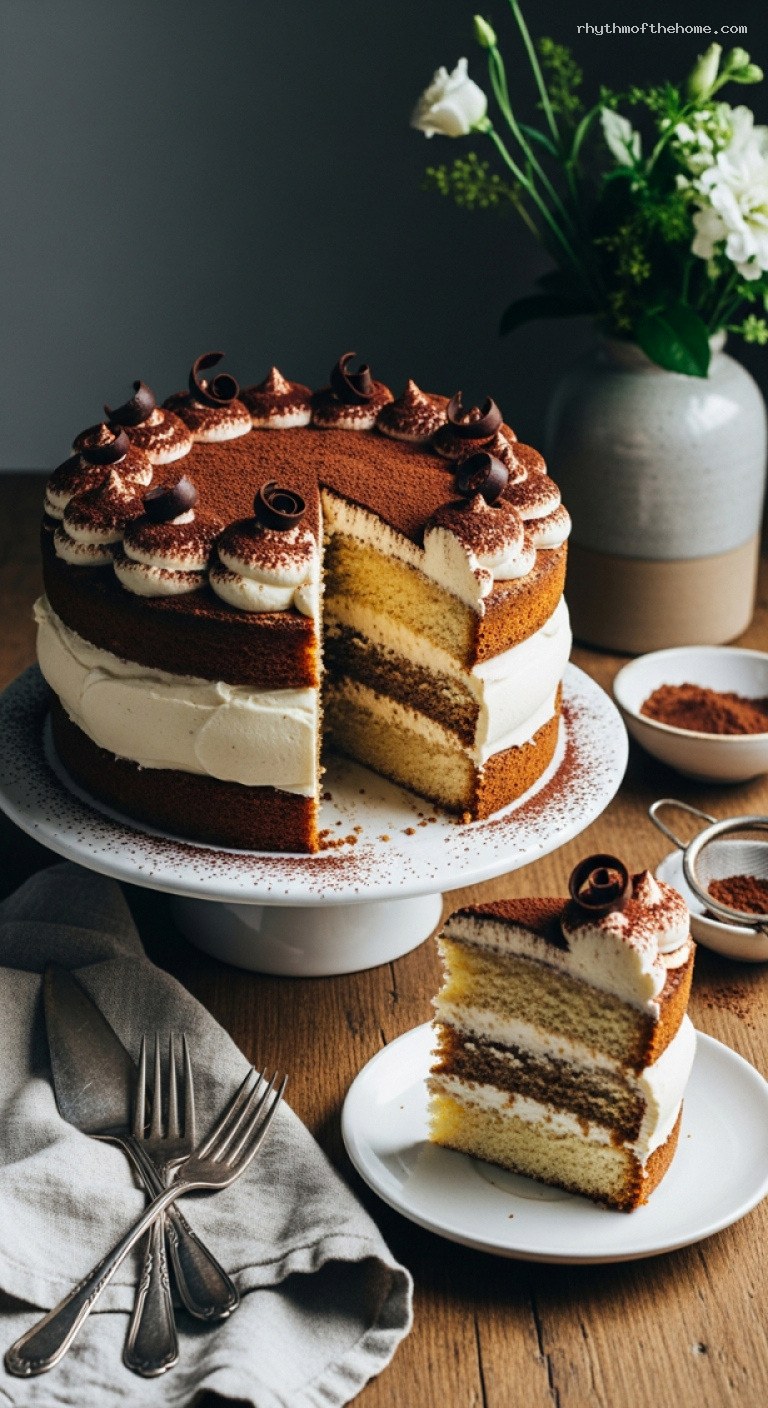
Quick Recipe Version (TL;DR)
Quick Ingredients
- 1 1/2 cups (195 g) all-purpose flour
- 1 1/2 tsp baking powder + 1/2 tsp fine salt
- 4 large eggs, room temperature
- 1 1/4 cups (250 g) granulated sugar (plus 1/4 cup / 50 g for the syrup)
- 1/2 cup (120 ml) whole milk + 1/4 cup (57 g) unsalted butter
- 3 tsp vanilla extract, divided
- 1 1/4 cups (300 ml) hot espresso or very strong coffee
- 3 Tbsp coffee liqueur, Marsala, or dark rum (optional)
- 1 3/4 cups (420 ml) cold heavy cream
- 1 1/2 cups (340 g) cold mascarpone cheese
- 2/3 cup (80 g) powdered sugar
- 2–3 Tbsp unsweetened cocoa powder, plus dark chocolate shavings (optional)
Do This
- 1. Heat oven to 350°F (180°C). Grease and line two 9-inch round cake pans with parchment. Sift flour, baking powder, and salt.
- 2. Beat eggs and 1 1/4 cups sugar on high until very pale and thick (about 5–7 minutes). Gently fold in dry ingredients.
- 3. Warm milk, butter, and 1 tsp vanilla until butter melts. Fold into batter. Divide between pans and bake 20–25 minutes. Cool completely.
- 4. Stir hot espresso with 1/4 cup sugar, liqueur (if using), and 1 tsp vanilla until sugar dissolves. Cool to room temperature.
- 5. Beat cold mascarpone, powdered sugar, 1 tsp vanilla, and a pinch of salt just to combine. Slowly add cold cream and whip to medium-firm peaks.
- 6. Level cakes. Place first layer on a plate, poke with a skewer, and brush with half the espresso syrup. Spread with mascarpone cream. Top with second layer, soak with remaining syrup, and frost top and sides.
- 7. Chill at least 4 hours or overnight. Before serving, dust generously with cocoa and garnish with chocolate shavings. Slice and serve cold.
Why You’ll Love This Recipe
- All the classic tiramisu flavors in a neat, sliceable layer cake format.
- Light, espresso-soaked sponge stays tender but holds its shape beautifully.
- Creamy, egg-free mascarpone filling feels luxurious yet is simple and safe to make at home.
- Perfect make-ahead dessert for dinner parties, holidays, or special occasions.
Grocery List
- Produce: Optional fresh berries or mint for garnish (if desired).
- Dairy: Eggs, whole milk, unsalted butter, heavy cream, mascarpone cheese.
- Pantry: All-purpose flour, granulated sugar, powdered sugar, fine salt, vanilla extract, espresso or strong coffee, coffee liqueur/Marsala/dark rum (optional), unsweetened cocoa powder, dark chocolate bar for shavings (optional), nonstick spray or extra butter for pans.
Full Ingredients
Sponge Cake Layers
- 1 1/2 cups (195 g) all-purpose flour, spooned and leveled
- 1 1/2 tsp baking powder
- 1/2 tsp fine sea salt
- 4 large eggs, at room temperature
- 1 1/4 cups (250 g) granulated sugar
- 1/2 cup (120 ml) whole milk
- 1/4 cup (57 g) unsalted butter
- 2 tsp vanilla extract, divided (1 tsp for cake, 1 tsp for syrup)
- Nonstick spray or extra butter, for greasing pans
Espresso Soaking Syrup
- 1 1/4 cups (300 ml) freshly brewed espresso or very strong coffee, hot
- 1/4 cup (50 g) granulated sugar
- 3 Tbsp coffee liqueur, Marsala wine, or dark rum (optional but traditional)
- 1 tsp vanilla extract
Mascarpone Cream Filling & Frosting
- 1 1/2 cups (340 g) mascarpone cheese, cold
- 2/3 cup (80 g) powdered sugar, sifted
- 1 tsp vanilla extract
- 1 pinch fine sea salt
- 1 3/4 cups (420 ml) heavy cream or heavy whipping cream, very cold
To Finish
- 2–3 Tbsp unsweetened cocoa powder, for dusting
- 1 oz (30 g) dark chocolate, shaved into curls or finely grated (optional)
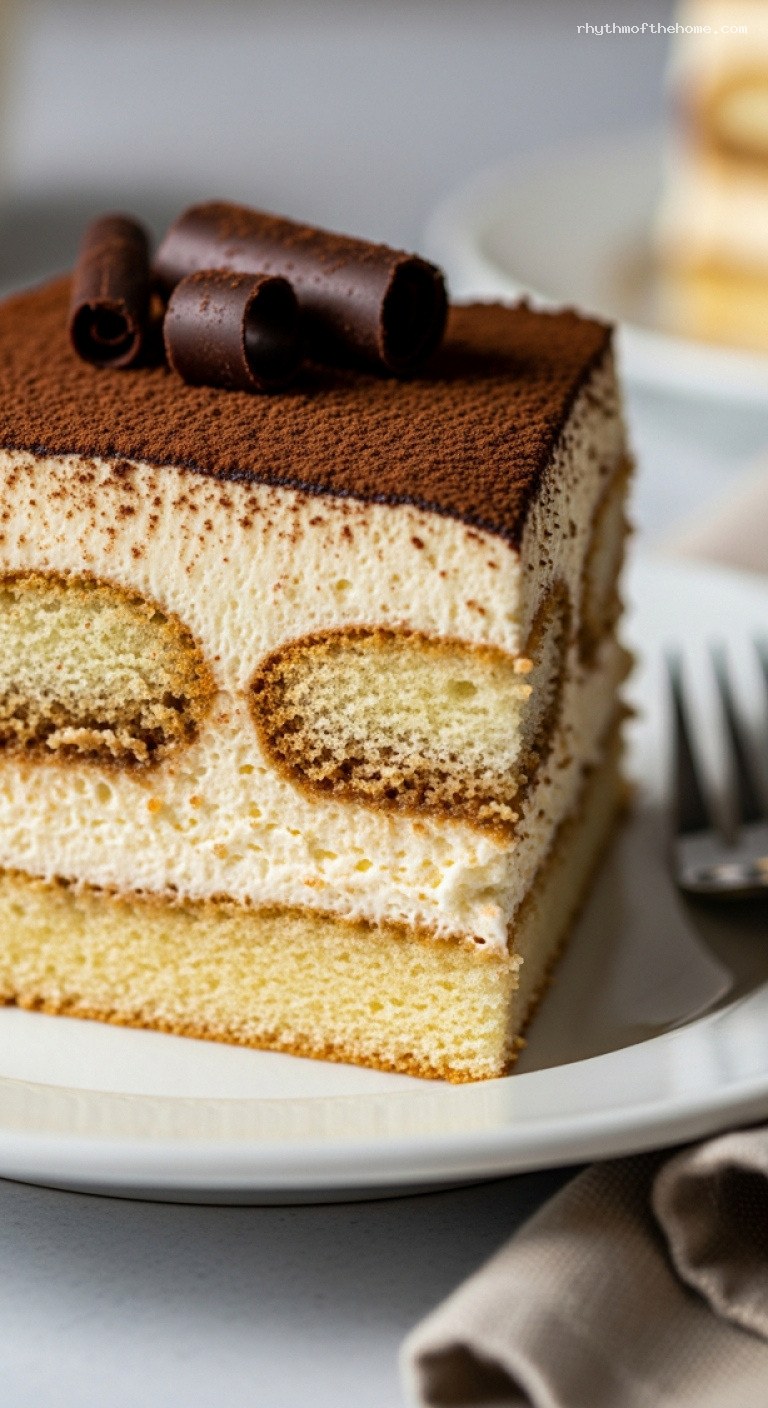
Step-by-Step Instructions
Step 1: Prep your pans and ingredients
Preheat your oven to 350°F (180°C) with a rack in the center. Grease two 9-inch (23 cm) round cake pans with butter or nonstick spray. Line the bottoms with parchment paper rounds, then lightly grease the parchment as well. This helps the delicate sponge release cleanly.
Set out all your ingredients. Make sure the eggs are at room temperature for maximum volume when whipped. Sift together the flour, baking powder, and salt into a medium bowl. In a small saucepan, combine the milk and butter but do not heat yet. Having everything measured and ready will make the batter come together smoothly.
Step 2: Make the light sponge batter
In a large mixing bowl (or the bowl of a stand mixer fitted with the whisk attachment), add the room-temperature eggs and 1 1/4 cups (250 g) granulated sugar. Beat on medium-high to high speed for about 5–7 minutes, until the mixture is very pale, thick, and has at least doubled in volume. When you lift the whisk, the batter should fall back in a thick ribbon that sits on the surface for a few seconds before slowly disappearing.
While the eggs whip, gently warm the milk and butter over low heat just until the butter melts and the mixture is steaming but not boiling. Remove from heat and stir in 1 teaspoon vanilla extract.
Once the egg mixture is thick and airy, sift about one-third of the flour mixture over the top and gently fold in with a spatula, using broad, sweeping motions and rotating the bowl. Repeat with the remaining flour in two more additions, folding just until no dry streaks remain. Finally, slowly pour the warm milk–butter mixture around the edges of the bowl and fold it in until fully incorporated. Work gently to preserve as much air as possible.
Step 3: Bake and cool the cake layers
Divide the batter evenly between the two prepared pans, smoothing the tops with a spatula. Tap each pan lightly on the counter once or twice to remove any large air bubbles.
Bake for 20–25 minutes, or until the tops are golden, the edges are pulling slightly away from the sides, and a toothpick inserted in the center comes out clean or with a few moist crumbs. Try not to overbake, as the sponge will be drier and soak less evenly.
Remove the pans from the oven and let the cakes cool in the pans for 10 minutes. Then carefully run a thin knife around the edges, invert each cake onto a wire rack, peel off the parchment, and turn right-side up. Allow the cakes to cool completely to room temperature, at least 45–60 minutes, before assembling. The cooler the cakes, the better they will hold up to the espresso soak.
Step 4: Prepare the espresso soaking syrup
While the cakes cool, make the syrup. In a heatproof bowl or large measuring jug, combine the hot espresso (or very strong coffee) and 1/4 cup (50 g) granulated sugar. Stir until the sugar dissolves completely. Add the coffee liqueur, Marsala, or dark rum (if using) and 1 teaspoon vanilla, and stir again.
Set the syrup aside to cool to room temperature. It should be cool before you apply it to the cake layers so it does not melt the mascarpone cream or make the sponge gummy. You can place it in the fridge for a few minutes to speed this up, but do not let it get icy cold.
Step 5: Whip the mascarpone cream
For the cream, place the cold mascarpone, sifted powdered sugar, 1 teaspoon vanilla, and a pinch of salt in a large mixing bowl. Using a hand mixer or the whisk attachment of a stand mixer, beat on low speed just until smooth and combined. Avoid overbeating at this stage; mascarpone can quickly turn grainy if worked too hard.
With the mixer on low speed, slowly pour in the very cold heavy cream. Once all the cream is added, increase the speed to medium-high and whip until the mixture becomes thick, smooth, and holds medium-firm peaks. This usually takes 1–3 minutes. The cream should be spreadable and able to hold its shape on a spatula but still look silky, not stiff or curdled.
If it seems too soft to spread, chill the bowl in the refrigerator for 10–15 minutes, then give it a brief whisk by hand before using.
Step 6: Level, soak, and assemble the tiramisu cake
Once the cakes are completely cool, use a long serrated knife to gently level the tops if they are domed, creating two flat, even layers. Brushing away crumbs can help keep the frosting neat.
Place one layer, cut-side up, on your serving plate or cake board. Slide small strips of parchment under the edges to keep the plate clean while you frost.
Use a skewer or toothpick to poke shallow holes all over the surface of the cake, going almost to the bottom but not all the way through. Gently spoon or brush about half of the cooled espresso syrup over the cake, allowing it to soak in gradually. Work slowly, giving the sponge time to absorb the liquid. It should look moist but not collapsed or soggy.
Spread a generous layer of mascarpone cream (about one-third to one-half of the cream) over the soaked cake, smoothing it evenly to the edges. Place the second cake layer on top, cut-side up. Repeat the poking process and soak the top with the remaining espresso syrup, again going slowly to avoid puddles.
Apply a thin “crumb coat” of mascarpone cream over the top and sides of the cake, catching any loose crumbs. Chill for 15–20 minutes to set, then use the remaining cream to frost the cake more generously, swirling the top and smoothing the sides as desired.
Step 7: Chill, garnish, and serve
Transfer the assembled cake to the refrigerator and chill for at least 4 hours, or overnight if possible. This resting time lets the espresso soak fully into the sponge and allows the mascarpone cream to firm up, giving you neat, clean slices and deeper tiramisu flavor.
Just before serving, dust the top of the cake generously with unsweetened cocoa powder using a fine-mesh sieve. Add dark chocolate curls or shavings over the top for extra drama, if you like.
To slice, run a large sharp knife under hot water and wipe dry between cuts for the cleanest layers. Serve the cake well chilled. Each slice should show distinct layers of pale espresso-speckled sponge and creamy mascarpone, with a velvety cocoa top.
Pro Tips
- Do not over-soak the sponge: Add the espresso syrup slowly. The cake should feel moist but still hold its structure; stop if the surface starts looking shiny or mushy.
- Whip the eggs enough: The volume you build in the eggs and sugar is what gives the sponge its light, airy texture. Whip until the batter falls in thick ribbons.
- Keep the mascarpone cold: Cold mascarpone and cream whip more easily and are less likely to curdle. If the mixture looks grainy, it is usually from overwhipping or starting too warm.
- Dust cocoa at the last minute: Cocoa powder can darken and turn slightly damp in the fridge. For a beautiful velvety finish, dust just before serving.
- Make it ahead: This cake actually tastes better the next day, once the flavors meld and the sponge fully absorbs the coffee and liqueur.
Variations
- Classic egg-yolk mascarpone: For a more traditional tiramisu flavor, fold in a cooled sabayon made from lightly cooking 3 egg yolks with 1/3 cup (65 g) sugar over a double boiler until thick and pale, then whisking it into the mascarpone before adding the cream.
- Chocolate tiramisu cake: Replace 1/4 cup (30 g) of the flour with unsweetened cocoa powder in the sponge, and add a layer of finely chopped dark chocolate or mini chocolate chips over the mascarpone filling.
- Nutty twist: Sprinkle a thin layer of toasted, finely chopped hazelnuts or almonds over the cream between the layers for extra texture and flavor.
Storage & Make-Ahead
Store the tiramisu cake covered in the refrigerator for up to 3 days. Because of the dairy and the coffee soak, it should stay chilled except when serving. For best texture, enjoy it within 24–48 hours when the sponge is perfectly tender and the flavors are at their peak.
You can bake the sponge layers a day ahead. Once completely cool, wrap them tightly in plastic wrap and keep at room temperature. The espresso syrup can be made up to 3 days ahead and stored in the fridge; bring it back to room temperature before using. The fully assembled cake also freezes surprisingly well: freeze uncovered until firm, then wrap well and store for up to 1 month. Thaw overnight in the refrigerator and dust with fresh cocoa before serving.
Nutrition (per serving)
Approximate values for 1 slice (1/12 of the cake): about 540 calories, 34 g fat, 45 g carbohydrates, 7 g protein, 1 g fiber, and 220 mg sodium. These numbers are estimates and will vary based on specific ingredients and portion sizes.

Leave a Reply