
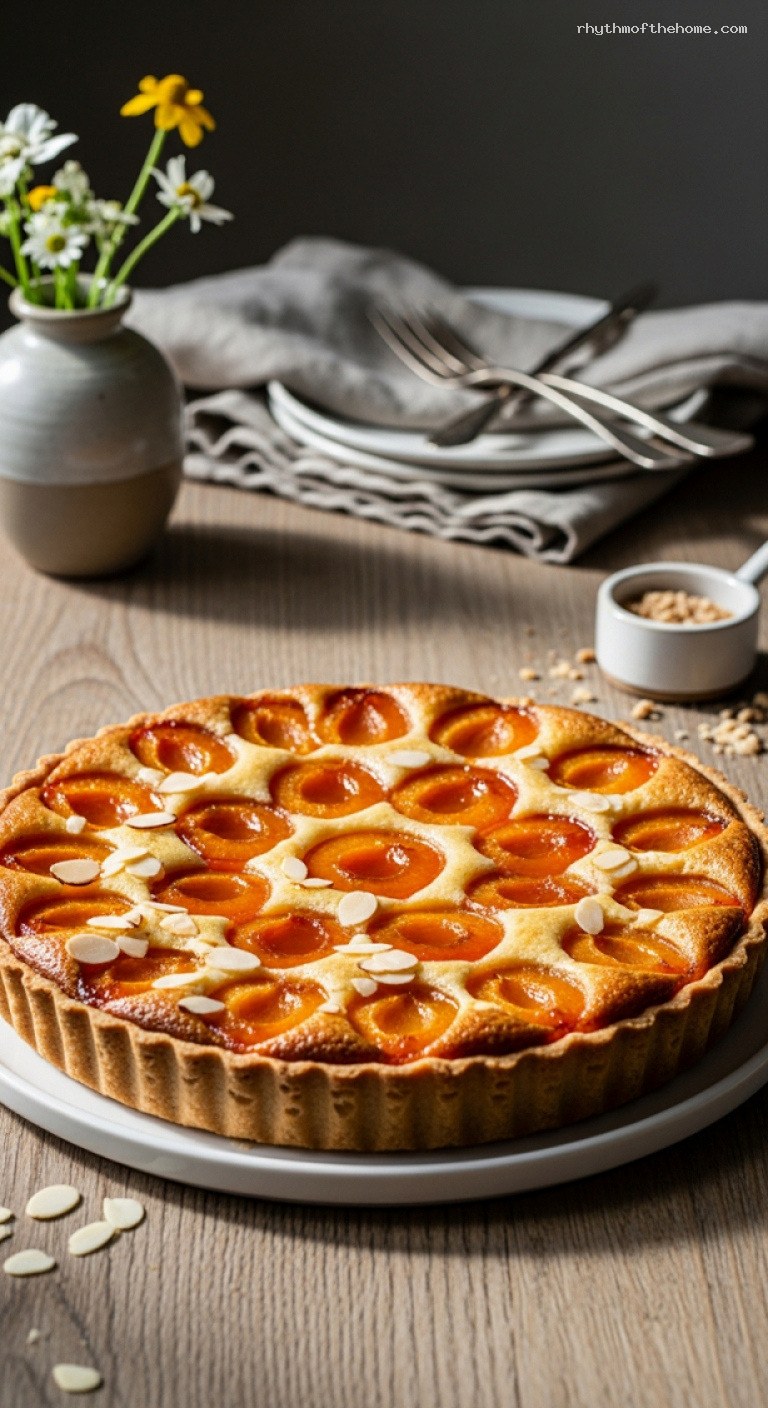
Quick Recipe Version (TL;DR)
Quick Ingredients
- 200 g (1 2/3 cups) all-purpose flour
- 50 g (1/2 cup) powdered sugar
- 115 g (1/2 cup) cold unsalted butter, cubed
- 1 large egg yolk + 1–2 tbsp cold water
- 120 g (1 1/4 cups) almond flour
- 100 g (7 tbsp) soft unsalted butter
- 100 g (1/2 cup) granulated sugar
- 2 large eggs
- 2 tbsp all-purpose flour
- 1/2 tsp almond extract, 1 tsp vanilla extract
- 8–10 small ripe apricots, halved and pitted
- 3–4 tbsp apricot jam (for glaze)
- 1–2 tbsp granulated sugar, 1 tbsp melted butter (for topping)
Do This
- 1. Make pastry: rub cold butter into flour, powdered sugar, and salt. Add egg yolk and a little cold water to form a dough. Chill 1 hour.
- 2. Roll dough to line a 23 cm (9-inch) tart tin. Chill 15 minutes, then blind bake at 190°C/375°F for 15 minutes with weights, plus 5–8 minutes without until lightly golden.
- 3. Beat soft butter and sugar, then mix in eggs, almond flour, flour, almond extract, vanilla, and a pinch of salt to make frangipane.
- 4. Spread frangipane in warm tart shell. Arrange apricot halves, cut side up, slightly pressing into the cream. Brush fruit with melted butter and sprinkle with sugar.
- 5. Bake at 175°C/350°F for 30–35 minutes until puffed, golden, and apricots are tender and lightly caramelized. Cover loosely if browning too quickly.
- 6. Warm apricot jam with a teaspoon of water and brush over hot fruit to make a glossy glaze.
- 7. Cool to lukewarm or room temperature before slicing. Serve plain or with softly whipped cream.
Why You’ll Love This Recipe
- Buttery, crisp pastry contrasts with the soft, custardy almond filling and tender baked apricots.
- Looks bakery-level impressive, but uses simple home-kitchen techniques and basic equipment.
- Make-ahead friendly: the dough, baked shell, and even the whole tart can be prepared in advance.
- Versatile base: swap in other stone fruits or use tinned apricots outside of apricot season.
Grocery List
- Produce: 8–10 small ripe apricots, 1 lemon (optional for zest).
- Dairy: Unsalted butter (about 215 g total), 3 large eggs (2 whole + 1 yolk), heavy cream if serving with whipped cream (optional).
- Pantry: All-purpose flour, powdered sugar (icing sugar), granulated sugar, fine salt, almond flour (ground almonds), apricot jam, vanilla extract, almond extract.
Full Ingredients
Crisp Pastry Crust
- 200 g all-purpose flour (about 1 2/3 cups, spooned and leveled)
- 50 g powdered sugar (about 1/2 cup)
- 1/4 tsp fine sea salt
- 115 g cold unsalted butter (1 stick or 1/2 cup), cut into small cubes
- 1 large egg yolk
- 1–2 tbsp ice-cold water, as needed
- 1/2 tsp vanilla extract (optional, for extra flavor)
Almond Frangipane Filling
- 100 g unsalted butter (7 tbsp), very soft but not melted
- 100 g granulated sugar (1/2 cup)
- 120 g almond flour (ground blanched almonds; about 1 1/4 cups, lightly packed)
- 2 large eggs, at room temperature
- 15 g all-purpose flour (2 tbsp)
- 1/2 tsp almond extract
- 1 tsp vanilla extract
- 1/4 tsp fine sea salt
- Finely grated zest of 1/2 lemon (optional, but lovely with apricot)
Apricot Topping
- 8–10 small ripe but firm apricots (about 550–600 g), halved and pitted
- 1 tbsp unsalted butter, melted (for brushing the fruit)
- 1–2 tbsp granulated sugar, to sprinkle on top
Glaze and Optional Garnish
- 3–4 tbsp apricot jam
- 1–2 tsp water (to loosen the jam)
- 2–3 tbsp sliced or slivered almonds, lightly toasted (optional)
- Powdered sugar, for dusting just before serving (optional)
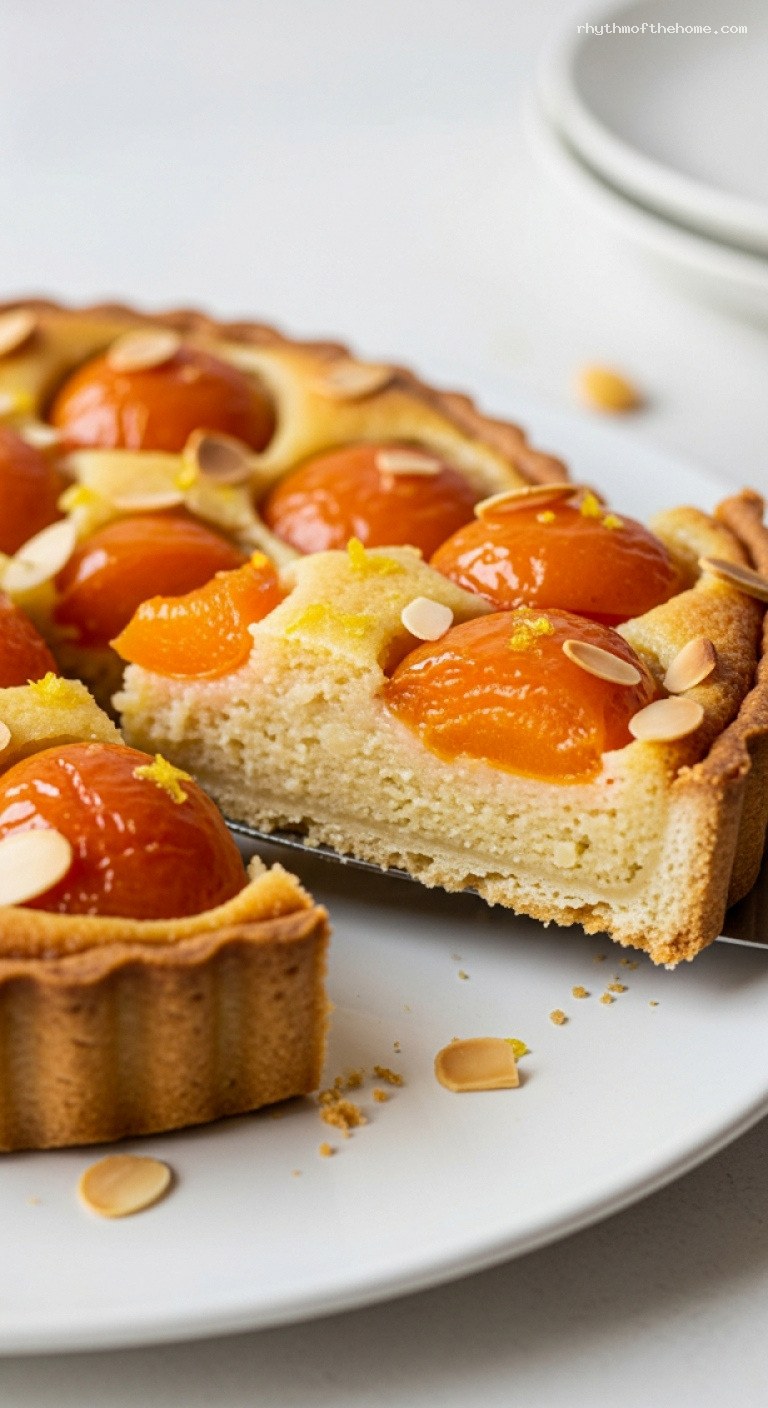
Step-by-Step Instructions
Step 1: Make the crisp pastry dough
In a large mixing bowl, whisk together the flour, powdered sugar, and salt. Add the cold, cubed butter. Using your fingertips or a pastry cutter, rub or cut the butter into the dry ingredients until the mixture looks like coarse breadcrumbs with some pea-sized bits of butter still visible. In a small bowl, whisk the egg yolk with the vanilla (if using) and 1 tablespoon of ice-cold water. Drizzle this over the flour mixture and toss with a fork until it starts to clump. If it looks dry and floury, add up to 1 more tablespoon of cold water, a teaspoon at a time, just until the dough holds together when pressed.
Tip the mixture onto a lightly floured surface and gently press it together with your hands. Knead only once or twice to form a smooth disk; avoid working it too much or the crust will be tough. Wrap the dough disk tightly in plastic wrap or parchment and chill in the refrigerator for at least 1 hour (or up to 2 days). Chilling is essential for a crisp, non-shrinking crust.
Step 2: Roll the dough and line the tart tin
After chilling, remove the dough from the fridge and let it sit at room temperature for 5–10 minutes so it softens slightly and is easier to roll. On a lightly floured surface, roll the dough into a circle about 30 cm (12 inches) in diameter and around 3 mm (1/8 inch) thick. If it cracks, just patch it with spare dough and gently press to seal. Dust your rolling pin and the dough occasionally with flour to prevent sticking, and rotate the dough as you roll to keep it even.
Carefully roll the dough around the rolling pin and unroll it over a 23 cm (9-inch) fluted tart tin with a removable base. Gently lift and ease the dough down into the corners without stretching it. Press it firmly against the sides and base. Run the rolling pin over the rim to trim the excess, or use a sharp knife. Patch any holes with scrap dough. Prick the base all over with a fork. Place the lined tin in the fridge or freezer for 15–20 minutes while you preheat the oven to 190°C/375°F. A cold shell helps prevent shrinking.
Step 3: Blind bake the tart shell
Cut a piece of baking parchment slightly larger than the tart tin and press it into the chilled shell, covering the base and sides. Fill with baking beans, dried rice, or dry beans to weigh it down. Bake in the preheated 190°C/375°F oven for 15 minutes. Carefully lift out the parchment and weights (they will be hot) and return the bare shell to the oven for 5–8 minutes more, until the base looks dry and just turning a light golden color.
Remove the shell from the oven and set it on a wire rack to cool slightly while you prepare the frangipane. Reduce the oven temperature to 175°C/350°F. If the base has puffed in any spot, gently press it down with the back of a spoon while still warm. A lightly baked, crisp shell is the foundation for a tart that stays sturdy under the moist almond cream and apricots.
Step 4: Prepare the almond frangipane
While the shell is blind baking, make the frangipane. In a medium bowl (or in a stand mixer with the paddle attachment), beat the soft butter and granulated sugar together until pale and fluffy, 2–3 minutes. Scrape down the bowl as needed. Beat in the eggs one at a time, fully incorporating the first before adding the second. The mixture may look slightly curdled at this stage; that is normal and will smooth out once the dry ingredients are added.
Add the almond flour, all-purpose flour, salt, almond extract, vanilla, and lemon zest (if using). Mix on low speed or fold by hand until just combined and smooth. You should have a thick, spreadable almond cream. Avoid overbeating at this stage so the frangipane stays tender rather than dense. Set aside at room temperature until the shell is ready.
Step 5: Prepare and arrange the apricots
Wash and dry the apricots. Cut them in half and remove the pits. If the apricots are very large, you can cut each half into two wedges, but for a more classic look, use halves. Lightly score the skin of each half with a shallow crisscross pattern if you like; this helps them release juices and take on a pretty texture as they bake.
Spread the frangipane evenly into the still-warm tart shell, smoothing the surface with an offset spatula or the back of a spoon. Arrange the apricot halves cut side up on top of the almond cream, pressing them in just slightly so they sit snugly but still visible. Start from the outer edge and work your way inward in a neat pattern. Brush the exposed apricot surfaces with the melted butter and sprinkle them evenly with 1–2 tablespoons of granulated sugar, depending on how tart your fruit is. The sugar will help them caramelize and become glossy in the oven.
Step 6: Bake the filled tart
Place the tart on a baking sheet to catch any drips and make handling easier. Bake in the preheated 175°C/350°F oven for 30–35 minutes, or until the frangipane is puffed and golden, the edges of the pastry are a deep golden brown, and the apricots are tender and slightly caramelized around the edges. The almond cream around the fruit should feel set when lightly pressed and not wet in the center.
If the crust edges are browning too quickly before the center is done, loosely tent the tart with foil or cover just the rim with strips of foil. Every oven is a little different, so start checking at the 25-minute mark, but do not be afraid of a deep golden color; that is where the best flavor lives.
Step 7: Glaze for a glossy finish
While the tart is baking, gently warm the apricot jam with 1–2 teaspoons of water in a small saucepan over low heat, or in a microwave-safe bowl in the microwave. Stir until the jam is fluid and smooth. If there are chunks, you can strain the glaze through a fine sieve for an ultra-smooth finish, but this is optional.
As soon as the tart comes out of the oven, place it on a wire rack and, while still hot, carefully brush the tops of the apricots and any exposed frangipane with the warm jam. Use a light hand so you do not disturb the fruit arrangement. The glaze will sink in slightly and set to a beautiful, shiny finish as the tart cools. If using, sprinkle toasted sliced almonds around the edge for extra crunch and a hint of rustic charm.
Step 8: Cool, slice, and serve
Allow the tart to cool in its tin on a wire rack for at least 45–60 minutes, or until just barely warm or at room temperature. This resting time lets the almond filling firm up for neat slices and allows the flavors to meld. Once cooled, gently remove the outer ring of the tart tin, supporting the base with your hand or placing it on a smaller tin or can to help the ring drop away.
Transfer the tart to a serving plate. If you like, dust lightly with powdered sugar just before serving so it does not melt into the glaze. Cut into 8–10 wedges with a sharp knife, wiping the blade between cuts for clean slices. Serve plain, or with softly whipped cream or a small scoop of vanilla ice cream alongside. The contrast of the cool cream with the buttery crust, soft almond center, and tender, glossy apricots is especially lovely.
Pro Tips
- Keep the dough cold: Cold butter and a well-chilled crust are the keys to a flaky, crisp pastry that does not shrink. If your kitchen is warm, chill the dough even between rolling and lining the tin.
- Use ripe but firm apricots: Overripe fruit will collapse and leak too much juice; underripe will stay hard and sour. Look for fragrant apricots that yield just slightly to gentle pressure.
- Weigh ingredients if possible: Using grams for flour, butter, sugar, and almond flour gives more consistent results, especially for delicate pastries like this.
- Room-temperature ingredients for frangipane: Soft butter and room-temperature eggs mix more easily and create a smooth, airy filling that bakes up tender instead of greasy or dense.
- Rotate the tart while baking: For even browning, turn the tart 180 degrees halfway through the baking time, especially if your oven has hot spots.
Variations
- Peach or nectarine frangipane tart: In place of apricots, use halved or thickly sliced peaches or nectarines. Peel if the skins are tough, or leave them on for a more rustic look and extra color.
- Mixed stone fruit tart: Combine apricots with plums, cherries (pitted), or small wedges of plumcot for a jewel-toned, slightly tangier tart. Arrange in alternating rings of color.
- Pistachio twist: Replace half the almond flour with finely ground pistachios and add a pinch of cardamom. Top the baked tart with chopped pistachios instead of sliced almonds.
Storage & Make-Ahead
This tart is best on the day it is baked, once cooled, when the crust is crispiest and the fruit is freshly glossy. However, it keeps very well. Store leftovers covered at cool room temperature for up to 1 day, or in the refrigerator for up to 3 days. If refrigerated, let slices sit at room temperature for 20–30 minutes before serving, or warm gently in a 150°C/300°F oven for about 10 minutes to refresh the crust.
To make ahead, you can prepare the pastry dough up to 2 days in advance and keep it wrapped in the fridge, or freeze it for up to 1 month (thaw overnight in the fridge). The blind-baked tart shell can be baked a day ahead and stored, well wrapped, at room temperature. You can also assemble the filled tart (with frangipane and arranged apricots) up to 4 hours ahead, keep it covered in the fridge, and bake just before serving time. The fully baked tart can be made earlier in the day and held at room temperature until dessert.
Nutrition (per serving)
Approximate values for 1 of 10 slices: about 410 kcal; 25 g fat; 13 g saturated fat; 42 g carbohydrates; 3 g fiber; 23 g sugar; 7 g protein; 170 mg sodium. Values will vary based on exact ingredients, portion sizes, and any garnishes or accompaniments.

Leave a Reply