
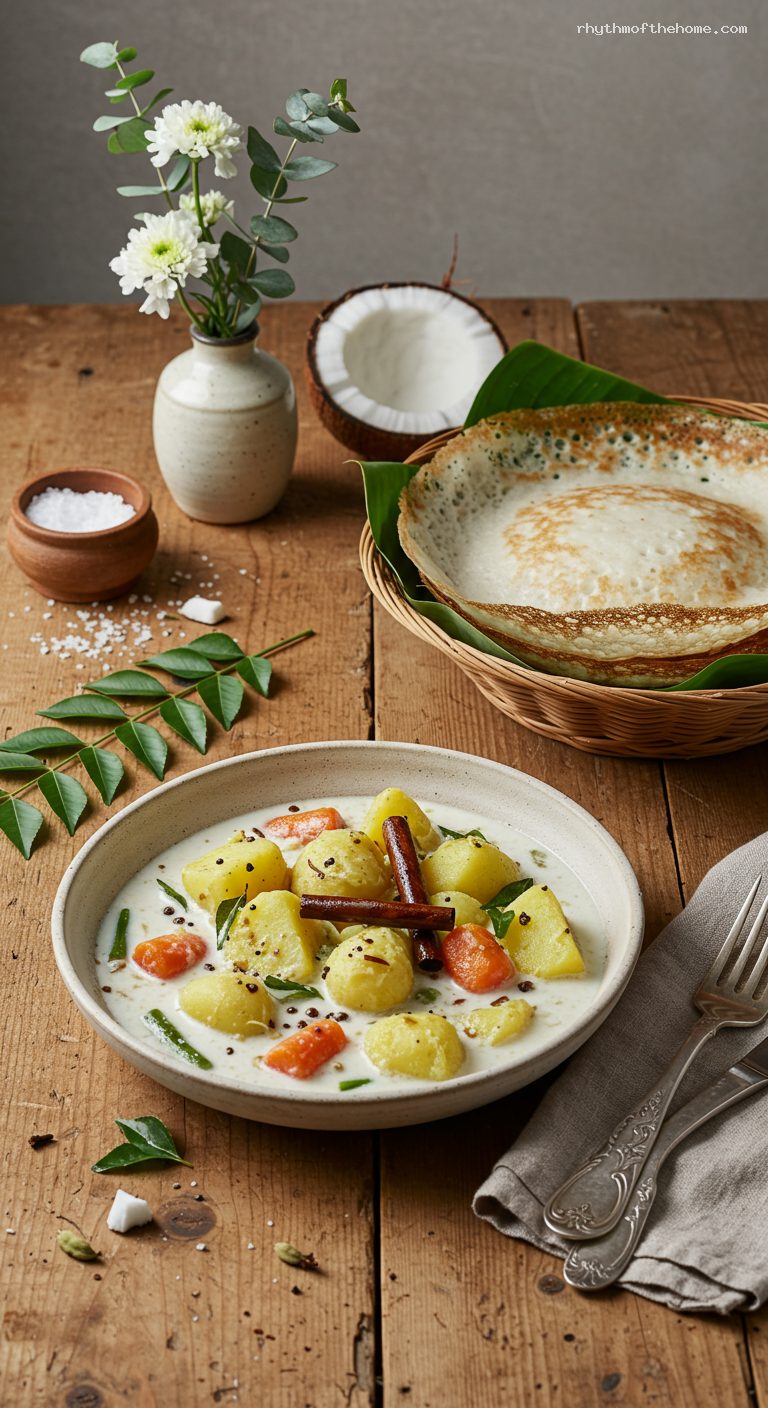
Quick Recipe Version (TL;DR)
Quick Ingredients
- Appam: 1 1/2 cups (300 g) idli/parboiled rice; 1/2 tsp fenugreek seeds; 1 cup (90 g) grated fresh coconut; 1/2 cup (90 g) cooked rice; 1 tbsp sugar; 1/2 tsp instant yeast; 3/4 tsp salt; 1 3/4–2 cups (415–475 ml) water; 1 tsp coconut oil (pan).
- Stew: 2 tbsp coconut oil; 1-inch cinnamon stick; 4 cloves; 4 green cardamom pods; 8–10 peppercorns; 1 medium onion; 1 tbsp ginger; 2 green chilies; 12–15 curry leaves; 2 medium potatoes (300 g); 2 small carrots (150 g); 100 g green beans; 1.5 cups (360 ml) thin coconut milk; 1 cup (240 ml) thick coconut milk; 1 cup (240 ml) water/stock; 1 1/2 tsp salt; 1/2 tsp pepper; 2 tsp lemon juice.
Do This
- 1) Soak rice + fenugreek in plenty of water for 4 hours.
- 2) Grind soaked rice with grated coconut and cooked rice, adding 1 3/4–2 cups water to a pourable batter. Stir in sugar + yeast. Ferment 10 hours.
- 3) After fermenting, add salt to batter; rest 15 minutes.
- 4) For stew, warm coconut oil; bloom cinnamon, cloves, cardamom, peppercorns 30–60 seconds. Add onion, ginger, chilies, curry leaves; sauté 3–4 minutes.
- 5) Add potatoes, carrots, beans, water, and thin coconut milk; simmer 12–15 minutes until tender. Stir in thick coconut milk; season with salt, pepper, lemon. Do not boil.
- 6) Heat appam pan on medium, brush with oil. Pour 1/3 cup batter; swirl to lace the edges. Cover 2–3 minutes until center is set. Repeat. Serve hot with stew.
Why You’ll Love This Recipe
- Classic Kerala comfort: lacy, bowl-shaped appams paired with a fragrant, mellow coconut-milk vegetable stew.
- Balanced flavors: warm whole spices (cinnamon, cloves, cardamom) and curry leaves without overwhelming heat.
- Beginner-friendly fermentation with yeast for reliable lift and those signature lacy edges.
- Naturally dairy-free and gluten-free, yet rich and satisfying.
Grocery List
- Produce: Onion, fresh ginger, green chilies, curry leaves, potatoes, carrots, green beans, lemon or lime, fresh grated coconut (or frozen), optional fresh cilantro.
- Dairy: None.
- Pantry: Idli/parboiled rice, fenugreek seeds, sugar, instant yeast, coconut oil, whole spices (cinnamon stick, cloves, green cardamom), black peppercorns, coconut milk (1 can full-fat plus 1 can light or water to dilute), salt.
Full Ingredients
For the Appam (Hoppers)
- 1 1/2 cups (300 g) idli rice or parboiled rice
- 1/2 teaspoon fenugreek seeds (optional but helps fermentation)
- 1 cup (90 g) freshly grated coconut (thawed if frozen)
- 1/2 cup (90 g) cooked rice
- 1 tablespoon (12 g) sugar
- 1/2 teaspoon instant yeast (or 3/4 teaspoon active dry yeast)
- 3/4 teaspoon fine salt
- 1 3/4 to 2 cups (415–475 ml) water, plus more for soaking
- 1 teaspoon coconut oil or neutral oil, for greasing the pan
For the Kerala-Style Vegetable Stew
- 2 tablespoons coconut oil
- 1-inch cinnamon stick
- 4 whole cloves
- 4 green cardamom pods, lightly crushed
- 8–10 whole black peppercorns
- 1 medium onion (about 150 g), thinly sliced
- 1 tablespoon fresh ginger, cut into thin matchsticks
- 2 green chilies, slit lengthwise (adjust to taste)
- 12–15 fresh curry leaves
- 2 medium potatoes (about 300 g), peeled and cut into 3/4-inch cubes
- 2 small carrots (about 150 g), sliced into 1/4-inch coins
- 100 g green beans, trimmed and cut into 1-inch pieces
- 1.5 cups (360 ml) thin coconut milk (or 3/4 cup full-fat coconut milk mixed with 3/4 cup water)
- 1 cup (240 ml) thick coconut milk (full-fat)
- 1 cup (240 ml) water or unsalted vegetable stock
- 1 1/2 teaspoons kosher salt (reduce if using stock)
- 1/2 teaspoon freshly ground black pepper, plus more to finish
- 2 teaspoons fresh lemon or lime juice
To Serve
- Extra curry leaves and freshly cracked black pepper
Step-by-Step Instructions
Step 1: Soak the rice and fenugreek
Rinse the rice and fenugreek seeds under cold water until the water runs clear. Place in a bowl and cover with 2 inches (5 cm) of water. Soak for 4 hours at room temperature.
Step 2: Grind the batter
Drain the soaked rice and fenugreek. In a blender, combine soaked rice, grated coconut, and cooked rice. Add 1 3/4 cups (415 ml) fresh water and blend until very smooth and slightly airy, 2–3 minutes, adding up to 1/4 cup more water if needed for a pourable, pancake-like batter. Transfer to a large bowl (the batter should have room to rise).
Stir in the sugar and instant yeast until dissolved. Cover the bowl loosely.
Step 3: Ferment the batter
Let the batter ferment in a warm spot (27–30°C / 80–86°F) for about 10 hours, until doubled, bubbly, and slightly tangy. Gently stir in the salt. If very thick, whisk in 2–4 tablespoons water to reach a flowing but not watery consistency. Rest 15 minutes to relax the batter.
Step 4: Prep the vegetables and aromatics
While the batter finishes fermenting, slice the onion, prep the ginger and chilies, strip the curry leaves, and cut the potatoes, carrots, and beans. Measure out whole spices, coconut milk (thin and thick), water/stock, and seasonings so the stew comes together smoothly.
Step 5: Start the vegetable stew
Warm 2 tablespoons coconut oil in a wide saucepan over medium heat for 1 minute. Add cinnamon, cloves, cardamom, and peppercorns; stir until fragrant and sizzling, 30–60 seconds. Add onion, ginger, chilies, and curry leaves; sauté until the onion turns translucent, 3–4 minutes, without browning.
Step 6: Simmer and finish the stew
Add potatoes, carrots, and green beans. Pour in 1 cup water (or stock) and 1.5 cups thin coconut milk. Season with 1 teaspoon of the salt. Bring to a gentle simmer, cover, and cook until vegetables are tender but not mushy, 12–15 minutes. Stir in the thick coconut milk and remaining 1/2 teaspoon salt and the black pepper. Heat gently for 1–2 minutes without boiling (to prevent splitting). Finish with lemon or lime juice. Taste and adjust salt, pepper, or acidity. Cover to keep warm.
Step 7: Cook the lacy appams
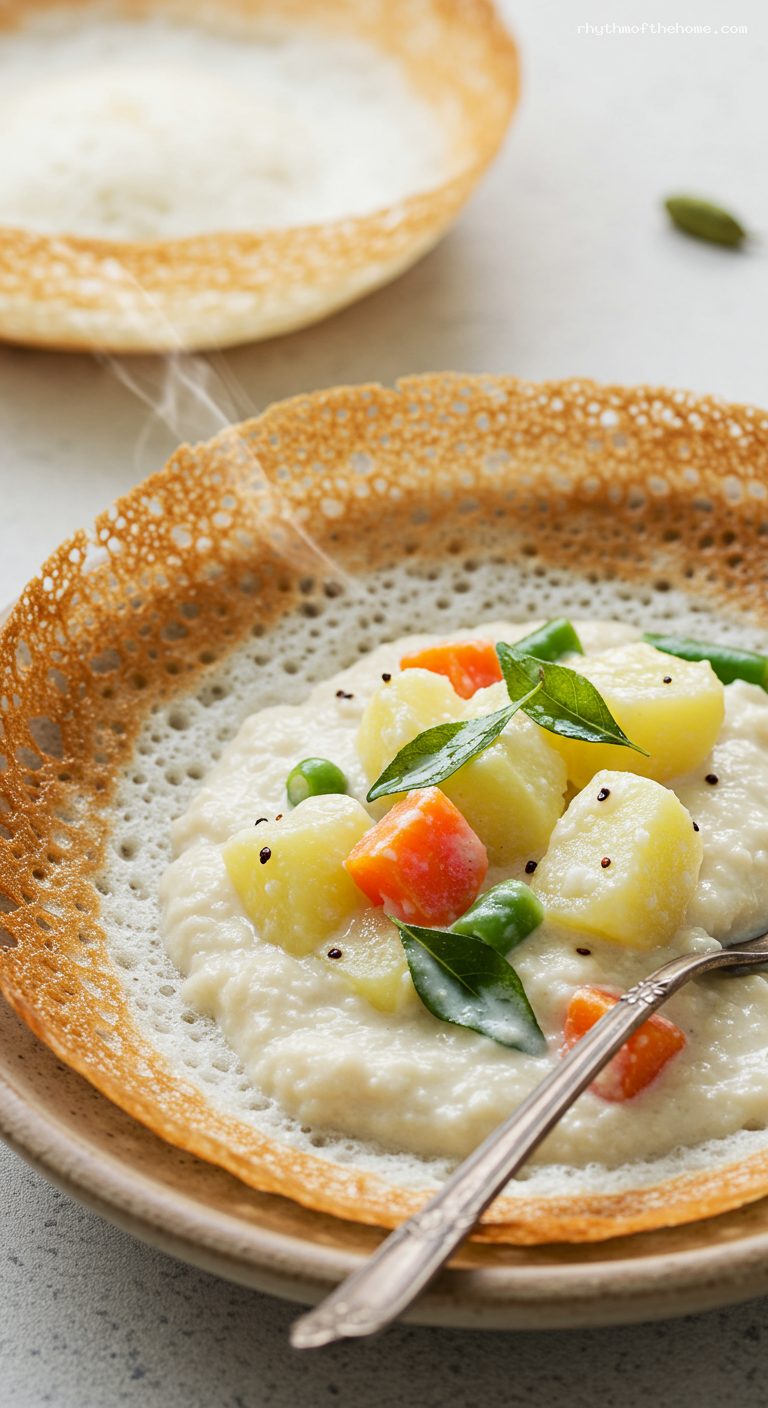
Heat an appachatti (curved appam pan) or a small nonstick wok over medium heat for 2 minutes. Lightly brush with coconut oil. Pour in about 1/3 cup batter. Immediately lift and tilt the pan in a circular motion so the batter climbs the sides, forming a thin lace around a slightly thicker puddle in the center. Cover and cook 2–3 minutes until the edges are crisp and lightly golden and the center is set and spongy. Do not flip. Transfer to a cloth-lined plate and keep covered. Repeat with remaining batter, oiling the pan lightly every 2–3 appams.
Step 8: Serve
Ladle the warm vegetable stew into bowls. Garnish with a few curry leaves and a crack of pepper. Serve immediately with hot appams. The crisp lace and tender center of the appam are perfect for scooping up the creamy, gently spiced stew.
Pro Tips
- Warm fermentation is key: if your kitchen is cool, place the batter in an unheated oven with the light on or near a sunny window.
- Consistency check: appam batter should ribbon off a ladle and quickly level out. If it sits in peaks, whisk in 1–2 tablespoons water.
- Do not boil the stew after adding thick coconut milk; gentle heat keeps it silky and prevents splitting.
- For extra lace, swirl the pan slowly twice—immediately after pouring the batter and again 5 seconds later.
- Use a dedicated appam pan or small wok for the classic bowl shape and crisp edges; a small nonstick skillet works in a pinch.
Variations
- No-yeast appam: replace yeast with 1/2 cup well-fermented idli/dosa batter or 1/4 cup toddy; ferment 8–10 hours.
- Veg mix-ups: add cauliflower florets (small), green peas, or bell pepper; keep total veg to about 550 g for best stew consistency.
- Spicier stew: add 1/2–1 teaspoon coarsely crushed black pepper with the thick coconut milk for a peppery finish.
Storage & Make-Ahead
Batter: Refrigerate fermented batter up to 3 days; it may thicken—whisk in water by the tablespoon before cooking. Stew: Refrigerate up to 3 days or freeze up to 1 month (coconut milk may separate slightly; reheat very gently without boiling and whisk to re-emulsify). Cooked appams are best fresh; to revive, steam for 30–45 seconds or warm in a covered skillet over low heat for 1 minute.
Nutrition (per serving)
Approximate for 1 serving (3 appams + stew): 700 kcal; 30 g fat; 92 g carbohydrates; 10 g protein; 8 g fiber; 1,300 mg sodium.

Leave a Reply