
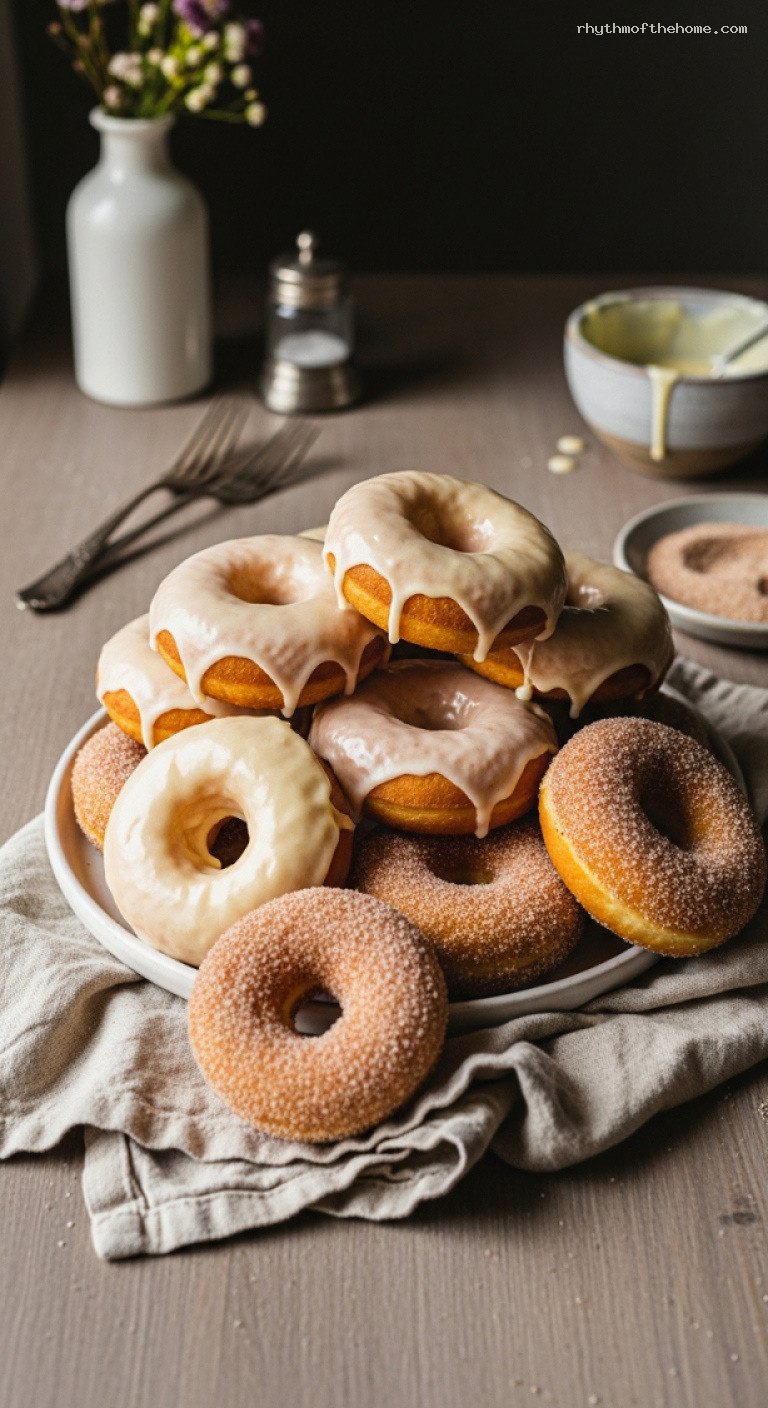
Quick Recipe Version (TL;DR)
Quick Ingredients
- 1 cup (240 ml) warm whole milk (105–115°F / 40–46°C)
- 2 1/4 tsp (7 g) active dry yeast
- 1/4 cup (50 g) granulated sugar (plus more for coating)
- 3 1/4–3 1/2 cups (390–420 g) all-purpose flour
- 1/2 tsp fine salt, 1/4 tsp ground nutmeg (optional)
- 2 large eggs, 1/4 cup (56 g) melted unsalted butter
- 2 tsp vanilla extract (1 tsp for dough, 1 tsp for glaze)
- 6–8 cups neutral oil for frying
- 2 cups (240 g) powdered sugar + 1/4 cup (60 ml) milk (for glaze)
- 1 cup (200 g) sugar + 2 tsp cinnamon (for coating)
Do This
- 1. Warm milk; whisk with yeast and 1 Tbsp sugar. Let foam 5–10 minutes.
- 2. Mix flour, remaining sugar, salt, nutmeg. Add yeast mixture, eggs, butter, vanilla. Knead until smooth and slightly tacky.
- 3. Let dough rise, covered, in a warm place until doubled, 60–75 minutes.
- 4. Roll to 1/2 in (1.25 cm) thick; cut donut rings. Place on floured or parchment-lined trays.
- 5. Cover and proof 30–45 minutes until puffy. Meanwhile, heat oil to 350°F (175°C) and mix glaze and cinnamon sugar.
- 6. Fry 2–3 donuts at a time, 45–60 seconds per side, until deep golden. Drain on a rack.
- 7. While warm, dip some donuts in vanilla glaze and toss others in cinnamon sugar.
Why You’ll Love This Recipe
- Light, airy, bakery-style yeast donuts with a tender, fluffy crumb.
- Two classic finishes in one batch: silky vanilla glaze and crunchy cinnamon sugar.
- Simple, clear steps with easy-to-find ingredients you likely already have.
- Perfect for weekend treats, brunch, or impressing guests with homemade donuts.
Grocery List
- Produce: None required.
- Dairy: Whole milk, unsalted butter, eggs.
- Pantry: All-purpose flour, active dry yeast, granulated sugar, powdered sugar, ground cinnamon, ground nutmeg (optional), fine salt, vanilla extract, neutral frying oil (vegetable, canola, or peanut).
Full Ingredients
For the Yeast-Raised Donut Dough
- 1 cup (240 ml) whole milk, warmed to 105–115°F (40–46°C)
- 2 1/4 tsp (7 g) active dry yeast (one standard packet)
- 1/4 cup (50 g) granulated sugar
- 3 1/4–3 1/2 cups (390–420 g) all-purpose flour, plus extra for dusting
- 1/2 tsp fine salt
- 1/4 tsp ground nutmeg (optional but classic in donuts)
- 2 large eggs, at room temperature
- 1/4 cup (56 g) unsalted butter, melted and slightly cooled
- 1 tsp pure vanilla extract
For Frying
- 6–8 cups (1.4–1.9 L) neutral oil, such as vegetable, canola, or peanut oil (enough for 2–3 in / 5–7.5 cm depth in a heavy pot)
Vanilla Glaze
- 2 cups (240 g) powdered sugar, sifted if lumpy
- 1/4 cup (60 ml) whole milk, plus 1–2 tsp extra if needed
- 1–2 tsp pure vanilla extract (to taste)
- Small pinch fine salt
Cinnamon Sugar Coating
- 1 cup (200 g) granulated sugar
- 2 tsp ground cinnamon
- Small pinch fine salt
- Optional: 3 Tbsp (42 g) unsalted butter, melted, for dipping if you want extra help with the sugar sticking
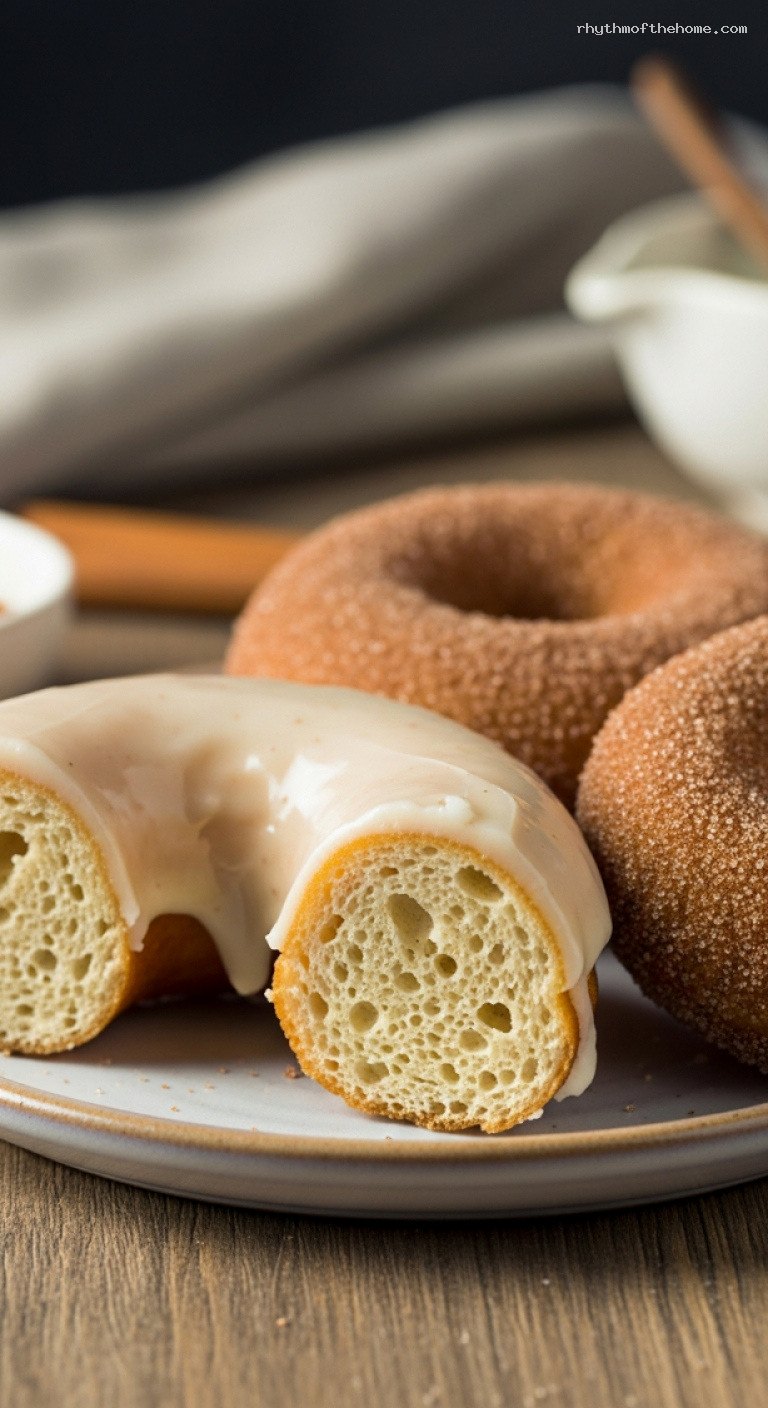
Step-by-Step Instructions
Step 1: Proof the yeast
In a small saucepan or in the microwave, gently warm the milk until it reaches 105–115°F (40–46°C). It should feel warm but not hot to the touch. Pour the warm milk into a large mixing bowl (or the bowl of a stand mixer). Sprinkle the yeast over the top and add about 1 tablespoon of the granulated sugar from the dough ingredients. Whisk to combine.
Let the mixture sit for 5–10 minutes, until the surface becomes foamy and bubbly. This tells you the yeast is active. If there is no activity after 10 minutes, your yeast may be dead; discard and start again with fresh yeast.
Step 2: Make and knead the dough
In a separate bowl, whisk together 3 1/4 cups (390 g) flour, the remaining granulated sugar, salt, and nutmeg. Set aside. To the yeast mixture, add the eggs, melted butter, and vanilla, whisking or stirring until mostly smooth.
Add the dry ingredients to the wet ingredients in two additions, mixing with a wooden spoon or the dough hook of a stand mixer on low speed. When a shaggy dough forms, begin kneading. Knead by hand on a lightly floured surface or with the mixer on medium-low speed for 5–8 minutes. The dough should become smooth, elastic, and slightly tacky but not overly sticky. If it is very sticky, add more flour 1 tablespoon at a time, up to an extra 1/4 cup (30 g) total. Avoid adding too much flour; a softer dough makes lighter donuts.
Step 3: First rise (bulk ferment)
Shape the dough into a ball and place it in a lightly greased bowl. Turn the dough once to coat it lightly in oil. Cover the bowl with plastic wrap, a lid, or a clean kitchen towel.
Let the dough rise in a warm, draft-free spot until it has doubled in size, about 60–75 minutes. A slightly warm oven (turned off) or a sunny countertop works well. The dough is ready when a gently pressed fingertip indent springs back slowly but does not disappear completely.
Step 4: Roll and cut the donuts
Gently turn the risen dough out onto a lightly floured surface. Pat it into a rectangle, then use a rolling pin to roll it to about 1/2 inch (1.25 cm) thickness. Try to keep the thickness even so your donuts fry uniformly.
Use a donut cutter (about 3 in / 7.5 cm wide with a 1 in / 2.5 cm center hole) to cut rings. If you do not have a donut cutter, use a large round cutter or glass for the outer ring and a small cutter or bottle cap for the center. Transfer each donut and donut hole to a parchment-lined or lightly floured baking sheet, leaving a little space between them. Gather the scraps, gently push them together, rest for 5 minutes, then roll and cut again. Avoid overworking the dough.
Step 5: Second rise and prepare the coatings
Cover the trays of shaped donuts loosely with lightly greased plastic wrap or a clean kitchen towel. Let them rise in a warm place until noticeably puffy, 30–45 minutes. They should look lighter and slightly larger, but not so risen that they collapse when moved.
While the donuts rise, prepare your frying station and coatings. Pour 6–8 cups of oil into a heavy pot or Dutch oven, aiming for 2–3 inches (5–7.5 cm) depth. Attach a deep-fry or instant-read thermometer, but do not heat the oil yet.
For the vanilla glaze, whisk the powdered sugar, milk, vanilla, and a pinch of salt in a medium bowl until smooth and pourable. Adjust thickness with a teaspoon of extra milk or powdered sugar as needed. For the cinnamon sugar, combine granulated sugar, cinnamon, and a pinch of salt in a shallow bowl or pie plate. If using, melt the extra butter in another small bowl.
Step 6: Fry the donuts
Heat the oil over medium heat until it reaches 350°F (175°C). Adjust the heat to maintain this temperature; consistent oil temperature is key to light, non-greasy donuts.
Carefully lower 2–3 donuts into the hot oil at a time, using a slotted spoon or spatula. Do not overcrowd the pot. Fry for about 45–60 seconds per side, turning once, until the donuts are a rich golden brown. Donut holes will cook faster, about 30–45 seconds total; stir them gently for even browning.
Use a slotted spoon to transfer fried donuts to a wire rack set over a baking sheet or paper towels to drain. Allow excess oil to drip off while you continue frying the remaining donuts, letting the oil return to 350°F (175°C) between batches.
Step 7: Glaze or coat with cinnamon sugar
While the donuts are still warm but cool enough to handle, finish them. For vanilla-glazed donuts, dip the top side of each donut into the bowl of glaze, letting it submerge halfway. Lift, letting excess glaze drip back into the bowl, then place the donuts back onto the wire rack so the glaze can set. For a thicker glaze, let the first layer set slightly, then dip a second time.
For cinnamon sugar donuts, you can either brush or dip each warm donut lightly in melted butter (if using) or go straight into the cinnamon sugar. Toss or roll each donut in the cinnamon sugar mixture until well coated on all sides. Donut holes are excellent rolled in cinnamon sugar as well.
Let glazed donuts sit for about 10–15 minutes to allow the glaze to firm up slightly. Serve warm or at room temperature.
Pro Tips
- Watch your flour: If possible, weigh your flour for accuracy. If measuring by cups, fluff the flour, spoon it into the cup, and level off. Too much flour makes heavy donuts.
- Use warm, not hot, liquids: Milk hotter than 115°F (46°C) can kill yeast. If it feels almost like a warm bath, it is probably about right.
- Maintain oil temperature: Use a thermometer and adjust the heat often. Too cool and the donuts will be greasy; too hot and they will brown before cooking through.
- Handle risen donuts gently: When transferring proofed donuts to the oil, use a spatula or gently pick up the parchment square under each ring to avoid deflating them.
- Glaze or sugar while warm: Coatings adhere best when the donuts are still warm, so do not wait too long after frying.
Variations
- Chocolate glaze: Replace 1/4 cup (30 g) of the powdered sugar in the glaze with unsweetened cocoa powder and add 1–2 extra teaspoons of milk until smooth and shiny.
- Maple glazed donuts: Swap half of the milk in the glaze for pure maple syrup and add a small pinch of nutmeg for a cozy flavor.
- Filled donuts: Skip cutting center holes and fry as whole rounds. Once cooled slightly, poke a hole in the side and pipe in jam, pastry cream, or chocolate ganache, then dust with powdered sugar.
Storage & Make-Ahead
These donuts are at their very best within a few hours of frying, while the texture is light and the crust is just slightly crisp. If you have leftovers, store cooled donuts in an airtight container at room temperature for up to 1 day. Cinnamon sugar donuts keep their texture a bit better than glazed ones on day two.
To refresh, warm donuts in a 300°F (150°C) oven for 5–7 minutes. Glazed donuts may become slightly tacky but will still taste good. For partial make-ahead, you can prepare the dough, complete the first rise, shape the donuts, and then cover and refrigerate the trays overnight. The next day, let them sit at room temperature until puffy (30–45 minutes or more, depending on kitchen temperature) before frying.
Nutrition (per serving)
Approximate values per donut (out of 12), glazed or cinnamon sugar coated: about 280 calories; 5 g protein; 38 g carbohydrates; 12 g fat; 4 g saturated fat; 26 g sugars; 1 g fiber; 200 mg sodium. Actual nutrition will vary based on exact frying oil absorption, coating amount, and ingredients used.

Leave a Reply