
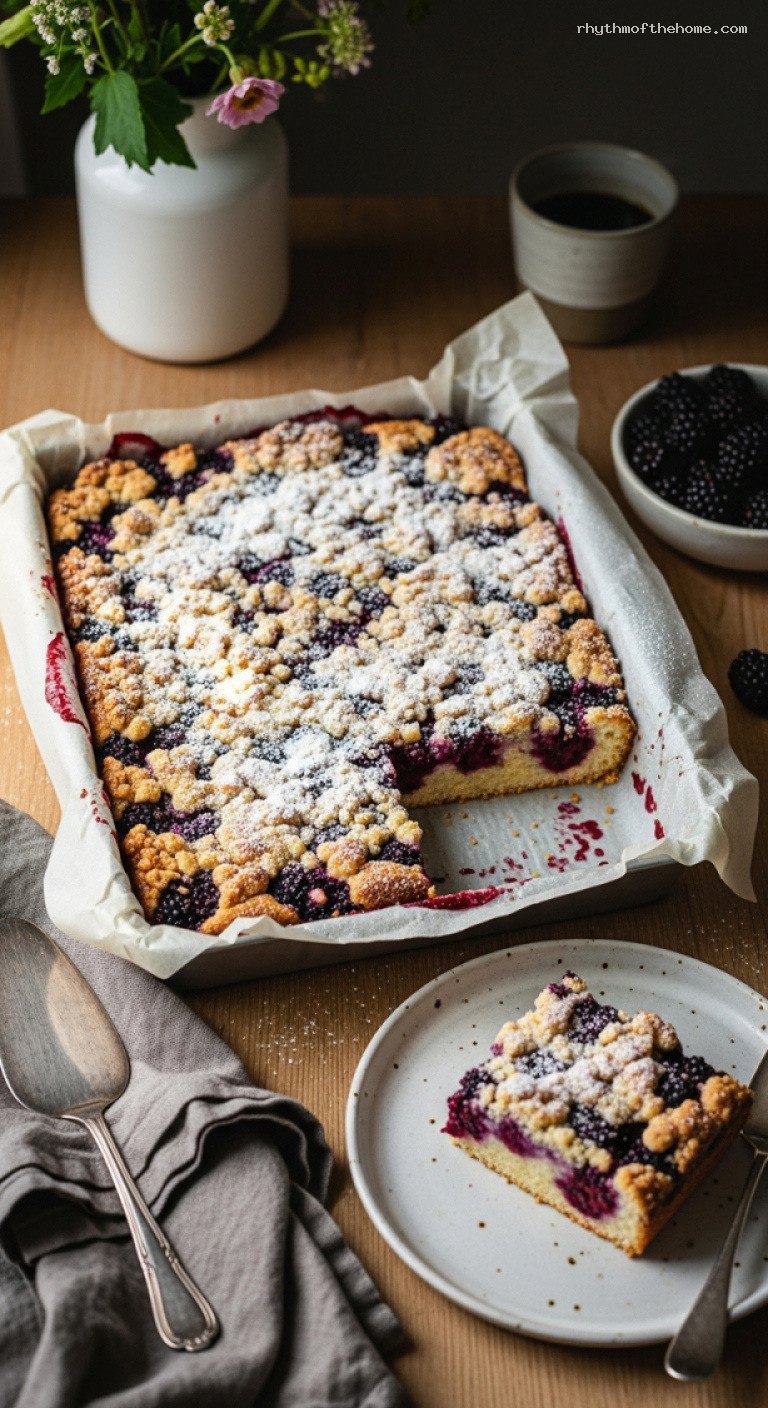
Quick Recipe Version (TL;DR)
Quick Ingredients
- 400 g fresh blackberries
- 1 tbsp sugar + 1 tsp cornstarch + 1 tsp lemon juice
- Base: 200 g flour, 2 tsp baking powder, pinch salt
- 120 g soft butter, 150 g sugar, 3 large eggs, 1 tsp vanilla, 120 ml milk
- Streusel: 125 g flour, 75 g sugar, pinch salt, 90 g cold butter
- To finish: 1–2 tbsp powdered sugar; whipped cream (optional)
Do This
- 1. Preheat oven to 180°C / 350°F. Grease and line a 23 x 33 cm / 9 x 13 inch pan with parchment.
- 2. Toss blackberries with sugar, cornstarch, and lemon juice; set aside.
- 3. Rub streusel ingredients together until crumbly; chill in fridge.
- 4. For base: cream soft butter and sugar; beat in eggs and vanilla. Fold in dry ingredients alternately with milk.
- 5. Spread batter evenly in pan. Scatter blackberries over the top, then sprinkle with chilled streusel.
- 6. Bake 35–40 minutes, until golden and a tester in the center comes out clean of raw batter.
- 7. Cool 20–30 minutes, dust with powdered sugar, slice, and serve slightly warm or at room temperature.
Why You’ll Love This Recipe
- Classic German-style coffee cake: a soft, lightly sweet base with juicy berries and buttery streusel.
- Flexible and forgiving: works with fresh or slightly soft blackberries and basic pantry staples.
- Perfect make-ahead cake for gatherings, picnics, or Sunday afternoon Kaffee und Kuchen.
- Not too sweet: the tart blackberries keep everything bright and fruity, especially with a dusting of powdered sugar.
Grocery List
- Produce: 400 g fresh blackberries, 1 lemon (for zest and juice, optional but recommended)
- Dairy: Unsalted butter (about 250 g total to be safe), milk (at least 120 ml), 3 large eggs, whipped cream or vanilla ice cream for serving (optional)
- Pantry: All-purpose flour, granulated sugar, powdered sugar, baking powder, salt, vanilla extract (or vanilla sugar), cornstarch
Full Ingredients
For the Blackberry Layer
- 400 g fresh blackberries (about 3 cups), picked over and gently patted dry
- 1 tbsp (12 g) granulated sugar
- 1 tsp cornstarch
- 1 tsp freshly squeezed lemon juice (optional, but brightens the flavor)
For the Cake Base
- 200 g all-purpose flour
- 2 tsp (about 8 g) baking powder
- 1 pinch fine salt
- 120 g unsalted butter, softened to room temperature
- 150 g granulated sugar
- 1 tsp vanilla extract (or 1 sachet vanilla sugar, 8 g)
- 3 large eggs, at room temperature
- 120 ml milk, at room temperature (whole milk preferred, but 2% works)
- 1 tsp finely grated lemon zest (optional, for a light citrus note)
For the Streusel Topping
- 125 g all-purpose flour
- 75 g granulated sugar (or 50 g white sugar + 25 g light brown sugar for a deeper flavor)
- 1 pinch fine salt
- 90 g unsalted butter, cold from the fridge and cut into small cubes
- Optional: 1/2 tsp vanilla extract or 1 tsp vanilla sugar
To Finish
- 1–2 tbsp powdered sugar, for dusting
- Lightly sweetened whipped cream or vanilla ice cream, for serving (optional but very nice)
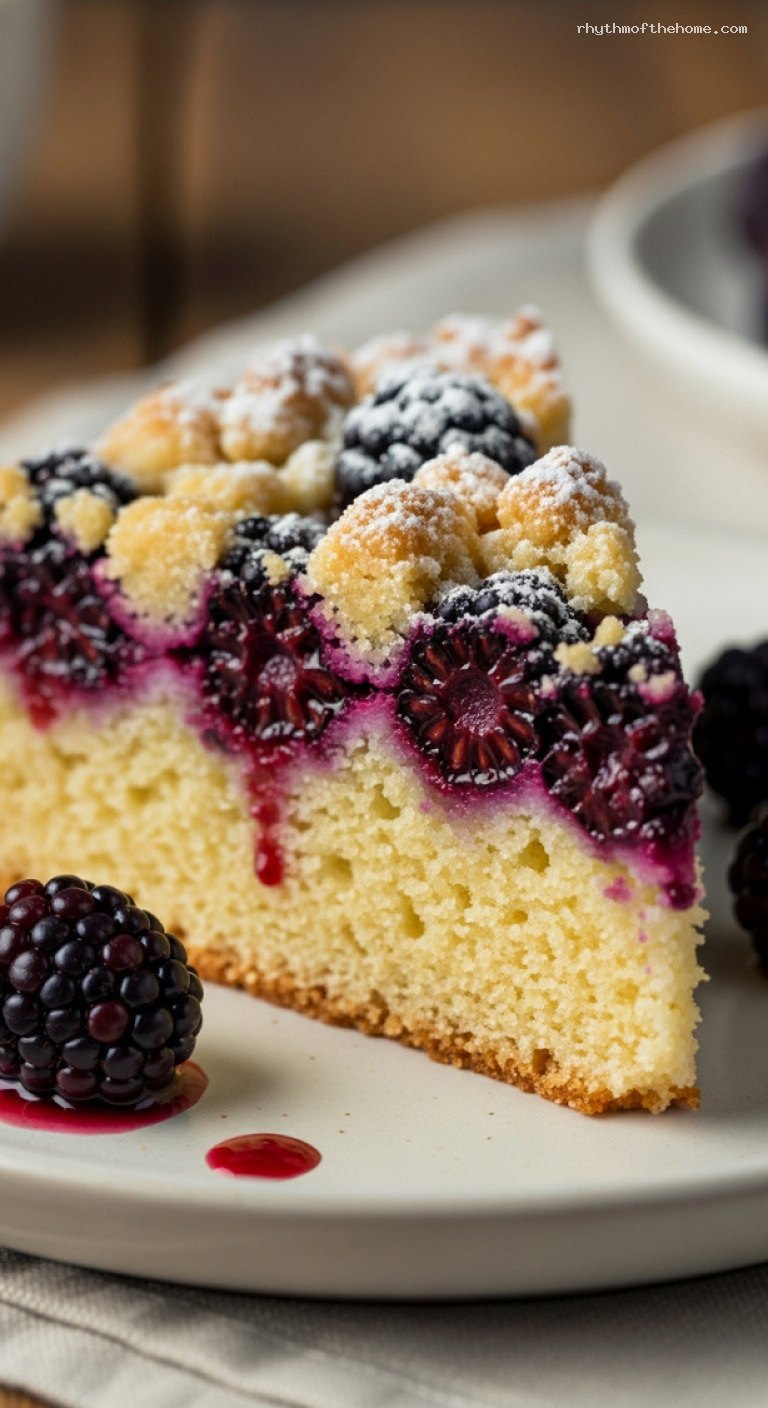
Step-by-Step Instructions
Step 1: Prepare the pan and preheat the oven
Preheat your oven to 180°C (top/bottom heat) / 350°F. Lightly grease a 23 x 33 cm (9 x 13 inch) rectangular baking pan with a little butter or neutral oil.
For easy removal and clean slices, line the bottom with a sheet of baking parchment, leaving a little overhang on two sides to act as handles, then lightly grease the parchment as well.
Set the prepared pan aside while you mix the berries, streusel, and batter.
Step 2: Toss the blackberries
Place the blackberries in a medium bowl. Sprinkle over the 1 tbsp sugar, 1 tsp cornstarch, and the lemon juice (if using). Gently toss with a spoon or your hands until the berries are lightly coated.
The thin cornstarch coating will help thicken the juices as they bubble during baking, so your cake stays moist but not soggy.
Set the bowl aside. Try not to mash the berries; a few split berries are fine, but you want most of them whole so they burst beautifully in the oven.
Step 3: Make the streusel topping
In another medium bowl, combine 125 g flour, 75 g sugar, and a pinch of salt. If using vanilla sugar or vanilla extract, add it now.
Add the 90 g cold butter cubes. Using your fingertips, a pastry cutter, or two knives, rub the butter into the dry ingredients until you get clumps ranging from small pebbles to pea-sized crumbs.
You are aiming for a mixture that holds together when squeezed but still breaks apart into crumbly pieces. If it seems too dry and floury, rub it a bit more; if it seems too wet and pasty, sprinkle in 1–2 tsp extra flour.
Place the bowl in the fridge while you prepare the cake batter. Chilling helps the streusel bake up crisp and distinct.
Step 4: Mix the dry and wet ingredients for the base
In a small bowl, whisk together 200 g flour, 2 tsp baking powder, and a pinch of salt. Set aside.
In a large mixing bowl, beat the softened 120 g butter and 150 g sugar together with a hand mixer or stand mixer on medium speed for about 3–4 minutes, until light, pale, and fluffy.
Scrape down the sides of the bowl once or twice. Add the vanilla and lemon zest (if using) and beat briefly to combine.
Add the eggs one at a time, beating on medium speed after each addition until fully incorporated. The mixture should be creamy and slightly thick.
If it looks a bit curdled, do not worry; it will smooth out when you add the flour.
Step 5: Finish the batter and spread it in the pan
With the mixer on low speed, add about one-third of the flour mixture to the butter-egg mixture. Mix just until combined. Pour in about half of the milk and mix again on low.
Repeat with another third of the flour, the remaining milk, and finally the last third of the flour, mixing gently each time until just incorporated. Do not overmix or the cake can turn dense.
Scrape the batter into the prepared pan. Use an offset spatula or the back of a spoon to spread it into an even layer, especially into the corners. The batter layer will be relatively thin; that is exactly right for this style of cake.
Step 6: Add berries, streusel, and bake
Give the blackberries a final gentle toss, then scatter them evenly over the batter. Do not press them all the way down; they will sink slightly during baking.
Try to distribute them so that every slice will get plenty of juicy fruit.
Next, take the chilled streusel from the fridge and crumble it evenly over the berries. You want a mixture of small and slightly larger crumbs for a nice rustic look and varied texture.
Transfer the pan to the preheated oven and bake for 35–40 minutes. The cake is done when the streusel is golden, the berries are bubbling, and a toothpick or cake tester inserted into the cake part (not just a berry pocket) comes out without wet batter. A few moist crumbs are fine.
Step 7: Cool, dust, and serve
Place the pan on a wire rack and let the cake cool for at least 20–30 minutes. This allows the blackberry juices to thicken and the crumb to set, making it easier to slice cleanly.
Just before serving, dust the top lightly with powdered sugar using a fine sieve. Cut into 12 squares or rectangles.
Serve warm or at room temperature on small plates, ideally with a dollop of lightly sweetened whipped cream or a scoop of vanilla ice cream.
This cake is wonderful as an afternoon treat with coffee or tea, or as an easy dessert after a relaxed meal.
Pro Tips
- Dry the berries well: After rinsing, spread the blackberries on a clean kitchen towel and pat dry. Excess water can make the top soggy.
- Room-temperature ingredients for the base: Soft butter, room-temperature eggs, and milk help the batter emulsify properly and bake into a light, even crumb.
- Do not overmix the batter: Once the flour is added, mix only until no streaks remain. Overmixing can create a tough, dense cake.
- Chilled streusel bakes best: A brief chill firms the butter, so the streusel holds its shape and bakes up crisp instead of melting into the cake.
- Adjust for pan size: If using a slightly smaller pan (e.g., 20 x 30 cm / 8 x 12 inch), expect a slightly thicker cake and add 3–5 minutes to baking time.
Variations
- Mixed berry streusel cake: Replace up to half of the blackberries with raspberries, blueberries, or sliced strawberries. Keep the total fruit weight around 400 g.
- Nutty streusel: Add 30–40 g finely chopped almonds or hazelnuts to the streusel mixture for extra crunch and a classic German bakery flavor.
- Lemon-vanilla twist: Increase lemon zest in the batter to 2 tsp and add a few drops of almond extract for a slightly more aromatic, cake-shop-style base.
Storage & Make-Ahead
Allow the cake to cool completely, then cover the pan tightly with foil or transfer slices to an airtight container.
It keeps well at room temperature for up to 2 days. For longer storage, refrigerate for up to 4 days; bring slices back to room temperature or gently warm in a low oven (about 140°C / 285°F) for 10 minutes before serving.
To freeze, wrap individual slices in plastic wrap, then place in a freezer bag or container. Freeze for up to 2–3 months. Thaw at room temperature for 1–2 hours, then warm briefly in the oven if you like a just-baked feel.
Make-ahead tip: You can prepare the streusel up to 2 days in advance and keep it in the fridge, and you can wash and dry the berries the day before. For the best texture, bake the cake the day you plan to serve it.
Nutrition (per serving)
Approximate values per slice (1 of 12): about 350 kcal, 17 g fat, 45 g carbohydrates, 5 g protein, 2 g fiber, 22 g sugars.
These numbers are estimates and will vary slightly based on ingredients and portion size.

Leave a Reply