
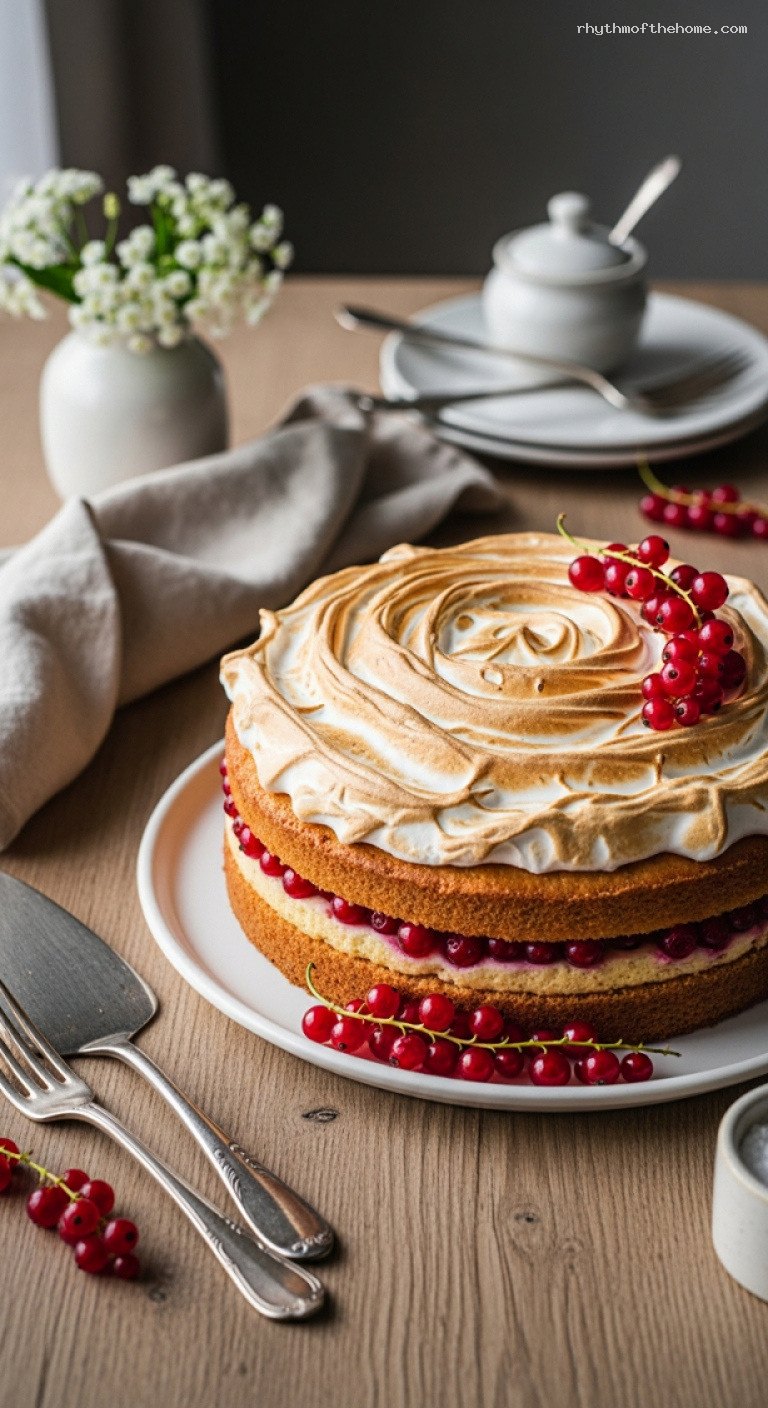
Quick Recipe Version (TL;DR)
Quick Ingredients
- 125 g unsalted butter, softened
- 120 g sugar + 1 tbsp sugar for berries
- 1 tsp vanilla extract (or 1 packet vanilla sugar, 8 g)
- 3 medium eggs, room temperature
- 180 g all-purpose flour
- 2 tsp baking powder (about 8 g)
- 1 pinch salt
- 3 tbsp milk (about 45 ml)
- 500 g fresh red currants, stemmed
- 2 tbsp cornstarch (about 16 g) for berries
- 4 large egg whites
- 200 g superfine sugar for meringue
- 1 tsp lemon juice or 1/4 tsp cream of tartar
- Optional: powdered sugar for dusting, extra currant clusters for garnish
Do This
- 1. Preheat oven to 180°C top/bottom heat (160°C fan). Line the base of a 26 cm springform pan with baking paper and lightly grease the sides.
- 2. Cream butter, 120 g sugar and vanilla until pale. Beat in eggs one at a time. Sift in flour, baking powder and salt, then mix with milk to a smooth, thick batter.
- 3. Spread batter into pan, smooth the top and bake 15–18 minutes until just set and lightly golden at the edges.
- 4. Meanwhile, stem and pat-dry currants. Toss with 1 tbsp sugar and 2 tbsp cornstarch. Whip egg whites with lemon juice to soft peaks, then gradually beat in 200 g sugar to stiff, glossy peaks.
- 5. Gently fold currants into the meringue. Reduce oven to 150°C (130°C fan). Pile the meringue mixture onto the warm base, creating swirls and peaks.
- 6. Bake 25–30 minutes until the meringue is set, matte and lightly golden. Cool completely in the pan, then slice and serve. Optionally dust with powdered sugar and garnish with currant clusters.
Why You’ll Love This Recipe
- Perfect balance of flavors: tangy red currants against a sweet, buttery base and fluffy meringue.
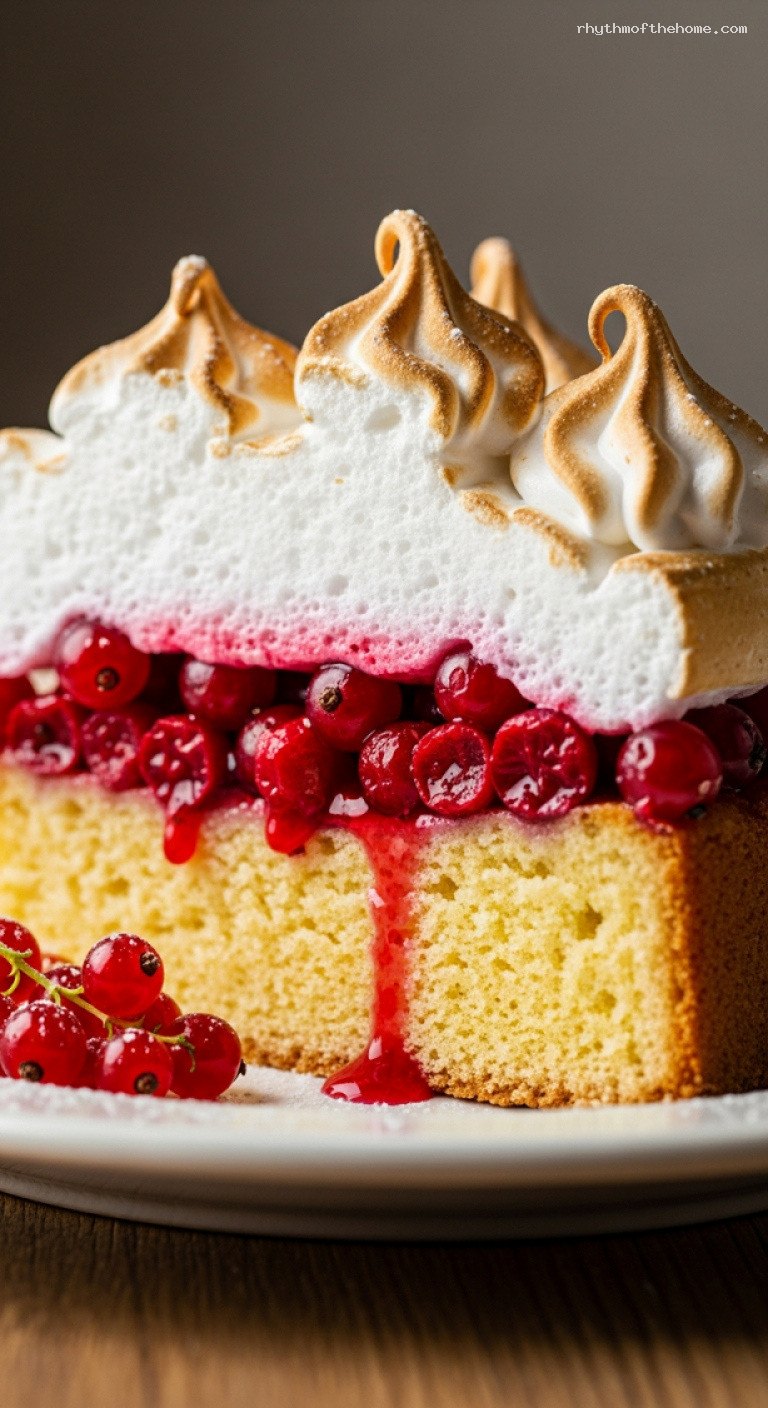
- Gorgeous to look at: glossy, lightly golden meringue peaks over a ruby-red berry layer.
- Surprisingly achievable: simple pantry ingredients and straightforward techniques.
- Ideal for guests: looks like a patisserie cake, tastes wonderfully homemade.
Grocery List
- Produce: 500 g fresh red currants (rote Johannisbeeren), optional extra currant clusters for decoration.
- Dairy: Unsalted butter, milk.
- Pantry: All-purpose flour, sugar, superfine (caster) sugar, vanilla extract or vanilla sugar, baking powder, salt, cornstarch, lemon juice (or cream of tartar), powdered sugar (optional).
Full Ingredients
For the Sweet Cake Base
- 125 g unsalted butter, softened to room temperature
- 120 g granulated sugar
- 1 tsp vanilla extract or 1 packet vanilla sugar (8 g)
- 3 medium eggs, at room temperature
- 180 g all-purpose flour (Type 405 or similar)
- 2 tsp baking powder (about 8 g)
- 1 pinch fine salt
- 3 tbsp milk (about 45 ml), room temperature
For the Red Currant Layer
- 500 g fresh red currants, stems removed, rinsed and well drained
- 1 tbsp granulated sugar (about 12 g), to lightly sweeten the berries
- 2 tbsp cornstarch (about 16 g), to thicken juices and protect the base
For the Fluffy Meringue Topping
- 4 large egg whites (about 130 g), at room temperature
- 200 g superfine (caster) sugar
- 1 tsp freshly squeezed lemon juice or 1/4 tsp cream of tartar
- Optional: 1 tsp cornstarch for extra-stable meringue
To Finish and Serve (Optional)
- Powdered sugar, for light dusting
- Small clusters of fresh red currants, for garnish
Step-by-Step Instructions
Step 1: Prepare pan and preheat the oven
Preheat your oven to 180°C top/bottom heat (160°C fan). Line the base of a 26 cm springform pan with baking paper so the cake releases easily later. Lightly grease the sides of the pan with a little butter or neutral oil.
Make sure your butter and eggs for the base, and egg whites for the meringue, are at room temperature. This helps the batter become fluffy and the meringue whip up to maximum volume.
Step 2: Make the sweet cake base
In a large mixing bowl, beat 125 g softened butter, 120 g sugar, and the vanilla with a hand mixer or stand mixer for about 3–4 minutes, until very light and creamy. Scrape down the bowl as needed.
Add the 3 eggs one at a time, beating well after each addition so the mixture stays smooth and emulsified. If it looks slightly curdled, do not worry; it will come together once the flour is added.
In a separate bowl, whisk together the 180 g flour, 2 tsp baking powder and a pinch of salt. Sift this dry mix over the butter-egg mixture. Add the 3 tbsp milk and gently mix on low speed or fold with a spatula just until you have a smooth, thick batter. Do not overmix; this keeps the crumb tender.
Step 3: Bake the base until just set
Scrape the batter into the prepared springform pan. Use a spatula or the back of a spoon to spread it evenly and smooth the top. The layer will be relatively thin; that is what you want, as it is just the base.
Bake in the preheated oven for 15–18 minutes until the cake is just set. The edges should be lightly golden and the center should spring back gently when touched, but it does not need to be fully browned. While the base bakes, start preparing the berries and meringue.
Step 4: Prep the red currants
While the base is in the oven, rinse the 500 g red currants if you have not already. Strip them from their stems using a fork or your fingers. Spread them out on a clean kitchen towel or paper towels and gently pat dry. Excess surface water can make the meringue runny, so try to get them as dry as possible without crushing them.
Transfer the currants to a bowl. Sprinkle over 1 tbsp sugar and 2 tbsp cornstarch. Gently toss until all the berries are lightly coated. The sugar takes off the sharpest edge of acidity, while the cornstarch will thicken the berry juices as the cake bakes, preventing a soggy base.
Step 5: Whip a stable, glossy meringue
Place the 4 egg whites in a clean, grease-free bowl. Add the 1 tsp lemon juice or 1/4 tsp cream of tartar. Using clean beaters, whip on medium speed until you reach soft peaks (the foam curls over softly when you lift the beaters).
Once at soft peaks, start adding the 200 g superfine sugar gradually, about 1 tablespoon at a time, beating constantly. Increase the mixer to medium-high and continue for 5–7 minutes, until the meringue is very thick, glossy, and holds firm, stiff peaks. If using, beat in the optional 1 tsp cornstarch at the end.
To fold in the berries, switch to a spatula. Add the prepared currants to the meringue and gently fold just until evenly distributed. Avoid overmixing, which can deflate the meringue and crush the fruit.
Step 6: Add the currant meringue and bake until lightly golden
When the base has baked for 15–18 minutes and is just set, remove it from the oven. Do not turn the oven off, but now reduce the temperature to 150°C top/bottom heat (130°C fan). Let the base sit for 3–5 minutes so it is hot but not scalding when you add the meringue.
Spoon the currant-studded meringue onto the warm base. Spread it gently to the edges and then use the back of a spoon or a spatula to create rustic swirls and peaks. These will brown beautifully in the oven.
Bake the cake at the reduced temperature for 25–30 minutes, until the meringue is set on top, no longer shiny, and lightly golden at the highest points. It should feel dry to the touch on the surface but still soft underneath. Avoid opening the oven in the first 15 minutes to prevent the meringue from collapsing.
If you like a slightly deeper color, you can bake for an extra 2–3 minutes, watching very closely so it does not burn.
Step 7: Cool, garnish and serve
Take the cake out of the oven and place it on a wire rack. Run a thin knife carefully around the inside of the pan to loosen the meringue from the sides; this helps prevent cracking as it cools and shrinks slightly. Let the cake cool in the pan for at least 1 hour, preferably until completely cool.
Once cool, unclasp the springform and transfer the cake to a serving plate. Just before serving, lightly dust the top with powdered sugar if you like, and decorate with a few fresh currant clusters for a beautiful finish.
Slice with a sharp, long knife, cutting straight down rather than sawing to preserve the meringue’s structure. Serve at room temperature, ideally on the day it is baked, when the meringue is still at its best balance of crisp edges and soft interior.
Pro Tips
- Keep everything grease-free for meringue: Any trace of fat or egg yolk will prevent the whites from whipping properly. Wipe your bowl and beaters with a bit of lemon juice and dry well before starting.
- Room-temperature eggs whip better: Take eggs out of the fridge at least 30 minutes before baking for maximum volume and a more stable foam.
- Dry those currants: After rinsing, pat currants really dry. Too much water dilutes the meringue and encourages weeping.
- Do not overbake the base: It should be just set, not deeply browned. Overbaking will make it dry once it bakes again with the meringue.
- Let it cool slowly: Sudden temperature changes can crack the meringue. Cooling in the pan on a rack helps it settle gently.
Variations
- Mixed berry version: Replace up to half of the red currants with raspberries or blackberries. Keep the total weight the same and handle them gently when folding into the meringue.
- Nutty base: Replace 50 g of the flour with finely ground almonds or hazelnuts for a slightly denser, aromatic base that pairs beautifully with tart currants.
- Spiced winter twist: Add 1/2 tsp ground cinnamon and a pinch of ground cardamom to the cake batter for a warming, festive flavor.
Storage & Make-Ahead
This cake is at its absolute best on the day it is baked, when the meringue still has a delicate outer crust and the interior is soft and marshmallowy. Once completely cooled, keep it at room temperature, loosely covered with a cake dome or an inverted bowl, for up to 1 day.
For longer storage, you can refrigerate leftovers for up to 2 days, but the meringue will gradually soften and may become a bit sticky from the berry juices. The flavor is still lovely, just less crisp on top.
To make ahead, you can bake just the cake base a day in advance. Let it cool completely, wrap tightly in plastic wrap, and store at room temperature. Shortly before serving day, prepare the currant meringue, spread it onto the base, and bake as directed. The fully assembled cake does not freeze well due to the meringue, but the baked base alone can be frozen (well wrapped) for up to 2 months.
Nutrition (per serving)
Approximate values per slice (1 of 12): about 320 kcal, 10 g fat, 55 g carbohydrates, 6 g protein, 1 g fiber, 220 mg sodium. These numbers are estimates and will vary with exact ingredients and portion size.

Leave a Reply