
Quick Recipe Version (TL;DR)
Quick Ingredients
- 4 cups (500 g) all-purpose flour
- 6 tbsp (75 g) granulated sugar
- 1 tsp baking powder
- 1/2 tsp fine salt
- 1 tsp ground cinnamon (optional)
- 9 tbsp (125 g) cold unsalted butter, cubed
- 3 large eggs + 2 large egg yolks
- 1/3 cup (80 ml) sour cream or heavy cream
- 2 tbsp dark rum or milk
- 1 tsp vanilla extract
- Finely grated zest of 1 lemon
- 1.5–2 L neutral oil for deep-frying
- 1 1/4 cups (150 g) powdered sugar for dusting
- Optional: 7 oz (200 g) chocolate + 1 tbsp neutral oil for dipping
Do This
- 1. Mix flour, sugar, baking powder, salt, cinnamon. Cut in cold butter until sandy.
- 2. Beat eggs, yolks, sour cream, rum, vanilla, and lemon zest; mix into dry ingredients to form a smooth but firm dough. Chill 1 hour.
- 3. Divide dough into 6 pieces. Roll each very thin (about 2 mm) and cut into 5 in (12–14 cm) discs, then slice discs into narrow strips, leaving the top uncut.
- 4. Weave and gently bunch the strips together and form into loose balls (with Schneeballen tongs or a metal ring and spoon handle).
- 5. Heat oil to 340–350°F (170–175°C). Fry 1–2 Schneeballen at a time, gently rotating, until deep golden and crisp, about 6–8 minutes.
- 6. Drain on a rack. While still slightly warm, toss in powdered sugar. Let cool completely.
- 7. For chocolate-coated Schneeballen, dip cooled pastries in melted chocolate, let excess drip off, and set on parchment to firm up.
Why You’ll Love This Recipe
- Authentic Franconian bakery flavor at home, without needing special equipment.
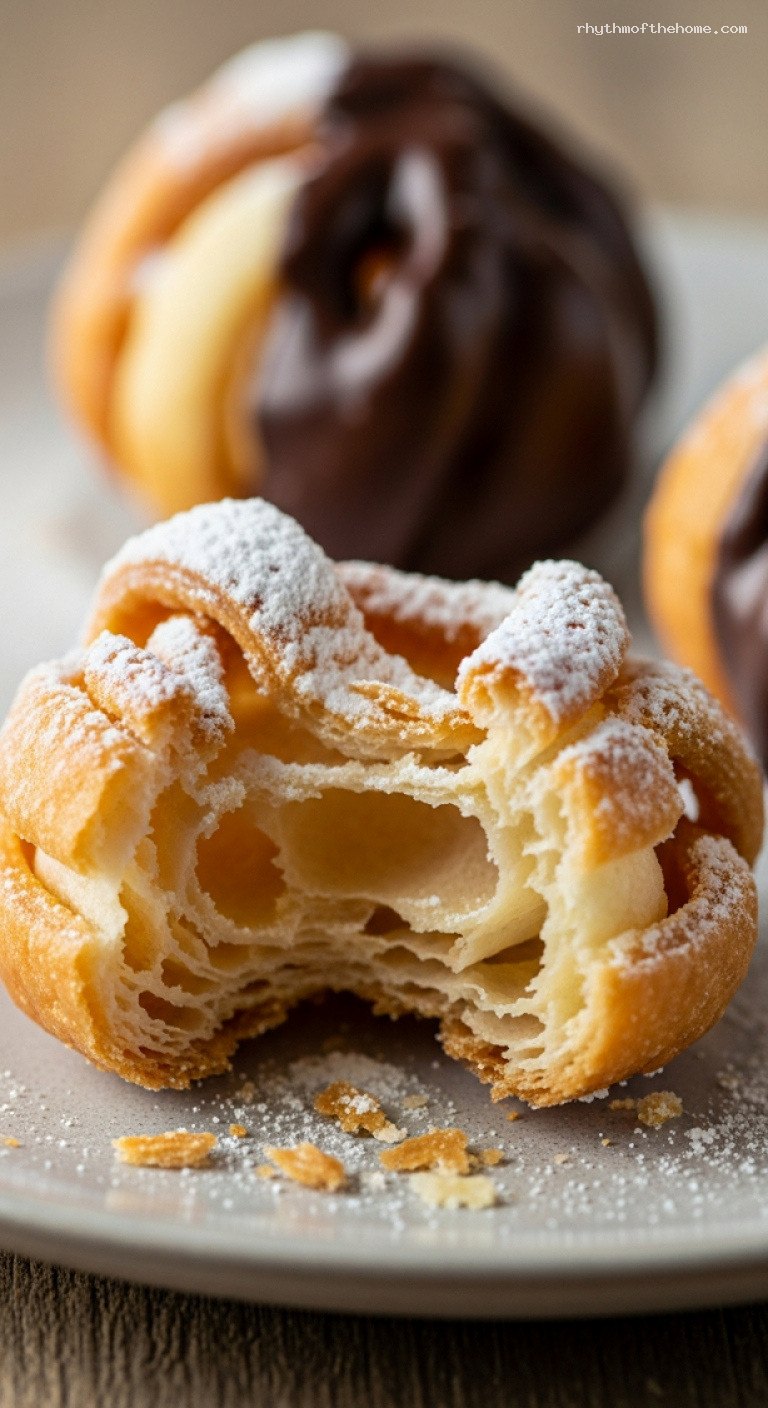
- Ultra-crisp, layered shortcrust strips that shatter delicately with each bite.
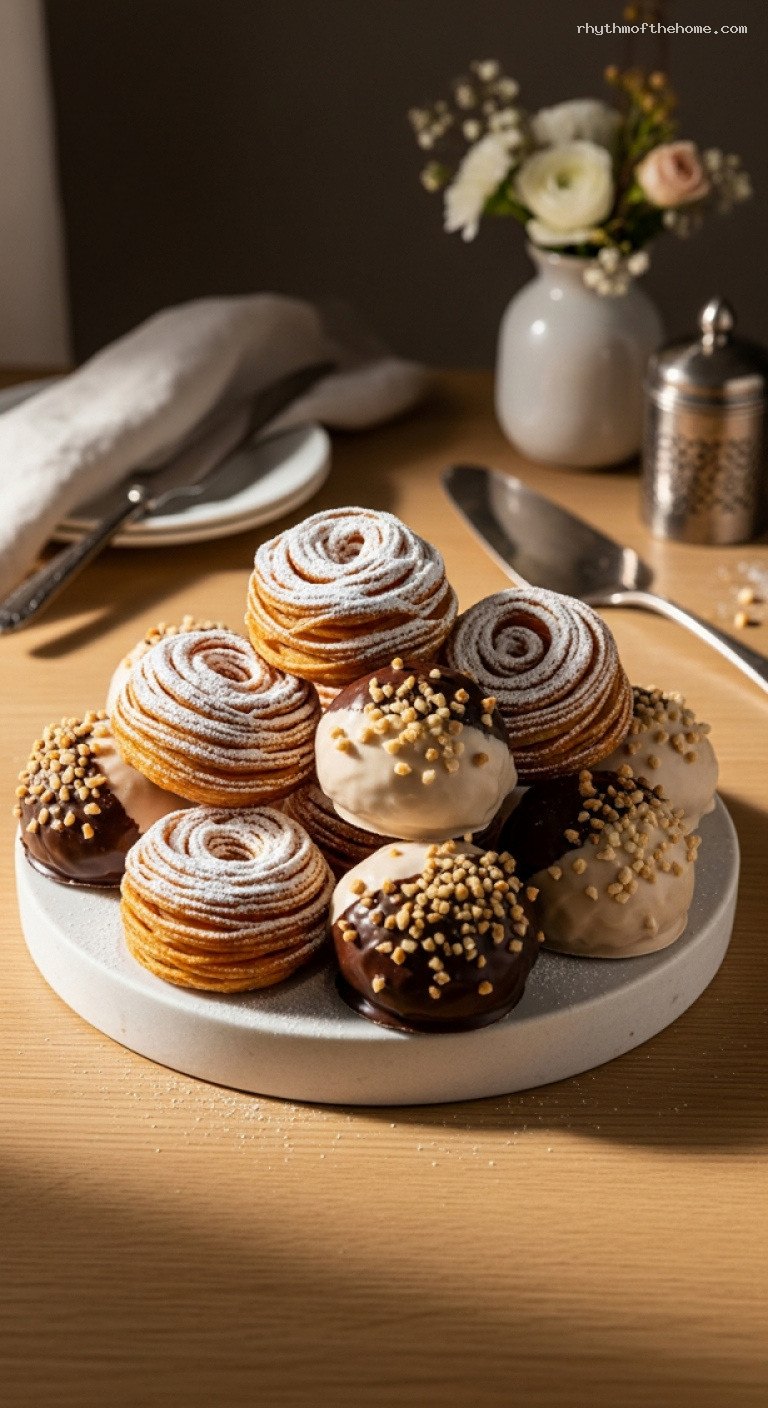
- Endlessly customizable: dust with powdered sugar, drizzle with chocolate, or coat in nuts.
- Stays crunchy for days, making it perfect for gifting or holiday platters.
Grocery List
- Produce: 1 unwaxed lemon (for zest)
- Dairy: Unsalted butter, eggs, sour cream or heavy cream
- Pantry: All-purpose flour, granulated sugar, powdered sugar, baking powder, salt, ground cinnamon, vanilla extract, dark rum (or milk), neutral frying oil (canola, sunflower, or vegetable), chocolate (dark or milk), optional chopped nuts or shredded coconut
Full Ingredients
For the Shortcrust Dough
- 4 cups (500 g) all-purpose flour
- 6 tbsp (75 g) granulated sugar
- 1 tsp baking powder
- 1/2 tsp fine sea salt
- 1 tsp ground cinnamon (optional but traditional)
- 9 tbsp (125 g) cold unsalted butter, cut into small cubes
- 3 large eggs, at room temperature
- 2 large egg yolks, at room temperature
- 1/3 cup (80 ml) sour cream or heavy cream
- 2 tbsp dark rum (or milk or apple juice for a non-alcoholic version)
- 1 tsp vanilla extract
- Finely grated zest of 1 unwaxed lemon
For Frying
- 1.5–2 L neutral oil with high smoke point (such as canola, sunflower, or vegetable oil)
For Coatings and Toppings
- 1 1/4 cups (150 g) powdered sugar, sifted
- 3.5 oz (100 g) dark chocolate, chopped
- 3.5 oz (100 g) milk chocolate, chopped
- 1 tbsp neutral oil (to thin the chocolate for dipping)
- Optional for garnish: finely chopped toasted nuts, shredded coconut, or chocolate sprinkles
Step-by-Step Instructions
Step 1: Make the shortcrust dough
In a large mixing bowl, whisk together the flour, granulated sugar, baking powder, salt, and ground cinnamon (if using). Add the cold butter cubes. Using your fingertips or a pastry cutter, rub or cut the butter into the dry ingredients until the mixture resembles coarse sand with a few pea-sized bits of butter remaining.
In a separate bowl or large measuring jug, whisk together the eggs, egg yolks, sour cream (or heavy cream), dark rum (or milk), vanilla extract, and lemon zest until well combined. Pour this wet mixture into the flour-butter mixture. Using a wooden spoon or your hands, stir and knead gently until a soft but fairly firm dough forms and no dry patches of flour remain.
Step 2: Knead briefly and chill the dough
Turn the dough out onto a lightly floured work surface. Knead it just until smooth and cohesive, about 1–2 minutes. Avoid overworking it; you want the gluten to stay relatively relaxed so the Schneeballen remain tender and crisp rather than tough.
Shape the dough into a flat disc, wrap it tightly in plastic wrap or place it in a covered bowl, and refrigerate for at least 1 hour. This rest time allows the flour to hydrate and the butter to firm up again, making it much easier to roll the dough very thin without tearing.
Step 3: Divide and roll the dough very thin
Line a baking sheet with parchment paper and dust it lightly with flour. Unwrap the rested dough and cut it into 6 equal pieces. Keep the pieces you are not working with covered so they do not dry out.
On a lightly floured surface, roll one piece of dough out into a thin sheet, then cut out 2 or 3 circles using a 4 1/2–5 1/2 inch (12–14 cm) round cutter or an upside-down bowl. Aim for a thickness of about 1/16 inch (2 mm) or slightly thinner; the thinner the dough, the more delicate and layered your Schneeballen will be. Transfer the circles to the prepared baking sheet, dust lightly with flour, and cover with a clean kitchen towel while you work with the remaining dough.
Step 4: Cut the characteristic strips
Take one dough circle and place it on a lightly floured surface. Using a sharp knife or a pastry wheel, cut parallel strips across the circle, each about 1/2 inch (1–1.5 cm) wide. Leave an uncut border of about 3/4 inch (2 cm) all the way around the edge so the strips are still attached at the top and bottom. You should end up with something that looks like a small, slotted disc or a “fringed” circle.
Gently separate the strips with your fingers so they are not sticking together, dusting lightly with flour if needed. Repeat with the remaining dough circles. Keep the prepared circles covered with a towel so they do not dry out while you shape and fry.
Step 5: Shape the Schneeballen
If you have Schneeball tongs: Lightly flour the inside of the tongs. Pick up one slotted disc and drape it loosely into the open tongs, letting the strips fall in folds and layers. Close the tongs gently, allowing the dough to bunch up into a ball without pressing it too tightly; the strips need a little space to expand while frying.
If you do not have Schneeball tongs: Place a slotted disc over a metal ladle, small heatproof bowl, or metal ring about 3–3 1/2 inches (8–9 cm) wide. Use the handle of a wooden spoon to gently push alternating strips toward the center, loosely tucking and overlapping them to create a layered ball shape. Cup your hands around it to hold the shape as you lower it gently into the hot oil in Step 6. It does not need to be perfect; the slightly irregular, rustic look is part of the charm.
Step 6: Deep-fry until golden and crisp
Pour the oil into a heavy, deep pot or Dutch oven to a depth of about 3 inches (7–8 cm). Heat over medium heat until the oil reaches 340–350°F (170–175°C). Use a thermometer for accuracy, or test by dropping in a small scrap of dough: it should sizzle gently and turn golden in about 60 seconds.
Working with one Schneeball at a time (or two if your pot is large), carefully lower the shaped dough into the hot oil. If using Schneeball tongs, keep them closed and turn them slowly so the pastry cooks evenly and puffs into a sphere. If shaping by hand, gently rotate the ball with two slotted spoons, holding it together as it fries. Fry for about 6–8 minutes, until deeply golden brown and crisp, adjusting the heat as needed to keep the oil at temperature.
Lift the Schneeball from the oil, allow excess oil to drain back into the pot, then transfer to a wire rack set over a tray or paper towels. Repeat with the remaining dough, allowing the oil to come back to temperature between batches.
Step 7: Cool and coat in sugar or chocolate
While the Schneeballen are still slightly warm but cool enough to handle, place the powdered sugar in a large bowl. Gently roll each pastry in the sugar, turning until well coated, or place the Schneeball in the bowl and sift sugar generously over the top, rotating as needed. Return to the rack to cool completely. This is the classic Franconian version.
For chocolate-coated Schneeballen, allow the pastries to cool completely. Place the chopped dark and milk chocolate in a heatproof bowl set over a saucepan of barely simmering water (do not let the bowl touch the water). Stir until melted and smooth, then stir in the neutral oil to create a fluid glaze. Dip the cooled Schneeballen halfway or drizzle generously over the top, letting excess chocolate drip back into the bowl. Place on parchment paper and optionally sprinkle with chopped nuts, coconut, or sprinkles. Let stand until the chocolate is fully set before serving.
Pro Tips
- Keep the dough thin: Rolling to about 2 mm thickness is key to achieving the delicate, shattering crunch that makes Schneeballen special.
- Control the oil temperature: Too cool and the pastries absorb oil; too hot and they brown before the inside crisps. Aim for 340–350°F (170–175°C) and adjust the heat as needed.
- Do not pack the tongs tightly: Leave room for the strips to puff and separate. A loosely formed ball gives better layers and a prettier shape.
- Work in small batches: Frying 1–2 Schneeballen at a time keeps the oil temperature stable and ensures even cooking.
- Dust while warm, glaze when cool: Powdered sugar sticks best to warm pastries, but chocolate holds its shine and sets properly on fully cooled ones.
Variations
- Cinnamon-sugar Schneeballen: Mix 1 cup (120 g) powdered sugar with 1–2 tsp ground cinnamon and a pinch of nutmeg, then roll the warm pastries in this fragrant coating.
- Nut-crunch Schneeballen: After dipping in chocolate, immediately roll or sprinkle the pastries with finely chopped toasted hazelnuts, almonds, or pistachios for extra texture.
- Coconut snow effect: For an extra “snowy” look, roll freshly chocolate-dipped Schneeballen in finely shredded desiccated coconut, creating a fluffy white coating over the dark chocolate.
Storage & Make-Ahead
Once completely cooled and coated, store Schneeballen in an airtight tin or container at cool room temperature for up to 5–7 days. They stay pleasantly crisp and are often even better the day after frying. To refresh slightly softened Schneeballen, warm them in a 300°F (150°C) oven for 5–7 minutes, then cool before serving.
For longer storage, you can freeze plain, unfrosted Schneeballen in a single layer, then transfer to a freezer bag for up to 2 months. Thaw at room temperature and re-crisp briefly in a low oven before dusting with sugar or glazing with chocolate.
Nutrition (per serving)
Approximate values for 1 Schneeball (based on 12 servings, sugar-dusted, not chocolate-coated): about 320 calories; 5 g protein; 35 g carbohydrates; 17 g fat; 7 g saturated fat; 120 mg cholesterol; 90 mg sodium; 12 g sugars. Chocolate coatings and nut toppings will increase calories and fat.

Leave a Reply