
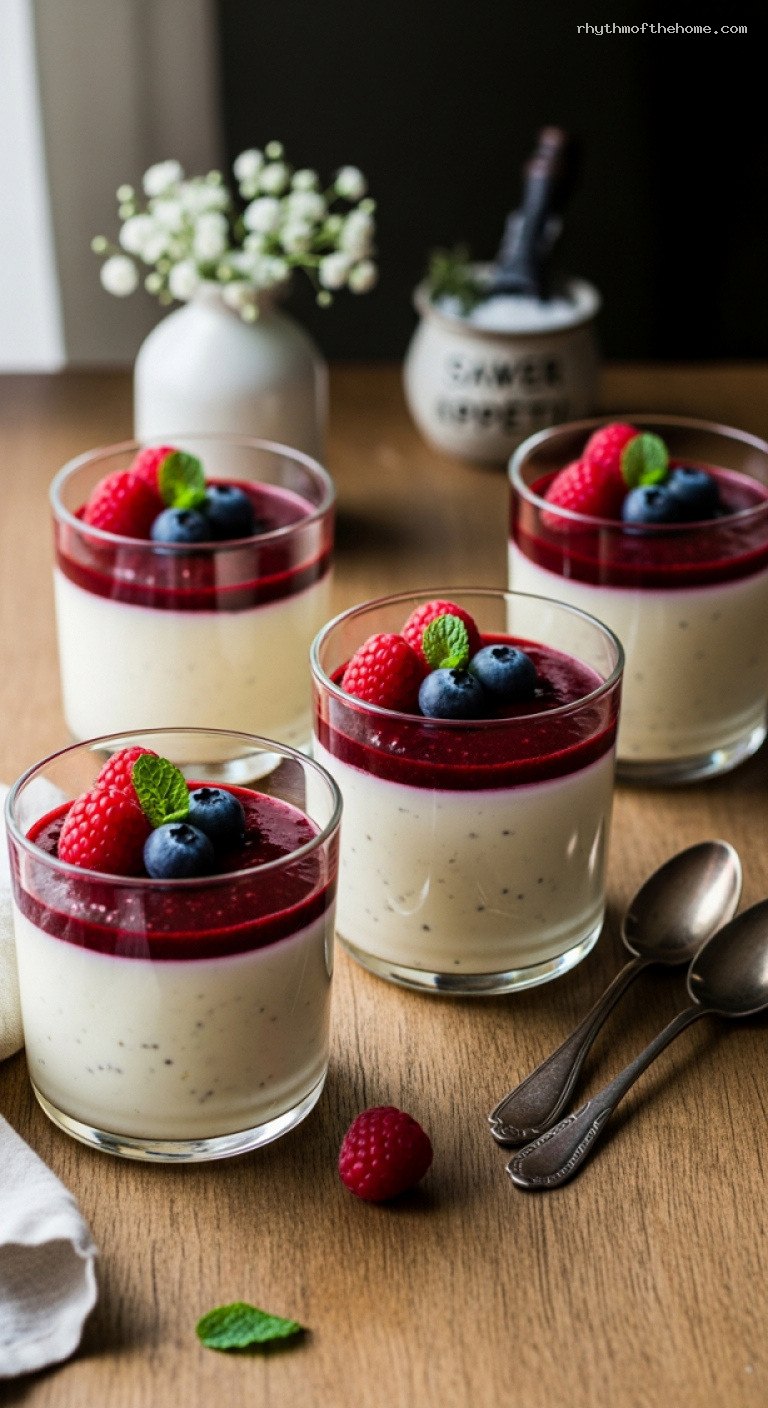
Quick Recipe Version (TL;DR)
Quick Ingredients
- 6 sheets gelatin (about 10 g) or 3 tsp (10 g) powdered gelatin
- 1 1/4 cups (300 ml) whole milk
- 1 vanilla bean (or 2 tsp pure vanilla extract)
- 6 large egg yolks
- 1/2 cup (100 g) granulated sugar + 3 tbsp (40 g) for coulis
- Pinch fine sea salt
- 2 cups (480 ml) cold heavy cream
- 2 cups (250 g) mixed berries (fresh or frozen)
- 1–2 tsp fresh lemon juice
- Fresh berries and mint for garnish (optional)
Do This
- 1. Bloom gelatin: soak sheets in cold water 5–10 minutes, or sprinkle powdered gelatin over 3 tbsp cold water and let stand.
- 2. Heat milk with split vanilla bean (or extract later) until steaming; do not boil.
- 3. Whisk yolks, sugar, and salt; slowly add hot milk, then cook over low heat, stirring, until custard thickens and coats the back of a spoon.
- 4. Off heat, dissolve squeezed gelatin sheets or bloomed powdered gelatin in hot custard. Cool until just beginning to thicken but not set.
- 5. Whip cold cream to soft peaks; gently fold into cool, slightly thickened custard. Pour into glasses or molds. Chill at least 4 hours.
- 6. Simmer berries, sugar, and lemon juice 5–7 minutes, then blend and strain for a smooth coulis. Serve Bavarian cream chilled with berry coulis and fresh berries.
Why You’ll Love This Recipe
- Classic Bavarian elegance: a silky, mousse-like vanilla cream that feels restaurant-fancy but is doable at home.
- Beautiful make-ahead dessert: perfect for dinner parties, holidays, or anytime you want zero last-minute stress.
- Light but indulgent: airy whipped cream folded into a delicate vanilla custard, set just enough with gelatin.
- Gorgeous with berries: the tart, jewel-toned coulis perfectly balances the rich cream.
Grocery List
- Produce: Mixed berries (fresh or frozen), 1 lemon, fresh mint (optional for garnish)
- Dairy: Whole milk, heavy cream, 6 large eggs
- Pantry: Gelatin sheets or powdered gelatin, granulated sugar, fine sea salt, vanilla bean or pure vanilla extract
Full Ingredients
For the Bavarian Cream
- 6 sheets gold-strength gelatin (about 10 g) or 3 tsp (10 g) powdered gelatin
- 1 1/4 cups (300 ml) whole milk
- 1 vanilla bean, split and scraped or 2 tsp pure vanilla extract
- 6 large egg yolks, room temperature
- 1/2 cup (100 g) granulated sugar
- Pinch fine sea salt
- 2 cups (480 ml) heavy cream, well chilled
- Optional: 1–2 tbsp rum, Kirsch, or vanilla liqueur, added after cooking (adults only)
For the Berry Coulis
- 2 cups (250 g) mixed berries (such as strawberries, raspberries, blueberries, blackberries; fresh or frozen)
- 3 tbsp (40 g) granulated sugar, or to taste (adjust depending on berry sweetness)
- 1–2 tsp freshly squeezed lemon juice, to taste
- 1–2 tbsp water, only if needed to help the berries cook down
For Serving
- Fresh berries (raspberries, blueberries, or sliced strawberries)
- Fresh mint leaves (optional)
- Extra vanilla bean seeds for decoration (optional)
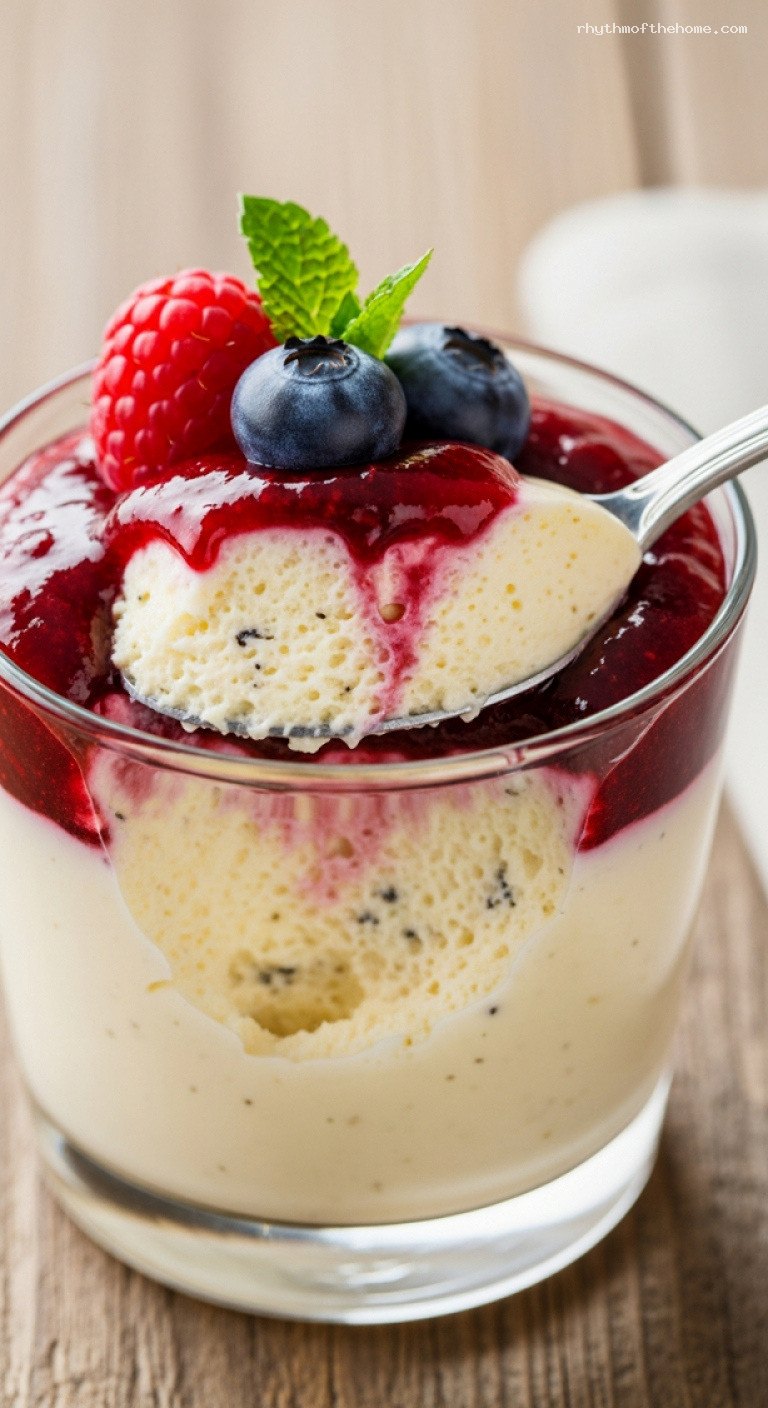
Step-by-Step Instructions
Step 1: Prepare the gelatin and equipment
Set out 6–8 small dessert glasses, ramekins, or silicone molds on a tray so they are ready to fill. This recipe makes about 6 generous servings or up to 8 smaller ones.
If using gelatin sheets, place them in a bowl of very cold water and soak for 5–10 minutes until soft and pliable. If using powdered gelatin, sprinkle 3 tsp (10 g) evenly over 3 tbsp cold water in a small bowl. Do not stir; let stand 5–10 minutes to bloom. While the gelatin softens, move on to the custard base.
Step 2: Infuse the milk with vanilla
In a medium saucepan, add the milk. If using a vanilla bean, split it lengthwise with a small, sharp knife, scrape out the seeds, and add both the seeds and the pod to the milk. If using vanilla extract, do not add it yet; you will stir it in at the end.
Heat the milk over medium-low heat until it is steaming and just starting to form small bubbles around the edges (about 160–170°F / 70–75°C). Do not let it boil. Once hot, remove from the heat, cover, and let the vanilla bean steep while you prepare the egg mixture, 5–10 minutes for maximum flavor.
Step 3: Make the vanilla custard base
In a medium heatproof bowl, whisk together the egg yolks, sugar, and a pinch of salt until the mixture is thickened and lightened in color, about 1–2 minutes by hand. This helps the sugar start dissolving and prevents graininess.
Remove the vanilla pod from the hot milk (if used) and slowly pour the hot milk into the yolk mixture in a thin stream, whisking constantly to temper the eggs. This gradual heating prevents curdling.
Return the mixture to the saucepan and place it over low to medium-low heat. Cook, stirring constantly with a heatproof spatula or wooden spoon, making sure to scrape the bottom and corners of the pan. The custard is done when it thickens slightly and coats the back of a spoon; if you run your finger along the coated spoon, it should leave a clean line. This usually happens around 170–175°F (77–80°C). Do not let it boil, or the eggs may scramble.
Step 4: Add the gelatin and cool the base
Remove the saucepan from the heat. If using gelatin sheets, gently squeeze out the excess water from each sheet, then add them to the hot custard. If using powdered gelatin, add the bloomed gelatin (it will be a firm gel) to the hot custard. Stir gently but thoroughly until the gelatin is completely dissolved and the mixture is smooth. If you see any lumps, place the pan over very low heat and stir until fully melted.
If you are using vanilla extract instead of a bean, stir it in now. You can also add the optional liqueur at this stage for an adult version.
Pour the custard through a fine-mesh sieve into a clean bowl to remove any tiny bits of cooked egg and ensure a silky texture. To cool it quickly, set this bowl over a larger bowl filled with ice water, making an ice bath. Stir gently and regularly until the mixture is cool to the touch and thickened to the consistency of heavy cream, but not yet set. This usually takes about 15–20 minutes over an ice bath, or 30–45 minutes in the refrigerator (stir occasionally so it sets evenly).
Step 5: Whip the cream and fold it in
Once the custard base is cool and slightly thickened, pour the cold heavy cream into a large, clean bowl. Using a hand mixer or stand mixer with the whisk attachment (or a whisk and some elbow grease), whip the cream to soft peaks. The cream should hold its shape when you lift the whisk but the tip should gently fold over, not stand straight up. Avoid overwhipping, or it will be harder to fold in smoothly.
Check that your gelatin custard base is cool and not warm to the touch; if it is warm, it will thin the whipped cream. Lighten the custard first by folding in about one-third of the whipped cream using a spatula, working gently from the bottom up to preserve air. Then fold in the remaining whipped cream in 2–3 additions until you have a smooth, pale, airy cream with no streaks. Work patiently and avoid vigorous stirring so you keep the mixture light and mousse-like.
Step 6: Portion and chill the Bavarian cream
Immediately pour or spoon the Bavarian cream into your prepared glasses, ramekins, or molds. Gently tap each dish on the counter to level the surface and remove any large air bubbles.
Cover each portion lightly with plastic wrap (try not to let it touch the surface if possible) and refrigerate until fully set, at least 4 hours or up to overnight. The cream should be softly set and will wobble slightly when gently shaken, but hold its shape when scooped or unmolded.
If you plan to unmold the cream onto plates, choose smooth molds and lightly rinse them with cold water before filling; this helps later release.
Step 7: Make the berry coulis
While the Bavarian cream chills, prepare the berry sauce. In a small saucepan, combine the berries, sugar, and lemon juice. If your berries are very thick or mostly strawberries, add 1–2 tbsp water to help them start releasing juices.
Cook over medium heat, stirring occasionally, until the berries break down and the mixture is bubbling all over, about 5–7 minutes. Taste and adjust sugar or lemon to balance sweetness and brightness.
Remove from heat and let cool slightly. Transfer the mixture to a blender or use an immersion blender to puree until smooth. For a refined, seed-free coulis, press the puree through a fine-mesh sieve into a bowl, scraping the underside of the sieve to collect all the sauce. Discard the seeds and solids. Cool completely, then refrigerate until ready to serve.
Step 8: Serve and garnish
When you are ready to serve, gently stir the chilled berry coulis. You can either spoon a thin layer of coulis directly on top of each glass of Bavarian cream or spoon the cream onto plates and surround it with a pool of sauce.
Garnish with a few fresh berries, a small mint leaf, and, if you like, a few extra vanilla seeds on top for a bakery-style look. Serve well chilled.
To unmold individual creams, briefly dip the bottom of each mold into warm (not hot) water for about 5–10 seconds, then run a thin knife quickly around the top edge. Invert onto a cold plate and give a gentle shake. Spoon berry coulis around the base and garnish as above.
Pro Tips
- Do not rush the cooling step: The custard base must be cool and only just starting to thicken before you fold in the whipped cream. If it is too warm, the cream will deflate; if it is too cold and almost set, you will get lumps.
- Control the gelatin: This amount gives a softly set, mousse-like texture. For a firmer, sliceable set (for unmolding), you can increase gelatin slightly to 7 sheets or 3 1/2 tsp powdered, but do not overdo it or the texture will feel rubbery.
- Whip cream to soft peaks only: Overwhipped cream makes folding difficult and can create a grainy mouthfeel. Stop as soon as it starts holding soft, billowy peaks.
- Cook the custard gently: Keep the heat low and stir constantly. If you accidentally overcook and see small curdled bits, straining through a fine sieve while still warm can often save the batch.
- Make it look restaurant-worthy: Use clear glasses or stemmed dessert cups to showcase the pale ivory cream with a vivid red coulis layer on top and a few perfectly placed berries.
Variations
- Chocolate Bavarian Cream: Stir 3 oz (85 g) finely chopped dark chocolate into the hot custard base just after you add the gelatin. Let melt completely, then cool and fold in the whipped cream as directed. Serve with plain or raspberry coulis.
- Citrus Bavarian Cream: Replace half the milk with freshly squeezed orange juice and add finely grated zest of 1 lemon or orange to the custard. Use a berry or passion fruit coulis for contrast.
- Coffee or Mocha Bavarian Cream: Infuse the milk with 2 tbsp finely ground coffee (then strain) or 2 tsp instant espresso powder. For mocha, add 2 oz (55 g) melted dark chocolate to the hot custard. Pair with chocolate shavings and a simple chocolate sauce instead of berry coulis.
Storage & Make-Ahead
Bavarian cream is an excellent make-ahead dessert. Once portioned into glasses or molds, cover and refrigerate for up to 2 days. The texture is best within the first 24 hours but still lovely on day two. Keep the berry coulis in a separate covered container in the refrigerator for up to 4 days. Assemble with sauce and garnishes just before serving.
Freezing is not recommended, as gelatin-based creams can separate and turn watery when thawed. If you are transporting the dessert, keep it chilled in an insulated carrier and add coulis and fresh berries on arrival.
Nutrition (per serving)
Approximate values for 1 of 6 servings, including coulis and without optional alcohol:
Calories: ~380 kcal; Protein: ~6 g; Fat: ~32 g; Saturated Fat: ~19 g; Carbohydrates: ~19 g; Sugars: ~18 g; Fiber: ~1 g; Sodium: ~60 mg. These values are estimates and will vary based on exact ingredients and portion sizes.

Leave a Reply