
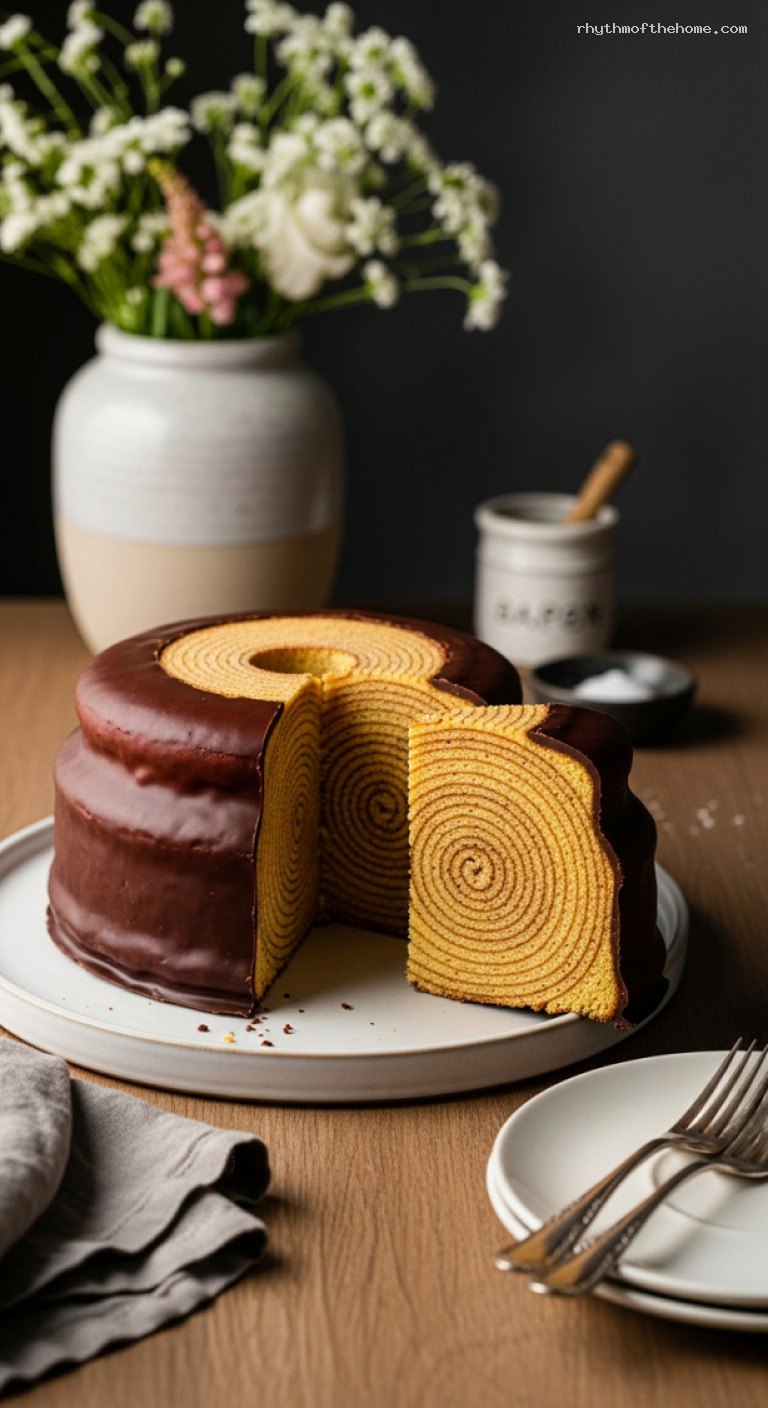
Quick Recipe Version (TL;DR)
Quick Ingredients
- 250 g (1 cup + 2 tbsp) unsalted butter, softened
- 200 g (1 cup) granulated sugar
- 8 large eggs, separated
- 2 tsp vanilla extract
- 2 tbsp dark rum or milk
- 150 g (1 1/2 cups) finely ground almond flour
- 150 g (1 1/4 cups) cake flour (or all-purpose), sifted
- 30 g (1/4 cup) cornstarch
- 1 1/2 tsp baking powder + 1/2 tsp fine salt
- 60 ml (1/4 cup) heavy cream
- 120 g (about 1/3 cup) smooth apricot jam
- 200 g (7 oz) dark or semisweet chocolate + 2 tbsp neutral oil or butter
Do This
- 1. Preheat oven to 220°C / 425°F on top heat or broil; line and grease a 23 cm / 9-inch springform pan.
- 2. Cream butter and sugar; beat in yolks, vanilla, rum, and cream. Fold in almond flour, sifted flours, baking powder, and salt.
- 3. Whip egg whites to soft peaks; gently fold into batter in 2–3 additions.
- 4. Spread a very thin layer of batter (2–3 tbsp) in the pan; broil until deep golden, 1–2 minutes. Repeat, stacking 10–14 layers.
- 5. Cool cake 20–30 minutes; trim edges if needed. Warm apricot jam and brush all over.
- 6. Melt chocolate with oil or butter; pour over cake and smooth to coat top and sides. Let set.
- 7. Slice into wedges to reveal “tree rings.” Serve at room temperature.
Why You’ll Love This Recipe
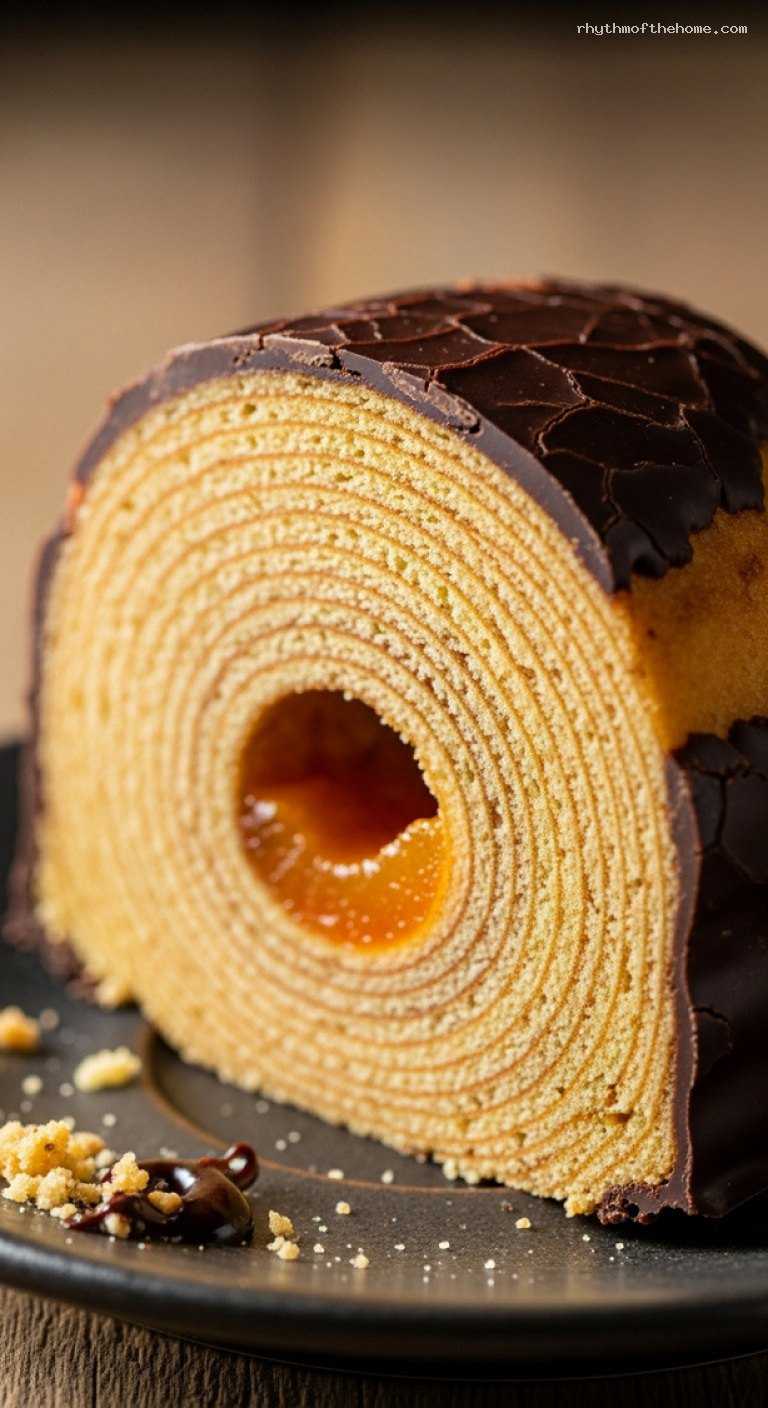
- Creates the classic “tree ring” pattern with beautiful caramelized layers that look stunning when sliced.
- Uses a regular oven and springform pan, so no special spit or machine is required.
- Flavor is rich and elegant: buttery almond sponge, fruity apricot glaze, and a crisp chocolate shell.
- Perfect for celebrations and holidays, yet the step-by-step layering makes it very doable for home bakers.
Grocery List
- Produce: None (optional: fresh berries or citrus for garnish)
- Dairy: Unsalted butter, eggs, heavy cream
- Pantry: Granulated sugar, vanilla extract, dark rum (or milk), almond flour, cake flour or all-purpose flour, cornstarch, baking powder, fine salt, apricot jam, dark or semisweet chocolate, neutral oil or extra butter, optional powdered sugar and nuts for garnish
Full Ingredients
For the Baumkuchen Batter
- 250 g unsalted butter, softened to cool room temperature (about 1 cup + 2 tbsp)
- 200 g granulated sugar (1 cup)
- 8 large eggs, separated, at room temperature
- 2 tsp vanilla extract
- 2 tbsp dark rum (traditional) or whole milk
- 150 g finely ground almond flour (1 1/2 cups, lightly packed)
- 150 g cake flour or very soft all-purpose flour (1 1/4 cups), sifted
- 30 g cornstarch (1/4 cup)
- 1 1/2 tsp baking powder
- 1/2 tsp fine sea salt
- 60 ml heavy cream (1/4 cup), at room temperature
For the Apricot Glaze
- 120 g smooth apricot jam or preserves (about 1/3 cup)
- 1–2 tbsp water (as needed to thin)
For the Chocolate Coating
- 200 g dark or semisweet chocolate (about 7 oz, 50–60% cocoa works well)
- 2 tbsp neutral oil (such as grapeseed or sunflower) or unsalted butter
Optional Garnishes
- Powdered sugar, for a light dusting
- Finely chopped toasted nuts (almonds or hazelnuts)
- Fresh berries or thin citrus slices for serving
Step-by-Step Instructions
Step 1: Prepare the pan and preheat the oven
Line the base of a 23 cm / 9-inch springform pan with a circle of baking parchment. Lightly grease the base and sides with butter, then line the sides with a strip of parchment that rises at least 2.5 cm / 1 inch above the rim; this helps contain the batter as it puffs.
Set an oven rack about 15 cm / 6 inches below the top heating element (broiler). Preheat the oven on top heat / broil / grill to 220°C / 425°F. If your oven has only a standard bake setting, set it to 220°C / 425°F and plan to watch the cake closely for browning. The goal is fast, intense top heat to caramelize each layer.
Step 2: Mix the dry ingredients
In a medium bowl, whisk together the cake flour, cornstarch, baking powder, and salt until well combined and lump-free. Set aside.
This blend of cake flour plus cornstarch keeps the crumb tender and fine, while a touch of baking powder ensures the layers stay light instead of becoming dense and rubbery.
Step 3: Make the rich butter base
In a large mixing bowl, or the bowl of a stand mixer fitted with the paddle attachment, beat the softened butter and granulated sugar together on medium-high speed for 3–4 minutes, until very light, pale, and fluffy. Scrape down the bowl once or twice so no streaks of butter remain.
Add the egg yolks one at a time, mixing well after each addition. The batter will become thick and glossy. Beat in the vanilla extract and dark rum (or milk), then mix in the almond flour until fully incorporated.
With the mixer on low speed, add half of the dry mixture, then the heavy cream, then the remaining dry mixture. Stop mixing as soon as everything is combined and smooth. The batter will be quite thick—this is ideal for spreading thin layers.
Step 4: Whip and fold in the egg whites
In a clean bowl with clean beaters (any grease will prevent whipping), beat the egg whites on medium speed until foamy. Increase to medium-high and beat to soft peaks: when you lift the beaters, the peaks should hold their shape but gently curl over at the tips, 3–4 minutes.
Using a large spatula, fold one-third of the whipped whites into the thick batter to lighten it. Do this gently but thoroughly. Then fold in the remaining whites in two more additions, turning the bowl and cutting through the batter until no visible streaks of white remain. The finished batter should be airy but still spreadable.
Step 5: Bake the first test layer
Scoop about 2–3 tablespoons of batter into the prepared pan. Use an offset spatula or the back of a spoon to spread it into an even, very thin layer covering the entire base. Aim for about 2–3 mm thickness; you should almost be able to see the parchment through it.
Place the pan on the prepared oven rack and bake under the broiler/top heat for 1–2 minutes, watching through the oven door. The layer should puff slightly and turn a deep golden color with light brown spots at the edges but should not burn. Note the exact timing in your oven; you will repeat it for each subsequent layer.
If the layer barely colors after 2–3 minutes, raise the rack one notch or increase the oven temperature slightly. If it browns too quickly, move the rack lower or reduce the temperature a little.
Step 6: Build up the tree rings layer by layer
Once the first layer is nicely browned, remove the pan from the oven and switch the oven door slightly ajar if needed to prevent overheating. Add another 2–3 tablespoons of batter onto the hot baked layer. Spread it gently into a thin, even layer, taking care not to disturb the browned surface underneath. Try to keep the middle slightly thinner than the edges so the cake bakes evenly.
Return the pan to the oven and broil for 1–2 minutes until this new layer is also deep golden. Repeat this process—spreading thin layers of batter and broiling—until you have used all the batter, usually 10–14 layers in total. Rotate the pan 180 degrees every few layers for even browning.
If any area browns too darkly, use a small knife to gently trim it while still warm; subsequent layers will cover minor imperfections. The total active baking time will be around 30–40 minutes.
Step 7: Cool, trim, and glaze with apricot jam
When the final layer is baked to a rich golden color, remove the pan from the oven and let the cake cool in the pan for 15–20 minutes. Run a thin knife around the edge, release the springform ring, and carefully transfer the cake to a wire rack. Peel away the parchment from the sides and base.
While the cake cools to just slightly warm, place the apricot jam and 1–2 tablespoons of water in a small saucepan. Warm over low heat, stirring, until the jam is smooth and pourable. Strain through a fine sieve if it is chunky.
Brush the warm apricot glaze over the top and sides of the cake in a thin, even coat. Let the glaze set and the cake cool completely, about 30 minutes, before adding the chocolate.
Step 8: Coat with chocolate and serve
Chop the dark or semisweet chocolate and place it in a heatproof bowl with the neutral oil or butter. Set the bowl over a saucepan of just-simmering water (do not let the base touch the water) and stir gently until fully melted and smooth. Alternatively, melt in the microwave in 15–20 second bursts, stirring often.
Place the cooled cake on a wire rack set over a tray to catch drips. Pour the melted chocolate over the center of the cake, using an offset spatula to coax it over the top and down the sides, fully enrobing the cake in a smooth shell. If desired, sprinkle the top with finely chopped toasted nuts before the chocolate sets.
Let the chocolate firm up at cool room temperature for about 30–45 minutes, or refrigerate briefly to speed this up (note that chilling can dull the chocolate’s shine). Transfer to a serving plate. To serve, use a long sharp knife dipped in hot water and wiped dry between cuts; slice into neat wedges to reveal the striking “tree rings.”
Pro Tips
- Keep the layers very thin. The thinner each layer (about 2–3 mm), the more dramatic and delicate the tree-ring pattern will be.
- Watch the broiler like a hawk. Each layer can go from golden to burnt in seconds. Stay nearby and adjust timing as you learn how your oven behaves.
- Use room-temperature ingredients. Soft butter and room-temperature eggs whip better, giving you a lighter batter and more even layers.
- Rotate the pan regularly. Most ovens heat unevenly; turning the pan every few layers prevents one side from getting too dark.
- Rest before slicing. Let the chocolate shell fully set so it cracks cleanly instead of smearing when you cut the cake.
Variations
- Classic spit / rotisserie style: If you have a rotisserie attachment, you can brush thin layers of batter onto a rotating, foil-wrapped spit and brown them under a grill or open flame, repeating to build up a log. Once cooled, slice into rings. This is more advanced but very traditional.
- Citrus Baumkuchen: Replace the rum with 2 tbsp lemon or orange juice and add 1 tbsp finely grated lemon or orange zest to the batter. Finish with candied citrus peel on top of the chocolate.
- Mocha version: Replace 2 tbsp of the flour with unsweetened cocoa powder and add 2 tsp instant espresso powder dissolved in 1 tbsp hot water to the batter for a subtle coffee-chocolate note.
Storage & Make-Ahead
Baumkuchen keeps very well and is an excellent make-ahead cake. Once the chocolate coating has fully set, store the cake in an airtight container at cool room temperature for up to 4–5 days. Avoid warm, humid spots which can soften the chocolate and glaze.
For longer storage, you can refrigerate the cake, well wrapped, for up to 1 week; bring it back to room temperature before serving for the best texture and flavor. The cake also freezes nicely: wrap tightly in plastic wrap, then in foil, and freeze for up to 2 months. Thaw overnight in the refrigerator, then allow to come to room temperature before slicing.
Nutrition (per serving)
Approximate values per slice (1 of 12): about 500 calories, 7 g protein, 40 g carbohydrates, 37 g fat, 2 g fiber, and 28 g sugar. Values will vary based on exact ingredients and thickness of chocolate and jam layers.

Leave a Reply