
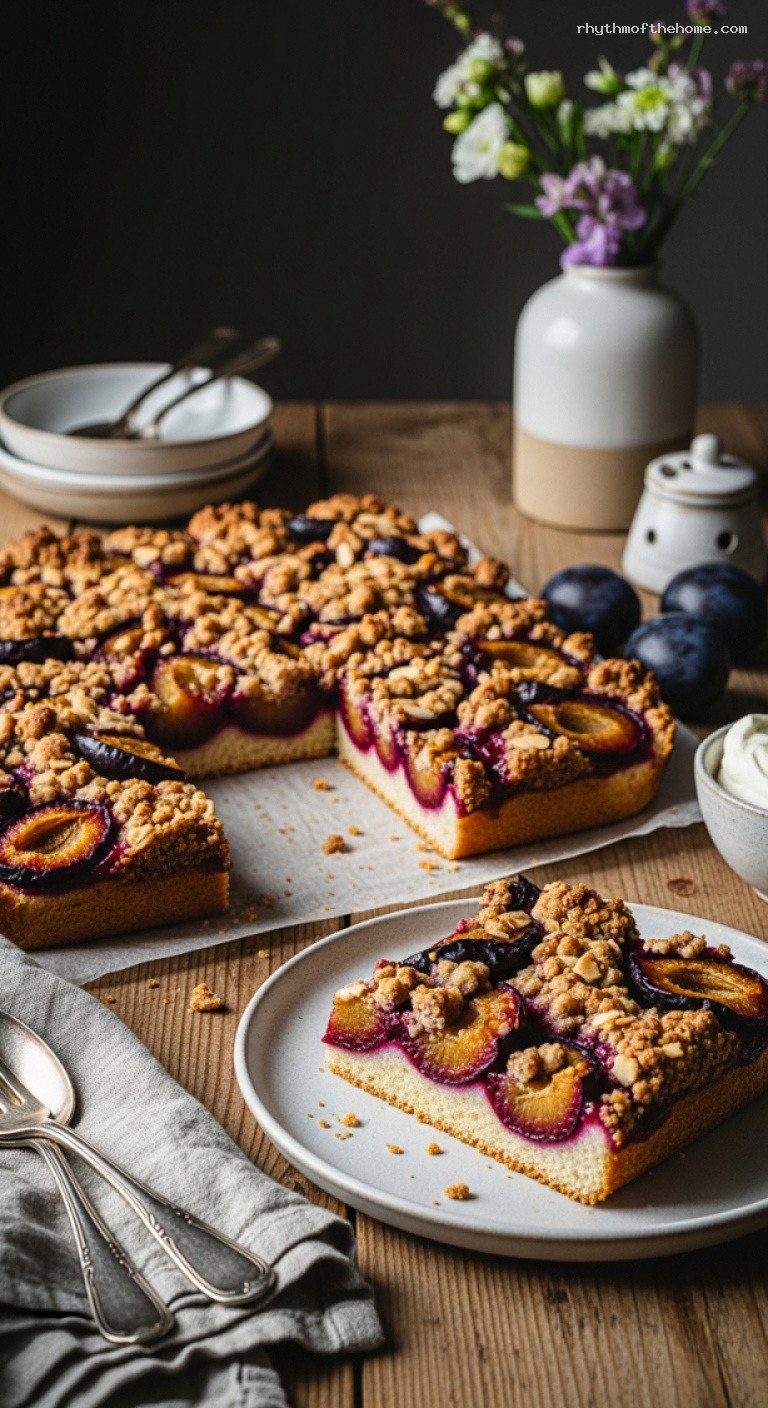
Quick Recipe Version (TL;DR)
Quick Ingredients
- 1.5–2 kg Italian prune plums (Zwetschgen), halved and pitted
- For yeast dough: 500 g all-purpose flour, 60 g sugar, 7 g instant yeast, 250 ml lukewarm milk, 1 large egg, 80 g soft butter, 1 tsp vanilla extract, 1/2 tsp salt
- For plum layer: 2 tbsp fine breadcrumbs or ground almonds, 2 tbsp sugar, 1 tsp ground cinnamon
- For streusel: 175 g all-purpose flour, 180 g sugar (white or white + light brown), 1.5 tsp ground cinnamon, pinch salt, 150 g cold butter, optional 40 g ground almonds
- Optional: powdered sugar for dusting, lightly whipped cream for serving
Do This
- 1. Mix flour, sugar, yeast, salt; add warm milk, egg, vanilla, soft butter and knead 8–10 minutes into a smooth dough.
- 2. Let dough rise in a greased bowl, covered, until doubled, about 45–60 minutes.
- 3. Meanwhile, halve and pit plums; toss sugar and cinnamon for sprinkling. Line a 30 × 40 cm (12 × 16 inch) baking sheet and lightly grease.
- 4. For streusel, rub flour, sugar, cinnamon, salt, and cold butter (plus almonds if using) into large, clumpy crumbs; chill.
- 5. Roll or press dough into the pan. Sprinkle breadcrumbs/almonds, then tightly overlap plum halves in rows.
- 6. Sprinkle plums with cinnamon sugar, then scatter streusel thickly on top. Rest 15–20 minutes while preheating oven to 180°C / 350°F.
- 7. Bake 30–35 minutes until the streusel is deep golden and plum juices bubble. Cool 15–20 minutes and serve slightly warm.
Why You’ll Love This Recipe
- Classic German bakery flavor at home: buttery, tender yeast dough, jammy plums, and a generous layer of crunchy streusel.
- Perfect make-ahead dessert or coffee cake that tastes even better slightly warm on day one.
- Flexible: works with Italian prune plums (traditional) or other firm, tart plums, and you can swap in a shortcrust base if you prefer.
- Simple, approachable method with detailed steps, even if you are new to yeast doughs.
Grocery List
- Produce: 1.5–2 kg Italian prune plums (Zwetschgen) or other firm, tart plums
- Dairy: Whole milk, unsalted butter, 1 large egg, optional cream for serving
- Pantry: All-purpose flour, granulated sugar, light brown sugar (optional), instant yeast, ground cinnamon, vanilla extract or vanilla sugar, fine breadcrumbs or ground almonds, salt, powdered sugar (optional)
Full Ingredients
For the Yeast Dough Base
- 500 g all-purpose flour (Type 405 if in Germany), plus extra for dusting
- 60 g granulated sugar
- 7 g instant yeast (about 2 1/4 tsp, one standard packet)
- 1/2 tsp fine salt
- 250 ml whole milk, lukewarm (about 35–38°C / 95–100°F)
- 1 large egg, at room temperature
- 80 g unsalted butter, very soft but not melted
- 1 tsp vanilla extract or 1 sachet (8 g) vanilla sugar
For the Plum Layer
- 1.5–2 kg Italian prune plums (Zwetschgen), ripe but still firm
- 2 tbsp fine, dry breadcrumbs or 2 tbsp ground almonds (to absorb juices)
- 2 tbsp granulated sugar
- 1 tsp ground cinnamon
For the Streusel Topping
- 175 g all-purpose flour
- 180 g sugar total:
- 100 g granulated sugar
- 80 g light brown sugar (or use all white sugar)
- 1.5 tsp ground cinnamon
- 1 pinch fine salt
- 150 g unsalted butter, cold and cut into small cubes
- Optional but lovely: 40 g ground almonds or finely chopped blanched almonds for extra crunch
To Finish (Optional)
- Powdered (icing) sugar, for dusting
- Lightly sweetened whipped cream or vanilla ice cream, for serving
Step-by-Step Instructions
Step 1: Make the yeast dough base
In a large mixing bowl, combine the flour, sugar, instant yeast, and salt. Stir briefly so the yeast and salt are well distributed. Make a well in the center.
In a separate jug or bowl, whisk together the lukewarm milk, egg, vanilla, and soft butter until roughly combined (the butter will still be a bit lumpy, that is fine). Pour this mixture into the well in the dry ingredients.
Using a wooden spoon or dough hook attachment (stand mixer), mix until a shaggy dough forms. Then knead:
- By hand: Turn onto a lightly floured surface and knead 8–10 minutes until smooth, elastic, and only slightly tacky.
- By mixer: Knead on medium-low speed for about 6–8 minutes until the dough pulls away from the bowl and feels soft and springy.
The dough should be soft and just barely sticky. If it is very wet, sprinkle in 1–2 tbsp more flour; if it feels dry and stiff, knead in 1–2 tsp more milk.
Step 2: Let the dough rise
Lightly grease a clean bowl with a bit of oil or butter. Shape the dough into a ball, place it in the bowl, and turn it once so all sides are lightly coated. Cover tightly with plastic wrap or a clean, damp kitchen towel.
Let the dough rise in a warm, draft-free place until doubled in size, about 45–60 minutes, depending on room temperature. While the dough is rising, you can prepare the plums, streusel, and pan to save time.
Line a rimmed baking sheet or rectangular pan (about 30 × 40 cm / 12 × 16 inches) with parchment paper and lightly grease the sides and paper. This will make removing the cake much easier later.
Step 3: Prepare the plums
Wash the plums thoroughly and pat them dry. Slice each plum lengthwise along the natural seam and twist to separate the halves. Remove the pit.
For a traditional German style arrangement, you can make each plum half slightly “fan” open: after halving and pitting, make an additional shallow slit lengthwise through the center of each half without cutting all the way through. This helps the plums splay slightly and cook down into a jammy layer.
In a small bowl, mix together the sugar and cinnamon for sprinkling. Set aside. Keep the plums at room temperature so they bake down nicely.
Step 4: Make the streusel topping
In a medium bowl, combine the flour, granulated sugar, brown sugar, cinnamon, salt, and ground or chopped almonds (if using). Stir until everything is evenly mixed.
Add the cold butter cubes. Using your fingertips, a pastry cutter, or two knives, cut the butter into the dry ingredients until large, crumbly clumps form. Aim for a mix of pea-sized and larger chunks; do not overwork into a dough. The mixture should hold together when squeezed but still fall apart into clumps when crumbled.
Place the streusel in the fridge while you prepare the base; cold streusel bakes up crisper.
Step 5: Shape the dough and arrange the plums
Once the dough has doubled, gently punch it down to deflate. Turn it out onto a very lightly floured surface. Using your hands or a rolling pin, shape it into a rectangle roughly the size of your prepared pan.
Transfer the dough to the pan, pressing it gently into the corners and edges. Try to keep the thickness even, but it does not need to be perfect. If the dough resists stretching and shrinks back, let it rest for 5 minutes and then continue.
Sprinkle the breadcrumbs or ground almonds evenly over the dough. This creates a thin barrier that absorbs some of the plum juices, keeping the base from getting soggy.
Now arrange the plum halves on top in tight rows, cut side up and slightly overlapping like roof tiles. Start at one short side of the pan and work your way across. The more plums you snug in, the better and fruitier the cake will be.
When all plums are in place, evenly sprinkle the cinnamon-sugar mixture over the fruit.
Step 6: Add streusel, rest briefly, and bake
Take the chilled streusel out of the fridge and break it up gently with your fingers if it has clumped too firmly. Scatter it generously over the plums in an even layer. Aim to cover most of the fruit, but leaving a few small gaps is fine; the plums will bubble up through as they bake.
Let the assembled cake rest at room temperature for 15–20 minutes while you preheat your oven to 180°C / 350°F (top and bottom heat, no fan if possible). This short rest gives the dough a second, gentle rise so it bakes up light and fluffy.
Bake on the middle rack for 30–35 minutes, or until:
- The streusel is a deep golden brown and crisp at the edges.
- Plum juices are visibly bubbling up between the crumbs.
- The dough at the edges looks set and lightly browned.
If the streusel browns too quickly before the plums are bubbling, loosely tent the pan with foil for the last 5–10 minutes.
Step 7: Cool slightly and serve warm
Remove the Zwetschgenkuchen from the oven and place the pan on a cooling rack. Allow it to cool for at least 15–20 minutes before cutting. The hot plum juices will thicken slightly as they cool, making it easier to cut clean slices.
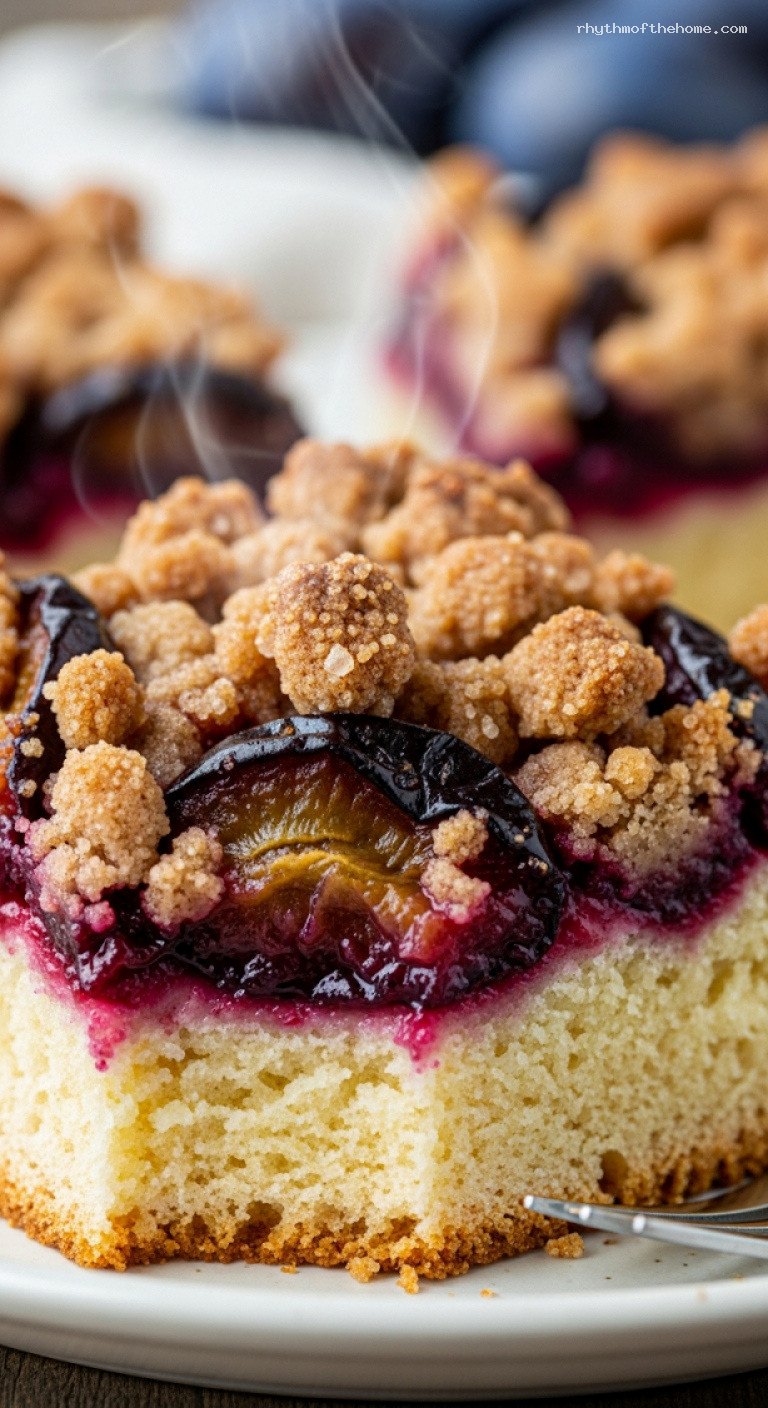
For the most classic experience, serve the cake still just warm: the base will be tender, the plums soft and jammy, and the streusel shatteringly crisp. Dust lightly with powdered sugar just before serving if you like. A generous spoonful of softly whipped cream or a scoop of vanilla ice cream makes it even more indulgent.
This cake is wonderful the same day it is baked, especially within the first few hours, but it also keeps nicely (see Storage & Make-Ahead below).
Pro Tips
- Use Italian prune plums if you can. They are less juicy and more intensely flavored than large round plums, so they hold their shape and give that authentic German taste.
- Do not over-flour the dough. A slightly soft, tacky dough bakes up much more tender. Add just enough flour so it is manageable.
- Chill the streusel before baking. Cold butter melts more slowly in the oven, which keeps the streusel chunky and crisp instead of melting into a flat layer.
- Pack the plums tightly. When in doubt, add more plums. They shrink as they bake, and a thick layer of fruit is what makes Zwetschgenkuchen special.
- Let the cake set before cutting. Even though it is best slightly warm, a short cooling time keeps the slices from collapsing and lets the juices thicken.
Variations
- Shortcrust base: Replace the yeast dough with a simple shortcrust: 250 g flour, 125 g cold butter, 80 g sugar, 1 egg, pinch salt. Press into the pan without rising, add plums and streusel, and bake 35–40 minutes.
- Nutty streusel: Swap 50 g of the streusel flour for finely ground hazelnuts or almonds, and sprinkle a few sliced almonds on top during the last 10 minutes of baking.
- Less sweet, more tart: Use only 1 tbsp sugar over the plums and reduce streusel sugar by 30 g for a more tangy, fruit-forward cake.
Storage & Make-Ahead
Let the cake cool completely before storing. Cover the pan tightly or transfer slices to an airtight container. Keep at room temperature for up to 1 day, or in the refrigerator for up to 3 days. The streusel will soften in the fridge; to crisp it back up, reheat individual slices in a 160°C / 320°F oven for 5–10 minutes.
You can make the yeast dough up to 12 hours ahead by letting it rise slowly in the refrigerator (first rise). Bring it back to room temperature for 30–45 minutes, then proceed with shaping. The streusel can be made up to 2 days in advance and kept chilled. This makes it easy to assemble and bake fresh on the day you want to serve.
Nutrition (per serving)
Approximate values per serving (1 of 12): about 360 kcal; 53 g carbohydrates; 7 g protein; 13 g fat; 4 g saturated fat; 3 g fiber; 24 g sugars; 220 mg sodium. Values will vary based on exact ingredients and portion sizes.

Leave a Reply