
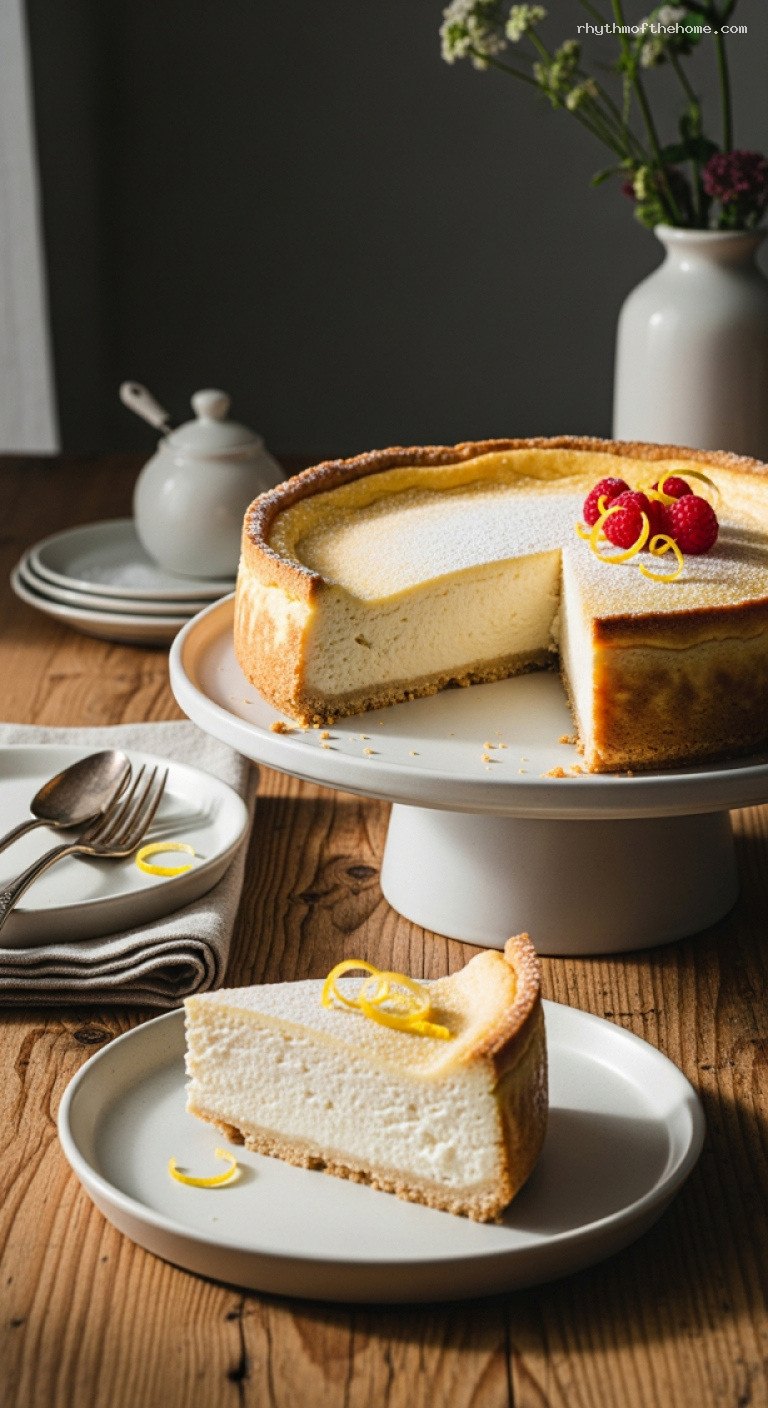
Quick Recipe Version (TL;DR)
Quick Ingredients
- Shortcrust base: 200 g (1 2/3 cups) flour, 75 g (about 1/3 cup + 1 tbsp) sugar, pinch salt, 1 tsp vanilla sugar or 1/2 tsp vanilla extract, 100 g (7 tbsp) cold butter, 1 large egg yolk, 1–2 tbsp cold milk or water.
- Quark filling: 750 g quark (or 500 g quark + 250 g whole-milk ricotta), 200 g (1 cup) sugar, 4 large eggs, 50 g (3 1/2 tbsp) melted butter, 200 ml (about 3/4 cup + 2 tbsp) heavy cream, zest of 1 lemon, 2 tbsp lemon juice, 35 g (about 4 tbsp) cornstarch, 1 tsp vanilla extract or 2 tsp vanilla sugar, pinch salt.
- To serve (optional): Powdered sugar, softly whipped cream, fresh berries, extra lemon zest.
Do This
- 1. Preheat oven to 180°C / 350°F. Grease and line a 26 cm / 10 inch springform pan.
- 2. Rub flour, sugar, salt, vanilla, and cold butter into crumbs, then add egg yolk and a little cold milk to form a soft dough. Chill 10–15 minutes.
- 3. Press or roll dough into pan, pushing 3–4 cm (about 1 1/2 inches) up the sides. Prick base and bake 12–15 minutes until lightly golden. Reduce oven to 170°C / 340°F.
- 4. For filling, whisk eggs, sugar, vanilla, and salt; add quark (and ricotta if using), lemon zest and juice, then melted butter and cream. Whisk in cornstarch until smooth.
- 5. Pour filling onto warm base and bake 50–60 minutes at 170°C / 340°F until edges are set and puffed but the center still has a gentle wobble.
- 6. Cool in oven with door cracked 20–30 minutes, then on a rack until room temperature. Chill at least 3 hours or overnight before slicing and serving.
Why You’ll Love This Recipe
- Classic German-style cheesecake: light, tangy, and silky instead of heavy and dense.
- Made with quark (or a quark–ricotta mix) for a fresh, slightly lemony flavor.
- Shortcrust base adds a delicate, buttery crunch that contrasts beautifully with the creamy filling.
- Make-ahead friendly: actually tastes better after a night in the fridge.
Grocery List
- Produce: 1 medium unwaxed lemon (for zest and juice)
- Dairy: Quark (or quark + whole-milk ricotta), heavy cream (whipping cream), unsalted butter, eggs, optional whipped cream
- Pantry: All-purpose flour, granulated sugar, powdered sugar (for dusting), vanilla extract or vanilla sugar, cornstarch, fine salt
Full Ingredients
For the Shortcrust Base (Mürbeteig)
- 200 g all-purpose flour (about 1 2/3 cups), preferably Type 405 or similar
- 75 g granulated sugar (about 1/3 cup + 1 tablespoon)
- 1 teaspoon vanilla sugar or 1/2 teaspoon vanilla extract
- 1/4 teaspoon fine salt
- 100 g cold unsalted butter, cut into small cubes (about 7 tablespoons)
- 1 large egg yolk, at room temperature
- 1–2 tablespoons cold milk or water, as needed to bring dough together
For the Quark Cheesecake Filling
- 750 g quark, 10–20% fat, well drained if watery (about 3 cups)
or 500 g (about 2 cups) quark + 250 g (about 1 cup) whole-milk ricotta, well drained - 200 g granulated sugar (1 cup)
- 4 large eggs, at room temperature
- 50 g unsalted butter, melted and slightly cooled (about 3 1/2 tablespoons)
- 200 ml heavy cream / whipping cream (about 3/4 cup + 2 tablespoons)
- Zest of 1 medium unwaxed lemon, very finely grated
- 2 tablespoons freshly squeezed lemon juice (about 30 ml)
- 35 g cornstarch (about 4 level tablespoons), sifted if lumpy
- 1 teaspoon vanilla extract or 2 teaspoons vanilla sugar
- 1/4 teaspoon fine salt
To Serve (Optional)
- Powdered (icing) sugar, for dusting
- Softly whipped cream
- Fresh berries (raspberries, strawberries, or blueberries)
- Extra finely grated lemon zest
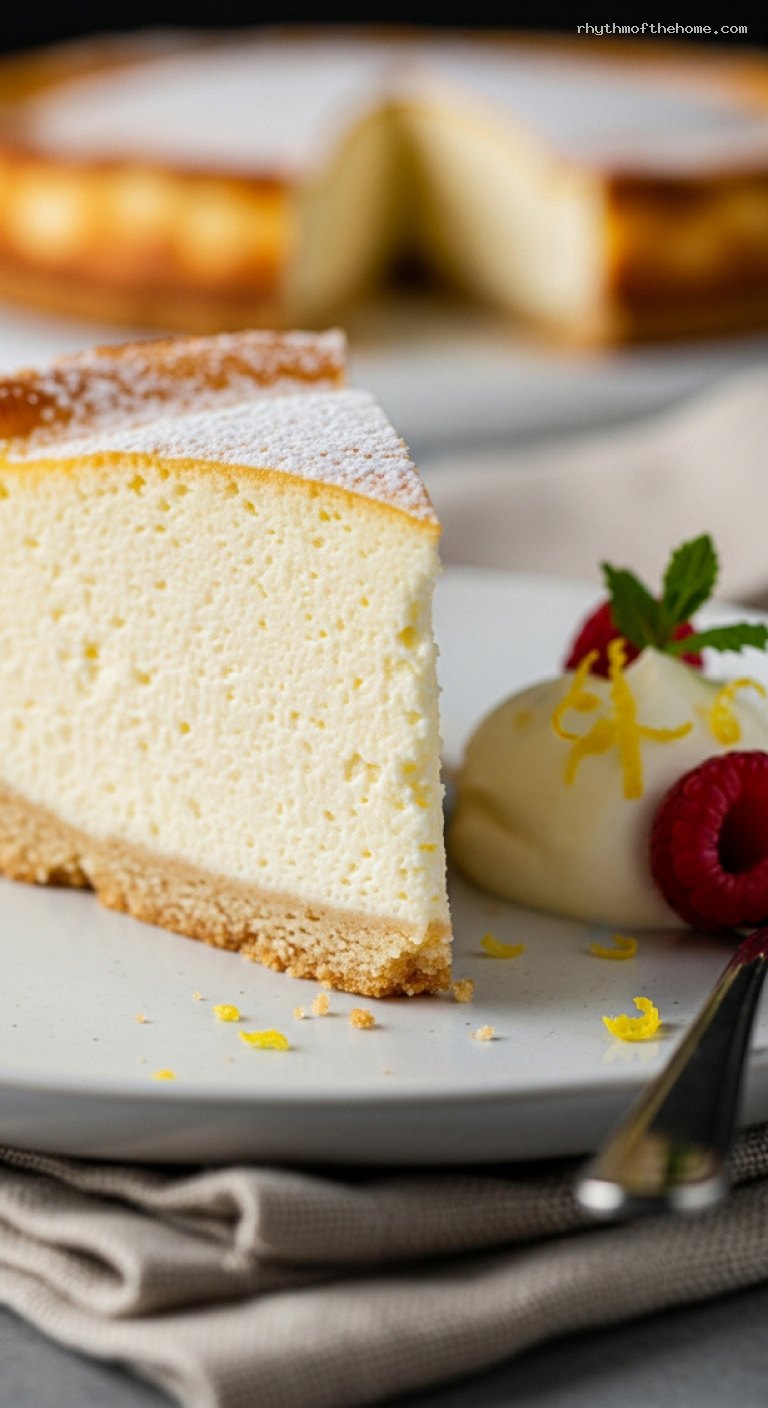
Step-by-Step Instructions
Step 1: Prepare the pan and preheat the oven
Preheat your oven to 180°C / 350°F (conventional, not fan). Lightly grease a 26 cm / 10 inch springform pan with butter. Line the base with a circle of parchment paper, and if you like, line the sides with a strip of parchment as well. This helps the cheesecake rise evenly and release cleanly later.
Wrap the outside of the pan with a layer of aluminum foil if your springform tends to leak. Set the pan aside while you prepare the shortcrust.
Step 2: Make the shortcrust base (Mürbeteig)
In a medium mixing bowl, combine the flour, sugar, vanilla sugar (or extract), and salt. Add the cold, cubed butter. Using your fingertips, a pastry cutter, or two knives, rub or cut the butter into the dry ingredients until the mixture resembles fine, sandy crumbs with no large butter pieces left.
Add the egg yolk and 1 tablespoon of cold milk or water. Gently work the mixture together just until a soft dough forms. If it is still dry or crumbly, add up to 1 more tablespoon of cold liquid, a teaspoon at a time. Do not overwork the dough; it should be smooth but not sticky.
Shape the dough into a flat disk, wrap it in plastic wrap or place it in a small bag, and chill in the refrigerator for about 10–15 minutes. This brief rest makes it easier to roll and helps keep the crust tender.
Step 3: Form and pre-bake the crust
Lightly flour your work surface and roll out the chilled dough into a circle slightly larger than your pan, about 3–4 mm (1/8 inch) thick. Alternatively, you can press the dough directly into the pan with your fingers.
Transfer the dough to the springform pan, pressing it evenly into the base and about 3–4 cm (1 1/2 inches) up the sides to create a shallow “bowl” for the filling. Trim any excess dough from the top edge. Prick the base a few times with a fork to prevent it from puffing up.
Bake the crust at 180°C / 350°F for 12–15 minutes, until it is just starting to turn a light golden color but not fully browned. Remove from the oven and place on a rack. Immediately reduce the oven temperature to 170°C / 340°F. Let the crust cool for about 10 minutes while you prepare the filling.
Step 4: Mix the quark cheesecake filling
In a large mixing bowl, whisk together the sugar, eggs, vanilla, and salt until the mixture is slightly thickened and pale, about 1–2 minutes by hand. Try not to incorporate too much air; you are aiming for a smooth mixture, not a foamy one.
Add the quark (and ricotta, if using), along with the lemon zest and lemon juice. Whisk or use a hand mixer on low speed until the mixture is smooth and no visible lumps of quark remain. Scrape down the sides and bottom of the bowl to make sure everything is incorporated.
Pour in the melted butter and heavy cream and whisk again until combined. Finally, sift the cornstarch over the bowl and whisk it in thoroughly so that no lumps remain. The filling should be pourable, silky, and just slightly thick.
Step 5: Fill the crust and bake gently
Pour the quark filling onto the warm, pre-baked crust. Gently tap the pan on the counter a couple of times to release any large air bubbles, and smooth the top with a spatula.
Place the pan on the middle rack of the oven. For an even gentler bake, you can place a small pan of hot water on the lower rack to create some steam (this helps reduce cracking, but is optional).
Bake at 170°C / 340°F for 50–60 minutes. The cheesecake is done when the edges are set, slightly puffed, and a light golden color, while the center still has a visible but gentle wobble when you nudge the pan. If the top is browning too quickly, tent it loosely with a piece of foil after about 40 minutes.
Step 6: Cool slowly to prevent cracks
Once the cheesecake reaches the “set edges, wobbly center” stage, turn off the oven. Prop the door open slightly (a wooden spoon works well) and leave the cheesecake inside for 20–30 minutes. This gradual temperature change helps minimize cracking.
After this rest, remove the pan from the oven and place it on a cooling rack. Run a thin knife around the inside edge of the pan to release the cheesecake from the sides, but leave the springform ring in place. Let the cake cool completely to room temperature, which usually takes about 2–3 hours.
Step 7: Chill, unmold, and serve
Once fully cooled, cover the pan and transfer the cheesecake to the refrigerator. Chill for at least 3 hours, but ideally overnight. This resting time allows the texture to set and the flavors to meld, giving you that signature silky, sliceable German cheesecake.
To serve, release the springform ring and carefully lift it away. Slide the cheesecake onto a serving plate if desired. Dust the top generously with powdered sugar, and garnish with a little extra lemon zest or fresh berries.
Use a long, sharp knife dipped in hot water and wiped dry between cuts for the cleanest slices. Serve plain, or with a spoonful of softly whipped cream and a few berries on the side.
Pro Tips
- Drain watery quark: If your quark or ricotta seems very wet, drain it in a fine-mesh sieve lined with cheesecloth or a clean kitchen towel for 20–30 minutes. This prevents a watery filling and helps the cheesecake set properly.
- Room temperature ingredients: Let eggs, quark, and cream sit out for 20–30 minutes before mixing. Cold ingredients can cause a lumpy batter and uneven baking.
- Do not overbake: The center should still wobble slightly when you gently shake the pan. It will firm up as it cools and chills. Overbaking makes the texture dry and can cause large cracks.
- Mix gently: Use low speed on your mixer (or whisk by hand) and stop as soon as the filling is smooth. Too much air in the batter leads to a soufflé-like rise and collapse.
- Clean slices: Chill thoroughly before cutting, and use a hot, dry knife for neat, bakery-style wedges.
Variations
- Classic quark–ricotta mix: For an extra creamy texture, use 500 g quark + 250 g whole-milk ricotta instead of 750 g quark. Make sure both are well drained so the filling sets nicely.
- Raisin or rum-raisin Käsekuchen: Soak 75 g (about 1/2 cup) raisins in hot water, apple juice, or a mixture of warm rum and water for 15–20 minutes, then drain and pat dry. Fold them gently into the filling just before pouring it onto the crust.
- Mandarin or berry version: Fold in 1 small can of well-drained mandarin orange segments or 1 cup of fresh or frozen (thawed and drained) berries. Alternatively, dollop a few spoonfuls of thick berry compote on top of the filling and swirl with a knife for a marbled effect.
Storage & Make-Ahead
This German Käsekuchen is ideal for making ahead. Once fully cooled, cover and refrigerate for up to 4 days. The flavor actually improves on day 2 as the lemon and vanilla settle into the creamy filling.
For longer storage, cut the cheesecake into slices, place them on a tray to freeze until firm, then wrap each slice tightly in plastic wrap and store in a freezer bag or airtight container for up to 2 months. Thaw overnight in the refrigerator, then bring to cool room temperature before serving.
You can also bake the cheesecake a day in advance and leave it in the pan, covered, in the fridge. Unmold and garnish just before serving to keep the edges neat and the top fresh-looking.
Nutrition (per serving)
Approximate values per slice (1 of 12), using quark and cream only (no toppings): about 360 kcal, 22 g fat (of which about 12 g saturated), 29 g carbohydrates (about 20 g sugars), 12 g protein, and a small amount of fiber and sodium. Values will vary depending on the exact products used and any toppings you add.

Leave a Reply