
Quick Recipe Version (TL;DR)
Quick Ingredients
- 4 lb bone-in beef short ribs (about 8 pieces)
- 1 1/2 tsp kosher salt + 1 tsp black pepper
- 2 Tbsp all-purpose flour (for dusting)
- 2 Tbsp olive oil
- 1 large onion, 2 carrots, 2 celery stalks, 4 garlic cloves
- 2 Tbsp tomato paste
- 1 cup pomegranate juice
- 1/2 cup balsamic vinegar
- 1 cup dry red wine (or extra beef broth)
- 2 cups low-sodium beef broth
- 2 Tbsp light brown sugar
- 1 bay leaf, 4 thyme sprigs, 1 rosemary sprig
- 2 Tbsp unsalted butter
- 1/2 cup pomegranate arils + 2 Tbsp chopped parsley (for garnish)
Do This
- 1) Pat ribs dry, season well with salt and pepper, and dust lightly with flour.
- 2) Brown ribs in hot oil in a heavy Dutch oven; remove to a plate.
- 3) Sauté onion, carrots, celery, and garlic; stir in tomato paste, then deglaze with pomegranate juice, balsamic, and red wine.
- 4) Add beef broth, brown sugar, herbs, and browned ribs; cover and braise at 325°F (165°C) for 2 1/2–3 hours until very tender.
- 5) Transfer ribs out; strain or skim braising liquid, then simmer to reduce by about half.
- 6) Whisk in cold butter to gloss the sauce; return ribs to warm through.
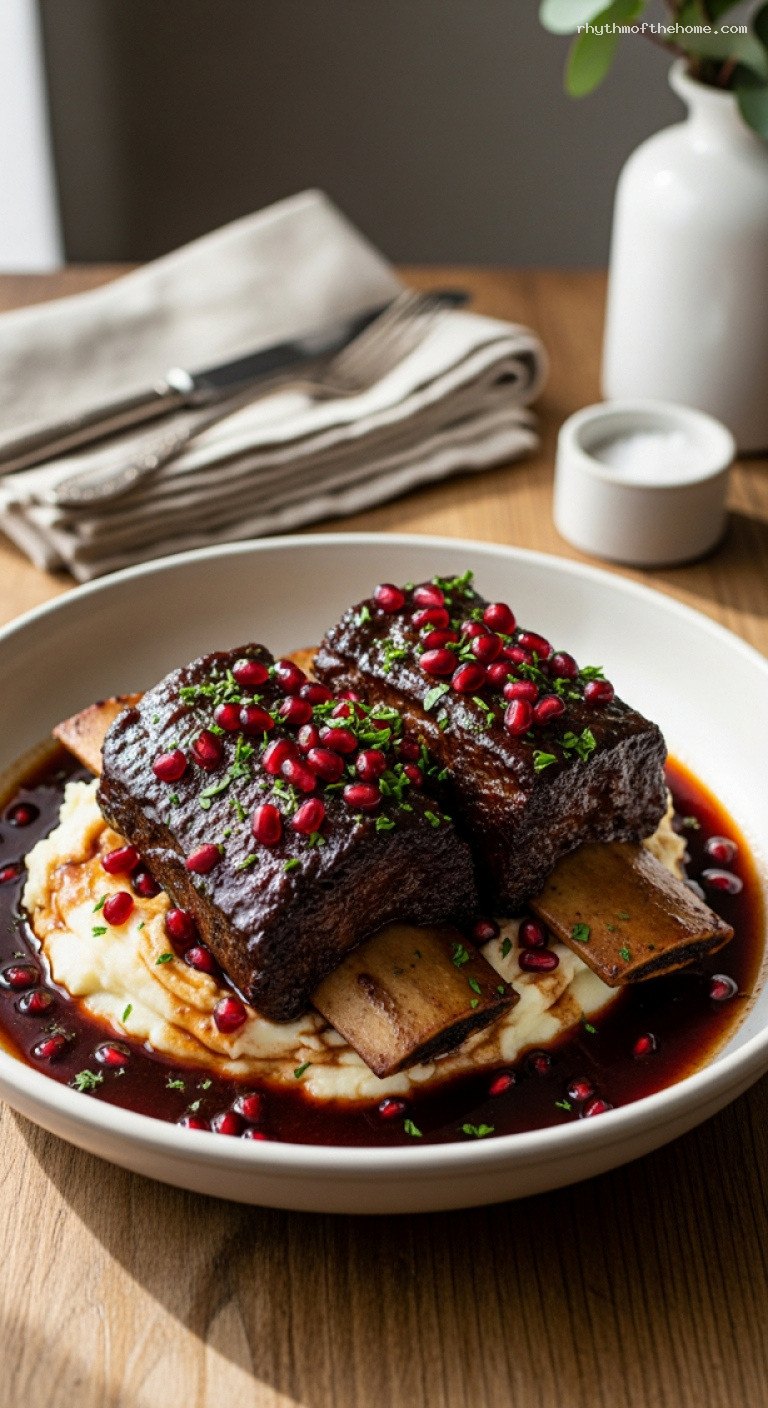
- 7) Serve ribs over mashed potatoes or polenta, spoon with pomegranate-balsamic sauce, and garnish with pomegranate arils and parsley.
Why You’ll Love This Recipe
- Deep, luxurious flavor from slow-braised beef, balsamic vinegar, and pomegranate juice that tastes like you cooked all day (because you did, but the oven does the work).
- A glossy, tangy-sweet sauce that clings to fall-apart tender short ribs and feels worthy of a special occasion.
- Mostly hands-off cooking: once everything is in the pot, you can walk away while it braises.
- Flexible and forgiving, easy to make ahead, and even better the next day for entertaining.
Grocery List
- Produce: Yellow onion, carrots, celery, garlic, fresh thyme, fresh rosemary, fresh parsley, pomegranate (for arils)
- Dairy: Unsalted butter (for finishing the sauce)
- Pantry: Bone-in beef short ribs, olive oil, kosher salt, black pepper, all-purpose flour, tomato paste, pomegranate juice, balsamic vinegar, dry red wine (or extra beef broth), low-sodium beef broth, light brown sugar, bay leaf
Full Ingredients
For the Pomegranate-Balsamic Short Ribs
- 4 lb bone-in beef short ribs, English-cut (about 8 meaty pieces)
- 1 1/2 tsp kosher salt, plus more to taste
- 1 tsp freshly ground black pepper
- 2 Tbsp all-purpose flour (for lightly dusting the ribs)
- 2 Tbsp olive oil
- 1 large yellow onion, diced
- 2 medium carrots, peeled and sliced into 1/2-inch pieces
- 2 celery stalks, chopped
- 4 garlic cloves, minced
- 2 Tbsp tomato paste
- 1 cup pomegranate juice (100% juice)
- 1/2 cup good-quality balsamic vinegar
- 1 cup dry red wine (or substitute 1 cup additional beef broth)
- 2 cups low-sodium beef broth, plus more as needed
- 2 Tbsp light brown sugar (loosely packed)
- 1 bay leaf
- 4 fresh thyme sprigs (or 1 tsp dried thyme)
- 1 fresh rosemary sprig (or 1 tsp dried rosemary, crushed)
- 2 Tbsp unsalted butter, cold (for finishing the sauce)
For Serving (Optional but Recommended)
- 1/2 cup pomegranate arils (seeds), for garnish
- 2 Tbsp fresh flat-leaf parsley, finely chopped
- Mashed potatoes, creamy polenta, or buttered egg noodles, as a base
Step-by-Step Instructions
Step 1: Prep and Season the Short Ribs
Remove the short ribs from the refrigerator about 20–30 minutes before cooking so they start to lose their chill. Pat them very dry with paper towels; this helps them brown properly. Sprinkle all sides evenly with the kosher salt and black pepper. Lightly dust the ribs with the all-purpose flour, tapping off any excess. The flour helps create a beautiful crust and will very gently thicken the braising liquid later.
Step 2: Brown the Ribs for Maximum Flavor
Preheat your oven to 325°F (165°C). Set a large, heavy Dutch oven (or other oven-safe pot with a tight-fitting lid) over medium-high heat and add the olive oil. When the oil is shimmering and just starting to smoke, add the short ribs in a single layer without crowding (work in batches if necessary). Sear for 3–4 minutes per side until deeply browned on all sides. Transfer browned ribs to a plate and repeat with any remaining pieces, adding a touch more oil if the pot looks dry. Do not rush this step; good browning equals deep flavor.
Step 3: Build the Aromatic Base and Deglaze
Reduce the heat to medium. In the same pot, add the diced onion, carrots, and celery. Cook, stirring occasionally and scraping up any browned bits, for 6–8 minutes until the vegetables are softened and starting to brown at the edges. Add the minced garlic and cook for 30 seconds until fragrant.
Stir in the tomato paste and cook for 1–2 minutes, stirring constantly, until it darkens slightly in color; this caramelization adds richness. Pour in the pomegranate juice, balsamic vinegar, and red wine. Use a wooden spoon to scrape up every bit of fond from the bottom of the pot. Let the mixture simmer for 3–4 minutes to reduce slightly and cook off some of the alcohol’s sharpness.
Step 4: Add the Braising Liquid and Herbs
Pour in the beef broth and add the light brown sugar, bay leaf, thyme sprigs, and rosemary. Stir well to combine and bring the liquid just to a simmer. Taste the braising liquid carefully (it will be quite tangy and slightly salty now, but will mellow as it cooks). Adjust with a pinch more salt if needed.
Nestle the browned short ribs back into the pot, bone side up if possible, along with any juices that collected on the plate. The liquid should come about two-thirds of the way up the sides of the meat; if it is too low, add a bit more broth or water.
Step 5: Braise Low and Slow Until Tender
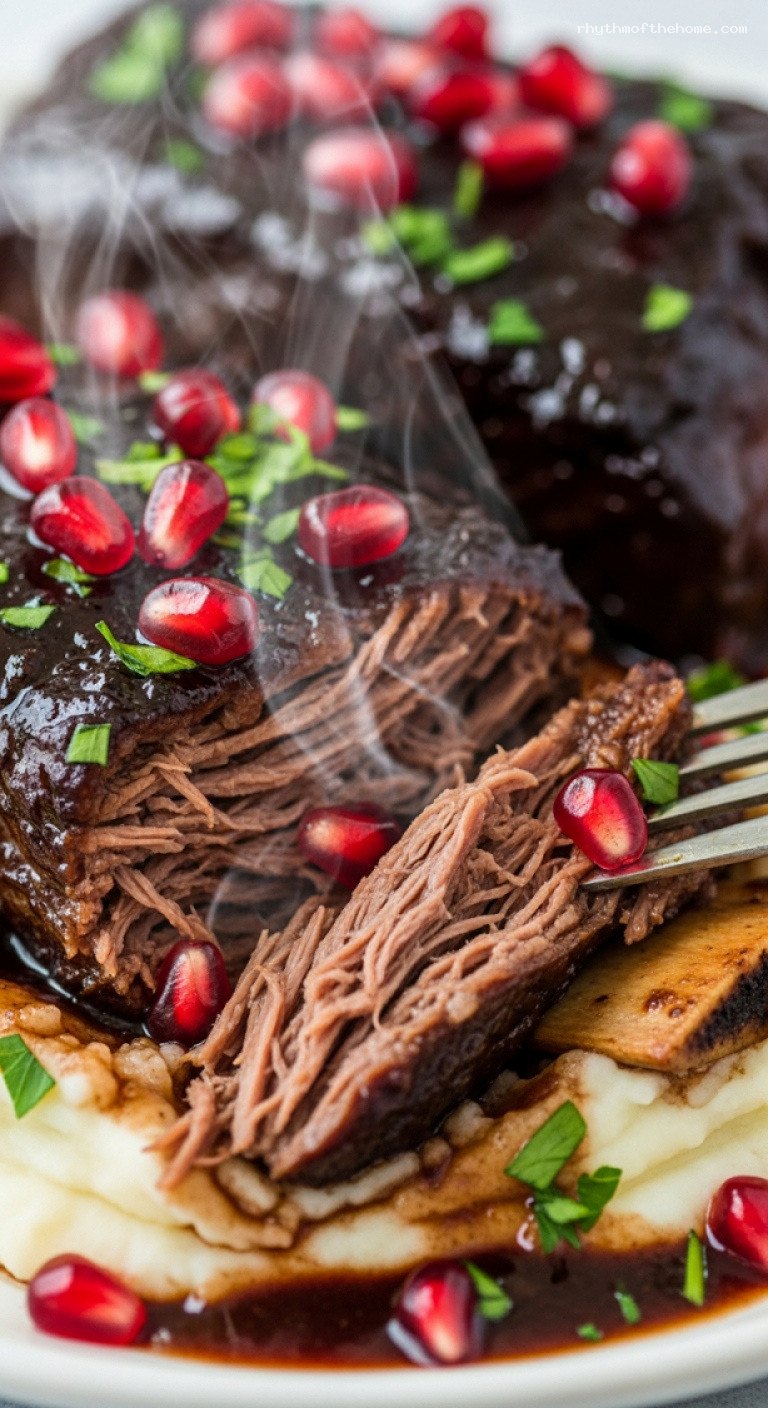
Cover the Dutch oven with its lid and transfer it to the preheated 325°F (165°C) oven. Braise for 2 1/2–3 hours, checking once or twice. Each time you check, gently turn the ribs and make sure there is still enough liquid (add a splash of broth or water if they seem dry). The short ribs are done when the meat is very tender and easily pulls away from the bone with a fork, but is not completely falling apart.
When the ribs are tender, carefully transfer them to a clean plate, tent loosely with foil, and keep warm. Remove and discard the bay leaf, thyme, and rosemary stems from the cooking liquid.
Step 6: Reduce and Finish the Pomegranate-Balsamic Sauce
Place the pot with the braising liquid on the stovetop over medium-high heat. If you prefer a smoother sauce, you can strain out the vegetables and press on them to extract as much liquid as possible, then discard the solids. Otherwise, leave them in for a more rustic texture.
Bring the liquid to a lively simmer and cook, uncovered, for 10–15 minutes, stirring occasionally, until it reduces by about half and thickens to a glossy, spoon-coating consistency. Taste and adjust the seasoning: add a pinch of salt for balance, or an extra teaspoon of brown sugar if it tastes too sharp.
Turn the heat to low and whisk in the cold butter, one tablespoon at a time, until melted and the sauce is shiny and slightly thickened. Return the short ribs (and any accumulated juices) to the pot and spoon the sauce over them. Simmer gently for 5 minutes to warm through.
Step 7: Plate and Garnish
To serve, spoon a bed of hot mashed potatoes, creamy polenta, or buttered egg noodles onto each plate. Place one or two short ribs on top, then generously ladle the pomegranate-balsamic sauce over the meat and around the base. Scatter pomegranate arils and chopped fresh parsley over each serving for a burst of color and freshness. Serve immediately while piping hot, passing any extra sauce at the table.
Pro Tips
- Buy meaty short ribs: Look for pieces with a good amount of meat on the bone and some marbling, but not overly thick caps of fat.
- Dry meat browns better: Take the time to thoroughly pat ribs dry and do not overcrowd the pot when searing, or they will steam instead of brown.
- Adjust the sweetness: Pomegranate juice and balsamic can vary; add the brown sugar gradually and taste the sauce at the end, balancing tangy, sweet, and savory.
- Make it ahead: The flavor improves overnight. Cool completely, refrigerate, and reheat gently; the fat will solidify so you can easily skim it off.
- Oven vs. stovetop: Oven-braising gives the most even heat, but you can also simmer gently on the stovetop on low heat, covered, checking more frequently to prevent scorching.
Variations
- Alcohol-free: Replace the red wine with an equal amount of beef broth plus 1 tablespoon extra balsamic vinegar. Braise as directed.
- Spiced version: Add a 2-inch strip of orange peel and 1/2 teaspoon ground cumin or coriander to the pot with the herbs for a warm, subtly spiced note.
- Vegetable-forward: Add extra carrots and pearl onions to the braise for a more stew-like meal and serve in shallow bowls with crusty bread.
Storage & Make-Ahead
Let leftovers cool to room temperature, then transfer ribs and sauce to an airtight container. Refrigerate for up to 3 days. The sauce will set and the fat will rise to the top; before reheating, scrape off and discard the solidified fat for a lighter dish.
For longer storage, place cooled ribs and sauce in a freezer-safe container and freeze for up to 3 months. Thaw overnight in the refrigerator before reheating.
Reheat gently on the stovetop over low heat, covered, stirring occasionally until the ribs are heated through and the sauce is bubbly. You can thin the sauce with a splash of broth or water if it has thickened too much.
Nutrition (per serving)
Approximate values for 1 of 4 servings (short ribs plus sauce, without side dishes): about 850 calories; 55 g fat (20 g saturated); 20 g carbohydrates; 3 g fiber; 14 g sugar; 35 g protein; 950 mg sodium. Actual values will vary based on the exact cut of beef, trimming, and sides served.

Leave a Reply