
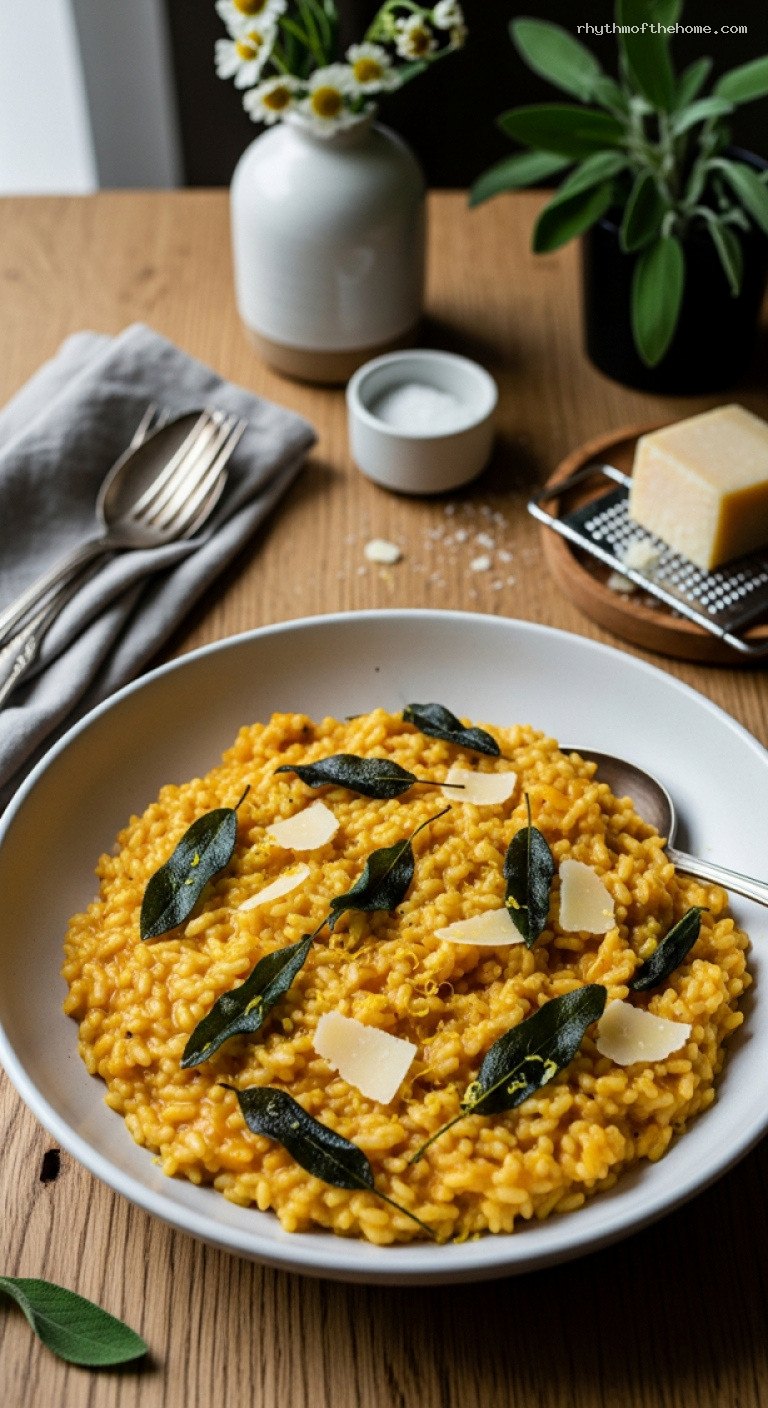
Quick Recipe Version (TL;DR)
Quick Ingredients
- 1 1/2 lb winter squash, peeled and cubed (about 4 cups)
- 5 cups low-sodium vegetable or chicken stock
- 5 Tbsp olive oil, divided
- 4 Tbsp unsalted butter, divided
- 1 small yellow onion, finely chopped
- 3 garlic cloves, minced
- 1 1/2 cups Arborio or Carnaroli rice
- 1/2 cup dry white wine
- 1 cup finely grated Parmesan cheese, plus extra for serving
- 2 Tbsp finely chopped fresh sage
- 12 whole fresh sage leaves
- Salt, black pepper, optional lemon zest and flaky sea salt
Do This
- 1. Roast squash at 400°F (200°C) with 2 Tbsp olive oil, salt, and pepper until very tender and caramelized, 25–30 minutes.
- 2. Warm stock in a saucepan and keep at a bare simmer. Purée roasted squash with a splash of hot stock until silky; set aside.
- 3. In a wide pot, sauté onion in 2 Tbsp butter and 1 Tbsp olive oil until soft. Add garlic, then rice; toast 1–2 minutes.
- 4. Deglaze with white wine and stir until absorbed. Add hot stock a ladle at a time, stirring often, until rice is creamy and just al dente, 18–22 minutes.
- 5. Stir in 1 1/2–2 cups squash purée, 2 Tbsp butter, Parmesan, chopped sage, salt, and pepper. Adjust consistency with more stock if needed.
- 6. Fry whole sage leaves in 2 Tbsp olive oil until crisp. Serve risotto immediately, topped with crispy sage, extra Parmesan, and lemon zest if using.
Why You’ll Love This Recipe
- Creamy, cozy comfort food with deep roasted winter squash flavor in every bite.
- Crispy sage leaves and Parmesan add restaurant-style flair with very simple techniques.
- Flexible and forgiving: use your favorite winter squash and vegetable or chicken stock.
- Perfect for a fall or winter dinner when you want something special but still homey.
Grocery List
- Produce: Winter squash (such as butternut, kabocha, or acorn), yellow onion, garlic, fresh sage, optional lemon.
- Dairy: Unsalted butter, Parmesan cheese (block or pre-grated, preferably from the block).
- Pantry: Arborio or Carnaroli rice, low-sodium vegetable or chicken stock, olive oil, dry white wine, salt, black pepper, optional flaky sea salt.
Full Ingredients
For the Roasted Squash Purée
- 1 1/2 lb winter squash, peeled, seeded, and cut into 1/2-inch cubes (about 4 cups)
- 2 Tbsp olive oil
- 1/2 tsp fine sea salt
- 1/4 tsp freshly ground black pepper
For the Risotto Base
- 5 cups low-sodium vegetable or chicken stock
- 2 Tbsp unsalted butter
- 1 Tbsp olive oil
- 1 small yellow onion, finely chopped (about 1 cup)
- 3 garlic cloves, minced
- 1 1/2 cups Arborio or Carnaroli rice (about 300 g)
- 1/2 cup dry white wine (such as Sauvignon Blanc or Pinot Grigio)
- 1 tsp fine sea salt, plus more to taste
- 1/4 tsp freshly ground black pepper, plus more to taste
For Finishing and Garnish
- 2 Tbsp unsalted butter, cold and cut into small pieces
- 1 cup finely grated Parmesan cheese (about 3 oz / 85 g), plus more for serving
- 2 Tbsp fresh sage leaves, finely chopped
- 12 whole fresh sage leaves
- 2 Tbsp olive oil (for frying the sage leaves)
- Optional: zest of 1/2 lemon
- Optional: flaky sea salt for sprinkling on top
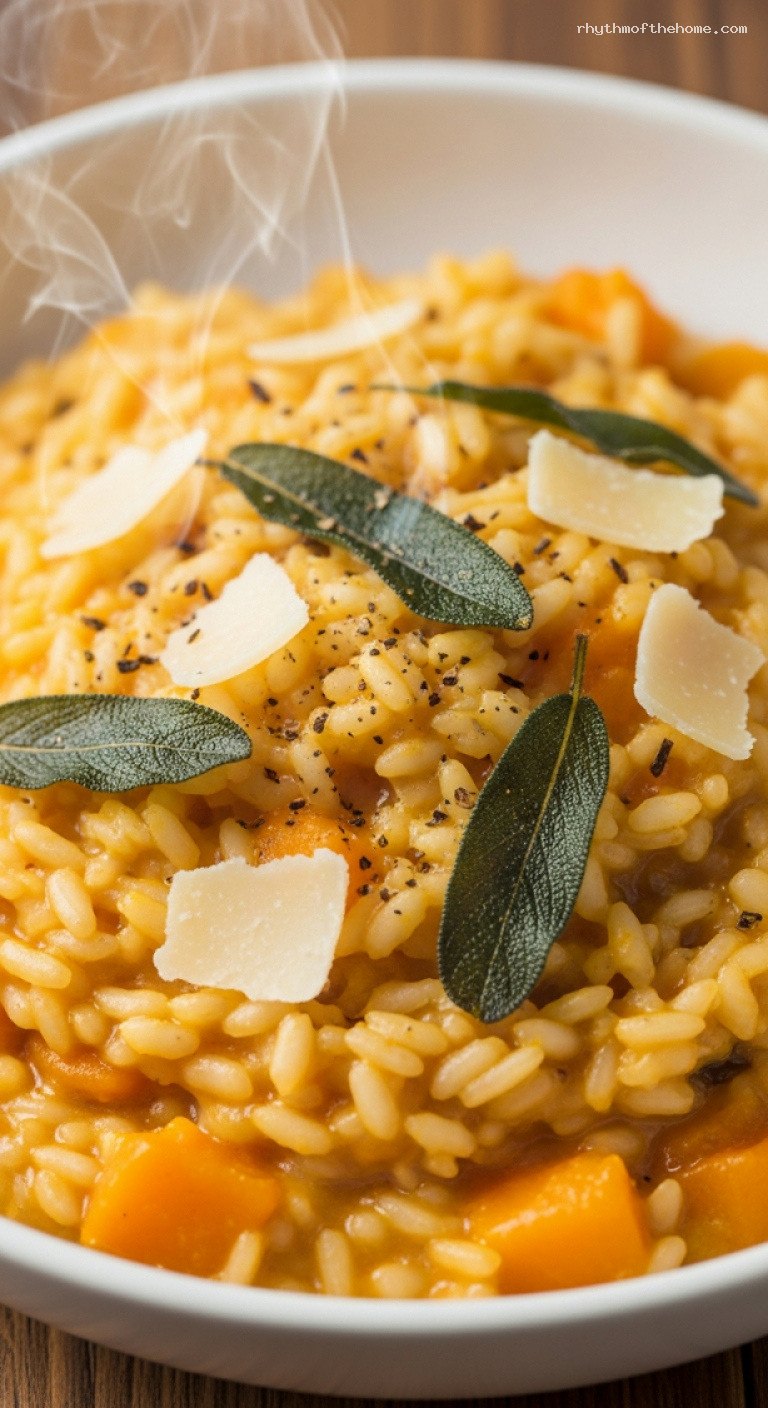
Step-by-Step Instructions
Step 1: Roast the winter squash
Preheat your oven to 400°F (200°C). Line a baking sheet with parchment paper for easier cleanup. Spread the peeled and cubed winter squash in an even layer on the tray. Drizzle with 2 tablespoons olive oil, then sprinkle with 1/2 teaspoon salt and 1/4 teaspoon black pepper. Toss with your hands or a spatula so every cube is lightly coated.
Roast for 25–30 minutes, stirring once halfway through, until the squash is very tender and starting to caramelize around the edges. The edges should be lightly browned and the centers should mash easily with a fork. Remove from the oven and set aside to cool slightly.
Step 2: Warm the stock and prep the flavorings
While the squash roasts, pour the 5 cups of stock into a medium saucepan and bring it just to a simmer over medium heat. Once it is steaming, reduce the heat to low and keep it hot but not boiling. Using hot stock is key for creamy risotto that cooks evenly.
Prep your aromatics: finely chop the onion, mince the garlic, and finely chop 2 tablespoons of fresh sage leaves for later. Grate the Parmesan if you are using a block. Have your butter measured and kept cold for finishing the risotto at the end.
Step 3: Make the squash purée
Transfer the roasted squash to a blender or food processor. Add about 1/2 cup of the hot stock from the saucepan. Blend until completely smooth and velvety, scraping down the sides as needed. If the mixture is very thick and does not move easily, add another 1–2 tablespoons of hot stock until it blends into a silky purée.
You should have about 1 1/2 to 2 cups of squash purée. Set this aside near the stove so it is ready to stir into the risotto later. Keep the remaining stock warm; you will still need most of it for cooking the rice.
Step 4: Start the risotto base
In a wide, heavy-bottomed pot or deep sauté pan, melt 2 tablespoons of unsalted butter with 1 tablespoon olive oil over medium heat. When the butter is melted and foamy, add the chopped onion and a pinch of salt. Cook, stirring often, for 4–5 minutes, until the onion is soft and translucent but not browned.
Add the minced garlic and cook for 30–60 seconds, just until fragrant. Then add the Arborio or Carnaroli rice. Stir well to coat each grain with the butter and oil. Toast the rice for 1–2 minutes, stirring constantly, until the grains look slightly translucent around the edges but are not browned. This step helps develop flavor and that classic creamy texture.
Step 5: Deglaze with white wine
Pour in the 1/2 cup of dry white wine. It should bubble briskly. Stir continuously until the wine has mostly evaporated and the rice looks thick and slightly creamy again, 1–2 minutes. This step adds brightness and depth to balance the sweetness of the squash.
Season the rice mixture with 1 teaspoon salt and 1/4 teaspoon black pepper. You can adjust the seasoning later, but starting now ensures the rice itself is flavorful from the inside out.
Step 6: Add hot stock gradually and cook the risotto
Add a ladleful of hot stock (about 1/2 cup) to the rice. Stir gently, scraping the bottom of the pot, until most of the liquid has been absorbed. You want the rice to be in a loose, saucy puddle, not dry. Continue adding stock 1 ladle at a time, stirring often, and waiting until each addition is mostly absorbed before adding the next.
Maintain a gentle simmer and adjust the heat as needed to keep the risotto bubbling lazily, not rapidly boiling. This gradual process should take about 18–22 minutes. Begin tasting the rice after 15 minutes. It is done when the grains are plump and creamy on the outside but still have a slight, pleasant bite in the center (al dente). You may not need all of the stock, or you may use nearly all of it, depending on your stove and pan.
Step 7: Stir in the squash, butter, cheese, and sage
When the rice is just shy of perfect doneness and still a little firmer than you want in the final dish, stir in 1 1/2 to 2 cups of the warm squash purée and the chopped fresh sage. Add a small ladle of stock if the mixture becomes too thick. Cook for another 2–3 minutes, stirring gently, until the rice is fully al dente and the squash is evenly incorporated, creating a rich golden-orange risotto.
Turn off the heat. Immediately add the remaining 2 tablespoons cold unsalted butter and the 1 cup grated Parmesan. Stir vigorously but gently (this technique is called mantecatura) until the butter and cheese are fully melted and the risotto is glossy and very creamy. The texture should be loose and pourable, like thick lava that slowly spreads on a plate, not a stiff mound. If it seems too thick, stir in a splash or two of hot stock. Taste and adjust with more salt and pepper as needed. Cover the pot loosely and let the risotto rest for 1–2 minutes while you prepare the sage garnish.
Step 8: Fry the sage leaves and serve
In a small skillet, heat 2 tablespoons olive oil over medium heat until shimmering. Add the whole sage leaves in a single layer. They should sizzle gently on contact. Fry for 30–45 seconds per side, or until they darken slightly in color and become crisp but not burnt. Remove with tongs or a slotted spoon to a paper towel–lined plate and sprinkle lightly with a pinch of salt.
To serve, give the risotto a final stir and adjust the consistency with a little more stock if needed. Ladle into warm shallow bowls. Top each serving with a few crispy sage leaves, a drizzle of the fragrant sage oil from the pan, and an extra shower of grated Parmesan. If you like, finish with a small pinch of flaky sea salt and a light dusting of lemon zest to brighten the flavors. Serve immediately while hot and creamy.
Pro Tips
- Use the right pan: A wide, heavy pot or sauté pan (rather than a tall saucepan) helps the rice cook evenly and release its starch, giving you a naturally creamy risotto.
- Keep the stock hot: Adding cold stock shocks the rice and slows cooking. A small pot of steaming (not boiling) stock beside your risotto pan makes all the difference.
- Stir smart, not nonstop: You do not need to stir every second, but do stir often. Aim to give the risotto a good stir every 30 seconds or so to prevent sticking and build creaminess.
- Adjust consistency at the end: Risotto thickens quickly as it sits. Before serving, loosen it with a splash of hot stock so it gently flows on the plate instead of sitting in a firm scoop.
- Taste for seasoning several times: Stock, cheese, and butter all have salt. Taste at the end and add salt gradually so the finished dish is seasoned but not overly salty.
Variations
- Brown butter and nutty twist: Instead of simply melting butter for the risotto base, brown it first until fragrant and golden, then proceed with the recipe. Finish with a sprinkle of toasted pumpkin seeds or walnuts for crunch.
- With pancetta or bacon: Cook 3–4 ounces of diced pancetta or thick-cut bacon in the pot until crisp. Remove and reserve for topping, leaving the rendered fat in the pan. Reduce or omit some of the butter and continue with the onion and rice as directed.
- Vegetarian-friendly: Use vegetable stock instead of chicken stock, and check that your Parmesan (or an alternative hard cheese) is suitable for vegetarians if that matters to you.
Storage & Make-Ahead
Risotto is at its absolute best right after it is made, when the rice is tender and the sauce is silky. However, leftovers do keep reasonably well. Cool any remaining risotto quickly by spreading it in a shallow container, then refrigerate in an airtight container for up to 3 days.
To reheat on the stovetop, add a splash or two of water or stock to a saucepan with the chilled risotto. Warm over low to medium-low heat, stirring often, and adding more liquid as needed until it loosens back into a creamy consistency. Taste and adjust the seasoning, and add a small knob of butter or a spoonful of grated Parmesan to refresh the flavor.
If you want to work ahead, you can roast and purée the squash up to 2 days in advance and store it in the refrigerator. You can also grate the Parmesan and prep the onion, garlic, and sage earlier in the day. Wait to cook the rice until just before serving for the best texture.
Nutrition (per serving)
Approximate values for one of 4 servings: about 700 calories; 33 g fat; 80 g carbohydrates; 16 g protein; 4 g fiber; 900 mg sodium. Actual values will vary based on the exact ingredients, brands, and stock used.

Leave a Reply