
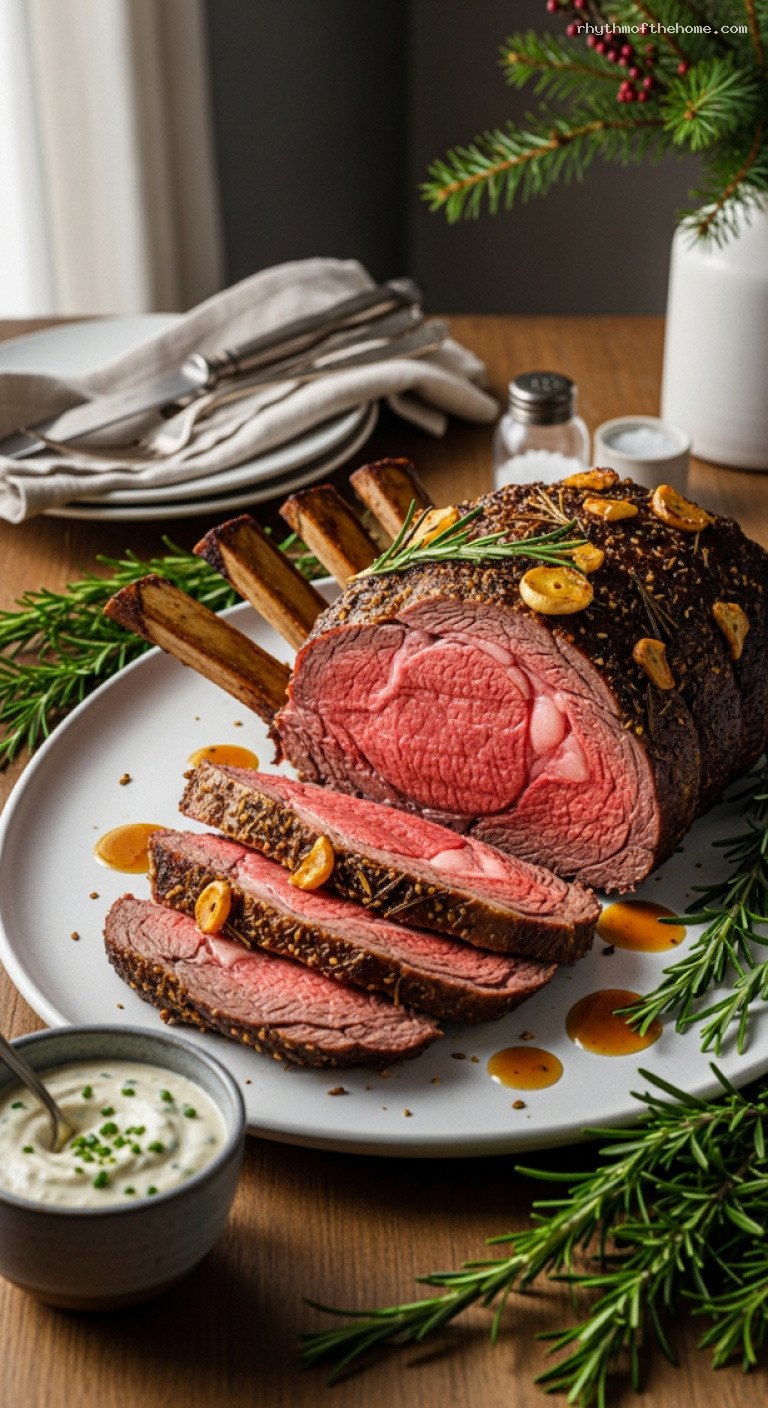
Quick Recipe Version (TL;DR)
Quick Ingredients
- 1 bone-in prime rib roast (standing rib), 8–10 lb
- 3 tbsp kosher salt + 2 tsp freshly ground black pepper
- 8 cloves garlic, minced
- 2 tbsp finely chopped fresh rosemary + 1 tbsp fresh thyme (optional)
- 2 tbsp olive oil + 2 tbsp softened unsalted butter
- 4–6 small fresh pine sprigs (food-safe, unsprayed), rinsed and dried
- 1 large onion, 2 carrots, 2 celery stalks, sliced
- 1 cup low-sodium beef broth or water
- 1 cup sour cream, 3 tbsp prepared horseradish, 1 tbsp Dijon, lemon, salt, pepper
Do This
- 1. Dry-brine roast 12–48 hours: pat dry, score fat, rub with salt, pepper, garlic, rosemary, thyme, and olive oil. Chill uncovered on a rack.
- 2. Before roasting, let roast sit at room temperature 1–2 hours. Heat oven to 250°F (120°C).
- 3. Make a bed of onion, carrot, celery, and pine sprigs in a roasting pan. Pour in broth and set a rack over the vegetables and pine.
- 4. Roast fat-side up at 250°F until thickest part reaches 118–120°F for rare or 122–125°F for medium-rare, about 3–4 hours.
- 5. While it cooks, mix sour cream, horseradish, Dijon, lemon, salt, pepper, and herbs. Chill.
- 6. Transfer roast to a board, tent loosely with foil, and rest 30–45 minutes. Strain and reduce pan juices if desired.
- 7. Remove pine, increase oven to 500°F (260°C). Rub roast with butter and roast 8–10 minutes to crisp the crust. Slice and serve with pan juices and horseradish cream.
Why You’ll Love This Recipe
- Slow roasting keeps the prime rib incredibly tender and evenly rosy from edge to center.
- Fresh pine branches, garlic, and rosemary perfume the meat with a subtle, woodsy holiday aroma.
- A tangy, creamy horseradish sauce cuts through the richness and feels restaurant-level but is very easy.
- Reverse-searing at the end gives you a deep, crackly crust without overcooking the inside.
Grocery List
- Produce: Garlic, yellow onion, carrots, celery, fresh rosemary, fresh thyme (optional), fresh chives or parsley, lemon
- Dairy: Sour cream (or crème fraîche), unsalted butter
- Pantry: Bone-in prime rib roast (standing rib), kosher salt, black pepper, olive oil, prepared horseradish, Dijon mustard, beef broth or stock, Worcestershire sauce (optional)
Full Ingredients
For the Pine-Roasted Prime Rib
- 1 bone-in prime rib roast (standing rib), 8 to 10 pounds (3 to 4 ribs), trimmed but with fat cap intact
- 3 tablespoons kosher salt (Diamond Crystal; if using Morton, use 2 tablespoons)
- 2 teaspoons freshly ground black pepper
- 8 cloves garlic, minced
- 2 tablespoons finely chopped fresh rosemary (or 2 teaspoons dried rosemary)
- 1 tablespoon fresh thyme leaves, chopped (optional)
- 2 tablespoons olive oil
- 2 tablespoons unsalted butter, softened (for the final sear)
- 1 large yellow onion, thickly sliced
- 2 medium carrots, cut into chunks
- 2 celery stalks, cut into chunks
- 4 to 6 small sprigs fresh, untreated pine (about 6–8 inches long each), thoroughly rinsed and dried
- 1 cup low-sodium beef broth or water (for the roasting pan)
For the Horseradish Cream
- 1 cup sour cream (or crème fraîche for a richer version)
- 3 tablespoons prepared horseradish, well drained (more or less to taste)
- 1 tablespoon Dijon mustard
- 1 teaspoon fresh lemon juice or white wine vinegar
- 1/4 teaspoon kosher salt, plus more to taste
- Freshly ground black pepper, to taste
- 1 tablespoon finely chopped fresh chives or flat-leaf parsley
Optional Garnishes & Serving
- Extra fresh rosemary sprigs
- Additional fresh pine sprigs for the platter (decorative only; do not eat)
- Flaky sea salt for finishing
- Roasted potatoes or root vegetables, for serving
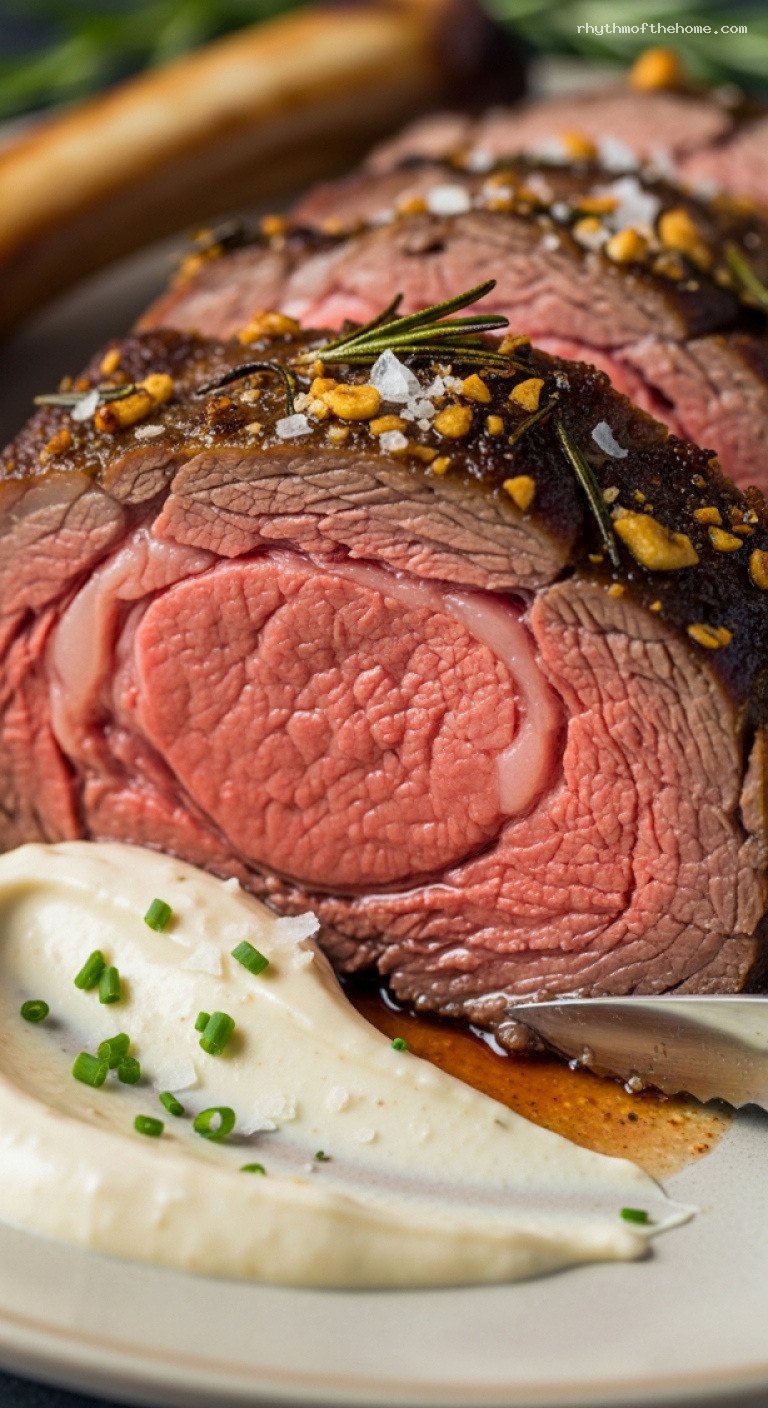
Step-by-Step Instructions
Step 1: Season and Dry-Brine the Prime Rib
Pat the prime rib roast dry all over with paper towels. If the fat cap is very thick, trim it to about 1/4–1/2 inch, but do not remove it entirely. Using a sharp knife, lightly score the fat in a crosshatch pattern, being careful not to cut into the meat.
In a small bowl, combine the kosher salt, black pepper, minced garlic, chopped rosemary, and thyme (if using). Stir in the olive oil to form a loose paste. Rub this mixture all over the roast, working it into the scored fat and all sides, including the ends.
Set the roast on a wire rack set over a rimmed baking sheet, fat side up. Refrigerate uncovered for at least 12 hours and up to 48 hours. This dry-brining time seasons the meat deeply and helps the surface dry out, which means better browning later.
Step 2: Bring to Room Temperature and Prepare the Pine Bed
About 1–2 hours before you plan to roast, remove the prime rib from the refrigerator so it can take off the chill. Leaving it on the rack, keep it loosely tented with foil if your kitchen is very warm, but avoid covering it tightly (you still want the surface fairly dry).
Place your oven rack in the lower third of the oven and preheat to 250°F (120°C). In a large roasting pan, scatter the sliced onion, carrot chunks, and celery chunks in an even layer. Nestle the rinsed and thoroughly dried pine sprigs among the vegetables. Pour the beef broth (or water) into the pan. Set a roasting rack on top of the vegetables and pine. The idea is that the pine perfumes the steam and gentle smoke around the meat without it touching the meat directly.
Step 3: Slow-Roast the Prime Rib
Transfer the seasoned prime rib (still fat side up) from the sheet pan to the roasting rack, positioning it so it is centered over the pine and vegetables. Insert an oven-safe meat thermometer or probe into the thickest part of the roast, avoiding any bones.
Roast at 250°F (120°C) until the internal temperature reaches:
- 118–120°F (48–49°C) for rare, or
- 122–125°F (50–52°C) for medium-rare.
This will typically take about 3–4 hours (roughly 20–25 minutes per pound), but always trust your thermometer rather than the clock. Do not raise the oven temperature; the low-and-slow roast is what keeps the meat tender and evenly pink.
Step 4: Make the Horseradish Cream
While the roast is in the oven, prepare the horseradish cream. In a medium bowl, stir together the sour cream, prepared horseradish, Dijon mustard, and lemon juice or vinegar until smooth. Season with 1/4 teaspoon kosher salt and a few grinds of black pepper, then taste and adjust, adding more horseradish for extra heat or more lemon for brightness.
Fold in the chopped chives or parsley. Cover and refrigerate until serving time. The flavors will meld and the sauce will thicken slightly as it chills.
Step 5: Rest the Roast and Prepare the Pan Juices
Once the roast hits your target temperature, carefully lift it from the roasting rack onto a cutting board with a juice groove. Tent it loosely with foil and let it rest for 30–45 minutes. This rest is crucial: it allows the juices to redistribute so they stay in the meat instead of running onto the cutting board.
While the roast rests, remove and discard the pine sprigs from the roasting pan. Strain the pan contents through a fine-mesh sieve into a saucepan, pressing gently on the vegetables to release their juices. Skim off excess fat from the surface. Set the saucepan over medium heat and simmer for 5–10 minutes to reduce to a light jus. Taste and season with salt, pepper, and a splash of Worcestershire sauce if you like.
Step 6: High-Heat Sear for a Crispy Crust
After the resting period (and while the jus is reducing), increase the oven temperature to 500°F (260°C). Make sure the pine sprigs have been removed from the roasting pan so they do not over-smoke at this high temperature.
Rub the softened butter all over the exterior of the rested roast. Place the roast back on the (now pine-free) roasting rack set in the roasting pan. Roast at 500°F for 8–10 minutes, just until the exterior is deeply browned and crisp. Watch closely; you are only building a crust here, not cooking it through again.
Remove from the oven and let the roast sit for 5–10 minutes before carving. The interior temperature will rise only slightly during this brief time.
Step 7: Carve and Serve
To carve, stand the roast on its end if needed and use a sharp carving knife to cut along the curve of the bones, separating the whole roast from the bone rack in one piece. Set the bone rack aside (these make fantastic chef’s snacks or can be reheated later).
Turn the boneless roast onto its side and slice into 1/2- to 1-inch thick slices, cutting across the grain. Arrange slices on a warm platter. If you like, tuck fresh rosemary and decorative pine sprigs around the meat (remind guests the pine is for aroma and looks, not for eating).
Drizzle a little of the warm jus over the meat and sprinkle with flaky sea salt. Serve immediately with additional jus on the side and generous spoonfuls of chilled horseradish cream.
Pro Tips
- Use a thermometer, not the clock. Prime rib is expensive; an instant-read or probe thermometer is the best insurance against overcooking.
- Mind your pine. Only use fresh, unsprayed, non-treated pine that you can confidently identify as safe (typical culinary pine, fir, or spruce). Do not use yew or cedar. If in doubt, skip the pine and rely on rosemary and garlic alone.
- Dry-brine longer for deeper flavor. If you can, aim for the full 24–48 hours in the fridge, uncovered. The meat will be better seasoned and the crust will brown more beautifully.
- Let the roast warm slightly before cooking. Taking the chill off for 1–2 hours helps it cook more evenly from edge to center.
- Slice to order. Only slice what you plan to serve immediately. Leaving the rest of the roast intact keeps it juicier for seconds and leftovers.
Variations
- No-pine version: Skip the pine sprigs and use extra rosemary and thyme, plus a couple of bay leaves, in the vegetable bed for a classic herb-roasted profile.
- Mustard-herb crust: After the resting period and just before the high-heat sear, brush the roast with a mixture of Dijon mustard, minced garlic, and herbs, then press on fine breadcrumbs for a crunchy, flavorful crust.
- Smoker-friendly adaptation: Instead of using pine in the pan, smoke the roast at 225–250°F with a mild wood (like oak or fruitwood), then finish with the same high-heat sear in the oven for the crust.
Storage & Make-Ahead
Leftover prime rib keeps well. Cool completely, then store slices in an airtight container in the refrigerator for up to 4 days. For longer storage, wrap slices tightly in foil, place in a freezer bag, and freeze for up to 2 months. Reheat gently in a low oven (around 275°F / 135°C) wrapped in foil with a splash of beef broth to keep it moist, just until warmed through. The horseradish cream can be made up to 2 days ahead and stored covered in the fridge; give it a stir and adjust seasoning just before serving. The jus is best fresh but can be refrigerated up to 3 days and reheated gently over low heat.
Nutrition (per serving)
Approximate values for one serving (about 8 ounces cooked prime rib plus 2 tablespoons horseradish cream): 700 calories; 52 g fat; 24 g saturated fat; 0 g carbohydrates; 0 g fiber; 0 g sugars; 55 g protein; 580 mg sodium. Actual values will vary based on the exact size of the roast, trimming, and how much jus and sauce you serve.

Leave a Reply