
Quick Recipe Version (TL;DR)
Quick Ingredients
- 2 tbsp unsalted butter
- 1 tbsp olive oil (for soup)
- 1 medium yellow onion, diced
- 3 cloves garlic, minced
- 3 cups pumpkin puree (not pie filling)
- 4 cups low-sodium chicken or vegetable broth
- 1/2 tsp salt, 1/4 tsp black pepper
- 1/4 tsp ground nutmeg, 1/4 tsp ground ginger, pinch cinnamon (optional)
- 3/4 cup heavy cream
- 1 tsp maple syrup or brown sugar (optional)
- 1/4 cup olive oil (for spiced oil)
- 12 fresh sage leaves
- 1/2 tsp crushed red pepper flakes
- 1/2 tsp smoked or sweet paprika
- Salt, toasted pumpkin seeds, extra cream for garnish (optional)
Do This
- 1. Sauté onion in butter and olive oil over medium heat until soft and golden, 8 to 10 minutes. Add garlic and cook 1 minute.
- 2. Stir in pumpkin puree, nutmeg, ginger, cinnamon (if using), salt, and pepper. Cook 2 minutes to bloom the spices.
- 3. Add broth and bring to a simmer. Cook gently, uncovered, 15 minutes.
- 4. Blend soup (carefully) with an immersion or regular blender until completely smooth. Return to pot.
- 5. Stir in heavy cream and maple syrup or brown sugar (if using). Warm gently 2 to 3 minutes; do not boil. Adjust seasoning.
- 6. For fried sage and spiced oil: heat 1/4 cup olive oil, fry sage leaves 20 to 30 seconds, remove, then add red pepper flakes, paprika, and a pinch of salt.
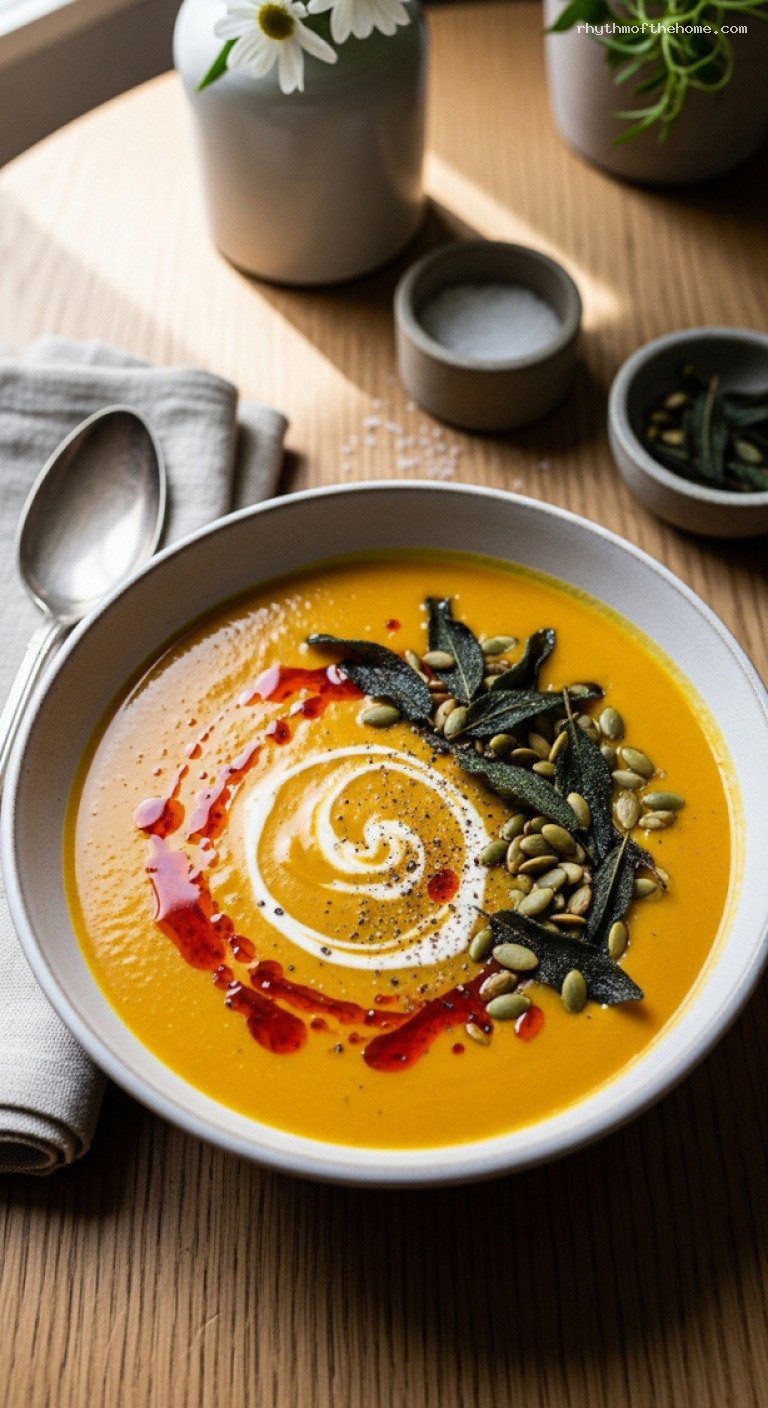
- 7. Ladle soup into bowls. Drizzle with spiced oil, add fried sage leaves, extra cream, and pumpkin seeds. Serve hot.
Why You’ll Love This Recipe
- Ultra-silky, comforting pumpkin soup with a cozy blend of garlic, onion, and warm spices.
- Restaurant-style finish at home thanks to crisp fried sage and a vibrant, smoky spiced oil drizzle.
- Uses simple pantry ingredients and canned pumpkin, but feels special enough for guests.
- Easy to make ahead, freezer-friendly, and adaptable for dairy-free or vegetarian diets.
Grocery List
- Produce: 1 medium yellow onion, 3 cloves garlic, fresh sage (about 12 leaves)
- Dairy: Unsalted butter, heavy cream (or half-and-half)
- Pantry: Pumpkin puree (not pumpkin pie filling), low-sodium chicken or vegetable broth, olive oil, salt, black pepper, ground nutmeg, ground ginger, ground cinnamon (optional), crushed red pepper flakes, smoked or sweet paprika, maple syrup or brown sugar (optional), pumpkin seeds (pepitas, optional)
Full Ingredients
For the Pumpkin Soup
- 2 tbsp unsalted butter
- 1 tbsp olive oil
- 1 medium yellow onion, finely diced (about 1 1/2 cups)
- 3 cloves garlic, minced
- 3 cups pumpkin puree (about 2 x 15 oz / 425 g cans, not pumpkin pie filling)
- 4 cups (960 ml) low-sodium chicken or vegetable broth
- 1/2 tsp fine sea salt, plus more to taste
- 1/4 tsp freshly ground black pepper, plus more to taste
- 1/4 tsp ground nutmeg (freshly grated if possible)
- 1/4 tsp ground ginger
- 1/8 tsp ground cinnamon (optional, for extra warmth)
- 1 tsp maple syrup or packed light brown sugar (optional, to balance flavors)
- 3/4 cup (180 ml) heavy cream (or half-and-half), plus more for serving if desired
For the Fried Sage & Spiced Oil
- 1/4 cup (60 ml) extra-virgin olive oil
- 12 fresh sage leaves, rinsed and thoroughly patted dry
- 1/2 tsp crushed red pepper flakes (adjust to your heat preference)
- 1/2 tsp smoked paprika or sweet paprika
- Pinch of fine sea salt
Optional Garnishes
- 1/4 cup toasted pumpkin seeds (pepitas)
- Additional heavy cream or thick plain yogurt for swirling
- Extra freshly grated nutmeg or black pepper
Step-by-Step Instructions
Step 1: Prep your ingredients
Dice the onion into small, even pieces so it cooks quickly and evenly. Mince the garlic. If you are using canned pumpkin, open the cans and measure out 3 cups of puree. Rinse the sage leaves gently, then pat them completely dry with a clean towel; any water on the leaves will cause the oil to splatter later. Have all the spices and broth measured and ready to go. This little bit of prep makes the cooking process smooth and stress-free.
Step 2: Build a flavorful base with onion and garlic
In a large, heavy-bottomed saucepan or Dutch oven, heat the butter and 1 tbsp olive oil over medium heat. Once the butter is melted and foamy, add the diced onion and a pinch of salt. Cook, stirring occasionally, until the onion is very soft and lightly golden around the edges, about 8 to 10 minutes. If it starts browning too quickly, reduce the heat slightly. Add the minced garlic and cook for 30 to 60 seconds, just until fragrant. This onion-garlic base gives your soup deep savory flavor.
Step 3: Add pumpkin and spices, then simmer with broth
Stir in the pumpkin puree, nutmeg, ginger, and cinnamon (if using) until the onions are well coated and the mixture looks thick and smooth. Let it cook for 1 to 2 minutes, stirring often; this step lightly toasts the pumpkin and spices, which wakes up their flavor. Pour in the broth, scraping the bottom of the pot with a spoon to release any browned bits. Season with 1/2 tsp salt and 1/4 tsp black pepper. Bring the mixture to a gentle simmer, then reduce the heat to low and simmer uncovered for about 15 minutes. The flavors should meld and the soup will slightly thicken.
Step 4: Blend the soup until velvety smooth
Turn off the heat. Use an immersion blender directly in the pot to blend the soup until completely smooth and creamy, moving the blender around to catch any bits of onion. This usually takes 2 to 3 minutes. If you do not have an immersion blender, carefully transfer the hot soup to a countertop blender in batches, filling it no more than halfway each time. Vent the lid slightly and cover with a clean towel to allow steam to escape, then blend until silky. Return the blended soup to the pot. The texture should be velvety and pourable, not too thick; if it seems very thick, you can add a splash of extra broth or water to loosen it slightly.
Step 5: Enrich with cream and balance the flavors
Place the pot back over low heat. Stir in the heavy cream and the maple syrup or brown sugar, if using. Gently warm the soup for 2 to 3 minutes, stirring often; do not let it boil, as boiling can cause the cream to separate. Taste and adjust the seasoning with more salt and pepper as needed. The flavor should be gently savory with a hint of warmth from the nutmeg and ginger, and just enough sweetness to round everything out without tasting like dessert.
Step 6: Fry the sage and make the spiced oil
While the soup is gently reheating, prepare the fried sage and spiced oil. In a small skillet, heat 1/4 cup olive oil over medium heat until it shimmers. Carefully add a few sage leaves at a time; they should sizzle on contact. Fry for 20 to 30 seconds, turning once, until they darken slightly and become crisp but not burned. Transfer the leaves to a plate lined with paper towels. Turn the heat down to low. To the same hot oil, add the crushed red pepper flakes, smoked or sweet paprika, and a pinch of salt. Swirl the pan and let the spices bloom in the warm oil for about 30 seconds; do not let them burn. Remove from heat. You now have a fragrant, brick-red spiced oil.
Step 7: Serve with garnishes
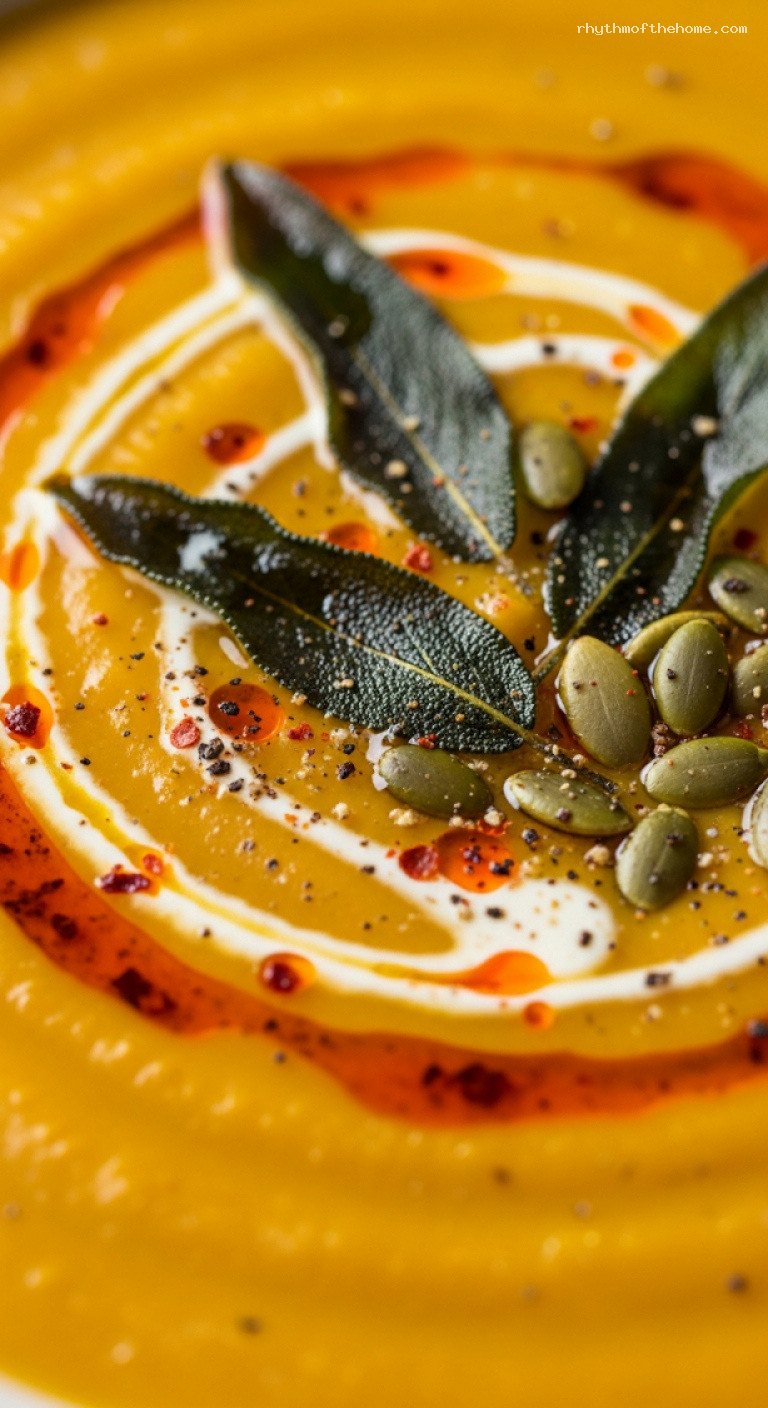
Ladle the hot pumpkin soup into warm bowls. Use a spoon to drizzle some of the spiced oil over the top of each bowl, letting it form little streaks or pools of deep orange-red. Add a small splash or swirl of extra cream or yogurt if you like a marbled look. Top with a few fried sage leaves per bowl. If desired, sprinkle on toasted pumpkin seeds for crunch and a little extra nutmeg or freshly ground black pepper. Serve immediately while everything is hot and aromatic, with crusty bread on the side for dipping.
Pro Tips
- Get the texture right: For the silkiest soup, blend longer than you think you need to, and if you want it restaurant-smooth, strain through a fine-mesh sieve after blending.
- Watch the heat when adding cream: Keep the soup just below a simmer after adding cream to prevent curdling and to preserve a velvety finish.
- Dry the sage very well: Any moisture on the leaves will cause the oil to spit aggressively. Fully dry sage leaves before frying for safety and crispness.
- Adjust thickness to taste: If the soup feels too thick, add a bit more broth or water. If it is too thin, simmer uncovered for a few extra minutes to reduce.
- Use quality pumpkin: Choose pure pumpkin puree (not pie filling) or make your own from roasted sugar pumpkin or butternut squash for the best flavor.
Variations
- Dairy-free / vegan: Replace the butter with olive oil and the heavy cream with full-fat coconut milk or an unsweetened oat cooking cream. The flavor will be slightly different but still rich and comforting.
- Curried pumpkin soup: Swap the nutmeg and ginger for 1 to 2 tsp mild curry powder and 1/2 tsp ground cumin. Finish with coconut milk and garnish with cilantro instead of sage.
- Roasted pumpkin version: Roast peeled pumpkin or butternut squash cubes at 400°F (200°C) with olive oil, salt, and pepper until tender and caramelized, then use in place of canned pumpkin for a deeper, roasted flavor.
Storage & Make-Ahead
Let the soup cool to room temperature, then transfer it to an airtight container. Refrigerate for up to 4 days. Reheat gently on the stovetop over low to medium-low heat, stirring often, until hot but not boiling. The fried sage is best on the day it is made, but the spiced oil can be stored in a sealed jar in the refrigerator for up to 1 week; bring it to room temperature before drizzling. For longer storage, freeze the soup (without the cream) for up to 3 months. Thaw overnight in the refrigerator, reheat gently, then stir in the cream just before serving for the best texture.
Nutrition (per serving)
Approximate values for 1 of 4 servings (without optional pumpkin seeds): about 320 calories; 24 g fat; 19 g carbohydrates; 4 g fiber; 7 g protein; 750 mg sodium (will vary based on broth and added salt). Adding pumpkin seeds will increase the healthy fats and protein slightly. These figures are estimates and will vary with specific products and portion sizes.

Leave a Reply