
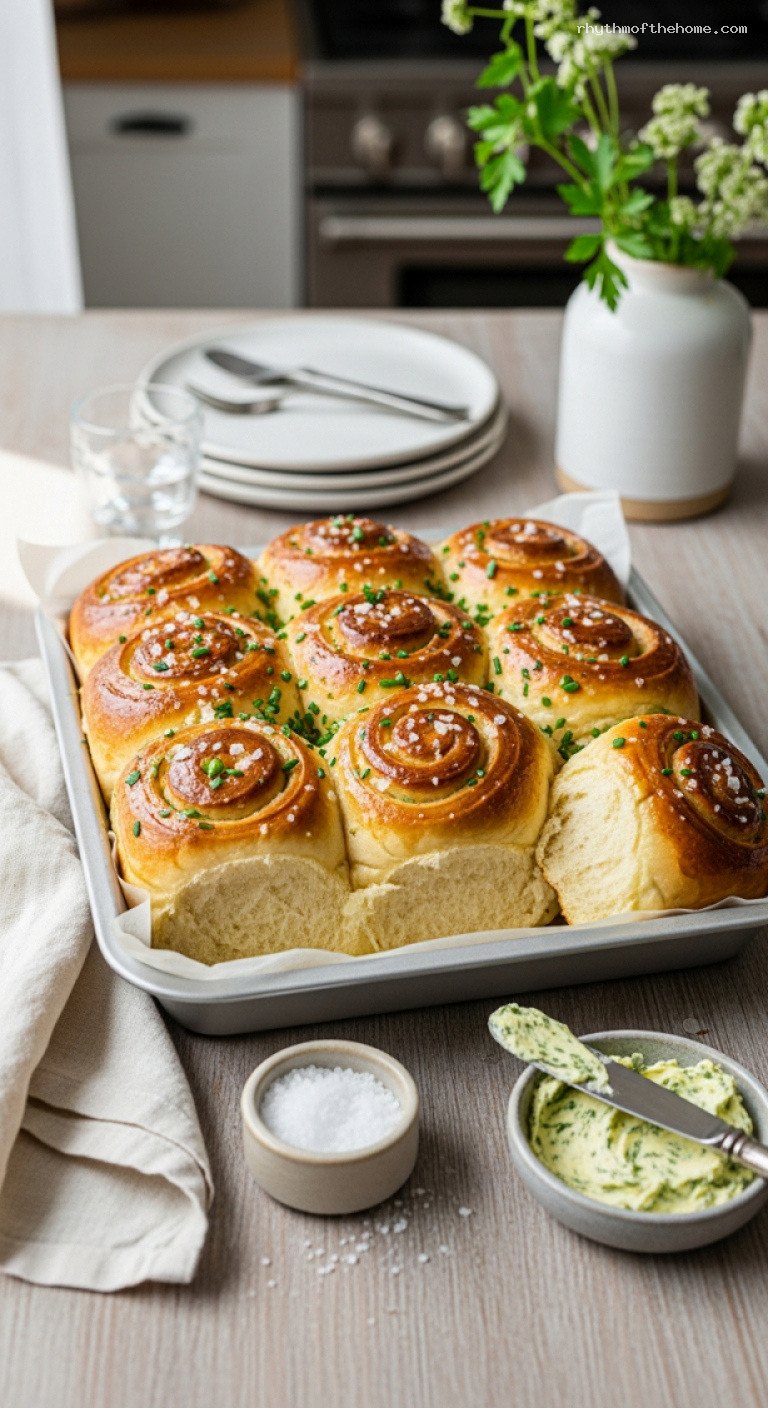
Quick Recipe Version (TL;DR)
Quick Ingredients
- 1 cup (240 ml) warm whole milk (110°F / 43°C)
- 2 1/4 tsp (7 g) active dry yeast
- 3 tbsp (38 g) granulated sugar
- 3 1/2 cups (420 g) all-purpose flour
- 1 1/2 tsp fine sea salt
- 2 large eggs, room temperature
- 4 tbsp (57 g) unsalted butter, very soft (for dough)
- 1 tbsp butter, for greasing pan
- 6 tbsp (85 g) unsalted butter, melted (for garlic-herb butter)
- 2–3 garlic cloves, finely minced
- 3 tbsp chopped fresh herbs (parsley, chives, thyme)
- Flaky sea salt, for sprinkling
Do This
- 1. Warm milk to 110°F. Stir in yeast and 1 tbsp sugar; let sit 5–10 minutes until foamy.
- 2. In a bowl, combine flour, remaining sugar, and salt. Add yeast mixture, eggs, and soft butter; mix, then knead 8–10 minutes until smooth and elastic.
- 3. Place dough in a greased bowl, cover, and let rise in a warm spot until doubled, about 60–75 minutes.
- 4. Mix melted butter with garlic and chopped herbs; set aside. Butter a 9×13-inch baking pan.
- 5. Roll dough into a 9×12-inch rectangle. Cut into 24 small rectangles, brush with some garlic-herb butter, fold each in half, and arrange tightly in the pan.
- 6. Cover and let rise until puffy, 30–45 minutes. Meanwhile, preheat oven to 375°F (190°C).
- 7. Bake 18–22 minutes until deep golden. Immediately brush generously with remaining garlic-herb butter, sprinkle with flaky sea salt, rest 5–10 minutes, and serve warm.
Why You’ll Love This Recipe
- Soft, pillowy pull-apart rolls with rich butter flavor and a tender, tearable crumb.
- Fragrant garlic and fresh herbs make them feel special enough for holidays but easy enough for weekends.
- They bake all together in one pan, so they are perfect for passing around a big table.
- Make-ahead friendly: the dough can be prepared earlier in the day (or the day before) to keep hosting stress low.
Grocery List
- Produce: Garlic (2–3 cloves), fresh flat-leaf parsley, fresh chives, fresh thyme (or dried thyme if needed)
- Dairy: Whole milk, unsalted butter, large eggs
- Pantry: All-purpose flour, granulated sugar, active dry yeast, fine sea salt, flaky sea salt
Full Ingredients
For the Parker House Roll Dough
- 1 cup (240 ml) whole milk, warmed to 110°F / 43°C (warm to the touch, not hot)
- 2 1/4 tsp (7 g) active dry yeast (one standard packet)
- 3 tbsp (38 g) granulated sugar, divided
- 3 1/2 cups (420 g) all-purpose flour, plus a little more for dusting
- 1 1/2 tsp fine sea salt
- 2 large eggs, at room temperature
- 4 tbsp (57 g) unsalted butter, very soft
- 1 tbsp unsalted butter, for greasing the bowl and pan
For the Garlic-Herb Butter
- 6 tbsp (85 g) unsalted butter, melted and slightly cooled
- 2–3 garlic cloves, very finely minced or pressed
- 2 tbsp finely chopped fresh flat-leaf parsley
- 1 tbsp finely chopped fresh chives
- 1 tsp finely chopped fresh thyme leaves (or 1/2 tsp dried thyme)
- 1/4 tsp fine sea salt (to season the butter)
To Finish
- Flaky sea salt (such as Maldon), for sprinkling on top
- Extra chopped herbs (optional), for garnish just before serving
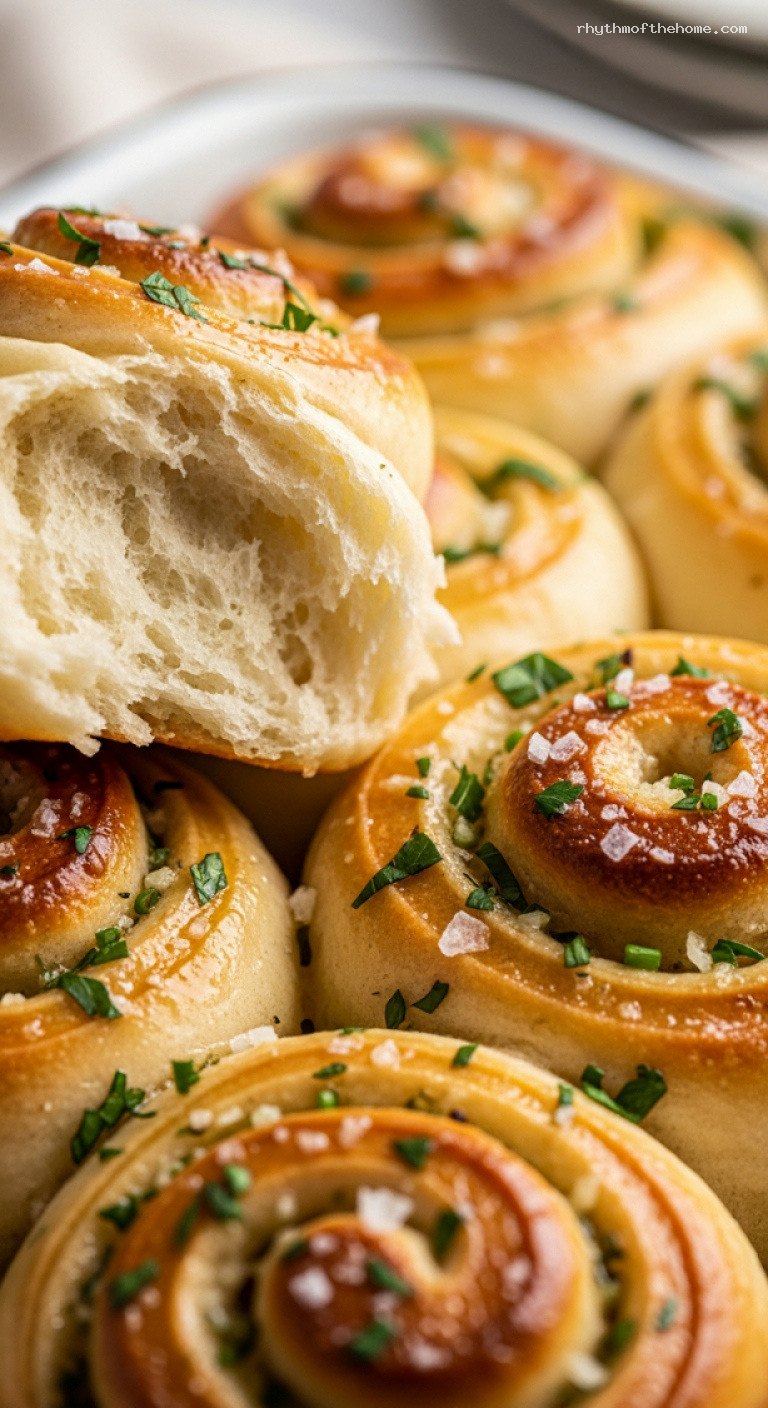
Step-by-Step Instructions
Step 1: Warm the milk and activate the yeast
In a small saucepan or in the microwave, gently warm the milk until it reaches about 110°F / 43°C. It should feel warm but comfortable to the touch, not hot. Pour the warm milk into a medium bowl or the bowl of a stand mixer. Stir in the yeast and 1 tablespoon of the sugar. Let the mixture sit for 5–10 minutes, until the surface looks foamy and creamy. This tells you the yeast is alive and ready to work. If it does not foam, your yeast may be expired or the milk may have been too hot; start again with fresh yeast.
Step 2: Make the enriched dough
In a large bowl (or the stand mixer bowl if you are using one), whisk together the flour, remaining 2 tablespoons sugar, and salt. Add the foamy yeast mixture, the eggs, and the very soft butter. If using a stand mixer, fit it with the dough hook and mix on low speed until a shaggy dough forms, scraping down the sides as needed.
Increase to medium speed and knead for 6–8 minutes, until the dough is smooth, slightly tacky, and pulls away from the sides of the bowl. If kneading by hand, turn the shaggy dough out onto a lightly floured surface and knead for about 10 minutes, adding just enough flour to keep it from sticking badly, until you have a smooth and elastic dough. It should feel soft and slightly springy when pressed with a fingertip.
Step 3: First rise (let the dough double)
Lightly butter a clean bowl with about 1 teaspoon of the 1 tablespoon butter. Shape the dough into a ball and place it in the bowl, turning it once so the top is lightly coated with butter. Cover the bowl tightly with plastic wrap or a clean, damp kitchen towel.
Let the dough rise in a warm, draft-free spot until doubled in size, about 60–75 minutes. You can check if it is ready by gently pressing a finger into the dough; if the indentation remains and does not spring back quickly, the dough has risen enough.
Step 4: Make the garlic-herb butter and prepare the pan
While the dough is rising, make the garlic-herb butter. In a small bowl, combine the melted butter, minced garlic, chopped parsley, chopped chives, chopped thyme, and 1/4 teaspoon fine sea salt. Stir well and set aside. The flavors will meld as it sits. If it starts to firm up too much, you can briefly rewarm it later.
Butter a 9×13-inch (23×33 cm) baking pan with the remaining butter from the 1 tablespoon (use more if needed). Make sure to coat the bottom and sides well so the rolls release easily and the edges get slightly crisp and golden.
Step 5: Shape classic Parker House folds
Once the dough has doubled, gently punch it down to release the gas. Turn it out onto a lightly floured surface. Using a rolling pin, roll the dough into a rectangle about 9×12 inches (23×30 cm) and roughly 1/2 inch (1.25 cm) thick. Try to keep the thickness even so the rolls bake uniformly.
Use a sharp knife or a bench scraper to cut the rectangle into 24 smaller rectangles: first cut into 4 strips one way and then 6 strips the other way (4 x 6 grid). Working with one piece at a time, brush the top generously with some of the garlic-herb butter. Fold the rectangle in half like a little book (short side to short side), with the buttered side inside the fold. Arrange each folded roll in the prepared pan, overlapping them slightly and keeping all the “hinges” facing in the same direction for a classic Parker House look. Continue until all 24 pieces are shaped and nestled snugly in the pan.
Step 6: Second rise (proof the shaped rolls)
Cover the pan loosely with plastic wrap or a clean kitchen towel, making sure it does not stick to the rolls. Let the rolls rise in a warm place until noticeably puffy and almost doubled, about 30–45 minutes. About 15 minutes before baking, preheat your oven to 375°F (190°C) with a rack in the center position.
The rolls are ready to bake when they are touching each other and look airy and light. If you gently nudge one with a fingertip, it should spring back slowly.
Step 7: Bake, finish with herb-garlic butter, and serve
Place the pan of risen rolls in the preheated 375°F (190°C) oven. Bake for 18–22 minutes, until the tops are a rich golden brown and the centers of a couple of middle rolls register about 190°F (88°C) if checked with an instant-read thermometer. If the tops brown too quickly, you can tent the pan loosely with foil for the last few minutes.
As soon as the rolls come out of the oven, brush the hot tops generously with the remaining garlic-herb butter, letting it drip down into the folds and between the rolls. Sprinkle lightly with flaky sea salt while the butter is still glossy so the salt adheres. Let the rolls cool in the pan for 5–10 minutes, then bring the whole pan to the table or gently pull apart and transfer to a serving basket. Serve warm, with extra butter if you like.
Pro Tips
- Check your yeast: If the milk-yeast mixture does not foam within 10 minutes, discard it and start over. Active yeast is key to fluffy rolls.
- Soft, not sticky dough: Add flour sparingly while kneading. Too much flour makes dense rolls; the dough should be soft, slightly tacky, and elastic.
- Use room-temperature eggs: Cold eggs can slow the rise. If you forget to take them out early, place whole eggs (in the shell) in warm water for 5–10 minutes.
- Warm rising spot: A turned-off oven with the light on or a microwave with a cup of hot water inside can create a cozy, draft-free place for rising.
- Do not skip the flaky salt: That final sprinkle of flaky sea salt adds a delicate crunch and really highlights the garlic-herb butter.
Variations
- Cheesy Herb Rolls: Sprinkle 1/2–3/4 cup finely grated Parmesan or aged cheddar over the dough before folding the pieces. A little extra cheese melted on top during the last 5 minutes of baking is also delicious.
- Rosemary & Sea Salt Rolls: Swap the parsley, chives, and thyme for 1 1/2 tablespoons finely chopped fresh rosemary. Keep the garlic and flaky sea salt as written.
- Plain Parker House Rolls: For a more classic, neutral roll (great for picky eaters), omit the garlic and fresh herbs. Brush with plain melted butter before and after baking, and sprinkle just a touch of salt on top.
Storage & Make-Ahead
To make ahead, you have a few options. Overnight dough: Prepare the dough through the end of Step 3, then cover tightly and refrigerate overnight. The next day, let the chilled dough sit at room temperature for 30–45 minutes, then proceed with shaping, the second rise, and baking. Same-day prep: You can also shape the rolls (Step 5), cover the pan well, and refrigerate for up to 6 hours. Let the pan sit at room temperature until the rolls are puffy, then bake as directed.
Leftover baked rolls keep well in an airtight container at room temperature for up to 2 days or in the refrigerator for up to 4 days. Rewarm loosely wrapped in foil at 325°F (165°C) for 8–10 minutes, then, if you like, brush with a little extra melted herb butter. The baked rolls can also be frozen for up to 1 month; thaw overnight in the fridge and reheat as above.
Nutrition (per serving)
Approximate per roll (1 of 24): about 140 calories; 6 g fat; 3.5 g saturated fat; 17 g carbohydrates; 1 g fiber; 3 g protein; 2 g sugar; 190 mg sodium. These values are estimates and will vary based on exact ingredients and portion sizes.

Leave a Reply