
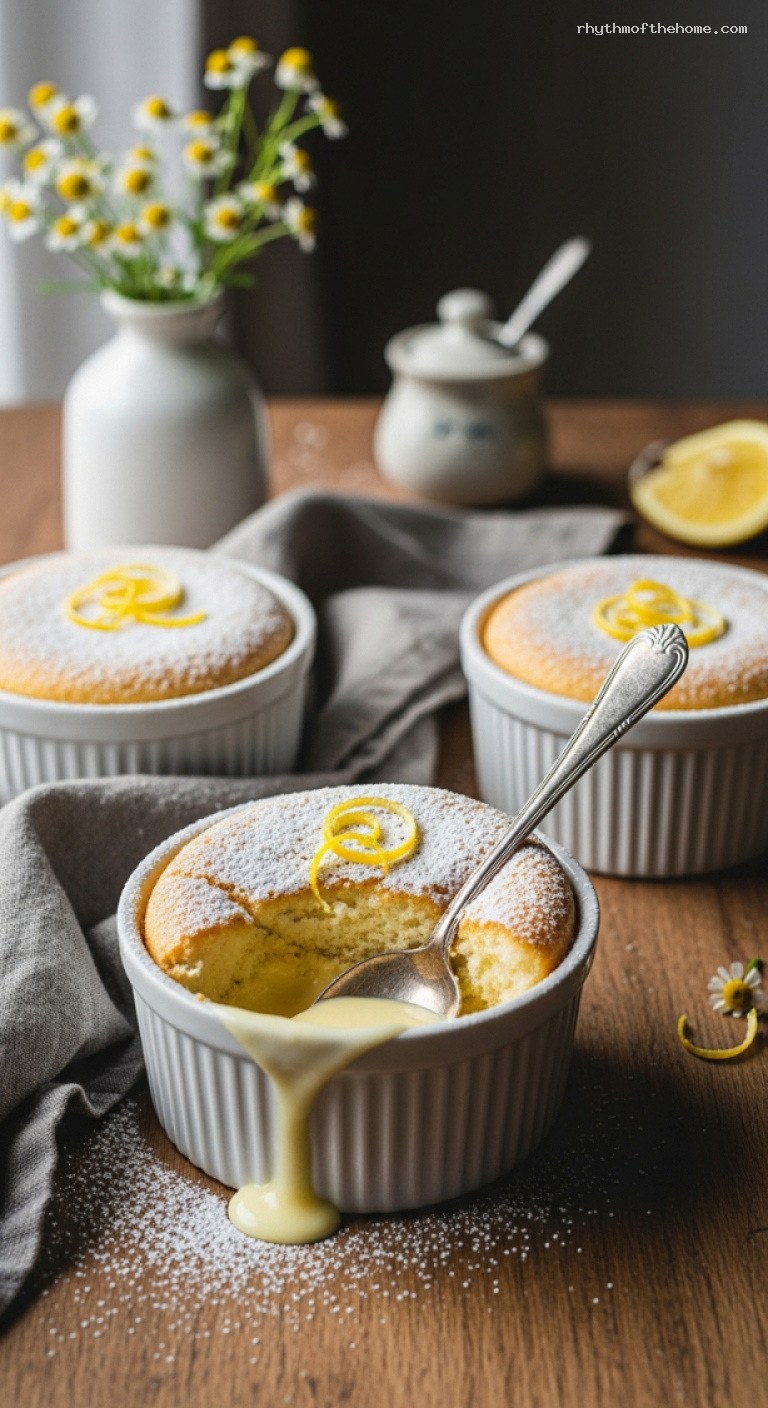
Quick Recipe Version (TL;DR)
Quick Ingredients
- 3 large eggs, separated
- 3/4 cup (150 g) granulated sugar, divided
- 1/3 cup (40 g) all-purpose flour
- 1/4 teaspoon fine salt
- 1 tablespoon finely grated lemon zest (about 2 lemons)
- 1/3 cup (80 ml) fresh lemon juice
- 1 cup (240 ml) whole milk, at room temperature
- 2 tablespoons (28 g) unsalted butter, melted and slightly cooled
- 1 teaspoon pure vanilla extract
- Soft butter and extra sugar for coating the ramekins
- Powdered sugar, extra lemon zest, and/or berries for serving (optional)
Do This
- 1. Preheat oven to 325°F (165°C). Butter and sugar 6 small ramekins and place them in a deep roasting pan. Put a kettle of water on to boil.
- 2. Whisk 1/2 cup sugar, flour, salt, and lemon zest. Whisk in egg yolks, melted butter, milk, lemon juice, and vanilla until smooth.
- 3. In a clean bowl, beat egg whites to soft peaks. Gradually add remaining 1/4 cup sugar and beat to glossy medium peaks.
- 4. Gently fold the whipped whites into the lemon batter in 3 additions until just combined.
- 5. Divide batter among ramekins. Place roasting pan on oven rack and pour hot water into the pan to reach halfway up the sides of the ramekins.
- 6. Bake 35–40 minutes, until tops are lightly golden and just set but centers still have a gentle wobble. Cool 10–15 minutes.
- 7. Dust with powdered sugar, garnish with lemon zest or berries if you like, and serve warm to enjoy the fluffy cake top and soft lemon custard underneath.
Why You’ll Love This Recipe
- One batter, two textures: a light, tender lemon cake on top and silky lemon custard underneath.
- Bright, fresh lemon flavor that is tangy but not overpowering, with just the right sweetness.
- Bakes in simple ramekins or one baking dish, with ingredients you probably already have.
- Elegant enough for guests but easy and comfortable enough for a weeknight dessert.
Grocery List
- Produce: Lemons (2–3 medium, for zest and juice)
- Dairy: Whole milk, unsalted butter, eggs
- Pantry: Granulated sugar, powdered sugar (optional), all-purpose flour, fine salt, vanilla extract
Full Ingredients
For the lemon pudding cake
- 3 large eggs, separated, at room temperature
- 3/4 cup (150 g) granulated sugar, divided
- 1/3 cup (40 g) all-purpose flour
- 1/4 teaspoon fine sea salt (or table salt)
- 1 tablespoon finely grated lemon zest (from about 2 lemons)
- 1/3 cup (80 ml) freshly squeezed lemon juice (from about 2 lemons)
- 1 cup (240 ml) whole milk, at room temperature
- 2 tablespoons (28 g) unsalted butter, melted and slightly cooled
- 1 teaspoon pure vanilla extract
For preparing the pan and serving
- Soft butter, for greasing ramekins or baking dish
- 2–3 tablespoons granulated sugar, for coating ramekins or baking dish
- Powdered sugar, for dusting (optional)
- Extra lemon zest curls or finely grated zest, for garnish (optional)
- Fresh berries and/or small mint leaves, for serving (optional)
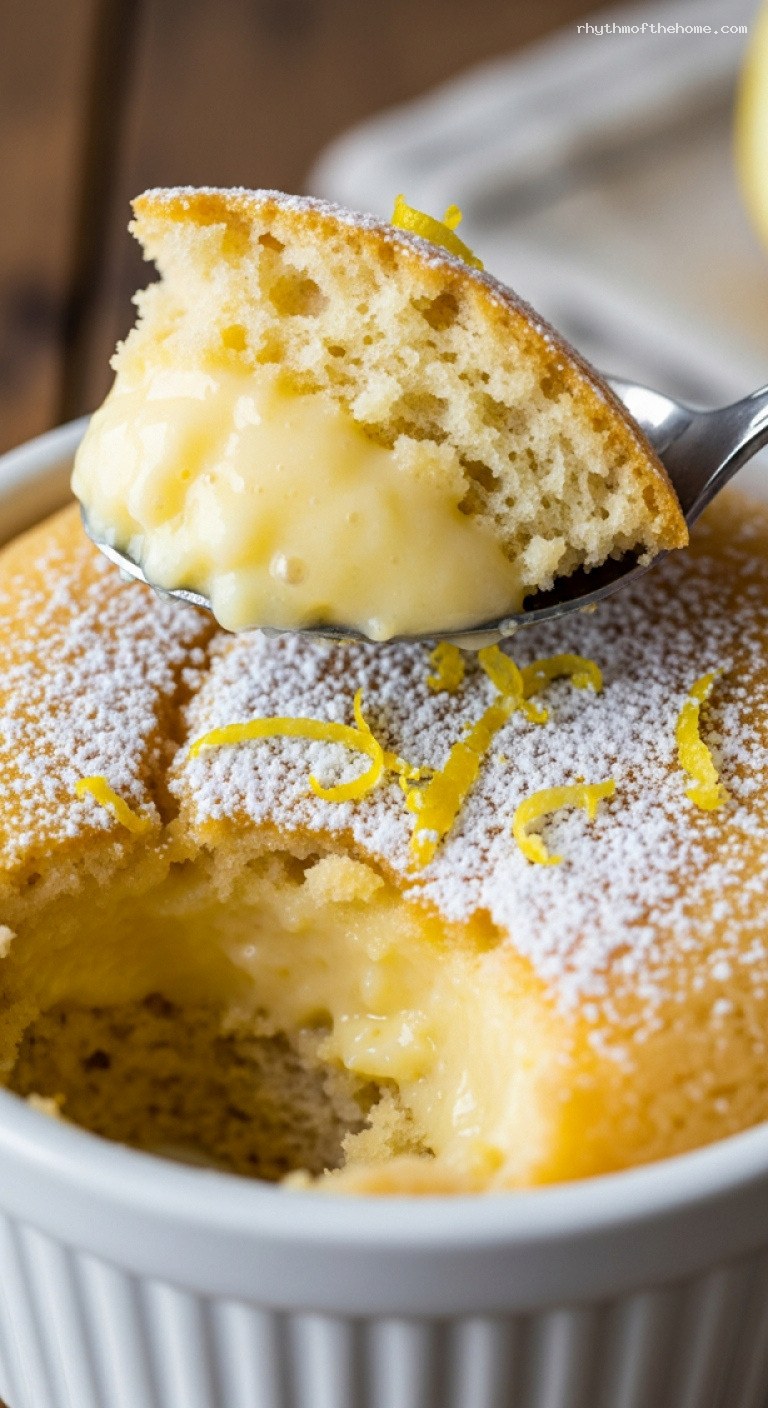
Step-by-Step Instructions
Step 1: Prep the oven, water bath, and baking dishes
Preheat your oven to 325°F (165°C) with a rack in the middle position. Set a kettle or pot of water on the stove to heat; you will need enough hot water to come about halfway up the sides of your ramekins or baking dish.
Generously butter 6 small ramekins (about 6-ounce / 180 ml capacity) or one 8-inch (20 cm) square or round baking dish. Sprinkle a spoonful of granulated sugar into each ramekin and tilt to coat the bottom and sides, tapping out any excess. This light sugar crust helps the cake rise evenly and adds a subtle crunch at the edges. Arrange the prepared ramekins (or baking dish) in a deep roasting pan or large baking dish that is safe to fill with water.
Step 2: Zest and juice the lemons
Wash and dry your lemons. Using a fine grater or microplane, finely zest enough lemon to yield 1 tablespoon of zest. Only remove the bright yellow part of the peel; the white pith underneath is bitter. Set the zest aside.
Cut the lemons in half and juice them. Strain the juice to remove seeds and excess pulp. Measure out 1/3 cup (80 ml) of lemon juice. If you are slightly short, you can top up with a bit of bottled lemon juice or water, but fresh juice gives the best flavor.
Step 3: Make the lemon base batter
In a medium mixing bowl, whisk together 1/2 cup (100 g) of the granulated sugar, the flour, salt, and lemon zest until the zest is well dispersed and there are no lumps of flour. Add the egg yolks (reserve the whites in a clean bowl for later) and whisk until the mixture is thick and smooth.
Whisk in the melted, slightly cooled butter until combined, then gradually whisk in the milk, lemon juice, and vanilla extract. The batter will look thin and may appear slightly curdled at first from the lemon and milk, but keep whisking until it becomes mostly smooth. A few tiny specks are fine.
Step 4: Whip the egg whites to soft, glossy peaks
Place the reserved egg whites in a clean, dry bowl (any grease will prevent them from whipping properly). Using an electric hand mixer or a stand mixer fitted with the whisk attachment, beat the whites on medium speed until they become foamy and opaque.
Increase the speed to medium-high and continue beating until soft peaks form. Soft peaks hold their shape but curl gently when you lift the beaters. With the mixer running, slowly sprinkle in the remaining 1/4 cup (50 g) granulated sugar. Beat just until the whites are thick, glossy, and form medium peaks that gently stand up without becoming dry or clumpy. Do not overbeat.
Step 5: Gently fold the whites into the lemon batter
Give the lemon batter a quick whisk to re-combine, then add about one-third of the whipped egg whites and gently fold them in with a spatula. This first addition can be mixed a little more vigorously to lighten the batter.
Add the remaining egg whites in two more additions, folding carefully each time. Use broad, sweeping motions: cut down through the center of the bowl, scoop along the bottom, and lift up and over, turning the bowl as you go. Stop folding as soon as there are no big streaks of egg white remaining. The batter will be light, foamy, and pourable—this is what creates the two distinct layers as it bakes.
Step 6: Fill the ramekins and bake in a water bath
Divide the batter evenly among the prepared ramekins or pour it into your prepared baking dish. The batter will come fairly close to the top; that is fine. Smooth the tops gently if needed.
Transfer the roasting pan with the filled ramekins to the middle oven rack. Carefully pour the hot water into the roasting pan until it reaches about halfway up the sides of the ramekins or baking dish, being careful not to splash water into the batter.
Bake for 35–40 minutes (for ramekins) or 40–45 minutes (for an 8-inch dish), until the tops are puffed, lightly golden, and spring back gently when touched. The centers should still have a slight wobble when you jiggle the pan—this means the custard layer underneath is silky and not overbaked.
Step 7: Cool briefly and serve warm
Using oven mitts, carefully remove the roasting pan from the oven. Let the pudding cakes sit in the hot water for about 5 minutes, then transfer the ramekins to a wire rack. Cool for another 10 minutes before serving. As they cool, the tops may deflate slightly; this is normal.
Serve the lemon pudding cakes warm or at room temperature. Dust the tops lightly with powdered sugar, and if you like, garnish with a little extra lemon zest, a few fresh berries, or a tiny mint sprig. When you dig in, you will get a spoonful of tender, sponge-like lemon cake on top and a warm, spoonable lemon custard underneath—two textures from one simple batter.
Pro Tips
- Use room-temperature ingredients: Room-temperature eggs and milk whip and combine more easily, giving you better volume in the egg whites and a lighter cake layer.
- Do not overwhip the egg whites: Aim for glossy medium peaks. Overbeaten whites become dry and are harder to fold in, which can deflate the batter and affect the pudding layer.
- Check doneness by sight and touch: The top should be lightly golden and springy, while the center should still have a gentle wobble. Overbaking can make the custard layer too firm.
- Water bath matters: The hot water bath (bain-marie) ensures gentle, even heat so the custard layer stays silky and the cakes do not crack.
- Adjust the tartness: For a sweeter, softer lemon flavor, reduce the lemon juice slightly to 1/4 cup and add 1–2 extra tablespoons of sugar.
Variations
- Meyer Lemon Pudding Cake: Use Meyer lemons instead of regular lemons for a slightly sweeter, floral flavor. Because Meyer lemons are milder, you can increase the juice to 1/2 cup if you like extra tang.
- Lemon–Blueberry Pudding Cake: Scatter 1 to 1 1/2 cups fresh blueberries in the bottom of the buttered and sugared ramekins or baking dish before adding the batter. They will bake into the custard layer and add juicy bursts of flavor.
- Coconut-Lemon Pudding Cake: Replace 1/2 cup of the milk with full-fat canned coconut milk and fold 1/4 cup unsweetened shredded coconut into the batter just before adding the egg whites for a tropical twist.
Storage & Make-Ahead
These lemon pudding cakes are at their very best when served warm on the day they are baked, but they also store nicely. Let leftovers cool completely, then cover and refrigerate for up to 3 days. The layers will firm up a bit in the fridge.
To reheat individual servings, place ramekins on a baking tray and warm in a 300°F (150°C) oven for 10–15 minutes, just until heated through. You can also microwave them gently (about 20–30 seconds per ramekin), but the texture is best from the oven. For make-ahead entertaining, you can bake the cakes earlier in the day, refrigerate once cool, and rewarm before serving; dust with powdered sugar and add garnishes just before bringing them to the table.
Nutrition (per serving)
Approximate values per serving (1 of 6): about 260 calories; 9 g fat; 5 g saturated fat; 40 g carbohydrates; 1 g fiber; 30 g sugar; 6 g protein; 160 mg sodium. These numbers are estimates and will vary based on exact ingredients and portion sizes.

Leave a Reply