
Quick Recipe Version (TL;DR)
Quick Ingredients
- 1 cup (200 g) granulated sugar
- 1/4 cup (60 ml) water
- 2 cups (480 ml) whole milk
- 1 cup (240 ml) heavy cream
- 4 large eggs + 2 large egg yolks
- 2/3 cup (135 g) granulated sugar
- 2 tsp pure vanilla extract
- 1/8 tsp fine sea salt
- Hot tap water for the water bath
Do This
- 1. Preheat oven to 300°F (150°C). Place a folded kitchen towel in the bottom of a deep roasting pan and set an 8–9 inch (2 L) round baking dish on top.
- 2. Make caramel by boiling 1 cup sugar with 1/4 cup water until deep amber, 8–12 minutes. Immediately pour into the baking dish, tilting to coat the bottom.
- 3. For custard, gently heat milk and cream until warm (not boiling). Whisk eggs, yolks, 2/3 cup sugar, vanilla, and salt. Slowly whisk in warm dairy.
- 4. Strain custard into a jug, skim foam, and pour over the set caramel.
- 5. Place pan in oven, then pour hot tap water into roasting pan to reach halfway up the sides of the dish.
- 6. Bake 45–65 minutes until edges are set and center wobbles like jelly. Cool to room temperature, then chill at least 4 hours or overnight.
- 7. To serve, run a knife around the edge, invert onto a rimmed plate, let caramel flow over the custard, slice, and serve cold.
Why You’ll Love This Recipe
- Silky-smooth vanilla custard with a mirror-like layer of golden caramel on top.
- Simple ingredients and classic technique, explained in an approachable, step-by-step way.
- Elegant enough for dinner parties, yet comforting and familiar for family desserts.
- Perfect make-ahead dessert: it actually tastes better after a night in the fridge.
Grocery List
- Produce: Fresh berries and mint sprigs (optional, for garnish)
- Dairy: Whole milk, heavy cream, large eggs
- Pantry: Granulated sugar, vanilla extract (or vanilla bean), fine sea salt
Full Ingredients
For the Caramel
- 1 cup (200 g) granulated sugar
- 1/4 cup (60 ml) water
For the Vanilla Custard
- 2 cups (480 ml) whole milk
- 1 cup (240 ml) heavy cream
- 4 large eggs
- 2 large egg yolks
- 2/3 cup (135 g) granulated sugar
- 2 tsp pure vanilla extract
- 1/8 tsp fine sea salt
For Serving (Optional)
- Fresh berries (strawberries, raspberries, or blueberries)
- Fresh mint leaves
- Lightly whipped cream (unsweetened or barely sweetened)
Step-by-Step Instructions
Step 1: Prepare the oven and baking setup
Preheat your oven to 300°F (150°C) with a rack in the middle position. Have a large, deep roasting pan ready that can fit your flan dish with space around it.
Place a folded kitchen towel in the bottom of the roasting pan. This keeps the flan dish from sliding and helps insulate the custard for gentler cooking. Set a round 8–9 inch (about 2-quart / 2-liter) baking dish or deep pie plate on top of the towel. You can also use 6–8 individual 6-ounce (180 ml) ramekins; the method is the same, but baking time will be a bit shorter.
Bring a full kettle of water to a boil or make sure you have plenty of very hot tap water ready. You will need enough to come about halfway up the sides of your flan dish when poured into the roasting pan.
Step 2: Make the caramel
In a medium, light-colored saucepan, combine 1 cup (200 g) granulated sugar and 1/4 cup (60 ml) water. Stir gently just until the sugar is evenly moistened; then stop stirring. Place the pan over medium heat.
Let the sugar mixture come to a simmer. As it cooks, occasionally swirl the pan gently to help it color evenly, but do not stir with a spoon (stirring can cause crystallization). The bubbles will get thicker and the syrup will slowly change from clear to pale gold, then to a richer amber. This takes about 8–12 minutes, depending on your stove and pan.
When the caramel reaches a deep amber color (similar to dark honey or a shiny copper penny) and you see a wisp of smoke, immediately remove it from the heat. It will continue to darken slightly off the heat, so do not wait too long or it can burn and taste bitter.
Step 3: Coat the baking dish with caramel
Working carefully (the caramel is extremely hot), immediately pour the caramel into your baking dish. Tilt and rotate the dish so the caramel coats the bottom in an even layer. It is okay if it does not fully reach the sides; it will melt and spread again during baking.
The caramel will harden as it cools and may crack—that is completely normal. Set the caramel-lined dish back into the roasting pan. Set aside while you prepare the custard.
Step 4: Warm the milk and cream
In a medium saucepan, combine 2 cups (480 ml) whole milk and 1 cup (240 ml) heavy cream. Heat over medium-low, stirring occasionally, until the mixture is warm and steaming but not boiling, about 5–7 minutes. If you have a thermometer, you are aiming for around 120–140°F (50–60°C).
Warming the dairy helps the sugar dissolve smoothly and makes it easier to blend with the eggs without shocking them. Once warmed, remove the pan from the heat and set aside.
Step 5: Whisk the custard and combine
In a large mixing bowl, whisk together 4 large eggs, 2 large egg yolks, 2/3 cup (135 g) granulated sugar, 2 tsp vanilla extract, and 1/8 tsp fine sea salt until everything is well combined and slightly lightened in color. You want the mixture to be smooth, but avoid whipping in lots of air.
Slowly pour the warm milk-and-cream mixture into the egg mixture in a thin stream, whisking constantly. This gradual mixing gently warms the eggs and prevents them from scrambling. Once all the dairy is incorporated, stop whisking as soon as the mixture is smooth and uniform.
For an ultra-silky texture, pour the custard through a fine-mesh sieve into a large jug or bowl. Skim off any foam from the surface with a spoon; foam can create bubbles on top of the finished flan.
Step 6: Pour, bake, and water bath
Carefully pour the strained custard into the caramel-lined baking dish. If any bubbles form on the surface, gently skim or pop them with the edge of a spoon.
Slide the roasting pan (with the flan dish inside) into the oven. Pour hot tap water or recently boiled water (let it cool 1–2 minutes off the boil) into the roasting pan, aiming for the sides of the pan rather than directly onto the custard. Fill until the water reaches about halfway up the sides of the flan dish.
Bake at 300°F (150°C) until the edges are set but the center still wobbles like soft jelly when you gently shake the dish. For one large 8–9 inch dish, this takes about 50–65 minutes. For individual ramekins, check at 35–45 minutes. The custard will firm up more as it cools.
To test doneness, you can insert a thin knife about 1 inch from the edge; it should come out mostly clean, while the center still looks slightly looser.
Step 7: Cool, chill, and unmold
Carefully remove the roasting pan from the oven. Using oven mitts, lift the flan dish out of the hot water and place it on a wire rack. Let it cool to room temperature, about 1–1 1/2 hours.
Once cooled, cover the dish tightly with plastic wrap or foil and refrigerate for at least 4 hours, preferably overnight. This resting time allows the custard to fully set and the caramel to liquefy into a glossy sauce.
To unmold, run a thin knife around the edge of the custard to loosen it from the dish. Choose a rimmed serving plate that is wider than the flan and can catch the caramel sauce. Place the plate upside down over the dish, hold them tightly together, and quickly invert in one confident motion. Give the dish a gentle shake; you should hear the custard release and feel it drop onto the plate.
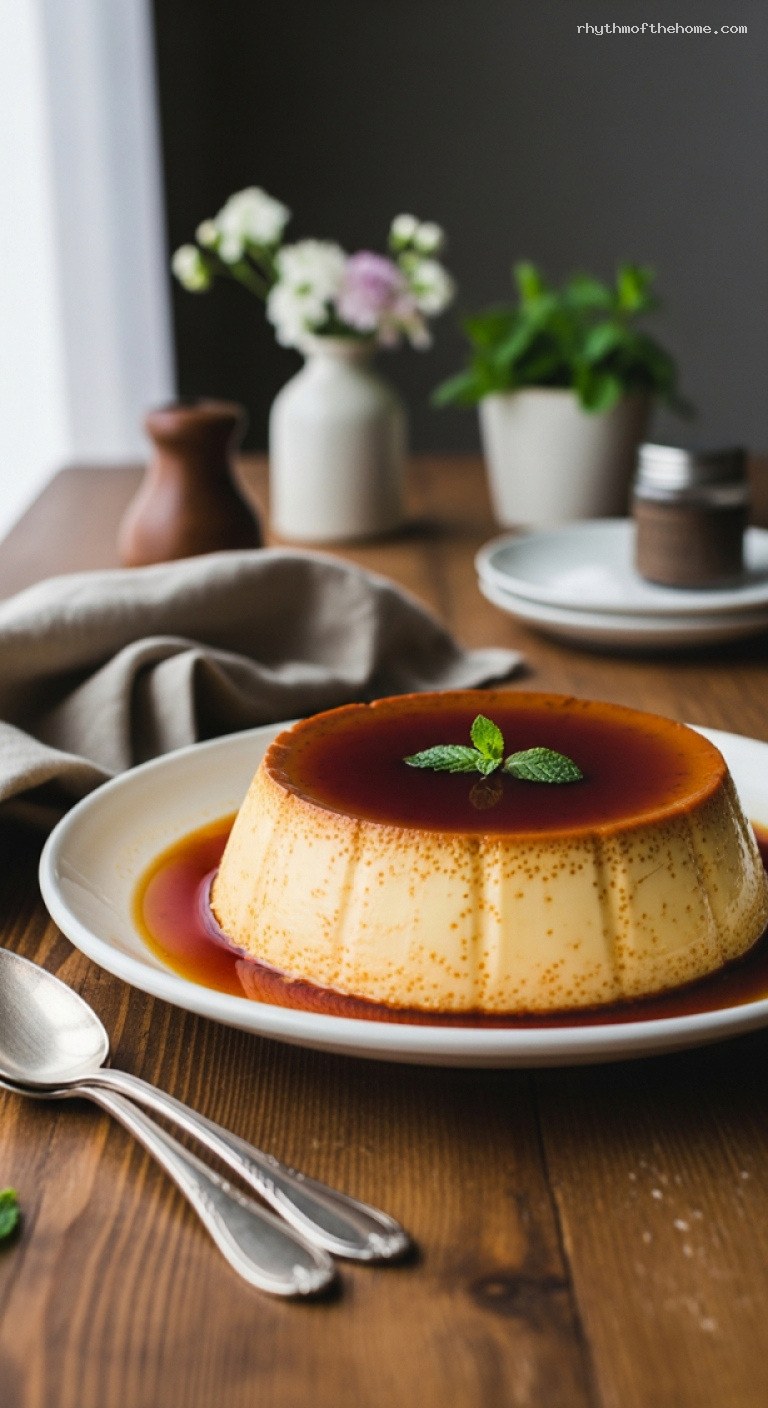
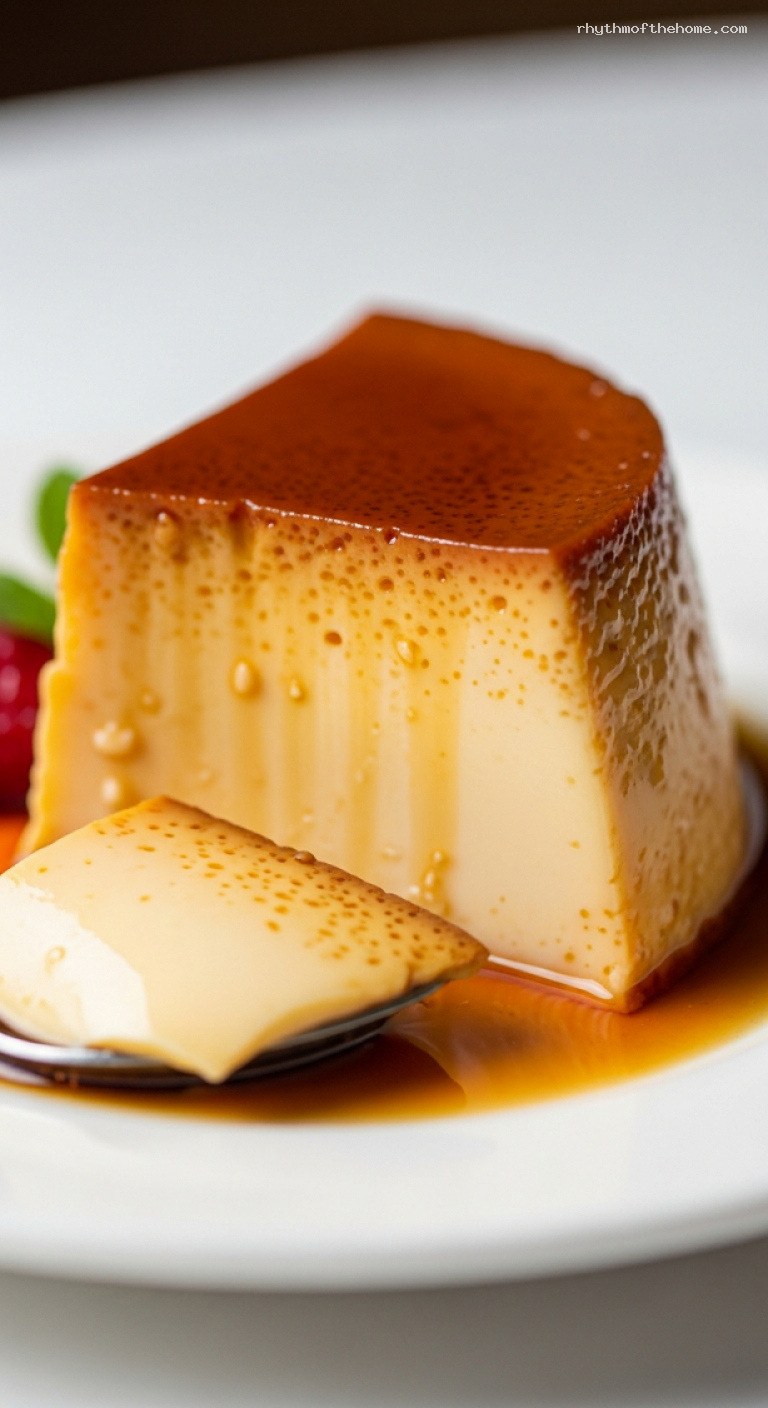
Lift off the baking dish—caramel will flow down over the custard, coating it in a shiny amber layer and pooling around the base. Slice into wedges with a sharp knife, wiping the blade between cuts, and spoon extra caramel over each serving. Garnish with fresh berries, a mint leaf, or a dollop of whipped cream, if you like.
Pro Tips
- Use gentle heat for the caramel: A light-colored pan helps you see the color change. If one side browns faster, rotate the pan instead of turning up the heat.
- Avoid scrambling the eggs: Make sure the milk and cream are warm, not boiling, and pour them slowly into the egg mixture while whisking constantly.
- Strain for silkiness: Passing the custard through a fine-mesh sieve removes any tiny bits of cooked egg and ensures an ultra-smooth texture.
- Do not overbake: It is better to remove the flan when the center still looks slightly wobbly. Overbaked custard turns rubbery and can develop bubbles.
- Chill thoroughly: The flavor and texture improve significantly after a night in the fridge, and the flan unmolds more cleanly.
Variations
- Citrus-scented flan: Add 1–2 tsp finely grated orange or lemon zest to the warm milk and cream, then strain before mixing with the eggs.
- Coconut flan: Replace 1 cup (240 ml) of the whole milk with full-fat coconut milk, and add 1/2 tsp coconut extract for extra aroma.
- Espresso flan: Stir 2–3 tsp instant espresso powder into the warm milk and cream until dissolved for a subtle coffee flavor and a light cappuccino-colored custard.
Storage & Make-Ahead
Flan is an ideal make-ahead dessert. Once baked and cooled to room temperature, cover the dish tightly and refrigerate for up to 3 days before serving. Unmold just before serving so the caramel stays glossy and the custard does not dry out around the edges.
If you have leftovers after unmolding, cover the plate loosely with plastic wrap or transfer individual slices (with some caramel) to airtight containers. Store in the refrigerator for up to 2 days. Flan should not be frozen; freezing tends to break the smooth texture and make it watery when thawed.
Nutrition (per serving)
Approximate values for 1 of 8 servings: about 380 calories, 22 g fat, 40 g carbohydrates, 6 g protein, 150 mg sodium, and 35 g sugar. Values will vary slightly depending on exact ingredients and portion sizes.

Leave a Reply