
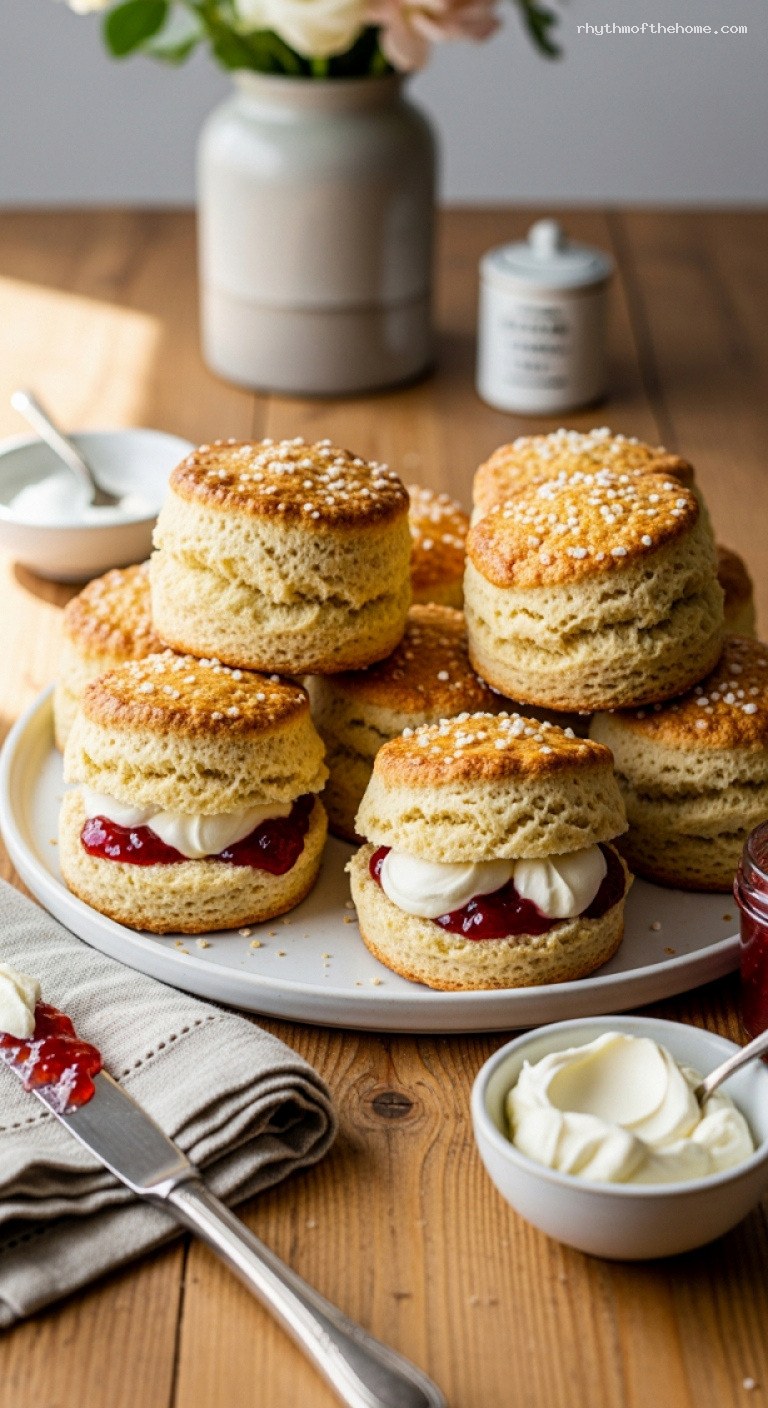
Quick Recipe Version (TL;DR)
Quick Ingredients
- 2 cups (240 g) all-purpose flour
- 1/4 cup (50 g) granulated sugar
- 1 tablespoon baking powder
- 1/2 teaspoon fine sea salt
- 6 tablespoons (85 g) cold unsalted butter, cubed
- 2/3 cup (160 ml) cold heavy cream, plus extra for brushing
- 1 large egg, cold
- 1 1/2 teaspoons vanilla extract
- 1–2 tablespoons coarse sugar (optional, for topping)
- Clotted cream & fruit preserves, for serving
Do This
- 1. Heat oven to 400°F (200°C). Line a baking sheet with parchment paper.
- 2. Whisk flour, sugar, baking powder, and salt in a bowl.
- 3. Cut in cold butter until the mixture looks like coarse crumbs with pea-sized bits of butter.
- 4. Whisk cream, egg, and vanilla; gently stir into dry ingredients just until a soft, shaggy dough forms.
- 5. Turn out onto a floured surface, gently knead 4–6 times, then pat into a 1-inch (2.5 cm) thick round.
- 6. Cut into 8 rounds or wedges, place on the sheet, brush tops with cream, and sprinkle with coarse sugar.
- 7. Bake 15–18 minutes until golden. Cool slightly and serve warm with clotted cream and preserves.
Why You’ll Love This Recipe
- Classic British-style scones: buttery, tender, and just lightly sweet, perfect for tea time.
- Simple pantry ingredients and foolproof method suitable for beginner bakers.
- Versatile base dough that welcomes add-ins like citrus zest or dried fruit.
- Ready in under 40 minutes, including baking, so you can have warm scones on the table fast.
Grocery List
- Produce: Optional: 1 lemon (for zest), fresh berries for serving.
- Dairy: Unsalted butter, heavy cream, 1 large egg, clotted cream (or double cream or thick whipped cream).
- Pantry: All-purpose flour, granulated sugar, coarse sugar (optional), baking powder, fine sea salt, vanilla extract, fruit preserves (such as strawberry or raspberry jam).
Full Ingredients
For the Classic Scones
- 2 cups (240 g) all-purpose flour, plus extra for dusting
- 1/4 cup (50 g) granulated sugar
- 1 tablespoon baking powder (ensure it is fresh)
- 1/2 teaspoon fine sea salt
- 6 tablespoons (85 g) unsalted butter, very cold, cut into small cubes
- 2/3 cup (160 ml) heavy cream, very cold, plus extra for brushing tops
- 1 large egg, cold
- 1 1/2 teaspoons pure vanilla extract
- 1–2 tablespoons coarse sugar (turbinado or demerara), for sprinkling on top (optional but recommended)
To Serve
- Clotted cream (traditional) or very thick lightly sweetened whipped cream
- Fruit preserves, such as strawberry, raspberry, or apricot jam
Step-by-Step Instructions
Step 1: Prepare your oven and baking sheet
Preheat your oven to 400°F (200°C) with a rack in the center. Line a large baking sheet with parchment paper or a silicone baking mat. This prevents the scones from sticking and helps them bake evenly with nicely browned bottoms. While the oven heats, measure out all of your ingredients. For the best results, keep the butter, heavy cream, and egg in the refrigerator until the moment you need them; cold ingredients are key to flaky, tender scones.
Step 2: Mix the dry ingredients
In a large mixing bowl, whisk together the flour, granulated sugar, baking powder, and salt until well combined and no streaks remain. Whisking evenly distributes the leavening and sugar so the scones rise properly and bake evenly. If your flour is lumpy, you can sift it first, but a good whisking usually does the job.
Step 3: Cut in the cold butter
Add the cold, cubed butter to the dry ingredients. Using a pastry cutter, two knives, or your fingertips, cut the butter into the flour mixture until it resembles coarse crumbs with some pea-sized bits of butter still visible. Work quickly so the butter stays cold; those little pieces will melt in the oven and create steam, which is what gives scones their fluffy, layered texture. Avoid rubbing the butter completely into the flour—you want some visible bits for the best crumb.
Step 4: Combine the wet ingredients and bring the dough together
In a small bowl or measuring jug, whisk together the cold heavy cream, egg, and vanilla extract until smooth. Make a well in the center of the flour-butter mixture and pour in the wet ingredients. Using a fork or a spatula, gently fold and stir the mixture until it just comes together into a shaggy, slightly sticky dough. It is normal to see a few dry spots of flour; they will hydrate as you shape the dough. Do not overmix—the less you work the dough, the more tender your scones will be.
Step 5: Gently knead, shape, and cut the scones
Lightly flour your work surface and tip the dough out onto it. With floured hands, gently bring the dough together and knead it 4–6 times, just until it forms a cohesive mass. Pat (rather than roll) the dough into a round about 6–7 inches (15–18 cm) in diameter and 1 inch (2.5 cm) thick. For traditional rounds, dip a 2 1/2–3 inch (6–7.5 cm) round cutter in flour and cut out as many scones as you can, pressing straight down without twisting. Re-gather the scraps gently, pat out again, and cut remaining scones. You should have about 8 scones total.
Step 6: Arrange, top, and chill briefly
Place the scones on the prepared baking sheet, spacing them about 2 inches (5 cm) apart. If you have time, place the sheet in the refrigerator or freezer for 10 minutes; this quick chill helps the scones hold their shape and rise higher in the oven. Brush the tops (not the sides) lightly with cold heavy cream. If you like a little crunch and extra sweetness, sprinkle the tops with coarse sugar.
Step 7: Bake until golden and serve warm
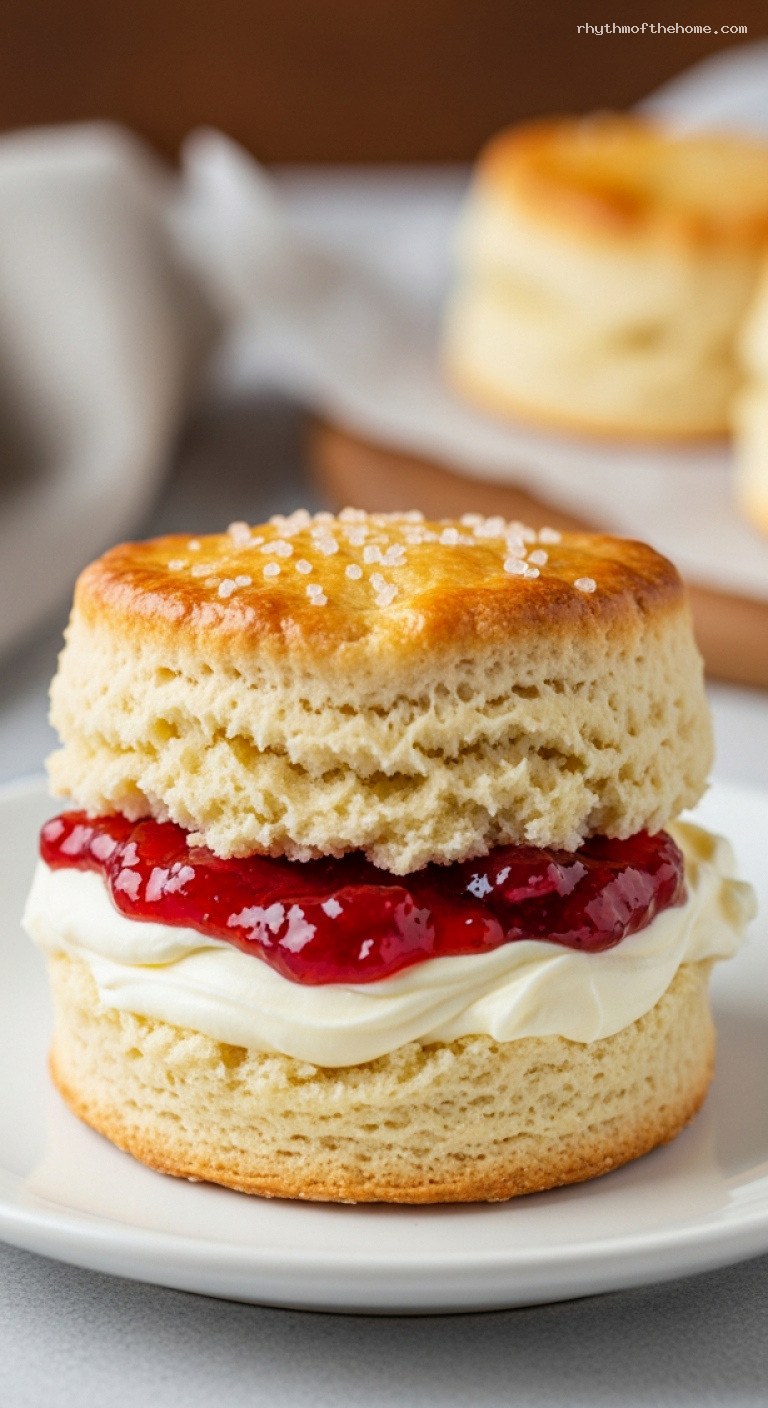
Bake the scones in the preheated oven for 15–18 minutes, or until the tops are lightly golden and the edges look set. The bottoms should be nicely browned but not dark. If your oven has hot spots, rotate the baking sheet halfway through. Transfer the baked scones to a wire rack and let them cool for at least 5–10 minutes; they should still be warm but not scorching when you serve them. Split each scone horizontally and serve with generous spoonfuls of clotted cream and fruit preserves. Enjoy the scones the day they are baked for peak flavor and texture.
Pro Tips
- Keep everything cold: Cold butter and cream are the secret to tall, flaky scones. If your kitchen is warm, pop the flour-butter mixture into the fridge for 10 minutes before adding the wet ingredients.
- Do not overwork the dough: Mix and knead only until the dough just comes together. Overworking develops gluten, which can make scones tough instead of tender.
- Use fresh baking powder: Old baking powder can lose its rising power. If your scones do not lift nicely, it may be time to replace it.
- Cut straight down: When using a round cutter, press straight down and lift straight up. Twisting seals the edges and can prevent a good rise.
- Serve slightly warm: Scones taste best within a few hours of baking, warmed just enough to soften the crumb and gently melt the cream and jam.
Variations
- Lemon or orange scones: Add 1–2 teaspoons of finely grated lemon or orange zest to the dry ingredients. Serve with matching citrusy marmalade for a bright twist.
- Currant or raisin scones: Fold 1/2 cup (75 g) dried currants or small raisins into the flour mixture after cutting in the butter. Continue as directed for a classic fruited scone.
- Vanilla bean scones: Split and scrape 1 vanilla bean and add the seeds to the cream/egg mixture for an extra fragrant, speckled scone.
Storage & Make-Ahead
These scones are at their absolute best the day they are baked, ideally within a few hours. Store any leftovers in an airtight container at room temperature for up to 1 day. To refresh, warm them in a 300°F (150°C) oven for 5–8 minutes until just heated through. For longer storage, freeze unbaked scones: after cutting, place them on a tray to freeze solid, then transfer to a freezer bag. Bake from frozen at 400°F (200°C), adding 3–5 extra minutes to the baking time. You can also freeze fully baked scones for up to 2 months and rewarm in the oven before serving.
Nutrition (per serving)
Approximate values per scone (without clotted cream or jam): about 290 calories; 14 g fat; 34 g carbohydrates; 1 g fiber; 7 g sugar; 6 g protein; 260 mg sodium. Adding clotted cream and jam will increase the calories and fat, so adjust based on your preferred serving size and toppings. Values are estimates and will vary with specific brands and portion sizes.

Leave a Reply