

Quick Recipe Version (TL;DR)
Quick Ingredients
- 1 1/2 cups (195 g) all-purpose flour
- 1 1/2 tsp baking powder + 1/4 tsp baking soda
- 1/2 tsp fine salt
- 2 tbsp poppy seeds
- 3/4 cup (150 g) granulated sugar
- Zest of 2 large lemons + 1/2 cup (about 120 ml) fresh lemon juice total (divided for batter and glaze)
- 1/2 cup (115 g) unsalted butter, softened
- 1/4 cup (60 ml) neutral oil
- 2 large eggs, room temperature
- 1 tsp vanilla extract
- 1/2 cup (120 g) plain Greek yogurt or sour cream
- 1/4 cup (60 ml) whole milk
- 1 1/4 cups (150 g) powdered sugar
- Pinch of fine salt (for glaze)
Do This
- 1. Heat oven to 350°F (175°C). Grease and line a 9×5-inch loaf pan with parchment.
- 2. Whisk flour, baking powder, baking soda, salt, and poppy seeds in a bowl.
- 3. Rub lemon zest into sugar, then beat with butter until fluffy. Beat in oil, eggs, and vanilla. Mix in yogurt and milk.
- 4. Gently mix dry ingredients into wet, then stir in 1/4 cup (60 ml) lemon juice just until combined.
- 5. Pour into pan and bake 50–55 minutes, until a toothpick comes out clean. Cool 10–15 minutes in pan.
- 6. Whisk powdered sugar, remaining lemon juice, zest, and salt into a thick but pourable glaze.
- 7. Poke warm loaf with a skewer and slowly pour glaze over. Let it soak and set before slicing.
Why You’ll Love This Recipe
- Bright, fresh lemon flavor in every bite, thanks to zest in the batter and a tangy lemon glaze on top.
- Soft, tender crumb speckled with crunchy poppy seeds for a lovely contrast in texture.
- Simple, pantry-friendly ingredients and an easy mixing method perfect for home bakers.
- Great make-ahead loaf: it stays moist and the lemon flavor deepens by the next day.
Grocery List
- Produce: 3–4 large lemons
- Dairy: Unsalted butter, 2 large eggs, plain Greek yogurt or sour cream, whole milk
- Pantry: All-purpose flour, granulated sugar, powdered sugar, baking powder, baking soda, fine salt, vanilla extract, poppy seeds, neutral oil (canola or vegetable)
Full Ingredients
Lemon Poppy Seed Loaf
- 1 1/2 cups (195 g) all-purpose flour
- 1 1/2 tsp baking powder
- 1/4 tsp baking soda
- 1/2 tsp fine sea salt
- 2 tbsp poppy seeds
- 3/4 cup (150 g) granulated sugar
- Zest of 2 large lemons (about 2 tbsp, packed)
- 1/2 cup (115 g) unsalted butter, softened to room temperature
- 1/4 cup (60 ml) neutral oil (canola or vegetable)
- 2 large eggs, at room temperature
- 1 tsp vanilla extract
- 1/2 cup (120 g) plain Greek yogurt or sour cream, at room temperature
- 1/4 cup (60 ml) whole milk, at room temperature
- 1/4 cup (60 ml) freshly squeezed lemon juice (about 1–2 lemons)
Lemon Glaze
- 1 1/4 cups (150 g) powdered sugar, sifted
- 3–4 tbsp freshly squeezed lemon juice (about 1 large lemon), plus more as needed
- 1 tsp finely grated lemon zest
- Pinch of fine sea salt
- 1–2 tsp milk or water, only if needed to thin the glaze
Optional Garnish
- Thin lemon slices or curls of lemon zest
- Extra poppy seeds for sprinkling
Step-by-Step Instructions
Step 1: Prep your pan and oven
Preheat your oven to 350°F (175°C). Lightly grease a 9×5-inch loaf pan with butter or nonstick spray. For easiest removal, line the pan with a strip of parchment paper that runs along the bottom and up the long sides, leaving some overhang as “handles.” Lightly grease the parchment as well.
Set the prepared pan aside while you mix the batter. Make sure your butter, eggs, yogurt (or sour cream), and milk are at room temperature so the batter comes together smoothly and bakes evenly.
Step 2: Mix the dry ingredients
In a medium bowl, whisk together the flour, baking powder, baking soda, salt, and poppy seeds until everything is well combined and the poppy seeds are evenly distributed. This helps prevent clumps of leavening and makes sure the loaf rises evenly.
Set the dry mixture aside.
Step 3: Build citrus flavor in the sugar
In a large mixing bowl, add the granulated sugar and the lemon zest. Use your fingertips to rub the zest into the sugar for 1–2 minutes, until the sugar feels slightly damp and smells very fragrant. This step releases the lemon oils and gives you much more flavor than just stirring the zest in.
Step 4: Cream the butter, then add liquids
Add the softened butter to the lemon sugar. Using a hand mixer or stand mixer with the paddle attachment, beat on medium speed for 2–3 minutes until the mixture is pale and fluffy. Scrape down the bowl as needed. Pour in the oil and beat again until smooth and emulsified.
Add the eggs one at a time, beating well after each addition until fully incorporated. Beat in the vanilla extract. The mixture may look slightly curdled at this stage; it will smooth out once the dry ingredients are added.
On low speed, mix in the yogurt and milk just until combined. Do not worry if the batter looks a bit loose.
Step 5: Combine wet and dry, then add lemon juice
Add the dry ingredient mixture to the bowl with the wet ingredients. Using a spatula or the mixer on low speed, gently fold or mix just until there are no visible streaks of flour. Be careful not to overmix; stop as soon as everything looks combined.
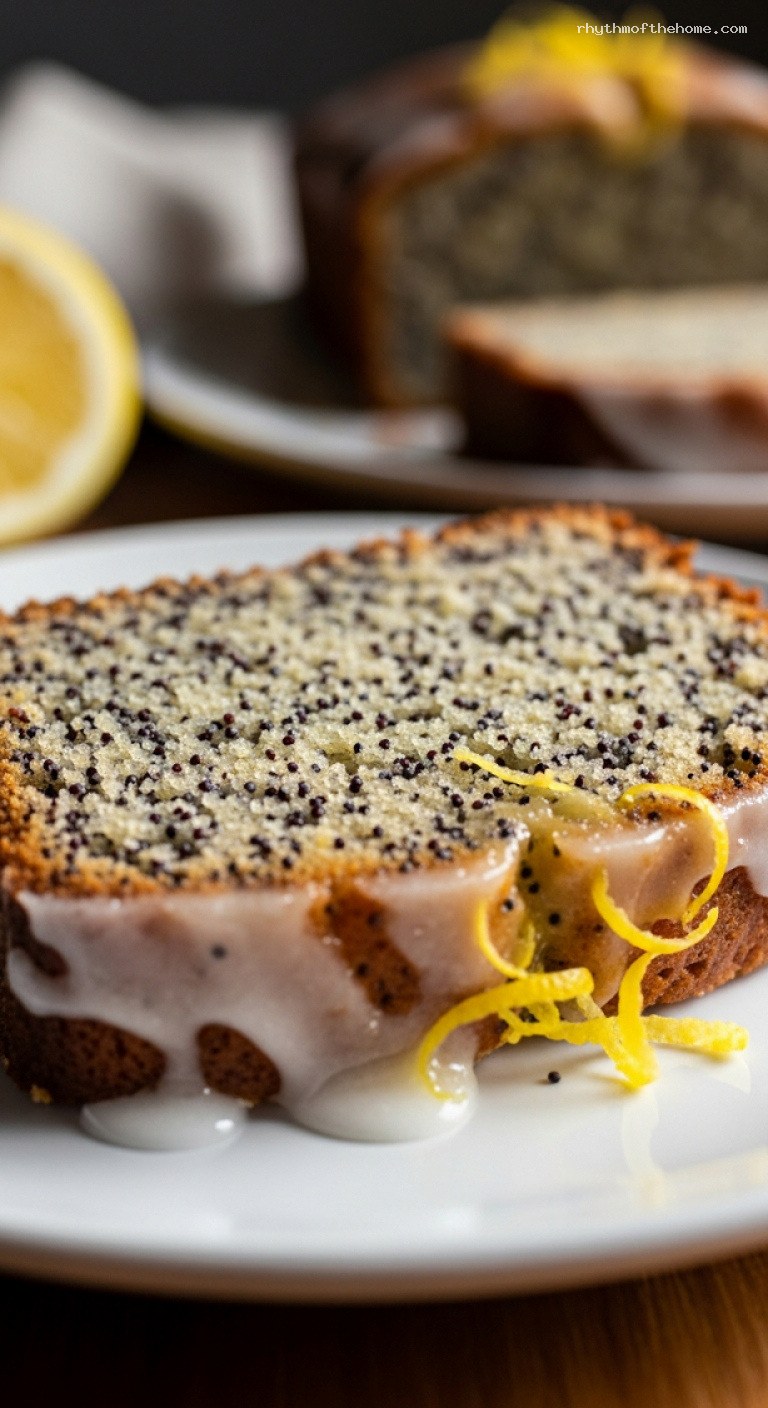
Pour in the 1/4 cup (60 ml) of lemon juice and fold it in gently until the batter is smooth and evenly mixed. The batter will be thick but pourable, flecked all over with poppy seeds and lemon zest.
Step 6: Bake the loaf
Scrape the batter into the prepared loaf pan and smooth the top with a spatula, pushing it gently into the corners. Tap the pan once or twice on the counter to release any large air bubbles.
Bake in the preheated oven for 50–55 minutes, or until the top is golden, domed, and a toothpick inserted into the center comes out clean or with just a few moist crumbs (no wet batter). If the top is browning too quickly around the 40-minute mark, loosely tent the loaf with a piece of foil.
Remove the pan from the oven and place it on a wire rack. Let the loaf cool in the pan for 10–15 minutes while you prepare the glaze.
Step 7: Make the tangy lemon glaze
In a small bowl, add the sifted powdered sugar, lemon zest, pinch of salt, and 3 tablespoons of lemon juice. Whisk until smooth. The glaze should be thick but pourable, like heavy cream. If it is too thick, add more lemon juice or a teaspoon of milk or water at a time. If it is too thin, add a tablespoon of powdered sugar and whisk again.
Taste and adjust for tartness. You are aiming for a bright, tangy glaze that will soak into and coat the warm loaf.
Step 8: Glaze the warm loaf and cool
After the loaf has cooled for 10–15 minutes, carefully lift it out of the pan using the parchment overhang and place it on a wire rack set over a tray or sheet of parchment (to catch drips).
Using a skewer, toothpick, or thin knife, poke holes all over the top of the warm loaf, going about halfway down. Slowly pour the glaze over the top, letting it seep into the holes and drizzle down the sides. You can reserve a few spoonfuls to drizzle once the first layer has soaked in, for a thicker topping.
Allow the loaf to cool completely until the glaze has set and the interior has firmed up before slicing, about 45 minutes to 1 hour. Slice with a sharp serrated knife, wiping the blade between cuts for neat slices.
Pro Tips
- Use room-temperature ingredients: Butter, eggs, yogurt, and milk should all be at room temp so the batter emulsifies smoothly and bakes with a fine, even crumb.
- Do not overmix the batter: Once you add the flour and then the lemon juice, mix just until combined. Overmixing can make the loaf dense and tough instead of tender.
- Rub the zest into the sugar: This simple step extracts flavorful oils from the lemon zest and gives you a noticeably more lemony loaf.
- Glaze while warm: Pouring the glaze onto a warm loaf lets it soak in, creating a moist, flavorful crust instead of a dry top layer.
- Check doneness early: Ovens vary, so start checking at 48–50 minutes. A few moist crumbs on the tester are fine; wet batter means it needs more time.
Variations
- Extra-lemony syrup soak: Before glazing, brush the warm loaf with a quick lemon syrup (equal parts sugar and lemon juice, warmed until dissolved). Then add the glaze once the syrup has soaked in for an ultra-bright lemon punch.
- Blueberry lemon poppy seed loaf: Gently fold 1 cup (about 150 g) of fresh blueberries (tossed in 1 tbsp flour) into the finished batter before baking. The berries add bursts of juicy sweetness alongside the citrus and poppy seeds.
- Mini loaves or muffins: Bake the batter in greased mini loaf pans or muffin tins. Reduce the baking time to about 18–22 minutes for muffins and 25–35 minutes for mini loaves, checking with a toothpick for doneness.
Storage & Make-Ahead
Once completely cool, store the lemon poppy seed loaf in an airtight container at room temperature for up to 3 days. The flavor often improves by the next day as the glaze soaks in. For longer storage, refrigerate for up to 5 days; bring slices to room temperature before serving for the best texture.
To freeze, wrap the whole glazed loaf or individual slices tightly in plastic wrap, then place in a freezer bag or airtight container. Freeze for up to 2–3 months. Thaw overnight in the refrigerator or at room temperature for a few hours. You can refresh slices briefly in a low oven (300°F / 150°C) for 5–10 minutes if you like them slightly warm.
Nutrition (per serving)
Approximate values per slice (1 of 10): about 320 calories, 14 g fat, 7 g saturated fat, 45 g carbohydrates, 27 g sugar, 1 g fiber, and 5 g protein. These numbers are estimates and will vary based on the exact ingredients and brands you use.

Leave a Reply