
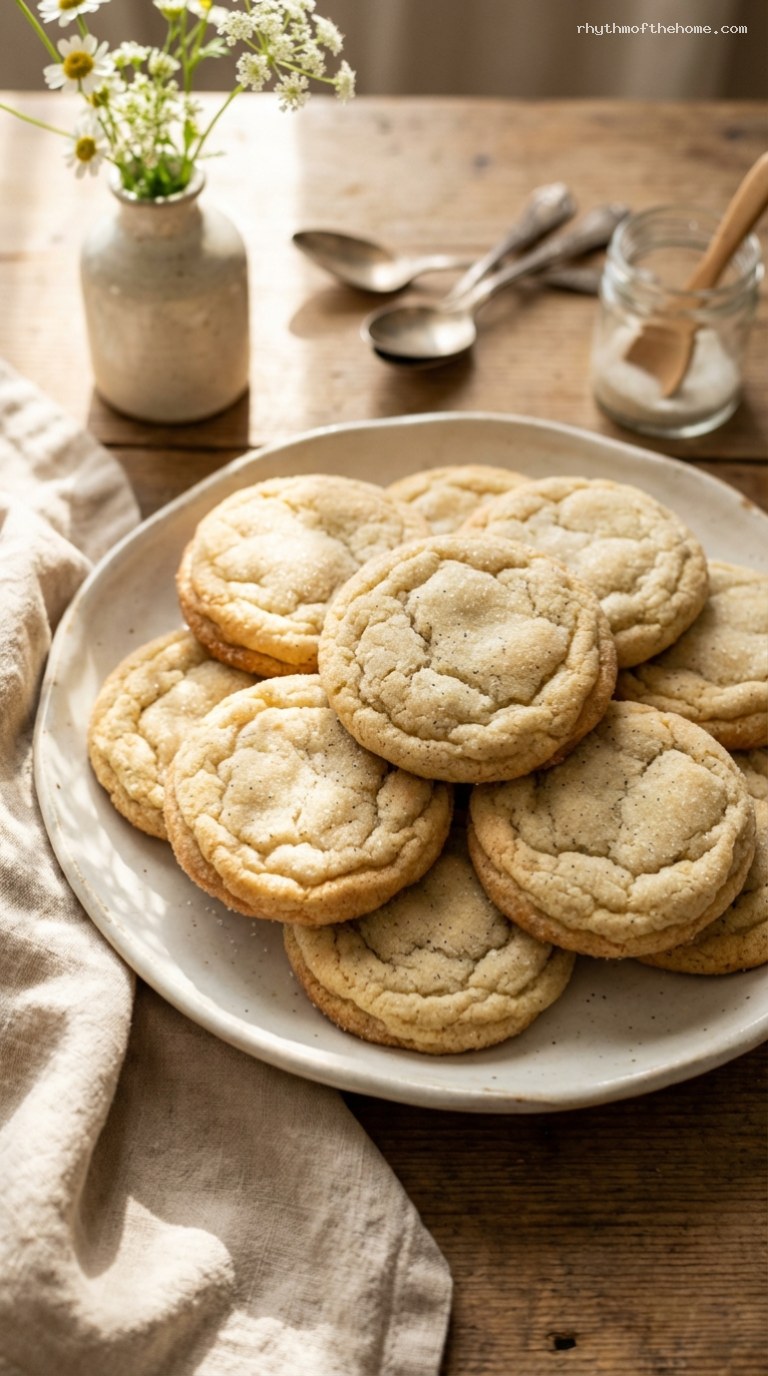
Quick Recipe Version (TL;DR)
Quick Ingredients
- 2 1/2 cups (300 g) all-purpose flour
- 1 tsp baking powder
- 1/2 tsp fine sea salt
- 1 cup (226 g) unsalted butter, softened
- 1 1/4 cups (250 g) granulated sugar, plus extra for rolling
- Seeds from 2 vanilla beans
- 2 tsp pure vanilla extract
- 1 large egg + 1 large egg yolk, room temperature
- 2 tbsp whole milk or heavy cream, room temperature
Do This
- 1. Preheat oven to 350°F (175°C). Line 2 baking sheets with parchment.
- 2. Whisk flour, baking powder, and salt in a bowl; set aside.
- 3. Cream butter, sugar, vanilla bean seeds, and vanilla extract until light and fluffy.
- 4. Beat in egg and egg yolk, then milk/cream until smooth.
- 5. Mix in dry ingredients just until a soft dough forms. Chill 30 minutes.
- 6. Scoop 1 1/2-tbsp portions, roll into balls, coat lightly in sugar, and space 2 inches apart.
- 7. Bake 10–12 minutes until edges are just set and centers look slightly soft; cool on pan 5 minutes, then on a rack.
Why You’ll Love This Recipe
- Intense vanilla flavor from both plump vanilla beans and pure vanilla extract.
- Tender, melt-in-your-mouth texture with just the right chewy center and delicate edges.
- Simple pantry ingredients and an easy method, perfect for beginners and experienced bakers.
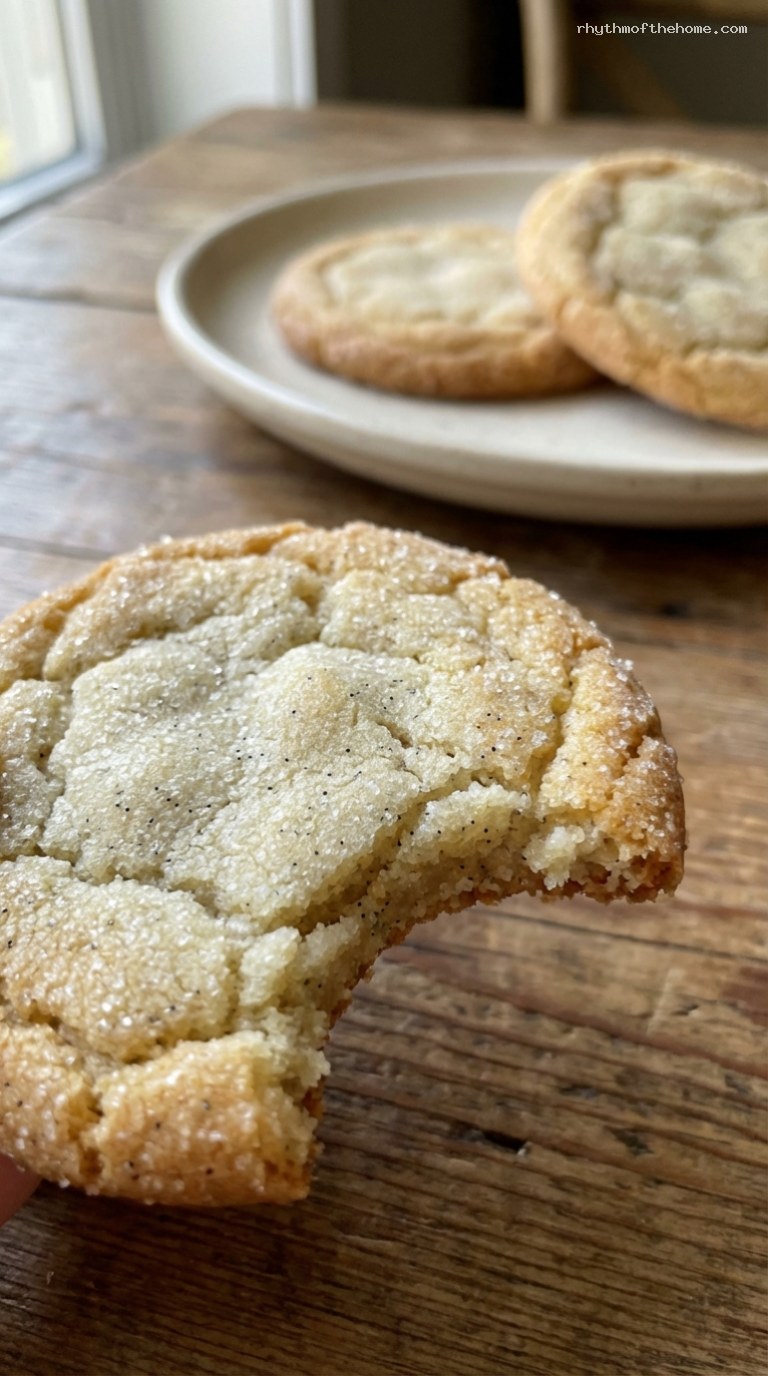
- Beautiful specks of vanilla bean make these cookies look as special as they taste.
Grocery List
- Produce: 2 whole vanilla beans
- Dairy: Unsalted butter, 1 large egg, 1 large egg yolk (from a second egg), whole milk or heavy cream
- Pantry: All-purpose flour, granulated sugar, baking powder, fine sea salt, pure vanilla extract
Full Ingredients
Double-Vanilla Bean Sugar Cookies
- 2 1/2 cups (300 g) all-purpose flour, spooned and leveled
- 1 tsp baking powder
- 1/2 tsp fine sea salt
- 1 cup (226 g) unsalted butter, softened to cool room temperature
- 1 1/4 cups (250 g) granulated sugar
- Seeds from 2 plump vanilla beans
- 2 tsp pure vanilla extract
- 1 large egg, room temperature
- 1 large egg yolk, room temperature
- 2 tbsp whole milk or heavy cream, room temperature
For Rolling (Optional but Recommended)
- 1/4 cup (50 g) granulated sugar, for coating dough balls
- Optional: 1 tbsp coarse or sparkling sugar, mixed into the granulated sugar for extra crunch
Step-by-Step Instructions
Step 1: Prep your pans and ingredients
Line 2 large baking sheets with parchment paper and set aside. If you plan to bake in multiple batches, you can reuse the same sheets once they cool.
Make sure your butter, egg, egg yolk, and milk or cream are at room temperature. This helps the dough come together smoothly and whip up light and fluffy.
Preheat your oven to 350°F (175°C), but only when your dough is nearly done chilling (see Step 5), so you are ready to bake right away.
Step 2: Whisk together the dry ingredients
In a medium bowl, add the all-purpose flour, baking powder, and fine sea salt. Whisk until everything is evenly combined and no streaks of baking powder remain.
Set this bowl aside. Having your dry ingredients ready makes it easier to avoid overmixing once they are added to the butter mixture.
Step 3: Scrape the vanilla beans and cream with sugar
On a cutting board, lay one vanilla bean flat. Use a sharp paring knife to carefully split it lengthwise. Open it like a book and scrape out the tiny black seeds with the back of the knife. Repeat with the second vanilla bean.
In a large mixing bowl (or the bowl of a stand mixer fitted with the paddle attachment), combine the softened butter, granulated sugar, vanilla bean seeds, and vanilla extract.
Beat on medium-high speed for about 3–4 minutes, scraping down the bowl once or twice, until the mixture looks pale, fluffy, and slightly increased in volume. The vanilla bean seeds should be evenly speckled throughout the creamed butter.
Step 4: Add the egg, yolk, and cream
Add the egg and egg yolk to the creamed butter and sugar. Beat on medium speed for about 30–45 seconds, just until fully incorporated and smooth. Scrape down the sides and bottom of the bowl.
Pour in the milk or heavy cream and mix again on low speed until combined. The mixture may look slightly silky or glossy, which is perfect. Avoid overbeating at this stage to keep the cookies tender.
Step 5: Incorporate the dry ingredients and chill the dough
Add the dry ingredient mixture to the wet ingredients in two additions. Mix on low speed after each addition, just until no visible streaks of flour remain. Stop the mixer and finish folding in any remaining dry bits with a spatula. The dough should be soft but not sticky.
Cover the bowl tightly with plastic wrap or transfer the dough to an airtight container. Chill in the refrigerator for at least 30 minutes and up to 24 hours. Chilling helps the flavors develop, firms the dough for easier rolling, and keeps the cookies from spreading too much.
Step 6: Shape and sugar-coat the dough balls
When the dough is chilled and firm but scoopable, preheat the oven to 350°F (175°C) if you have not already.
Pour the rolling sugar (granulated and optional sparkling sugar) into a small shallow bowl.
Use a cookie scoop or tablespoon to portion about 1 1/2 tablespoons of dough per cookie (about 30 g each). Roll each portion between your palms into a smooth ball.
Lightly roll each ball in the sugar to coat the outside. Place on the prepared baking sheets, spacing them about 2 inches apart to allow for spreading. You can gently press the tops just slightly to encourage a classic sugar-cookie shape, but do not flatten too much.
Step 7: Bake to soft-set perfection
Bake one sheet at a time on the center rack for 10–12 minutes, rotating the pan halfway through baking for even color.
The cookies are done when the edges look set and just beginning to turn a very light golden color, while the centers still look slightly soft and pale. They will continue to firm up as they cool, so do not wait for them to brown all over.
Remove the baking sheet from the oven and let the cookies cool on the pan for 5 minutes. Then, use a spatula to transfer them to a wire rack to cool completely.
Step 8: Cool, serve, and enjoy the vanilla aroma
Allow the cookies to cool until they are just slightly warm or completely cooled, depending on how you like them. As they cool, the vanilla aroma will deepen, and the texture will settle into a tender, slightly chewy center with delicate edges.
Serve on a plate or platter where the vanilla bean specks can be seen. These cookies are lovely with a glass of cold milk, a cup of coffee, or fragrant black tea.
Pro Tips
- Use fresh, plump vanilla beans. Dry, brittle beans have fewer flavorful oils. Look for beans that are flexible and slightly glossy.
- Do not skip the chill time. Even 30 minutes in the fridge helps control spreading and intensifies the vanilla flavor.
- Cream thoroughly, but mix gently later. Beat the butter and sugar really well for light cookies, but once the flour goes in, mix only until just combined to avoid toughness.
- Pull them while still pale. Overbaked sugar cookies will be dry. Aim for set edges and soft, pale centers; they will finish cooking from residual heat.
- Bake one tray at a time. This ensures even heat circulation and more consistent results from batch to batch.
Variations
- Lemon-vanilla bean sugar cookies: Add 1 tbsp finely grated lemon zest to the creamed butter and sugar, and replace 1 tbsp of the milk/cream with fresh lemon juice for a bright citrus note.
- Vanilla bean glazed cookies: Whisk 1 cup (120 g) powdered sugar with 2–3 tbsp milk and 1/2 tsp vanilla extract. Drizzle over cooled cookies and let set for a glossy vanilla finish.
- Vanilla almond twist: Replace 1/2 tsp of the vanilla extract with 1/2 tsp almond extract and sprinkle the tops with sliced almonds right before baking.
Storage & Make-Ahead
Store completely cooled cookies in an airtight container at room temperature for up to 5 days. To keep them extra soft, you can place a small piece of bread or a slice of apple in the container; replace it every day or two.
For longer storage, freeze baked cookies in a single layer on a tray until solid, then transfer to a freezer bag or airtight container for up to 2 months. Thaw at room temperature for 20–30 minutes.
You can also freeze the unbaked dough balls (before rolling in sugar). Arrange them on a baking sheet, freeze until firm, then store in a freezer bag for up to 2 months. Bake from frozen, adding 1–2 extra minutes to the bake time, after rolling the frozen dough balls in sugar.
Nutrition (per serving)
Approximate values per cookie (1 of 24): about 160 calories, 8 g fat, 5 g saturated fat, 20 g carbohydrates, 12 g sugar, 1 g protein, and 75 mg sodium. Values will vary slightly based on exact size and ingredients used.

Leave a Reply