
Quick Recipe Version (TL;DR)
Quick Ingredients
- 1 cup (226 g) unsalted butter, softened
- 1/2 cup (100 g) granulated sugar
- 1/4 cup (30 g) powdered sugar
- 2 1/4 cups (270 g) all-purpose flour
- 1/2 teaspoon fine salt
- 2 teaspoons pure vanilla extract or 1 1/2 teaspoons vanilla + 1/2 teaspoon almond extract
- 2–3 tablespoons coarse sugar, for rolling edges (optional)
- 4 oz (115 g) dark or semisweet chocolate, chopped, plus 1 teaspoon neutral oil (optional dip)
Do This
- 1. Cream butter, granulated sugar, and powdered sugar until smooth and slightly fluffy. Beat in vanilla or vanilla–almond.
- 2. Mix in flour and salt on low until a soft, sandy dough forms and holds together when pressed.
- 3. Divide dough into 2 logs, about 1 1/2 inches (4 cm) thick. Wrap and chill until very firm, at least 1 hour.
- 4. Heat oven to 325°F (165°C). Slice logs into 1/3-inch (8 mm) rounds. Roll edges in coarse sugar if using and place on lined baking sheets.
- 5. Bake 12–15 minutes until just set and barely golden at the bottoms. Cool completely on a rack.
- 6. For a chocolate tip, dip one end of each cooled cookie in melted chocolate (with a little oil), let excess drip off, and set until firm.
Why You’ll Love This Recipe
- Classic, buttery shortbread with a delicate, melt-in-your-mouth texture.
- Beautiful slice-and-bake rounds that look bakery-perfect with minimal effort.
- Customizable flavor: pure vanilla, vanilla–almond, sugar-crusted edges, or a glossy chocolate dip.
- Flexible make-ahead dough: keep logs in the fridge or freezer and bake fresh whenever you like.
Grocery List
- Produce: None (unless you want citrus zest or fresh flowers for serving decor).
- Dairy: Unsalted butter.
- Pantry: All-purpose flour, granulated sugar, powdered sugar, fine salt, vanilla extract, almond extract (optional), coarse or sparkling sugar (optional), dark or semisweet chocolate (optional), neutral oil (optional).
Full Ingredients
For the Buttery Shortbread Dough
- 1 cup (226 g) unsalted butter, at cool room temperature (soft but not greasy)
- 1/2 cup (100 g) granulated sugar
- 1/4 cup (30 g) powdered sugar
- 2 1/4 cups (270 g) all-purpose flour
- 1/2 teaspoon fine salt (reduce to 1/4 teaspoon if using salted butter)
-
2 teaspoons pure vanilla extract
or 1 1/2 teaspoons vanilla extract + 1/2 teaspoon almond extract, for a vanilla–almond twist
For Optional Sugar-Crusted Edges
- 2–3 tablespoons coarse or sparkling sugar (such as demerara, turbinado, or sanding sugar)
- 1–2 teaspoons milk or water, for lightly brushing edges (optional, helps sugar stick)
For Optional Chocolate-Dipped Ends
- 4 oz (115 g) dark or semisweet chocolate, finely chopped or in chips
- 1 teaspoon neutral oil (such as canola, sunflower, or refined coconut), to help the chocolate set with a gentle sheen
Step-by-Step Instructions
Step 1: Prepare your tools and soften the butter
Line 2 baking sheets with parchment paper or silicone baking mats and set aside. If your butter is straight from the fridge,
cut it into small cubes and let it sit out for 20–30 minutes. You want it cool but pliable: it should dent easily when pressed
with a finger, without feeling oily or melting.
Have your electric mixer (hand or stand mixer with paddle attachment) ready. Shortbread can be mixed by hand, but a mixer
makes it easier to get a smooth, even dough without overworking it.
Step 2: Cream butter and sugars with vanilla (or almond)
Place the softened butter in a mixing bowl. Add the granulated sugar and powdered sugar. Beat on medium speed for about
2–3 minutes, scraping down the bowl once or twice, until the mixture looks smooth, creamy, and slightly lighter in color.
You do not need as much air as you would for cake, but you want the sugars to dissolve a bit into the butter.
Add the vanilla extract (or the combination of vanilla and almond extract) and beat for another 15–30 seconds until blended.
At this stage, the mixture should smell richly of butter and vanilla.
Step 3: Add dry ingredients and bring the dough together
In a separate bowl, whisk together the flour and salt to evenly distribute the salt. With the mixer on low speed, gradually
add the flour mixture to the creamed butter. Mix just until the dough looks dry and sandy, then begins to clump together.
This will take 30–60 seconds; avoid overmixing, which can make the cookies tough.
Turn off the mixer and use your hands to gently press the dough together in the bowl. When pressed, it should hold its shape
like damp sand. If it is extremely crumbly and will not hold when squeezed, continue gently kneading in the bowl for
another 10–20 seconds; the warmth of your hands will help it come together. Resist the urge to add liquid unless absolutely
necessary, as extra moisture changes the classic shortbread texture.
Step 4: Shape into logs and chill thoroughly
Turn the dough out onto a clean counter or sheet of parchment. Divide it into 2 equal portions. Working with one piece at
a time, roll it into a log about 1 1/2 inches (4 cm) in diameter and 7–8 inches (18–20 cm) long. If the dough cracks, just
press and smooth it back together with your hands.
Wrap each log tightly in parchment or plastic wrap, rolling it a few times on the counter to smooth out flat sides. Place
the wrapped logs in the refrigerator and chill until very firm, at least 1 hour and up to 3 days. For faster chilling,
you can refrigerate 20–30 minutes, then transfer to the freezer for another 20–30 minutes, until solid.
Step 5: Slice, sugar (if using), and bake
When ready to bake, preheat your oven to 325°F (165°C) with a rack in the middle. Unwrap one dough log (leave the other
chilling until you are ready to slice it). Using a sharp knife, slice the log into rounds about 1/3 inch (8 mm) thick.
Try to keep the slices even for consistent baking.
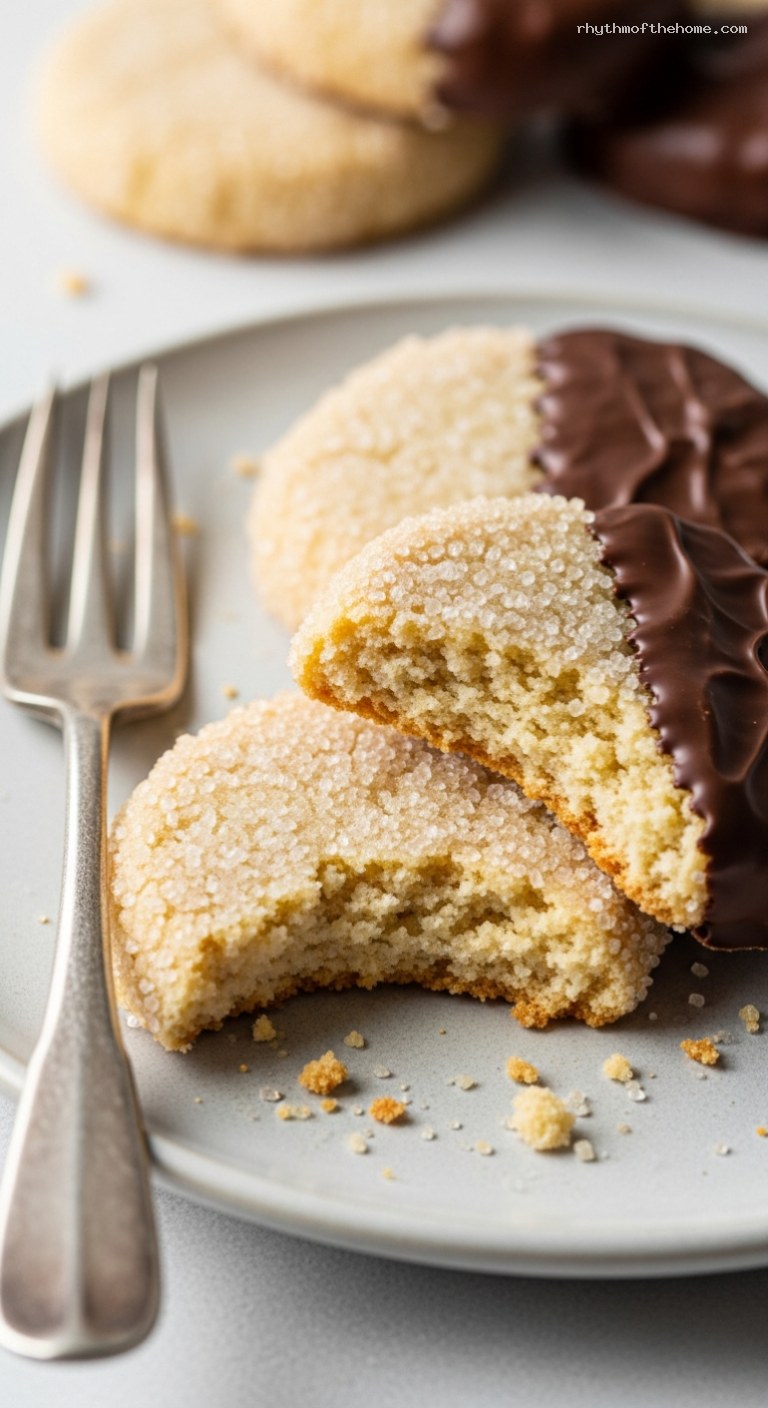
For sugar-crusted edges, lightly brush the outside edge of each round with a little milk or water, then roll the edge
in coarse sugar so it sticks in a sparkling ring. Place the rounds on the prepared baking sheets, spacing them about
1 inch (2.5 cm) apart. They will spread only slightly.
Bake for 12–15 minutes, rotating the pan halfway through if your oven bakes unevenly. The cookies are done when the tops
look set, the edges are barely turning a pale golden color, and the bottoms are light golden but not brown. They should
still feel soft in the center; they will firm up as they cool.
Let the cookies cool on the baking sheet for 5 minutes, then transfer to a wire rack to cool completely. Repeat with the
second log of dough.
Step 6: Dip one end in chocolate (optional but lovely)
Once the shortbread rounds are completely cool, prepare the chocolate dip if desired. Place the chopped chocolate and
neutral oil in a microwave-safe bowl. Heat in 15–20 second bursts, stirring well after each, until just melted and smooth.
Alternatively, melt the mixture in a heatproof bowl set over a pan of barely simmering water, stirring constantly.
Line a baking sheet or tray with parchment. Holding a cookie by one side, dip about one-third to one-half of the cookie
into the melted chocolate, letting the excess drip back into the bowl. Gently scrape the bottom of the dipped edge against
the rim of the bowl to remove heavy drips, then lay the cookie on the prepared tray. Repeat with as many cookies as you like.
Let the dipped cookies sit at cool room temperature until the chocolate is fully set, 30–45 minutes, or refrigerate
for 10–15 minutes to speed this up. Once set, the chocolate tip should be firm with a soft sheen, not sticky to the touch.
Step 7: Serve and enjoy
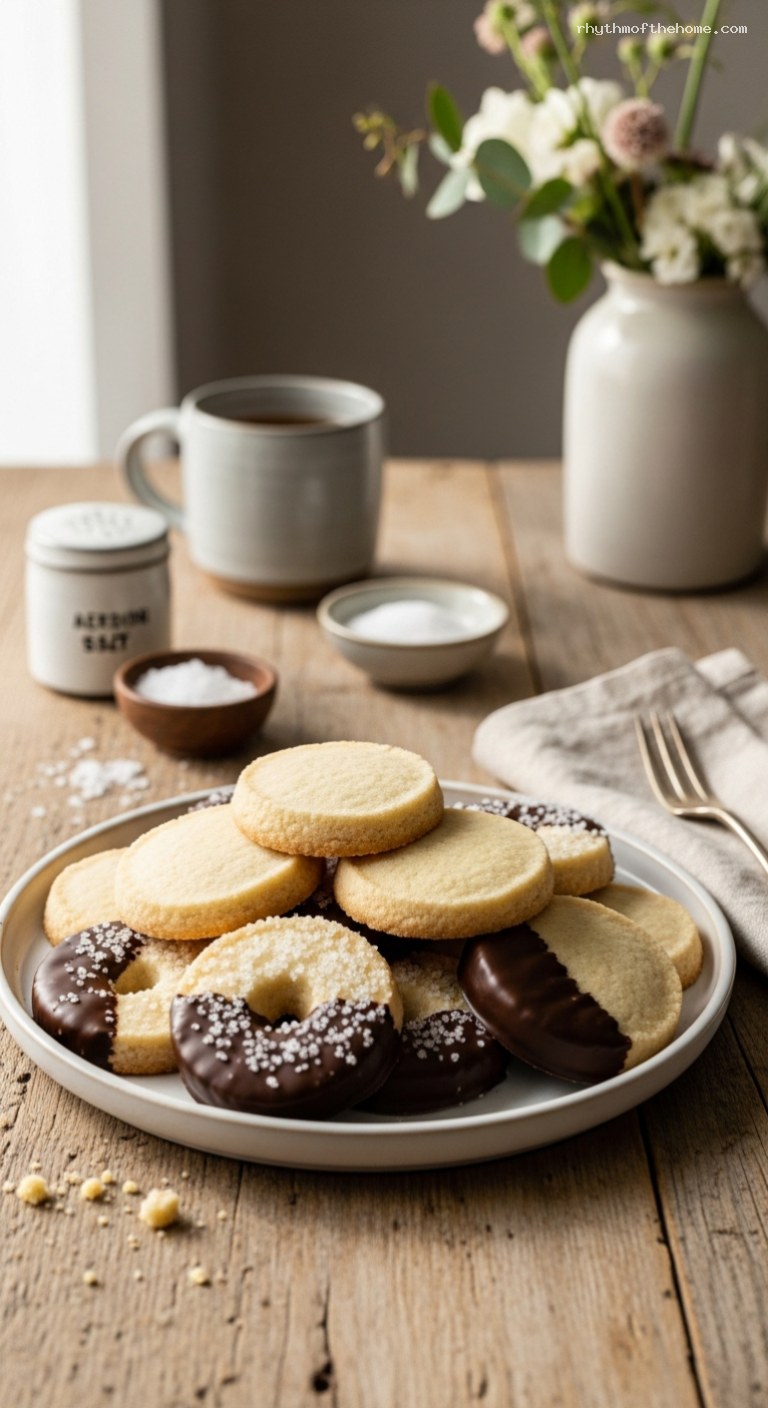
Arrange the shortbread on a plate or platter, mixing plain, sugar-edged, and chocolate-dipped pieces for a pretty contrast.
You can add a small pinch of flaky sea salt on the chocolate tips just before the chocolate sets, if you enjoy a sweet–salty bite.
Serve with tea, coffee, or a small glass of milk.
These cookies are rich, so one or two rounds per person is usually perfect. The texture is best at room temperature,
when the butter softens just enough for them to truly melt in your mouth.
Pro Tips
- Do not overbake: Pull the cookies when they are set and only lightly colored. Deep golden edges usually mean a drier, crunchier shortbread.
- Chill for clean slices: Very firm dough gives you neat, round cookies. If the dough softens while slicing, pop it back in the fridge or freezer for 10 minutes.
- Smooth out log edges: After wrapping the dough, roll the log back and forth on the counter to round off flat sides so your baked cookies are more circular.
- Use good butter and real vanilla: With such a simple recipe, higher quality butter and pure vanilla (or almond) extract make a noticeable difference in flavor.
- Keep mixing gentle: Stop as soon as the dough holds together. Overworking flour develops gluten and can make the cookies less tender.
Variations
- Citrus vanilla shortbread: Add 1–2 teaspoons finely grated lemon or orange zest with the butter and sugars. Keep the vanilla as written for a bright, fragrant twist.
- Almond lovers’ shortbread: Use the vanilla–almond extract option and mix 1/3 cup (35 g) very finely chopped toasted almonds into the dough at the end.
- Mocha chocolate dip: Stir 1 teaspoon instant espresso powder into the melted chocolate before dipping for a subtle coffee note that pairs beautifully with the buttery cookies.
Storage & Make-Ahead
Store fully cooled shortbread in an airtight container at room temperature for up to 1 week. If you have both plain and
chocolate-dipped cookies, layer them between sheets of parchment or wax paper to prevent sticking and smudging.
For longer storage, you can freeze baked cookies (plain or dipped) in an airtight container or freezer bag for up to
2–3 months. Thaw at room temperature in a single layer to avoid condensation on the chocolate.
To get ahead, make the dough logs up to 3 days in advance and keep them well wrapped in the refrigerator. For even longer
storage, freeze the wrapped logs for up to 2 months. Slice directly from chilled, or from frozen with a few extra minutes
of baking time; just watch for the visual doneness cues rather than the clock.
Nutrition (per serving)
Approximate values per plain shortbread round (1 of about 28): 120 calories; 8 g fat; 5 g saturated fat; 12 g carbohydrates;
6 g sugar; 0.5 g protein; 0.5 g fiber; 70 mg sodium. A chocolate-dipped cookie will add roughly 25–35 calories and 1–2 g fat,
depending on how heavily it is coated. These numbers are estimates and will vary with exact size, ingredients, and toppings.

Leave a Reply