
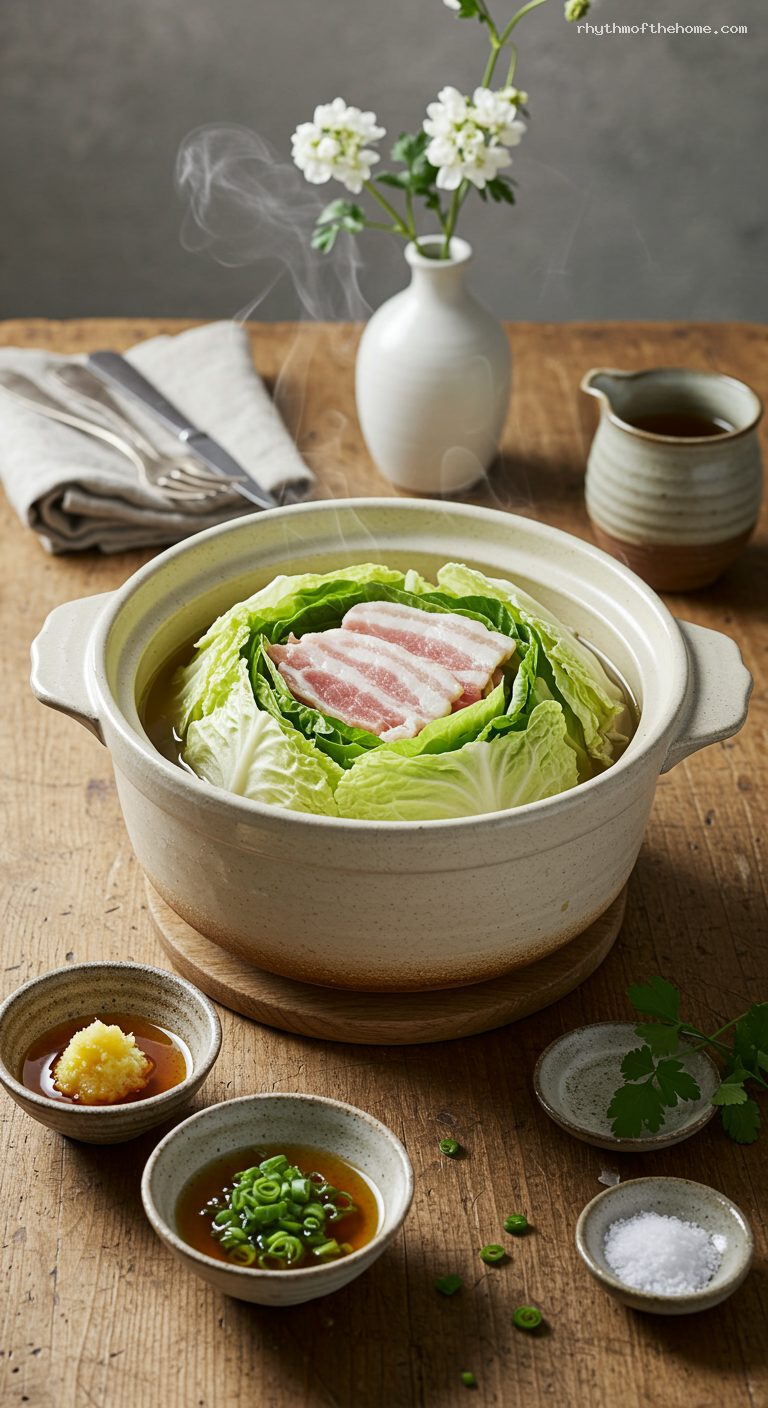
Quick Recipe Version (TL;DR)
Quick Ingredients
- 1 medium napa cabbage (2–2.5 lb / 900–1,100 g)
- 1 lb (450 g) thinly sliced pork belly (shabu-shabu cut)
- 1 piece kombu (4 x 4 in / 10 x 10 cm; ~10 g)
- 6 cups (1.4 L) water
- 2 scallions, thinly sliced
- Ponzu (store-bought) or homemade: 1/4 cup soy sauce, 2 tbsp lemon/yuzu juice, 2 tbsp rice vinegar, 1 tbsp mirin
- Finisher (choose one): 8 oz (225 g) fresh udon (cooked) OR 2 cups (300 g) cooked Japanese rice; 1 egg optional
Do This
- 1. Rinse, core, and dry napa; keep leaves whole. Keep pork slices cold.
- 2. Whisk ponzu ingredients; chill.
- 3. Stack: cabbage leaf + pork, repeating 5–6 layers; end with cabbage. Make 4–5 stacks, press, and slice into 2 in (5 cm) segments.
- 4. Lay kombu in a wide 3–4 qt pot. Stand stacks upright snugly; add water to just cover.
- 5. Hydrate 10 minutes off heat, then simmer gently over medium heat (190–200°F / 88–93°C). Remove kombu as it starts simmering; cook 10–12 minutes until pork is done.
- 6. Serve with ponzu and scallions. Finish broth with cooked udon (2–3 min) or rice + beaten egg (2–3 min) at the end.
Why You’ll Love This Recipe
- Show-stopping presentation with minimal effort—neatly layered “mille-feuille” stacks that cook in one pot.
- Clean, comforting flavors from kombu dashi balanced by bright, citrusy ponzu.
- Flexible finish: add noodles for a slurpable ending or make cozy rice porridge (zosui).
- Weeknight-simple yet dinner-party elegant, ready in about 40 minutes.
Grocery List
- Produce: Napa cabbage, scallions, lemon or yuzu (or bottled juice), optional shiitake mushrooms, fresh ginger, daikon (for grating)
- Dairy: None
- Pantry: Thinly sliced pork belly (meat counter), kombu, soy sauce, rice vinegar, mirin, udon noodles or Japanese short-grain rice, optional shichimi togarashi and yuzu kosho
Full Ingredients
Nabe Base
- 1 medium napa cabbage (2–2.5 lb / 900–1,100 g), leaves separated
- 1 lb (450 g) thinly sliced pork belly (shabu-shabu cut)
- 1 piece kombu (4 x 4 in / 10 x 10 cm; ~10 g)
- 6 cups (1.4 L) water, plus more as needed
- 2 scallions, thinly sliced (garnish)
- Pinch of kosher salt (optional; taste before adding since ponzu is salty)
- Optional extras to tuck in: 4 shiitake mushrooms (stems removed), 1 small carrot (peeled, thinly sliced)
Ponzu Dipping Sauce (or use 2/3 cup store-bought)
- 1/4 cup (60 ml) soy sauce
- 2 tbsp (30 ml) fresh lemon or yuzu juice
- 2 tbsp (30 ml) rice vinegar
- 1 tbsp (15 ml) mirin
- 1 tsp sugar (optional, to round acidity)
- 1 tsp finely grated fresh ginger (optional)
Finishers (Choose One)
- Udon: 8 oz (225 g) fresh udon, cooked and drained (or 6 oz/170 g dried noodles, cooked)
- Rice porridge (zosui): 2 cups (300 g) cooked Japanese short-grain rice, 1 large egg lightly beaten, 1 tsp soy sauce (optional)
Optional Condiments
- Grated daikon, shichimi togarashi, or yuzu kosho
Step-by-Step Instructions
Step 1: Prep the cabbage and pork
Rinse the napa cabbage, remove any tough or damaged outer leaves, and slice off the root end. Separate the leaves and pat dry. Keep the pork belly slices chilled; if they’re very soft, pop them in the freezer for 10–15 minutes to firm up—this makes layering neat and easy.
Step 2: Make quick ponzu
In a small bowl, whisk the soy sauce, lemon/yuzu juice, rice vinegar, mirin, and sugar and ginger if using. Taste and adjust acidity or sweetness to preference. Chill until serving.
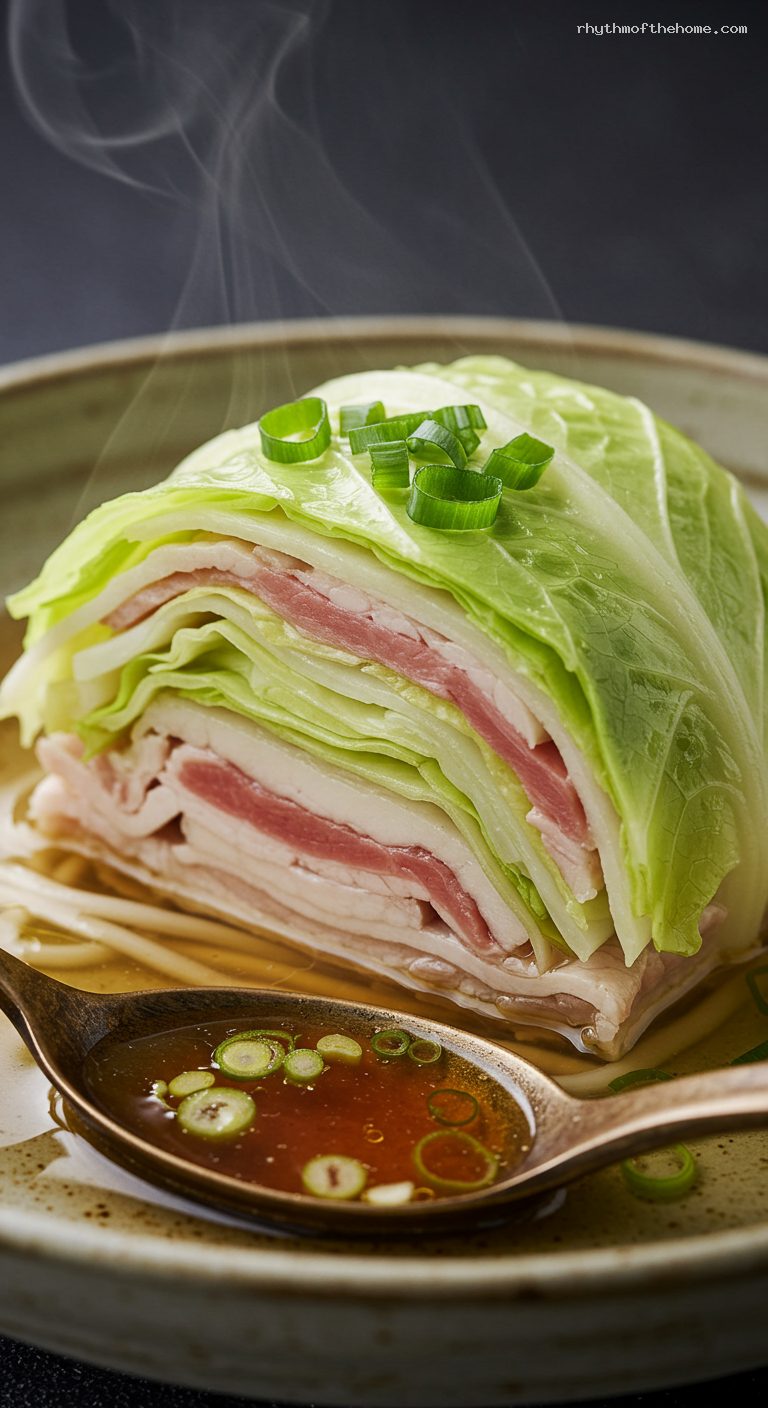
Step 3: Build tidy stacks (the “mille-feuille”)
On a cutting board, lay down one cabbage leaf (trim width if very wide). Place 2–3 slices of pork belly on top in a single layer. Repeat, alternating cabbage and pork for 5–6 layers total, finishing with a cabbage leaf. Gently press to compact. Make 4–5 stacks. Using a sharp knife, cut each stack crosswise into 2 in (5 cm) segments, keeping the layers intact.
Step 4: Pack the pot with kombu and stacks
Place the kombu on the bottom of a wide, heavy 3–4 quart (3 L), 9–10 inch (24–26 cm) pot or donabe. Stand the cabbage–pork segments upright, cut-side up, fitting them snugly like books on a shelf. Tuck in shiitake or carrot slices if using. Pour in 6 cups (1.4 L) water—just to the top of the layers. Let the kombu hydrate 10 minutes off heat.
Step 5: Simmer gently until tender
Set over medium heat and bring to a gentle simmer (190–200°F / 88–93°C) in about 10 minutes. Remove and discard the kombu as soon as simmering starts to prevent bitterness. Reduce to medium-low, skim any foam, and continue simmering 10–12 minutes until the cabbage is silky and the pork is fully cooked (165°F / 74°C internal temperature if checked). Taste the broth; add a pinch of salt only if needed.
Step 6: Serve with ponzu at the table
Serve the pot on a trivet or portable burner set to low. Ladle stacks and hot broth into individual bowls. Dip bites into chilled ponzu, and garnish with sliced scallions. Offer grated daikon, shichimi togarashi, or yuzu kosho for heat and brightness.
Step 7: Finish with noodles or rice
When most solids are gone, bring the remaining broth back to a bare simmer. For noodles: add the cooked udon, simmer 2–3 minutes to heat through, then serve. For rice porridge (zosui): add cooked rice and 1 tsp soy sauce if desired; simmer 1–2 minutes, then drizzle in the beaten egg while stirring gently. Cook 1 minute until silky and serve immediately.
Pro Tips
- Keep pork slices cold (even semi-frozen) for crisp, tidy stacking and easier slicing.
- Use a wide, shallow pot so the stacks can stand upright and cook evenly with minimal liquid.
- Do not boil hard—gentle heat keeps the broth clear and the cabbage sweet. Remove kombu at first simmer to avoid bitterness.
- Season lightly in the pot. The ponzu delivers the main salinity and brightness at the table.
- For extra umami, add a few dried shiitake to the water at Step 4 and remove them when tender.
Variations
- Chicken mille-feuille: Swap pork belly for very thinly sliced boneless chicken thigh; simmer until fully cooked (165°F / 74°C).
- Miso base: Whisk 2–3 tbsp white miso into the hot broth after removing the kombu and before simmering the stacks.
- Spicy kimchi nabe: Layer in drained kimchi and add 1–2 tbsp gochujang to the broth for a warming kick.
Storage & Make-Ahead
Assemble the raw stacks up to 24 hours ahead: wrap tightly and refrigerate. Cooked nabe keeps 3 days in the refrigerator; reheat gently to a simmer. Broth can be cooled and frozen up to 2 months. Ponzu keeps 2 weeks refrigerated.
Nutrition (per serving)
Approximate (with udon finish and 2 tbsp ponzu): 720 calories; 61 g fat (22 g saturated); 19 g carbohydrates; 12 g protein; 1,340 mg sodium; 3 g fiber; 4 g sugars. Values will vary with noodle/rice choice and how much broth/fat is consumed.

Leave a Reply