
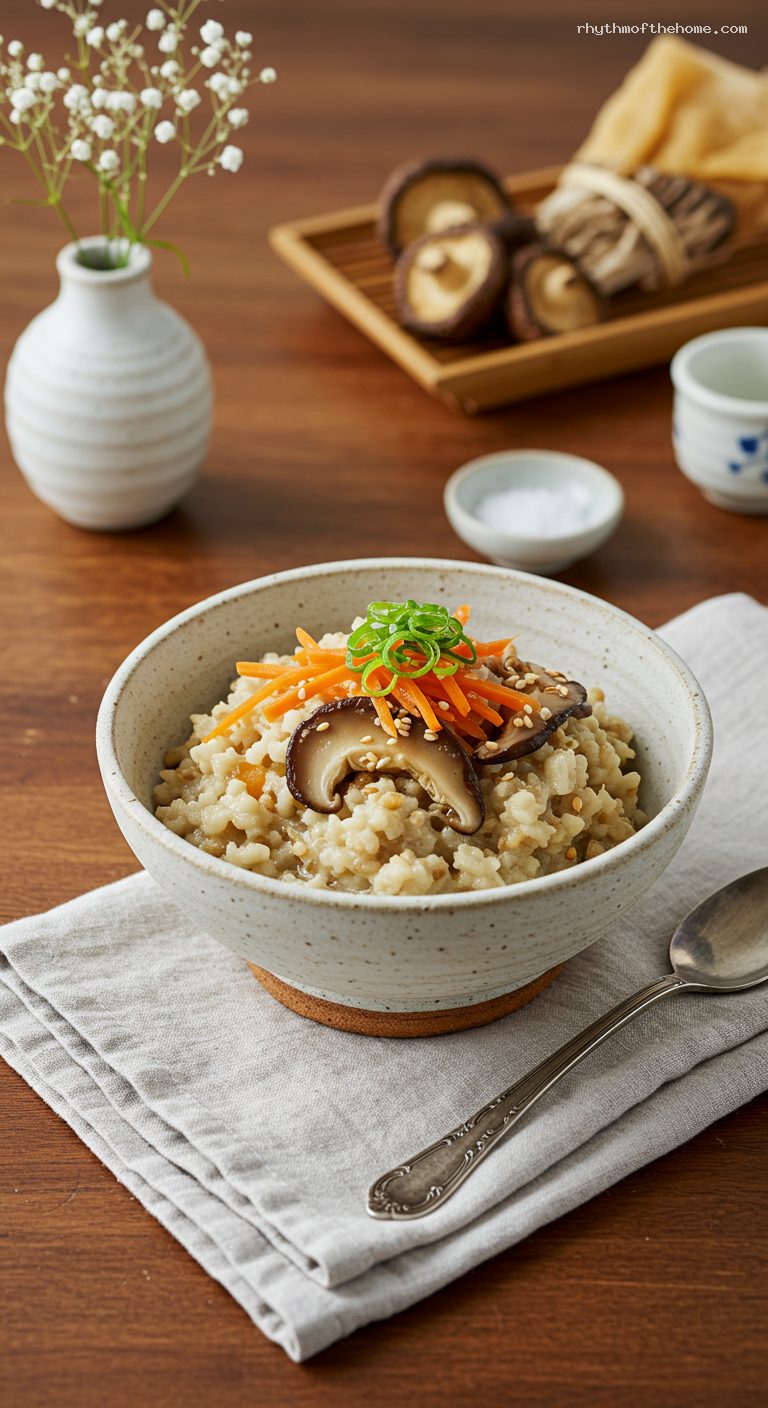
Quick Recipe Version (TL;DR)
Quick Ingredients
- 300 g fresh okara (about 3 cups, loosely packed)
- 1 small carrot (80 g), julienned
- 4 dried shiitake mushrooms (8–10 g), soaked 30 min and sliced
- 1 aburaage (fried tofu pouch), blanched and sliced
- 1 tbsp toasted sesame oil
- 1 cup (240 ml) dashi
- 2 1/2 tbsp soy sauce
- 2 tbsp mirin
- 1 tbsp sake
- 1 tsp sugar (optional)
- Sliced scallion and 1 tsp toasted sesame seeds, for garnish
Do This
- 1. Soak shiitake in very warm water 30 min; strain liquid and slice caps.
- 2. Blanch aburaage with boiling water to remove excess oil; pat dry and slice. Julienne carrot.
- 3. Mix dashi, soy sauce, mirin, sake, and sugar.
- 4. Heat sesame oil; sauté carrot and shiitake 2 min, add aburaage 1 min.
- 5. Crumble in okara; toast 2–3 min to drive off moisture.
- 6. Add sauce; simmer, stirring, 6–8 min until absorbed and fluffy.
- 7. Rest 5 min; garnish with scallion and sesame. Serve warm or room temp.
Why You’ll Love This Recipe
- Comforting and savory with a gentle, nutty sweetness—classic Japanese home cooking.
- Budget-friendly and high in fiber, making great use of nutritious soy pulp.
- Cook time is just 20 minutes; perfect for meal prep and bento boxes.
- Tastes great warm, room temperature, or chilled—and keeps beautifully.
Grocery List
- Produce: Carrot, scallion
- Dairy: None
- Pantry: Fresh okara (soy pulp; often near tofu), dried shiitake, aburaage (fried tofu pouch), toasted sesame oil, soy sauce, mirin, sake, sugar, dashi (liquid, kombu-bonito, or instant granules)
Full Ingredients
Main
- 300 g fresh okara (about 3 cups loosely packed; thaw and squeeze if frozen)
- 1 small carrot (80 g), julienned into 2–3 mm matchsticks
- 4 dried shiitake mushrooms (8–10 g) + 1 cup (240 ml) very warm water for soaking
- 1 aburaage (25–30 g), blanched in boiling water, patted dry, cut into thin strips
- 1 tbsp toasted sesame oil
Simmering Sauce
- 1 cup (240 ml) dashi (use strained shiitake soaking liquid topped up with water; or 1 cup water + 1 tsp instant dashi granules; or kombu–shiitake dashi for vegan)
- 2 1/2 tbsp (37 ml) soy sauce (use tamari for gluten-free)
- 2 tbsp (30 ml) mirin
- 1 tbsp (15 ml) sake
- 1 tsp (4 g) sugar (optional but classic)
To Finish
- 1 scallion, thinly sliced (for garnish)
- 1 tsp toasted white sesame seeds (for garnish)
Step-by-Step Instructions
Step 1: Soak shiitake and prep aburaage
Place dried shiitake in 1 cup (240 ml) very warm water and weigh them down with a small plate. Soak for 30 minutes until fully rehydrated. Lift mushrooms out (do not discard liquid), trim stems, and slice caps thinly. Strain the soaking liquid through a fine sieve or paper towel to remove grit.
Meanwhile, pour boiling water over the aburaage to remove excess oil. Pat dry and cut into thin strips. Julienne the carrot. Slice the scallion for garnish and set aside.
Step 2: Mix the simmering sauce
In a measuring cup, combine 1 cup strained dashi (use the shiitake soaking liquid topped up with water as needed) with soy sauce, mirin, sake, and sugar. Stir until the sugar dissolves and set aside.
Step 3: Sauté the vegetables
Heat the sesame oil in a large skillet or sauté pan over medium heat. Add the carrot and shiitake; cook, stirring, for 2 minutes until slightly tender and glossy. Add the aburaage and cook 1 minute to warm through.
Step 4: Toast the okara
Crumble in the okara. Cook, stirring constantly, for 2–3 minutes to drive off excess moisture and coat the okara evenly with oil. This toasting step keeps the final dish fluffy rather than pasty.
Step 5: Simmer and absorb
Pour in the simmering sauce. Bring to a lively simmer, then reduce heat to medium-low. Cook, stirring every minute, until most of the liquid is absorbed and the mixture looks moist but not wet, 6–8 minutes.
Step 6: Season and balance
Taste and adjust: add 1–2 tsp soy sauce for more salt/umami or 1–2 tsp mirin for a touch more sweetness. If the mixture feels dry, splash in 1–2 tbsp water or dashi; if still wet, continue cooking another 1–2 minutes until fluffy.
Step 7: Rest and serve
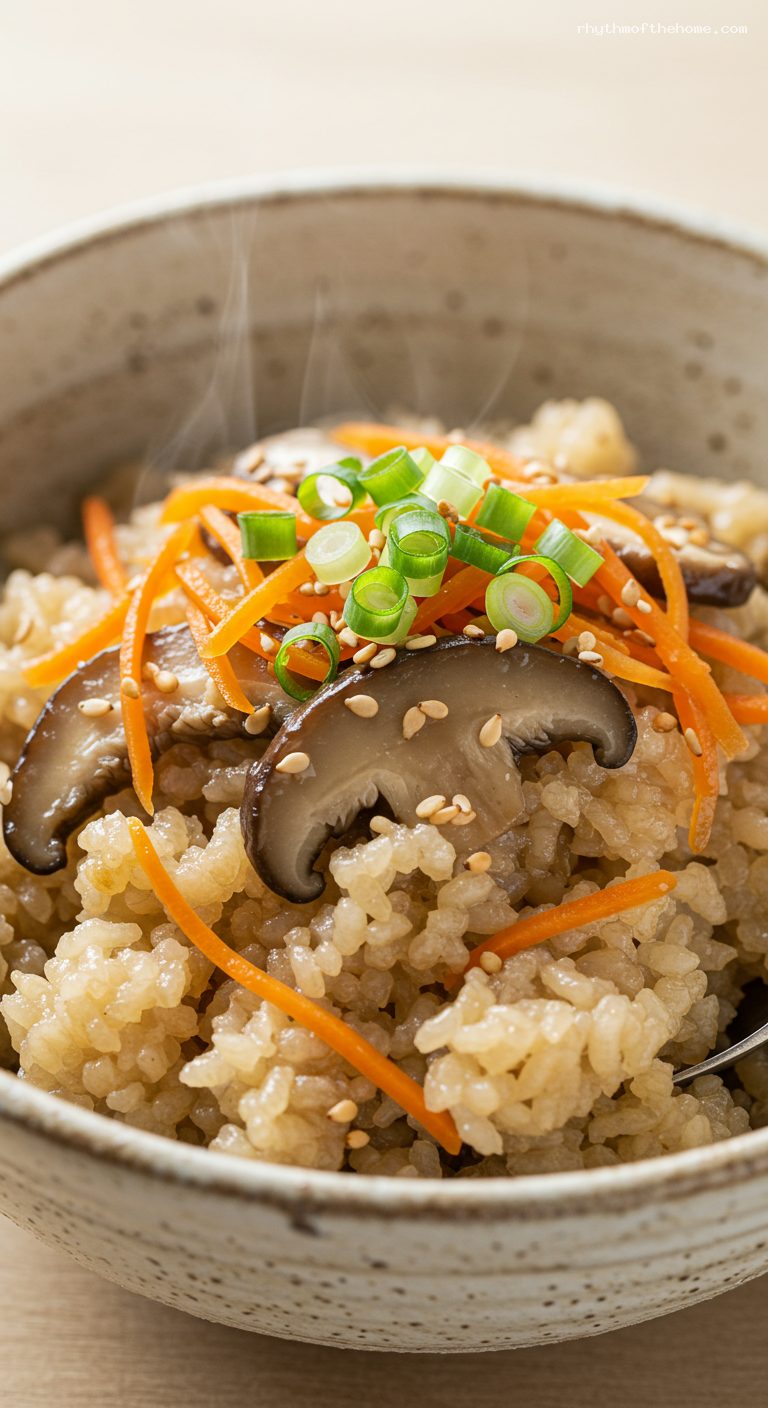
Remove from heat, cover, and let stand 5 minutes to settle and absorb remaining moisture. Fluff with a spatula. Garnish with sliced scallion and toasted sesame seeds. Serve warm, at room temperature, or chilled with steamed rice.
Pro Tips
- Toast the okara before adding liquid—this simple step keeps the texture light and crumbly.
- Strain shiitake soaking liquid to remove grit and use it as part of the dashi for extra umami.
- Control moisture: add a spoonful of dashi if too dry, or cook a minute longer if too wet.
- Blanching aburaage removes excess oil so the dish tastes clean, not greasy.
- Slice carrots thinly (2–3 mm) so they soften quickly and meld into the mixture.
Variations
- Vegan & gluten-free: Use kombu–shiitake dashi and tamari. The rest of the recipe stays the same.
- Burdock & konnyaku: Add 1/2 cup thinly sliced burdock root and 1/2 cup konnyaku matchsticks; sauté with the carrot for an earthier, classic twist.
- Green pop: Stir in 1/2 cup thawed edamame or green peas during the last 2 minutes; finish with a pinch of shichimi togarashi for gentle heat.
Storage & Make-Ahead
Cool completely, then refrigerate in an airtight container for up to 4 days. For longer storage, freeze in meal-size portions for up to 1 month; thaw overnight in the fridge. Reheat gently on the stovetop with a splash of water or dashi, or microwave in 30-second bursts, stirring between each, until warmed through. Unohana is excellent for bento—let it cool to room temperature before packing so condensation doesn’t make it soggy.
Nutrition (per serving)
Approximate per serving (1/6 of recipe): 105 calories; 5 g protein; 5 g fat; 12 g carbohydrates; 3 g fiber; 380 mg sodium.

Leave a Reply