
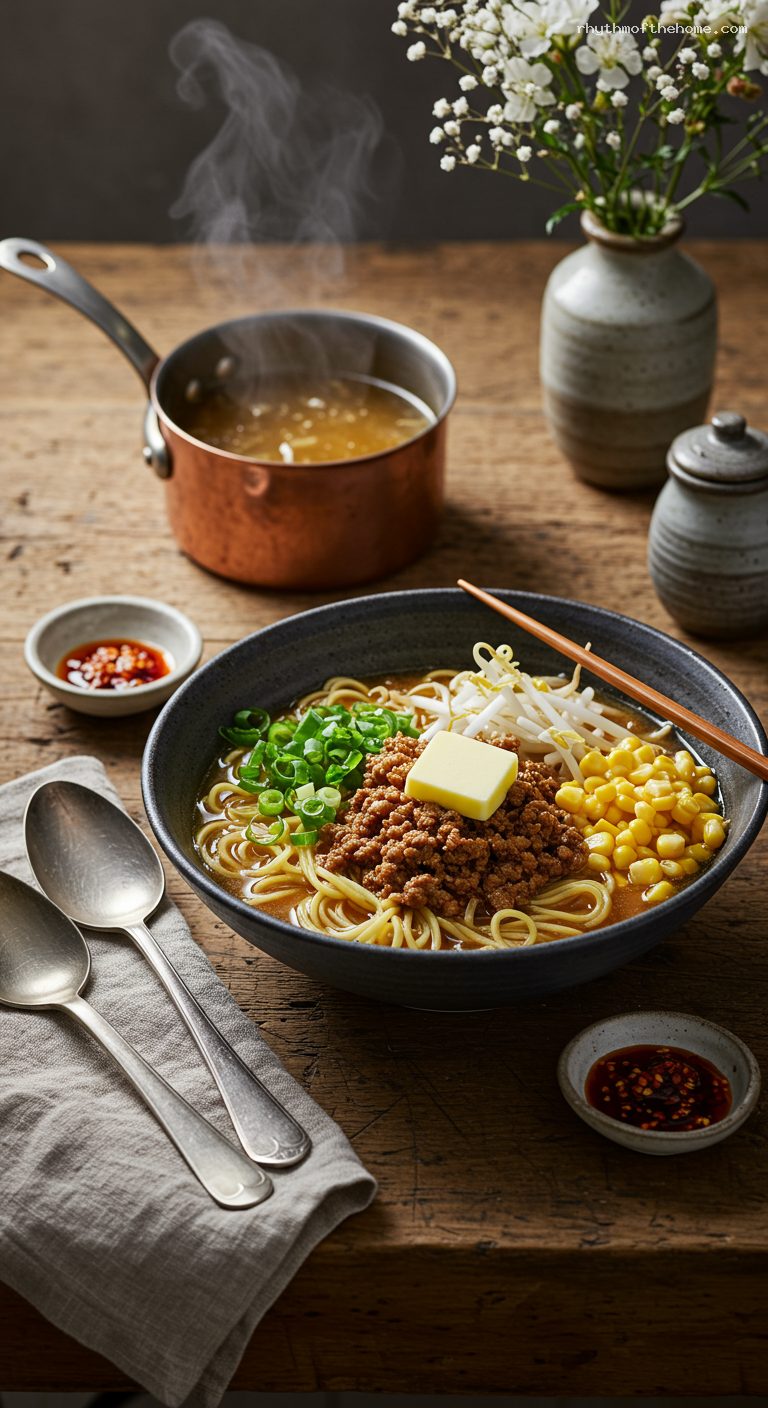
Quick Recipe Version (TL;DR)
Quick Ingredients
- 2 lb (900 g) chicken wings + 1 lb (450 g) pork neck bones
- 10 cups (2.4 L) water, plus extra for blanching
- 1 onion, 1 head garlic, 2-in (30 g) ginger, 10 g kombu, 2 dried shiitake
- 2 Tbsp lard or neutral oil
- 6 Tbsp miso (3 Tbsp red + 3 Tbsp white), 1 Tbsp soy sauce, 1 Tbsp mirin, 1 Tbsp sake
- 10 oz (300 g) ground pork, 1 Tbsp soy sauce, 1 Tbsp sake
- 14 oz (400 g) fresh ramen noodles
- 2 cups bean sprouts, 1 cup sweet corn kernels
- 4 scallions, thinly sliced; 4 Tbsp unsalted butter
Do This
- 1. Blanch chicken wings and pork bones 5 minutes; drain and rinse.
- 2. Simmer bones with onion, garlic, ginger, kombu (remove after 30 minutes), and shiitake in 10 cups water for 2.5–3 hours; strain to get about 8 cups broth.
- 3. Make miso tare: warm 2 Tbsp lard; stir in miso, soy, mirin, sake, garlic, ginger; keep warm.
- 4. Sauté ground pork with soy and sake until browned; quickly sauté bean sprouts; warm corn.
- 5. Boil ramen 2 minutes (fresh); drain well.
- 6. In each hot bowl, whisk 2.5 Tbsp tare with 1.75 cups hot broth. Add noodles; top with pork, sprouts, corn, scallions, and 1 Tbsp butter.
Why You’ll Love This Recipe
- Deep, robust chicken-and-pork broth balanced by a savory miso tare.
- Springy, curly ramen noodles that soak up flavor without going soggy.
- Classic Hokkaidō toppings: sautéed ground pork, crisp bean sprouts, sweet corn, scallions, and a melting pat of butter.
- Restaurant-quality results with clear, home-cook-friendly steps.
Grocery List
- Produce: Onion, garlic, fresh ginger, scallions, bean sprouts, frozen or canned sweet corn, kombu (dried kelp), dried shiitake mushrooms.
- Dairy: Unsalted butter.
- Pantry: Chicken wings, pork neck bones (or pork rib bones), ground pork, miso paste (red and white), soy sauce, mirin, sake (or dry sherry), lard or neutral oil, toasted sesame paste or tahini (optional), white pepper, sugar, chili bean paste or chili oil (optional), fresh ramen noodles.
Full Ingredients
Chicken-Pork Broth (makes about 8 cups/1.9 L)
- 2 lb (900 g) chicken wings
- 1 lb (450 g) pork neck bones (or pork rib bones)
- 10 cups (2.4 L) water, plus extra for blanching
- 1 medium onion, halved
- 1 head garlic, halved crosswise
- 2-in (30 g) piece ginger, sliced
- 10 g kombu (1 sheet, about 4 x 6 in/10 x 15 cm)
- 2 dried shiitake mushrooms
Miso Tare (seasoning base, yields about 3/4 cup)
- 2 Tbsp lard or neutral oil
- 3 Tbsp red miso (akamiso)
- 3 Tbsp white miso (shiro miso)
- 1 Tbsp soy sauce
- 1 Tbsp mirin
- 1 Tbsp sake (or dry sherry)
- 1 Tbsp toasted sesame paste or tahini (optional, for extra body)
- 1 tsp sugar
- 1 tsp grated garlic
- 1 tsp grated ginger
- 1/2 tsp ground white pepper
- 1 tsp chili bean paste (doubanjiang) or chili oil (optional, for heat)
Pork Topping and Vegetables
- 10 oz (300 g) ground pork
- 1 Tbsp neutral oil or lard
- 1 Tbsp soy sauce
- 1 Tbsp sake
- 2 cups (150 g) bean sprouts
- 1 cup (150 g) sweet corn kernels, warmed
- 4 scallions, thinly sliced (greens and tender whites)
Noodles and Finish
- 14 oz (400 g) fresh curly ramen noodles
- 4 Tbsp unsalted butter (1 Tbsp per bowl), kept cold
Step-by-Step Instructions
Step 1: Blanch the bones for a clean broth
Place chicken wings and pork bones in a large pot and cover with cold water by 2 inches (5 cm). Bring to a full boil over high heat; boil 5 minutes. Drain into a colander, rinse bones and wings under hot running water to remove scum, and rinse out the pot. This quick blanch yields a cleaner-tasting, less cloudy broth.
Step 2: Simmer the chicken-pork broth
Return the blanched bones to the pot. Add 10 cups (2.4 L) fresh water, onion, garlic, ginger, kombu, and dried shiitake. Heat over medium until small bubbles form around the edges (about 180–190°F / 82–88°C). Remove the kombu after 30 minutes to prevent bitterness. Adjust heat to maintain a gentle simmer—no vigorous boiling. Skim any foam as needed. Simmer uncovered 2.5–3 hours, until the broth tastes rich and you have about 8 cups (1.9 L). Strain through a fine-mesh sieve into a clean pot; keep hot over low heat.
Step 3: Make the miso tare (seasoning base)
In a small saucepan over low heat, warm the lard or oil until melted. Add grated garlic and ginger; cook 30 seconds until fragrant. Off heat, whisk in red miso, white miso, soy sauce, mirin, sake, sesame paste (if using), sugar, white pepper, and chili bean paste (if using) until smooth. Keep warm on the lowest heat; do not boil. This tare seasons each bowl so the broth stays balanced.
Step 4: Sauté the ground pork
Heat a skillet or wok over medium-high until hot. Add the oil, then the ground pork. Cook, breaking it up, until lightly browned and cooked through, 4–5 minutes. Stir in soy sauce and sake; cook 30 seconds until glazed and savory. Transfer to a bowl and keep warm. In the same pan, quickly sauté the bean sprouts over high heat for 30–60 seconds just until glossy and crisp-tender; season with a pinch of salt if desired. Warm the corn in a small pan or microwave until steaming.
Step 5: Cook the ramen noodles
Bring a large pot of water to a rolling boil (no salt needed). Add the fresh ramen noodles and cook for 2 minutes, separating with chopsticks. Drain thoroughly in a colander and shake off excess water so it does not dilute the broth.
Step 6: Season the bowls
Warm four deep bowls with hot water, then pour it out. Into each bowl, add 2.5 Tbsp miso tare. Ladle in 1.75 cups (420 ml) of hot broth and whisk to dissolve the tare completely. Taste the seasoned broth from one bowl; if you prefer saltier, add up to 0.5 Tbsp more tare total across the bowls.
Step 7: Assemble and finish with butter
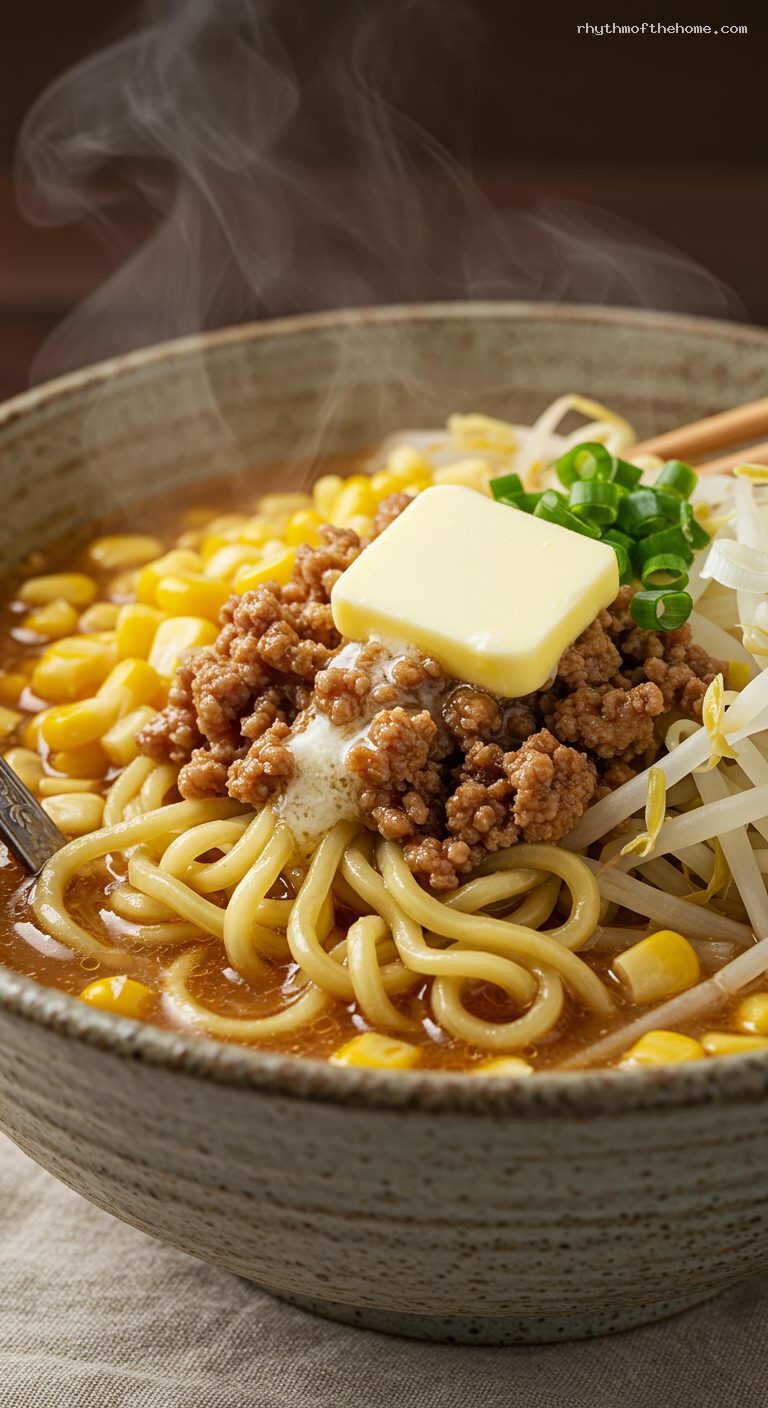
Divide noodles among bowls. Top each with a generous spoonful of sautéed ground pork, a handful of bean sprouts, 1/4 cup corn, and a shower of sliced scallions. Crown with 1 Tbsp cold unsalted butter. Serve immediately while the butter softens and perfumes the steaming miso broth.
Pro Tips
- Do not boil the miso tare—high heat can make miso taste harsh and muddy. Always dissolve tare with hot broth in the bowl.
- Remove kombu at 30 minutes; too long can add a grassy bitterness.
- Keep the broth at a gentle simmer (180–190°F / 82–88°C) for clarity and a clean flavor.
- Cook noodles last and drain very well; residual water dilutes the broth and tare.
- Warm your serving bowls—hot bowls keep noodles bouncy and the broth piping.
Variations
- Weeknight shortcut: Use 2 quarts (1.9 L) low-sodium chicken stock plus 1 sheet kombu and 2 dried shiitake; simmer 45 minutes, remove solids, and proceed with the tare.
- Spicy miso: Double the chili bean paste to 2 tsp and finish bowls with a drizzle of chili oil.
- Vegetarian: Make a kombu–shiitake broth (omit bones), use sesame oil instead of lard, and sauté crumbled mushrooms or firm tofu in place of the pork. Swap butter for plant-based butter.
Storage & Make-Ahead
Broth: Refrigerate up to 4 days or freeze up to 3 months. Tare: Refrigerate in a jar up to 1 month. Pork topping: Refrigerate up to 3 days; rewarm in a skillet. Corn and sprouts: Prep up to 1 day ahead; keep chilled. Noodles are best cooked to order—never store cooked noodles in broth or they will over-soften.
Nutrition (per serving)
Approx. 820 calories; 39 g fat; 75 g carbohydrates; 34 g protein; 2,100 mg sodium. Nutrition will vary based on noodle brand, miso type, and toppings.

Leave a Reply