
Quick Recipe Version (TL;DR)
Quick Ingredients
- 1/2 cup (25 g) dried hijiki seaweed
- 1 medium carrot (120 g), cut into thin matchsticks
- 1 sheet aburaage (about 30 g)
- 3/4 cup (120 g) cooked soybeans (canned, drained and rinsed)
- 1 teaspoon toasted sesame oil
- 1 1/2 cups (360 ml) dashi
- 3 tablespoons soy sauce
- 2 tablespoons mirin
- 2 tablespoons sake
- 1 tablespoon sugar
- Toasted sesame seeds and optional yuzu zest, for serving
Do This
- 1. Soak hijiki in plenty of cold water for 20 minutes; drain and rinse well.
- 2. Blanch aburaage in boiling water for 15 seconds, squeeze dry, slice thin; julienne carrot; rinse soybeans.
- 3. Mix dashi, soy sauce, mirin, sake, and sugar in a jug.
- 4. Heat sesame oil in a saucepan; sauté hijiki and carrot for 2 minutes; add aburaage and toss 30 seconds.
- 5. Add broth and soybeans; bring to a gentle simmer; cover with a drop-lid; cook 12–15 minutes.
- 6. Remove lid; reduce 3–5 minutes until glossy with a little sauce left.
- 7. Rest 5 minutes; sprinkle sesame seeds (and yuzu zest, optional); serve warm or room temp.
Why You’ll Love This Recipe
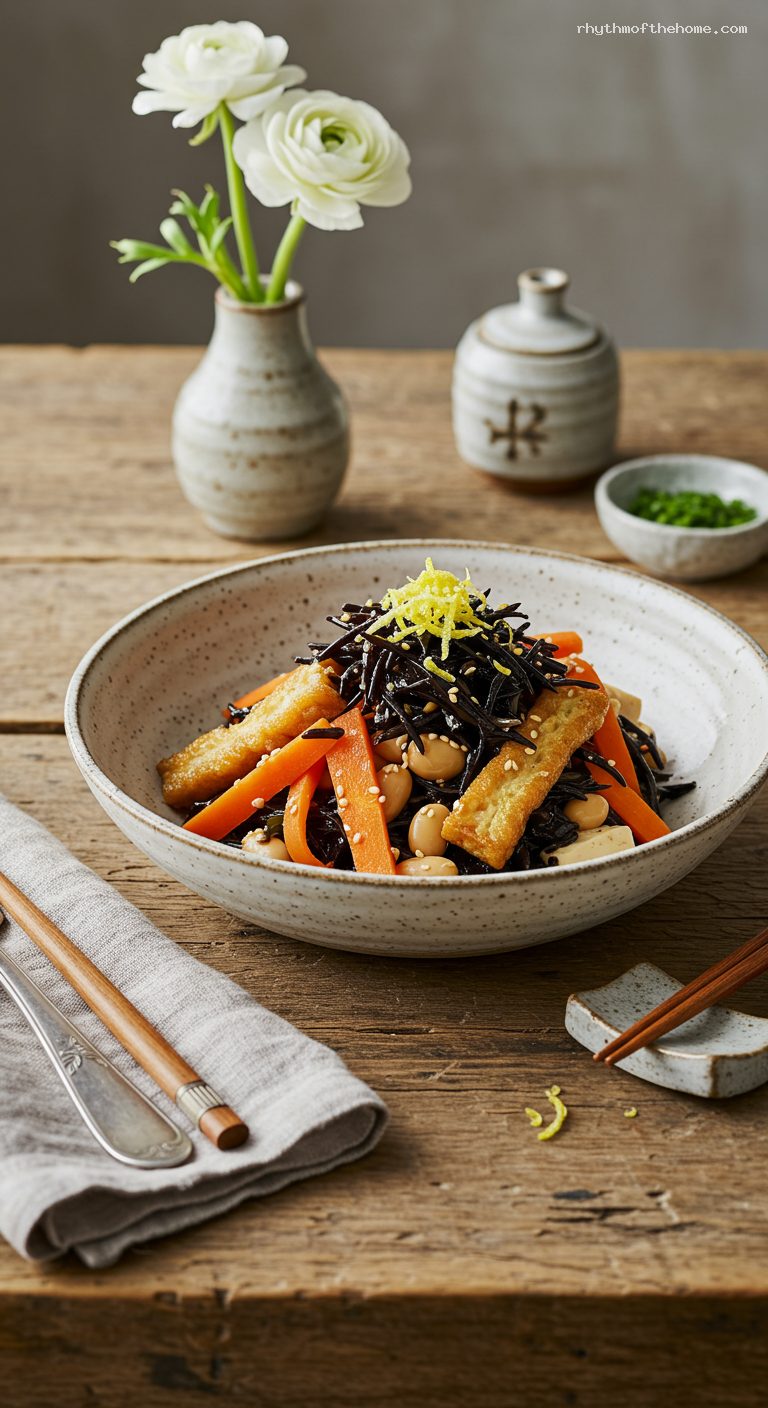
- Classic Japanese side: savory-sweet hijiki with carrot, aburaage, and soybeans in a delicate dashi–soy glaze.
- Make-ahead friendly: flavors deepen overnight and it packs beautifully for bento.
- Nutrient-dense: fiber and plant protein from soybeans; minerals from seaweed.
- Versatile: pairs with any rice set and works warm or at room temperature.
Grocery List
- Produce: 1 medium carrot; optional yuzu or lemon (zest) for garnish
- Dairy: None
- Pantry: Dried hijiki, aburaage, cooked soybeans (canned), dashi (homemade or powder), soy sauce, mirin, sake, sugar, toasted sesame oil, sesame seeds
Full Ingredients
Hijiki & Vegetables
- 1/2 cup (25 g) dried hijiki seaweed (me-hijiki preferred)
- 1 medium carrot (120 g), peeled and cut into 1.5–2 inch (4–5 cm) thin matchsticks
- 1 sheet aburaage (about 30 g), blanched and sliced into 1/4 inch (5 mm) strips
- 3/4 cup (120 g) cooked soybeans (canned, drained and rinsed; or home-cooked)
- 1 teaspoon toasted sesame oil
Simmering Broth
- 1 1/2 cups (360 ml) dashi (kombu–bonito or kombu–shiitake for vegetarian)
- 3 tablespoons soy sauce (use low-sodium if preferred)
- 2 tablespoons mirin
- 2 tablespoons sake
- 1 tablespoon sugar
To Finish (Optional)
- 1 teaspoon toasted white sesame seeds
- Very fine strips of yuzu or lemon zest, or a pinch of shichimi togarashi
Step-by-Step Instructions
Step 1: Hydrate and clean the hijiki
Place the dried hijiki in a large bowl and cover with plenty of cold water. Soak for 20 minutes. Swirl with your fingers to release any sand, then drain through a fine sieve and rinse under cold running water until the water runs clear. Let drain well.
Step 2: Prep the aburaage, carrot, and soybeans
Bring a small pot of water to a boil. Add the aburaage and blanch for 15 seconds to remove excess oil. Drain, pat dry, and gently squeeze between paper towels. Slice into 1/4 inch (5 mm) strips. Julienne the carrot into thin matchsticks. If using canned soybeans, drain and rinse.
Step 3: Mix the simmering broth
In a measuring jug, stir together the dashi, soy sauce, mirin, sake, and sugar until the sugar dissolves. Set aside.
Step 4: Brief sauté for deeper flavor
Heat a medium saucepan over medium heat. Add the toasted sesame oil, then the drained hijiki and carrot. Sauté for 2 minutes to bloom the aroma and lightly coat the strands, then add the sliced aburaage and toss for 30 seconds.
Step 5: Simmer gently with a drop-lid
Pour in the broth mixture and add the soybeans. Bring just to a gentle simmer, then place a drop-lid (otoshibuta) or a parchment paper circle directly on the surface to keep ingredients submerged. Reduce heat to low and simmer for 12–15 minutes, until the carrot is tender and the hijiki has absorbed the seasonings.
Step 6: Reduce to a glossy finish
Remove the drop-lid. Increase heat to medium and simmer for 3–5 minutes, stirring occasionally, until most of the liquid has evaporated and the mixture looks shiny with a light glaze. You should have 2–3 tablespoons of sauce clinging to the ingredients. Taste and adjust with a touch more soy sauce or a pinch of sugar if desired.
Step 7: Rest and serve
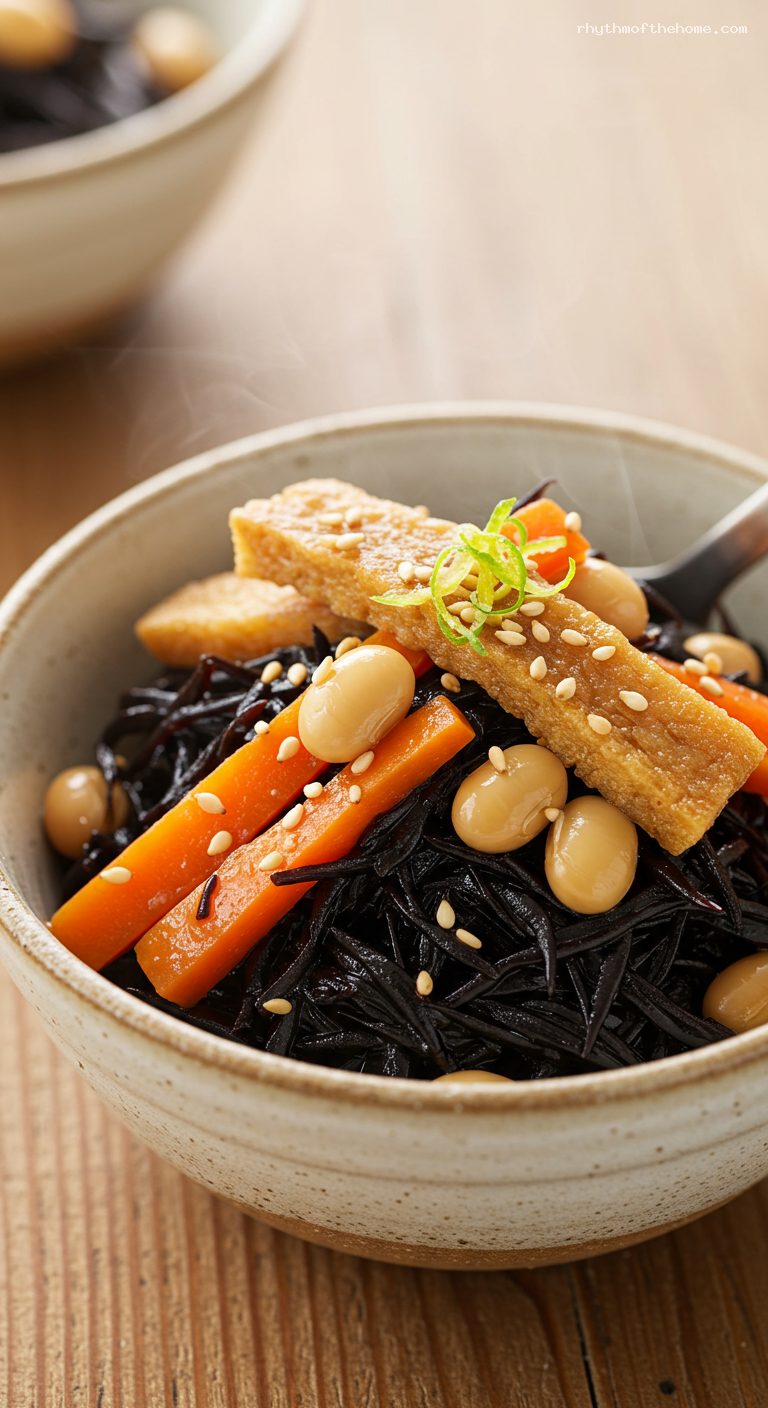
Turn off the heat and let the hijiki rest for 5–10 minutes so flavors settle and the broth absorbs further. Transfer to a shallow bowl and sprinkle with toasted sesame seeds. Add a few fine strips of yuzu zest (or a pinch of shichimi) if you like. Serve warm or at room temperature alongside rice.
Pro Tips
- Use me-hijiki (short strands) for a classic, easy-to-eat texture. If using long-strand hijiki, chop into shorter lengths after soaking.
- Do not skip blanching the aburaage; it removes excess oil so the broth tastes clean.
- A drop-lid ensures even cooking and better absorption. A parchment circle with a small vent hole works perfectly.
- For vegetarian/vegan, use kombu–shiitake dashi and keep the rest of the recipe the same.
- For bento, reduce the sauce a bit more so the mixture is glossy but not wet.
Variations
- Chicken and Hijiki: Sauté 4 ounces (115 g) bite-size chicken thigh pieces in 1 teaspoon neutral oil first; proceed with the recipe.
- Root Veg Mix: Add thin half-moons of lotus root or small diced burdock (gobo) with the carrot for extra crunch.
- Konnyaku Twist: Add 1/2 block konnyaku cut into thin batons; blanch briefly, then sauté with the hijiki.
Storage & Make-Ahead
Cool quickly and store in an airtight container in the refrigerator for up to 4 days. The flavors improve on day 2. For longer storage, freeze in small portions for up to 1 month; thaw overnight in the refrigerator and rewarm gently over low heat with a splash of water if needed. Pack into bento boxes once fully cooled.
Nutrition (per serving)
Approximate values: 130 calories; 8 g protein; 14 g carbohydrates; 5 g fat; 690 mg sodium; 6 g fiber; rich in iodine and iron. Values will vary based on brands and exact ingredients.

Leave a Reply