
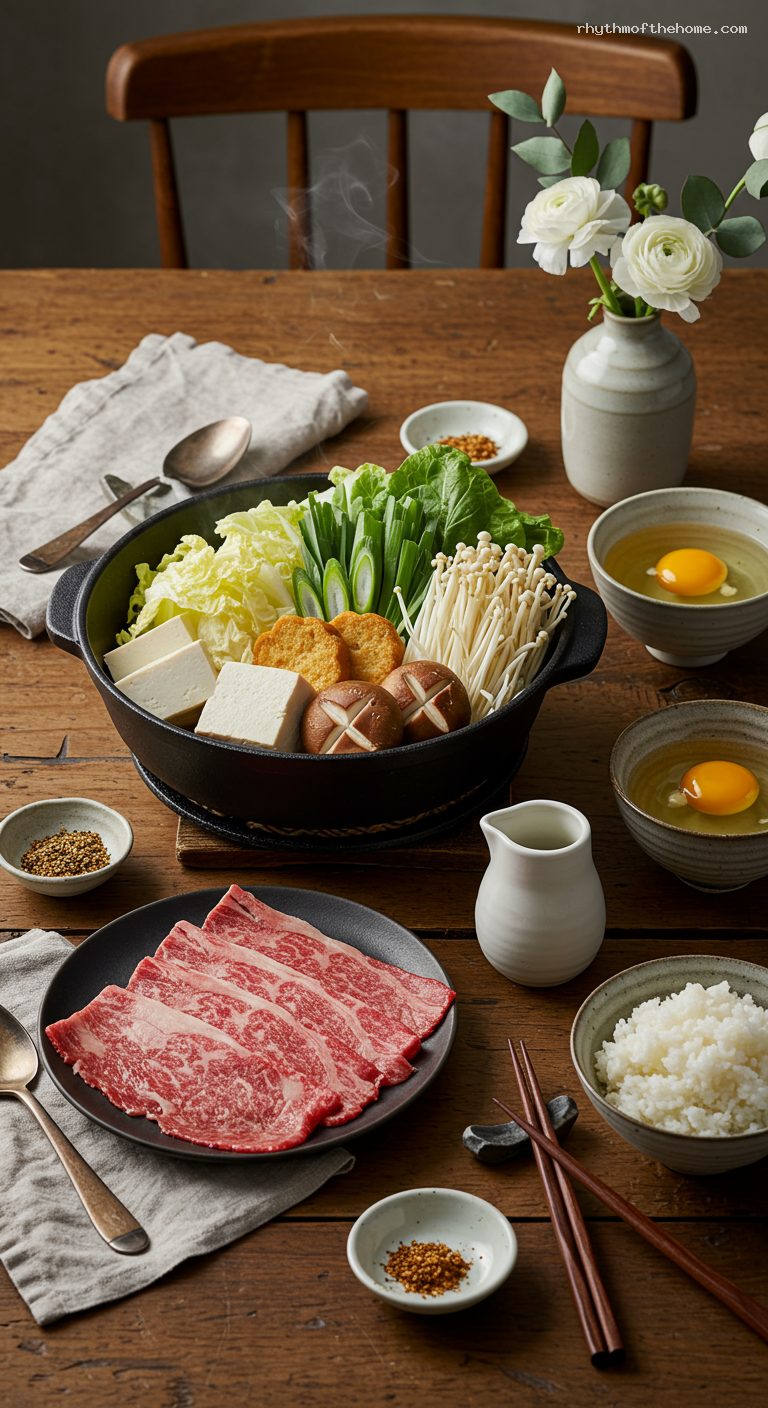
Quick Recipe Version (TL;DR)
Quick Ingredients
- 1 lb (450 g) thin-sliced beef (sukiyaki/shabu-shabu cut, 1–2 mm)
- 1 Tbsp beef tallow or neutral oil
- 14 oz (400 g) firm tofu, drained and cut into 12 pieces
- 8 oz (225 g) shirataki noodles, rinsed and blanched 1 minute
- 1/2 Napa cabbage (about 1 lb/450 g), cut into 2-inch pieces
- 6 shiitake mushrooms, stems removed, caps scored
- 3 oz (85 g) enoki mushrooms, trimmed (optional)
- 2 Japanese negi or 2 leeks (white/light green only), 1-inch bias cuts
- 4 oz (115 g) shungiku (chrysanthemum greens) or spinach
- 4 pasteurized large eggs (for dipping)
- 4 cups hot cooked Japanese short-grain rice
- Warishita: 1 cup (240 ml) dashi, 1/2 cup (120 ml) soy sauce, 1/2 cup (120 ml) mirin, 1/3 cup (80 ml) sake, 3 Tbsp (36 g) sugar
Do This
- 1. Make warishita: simmer dashi, soy, mirin, sake, and sugar until dissolved; keep hot.
- 2. Prep: drain/cut tofu; rinse and blanch shirataki 1 minute; prep veg; set rice and egg bowls.
- 3. Heat a shallow pot (donabe or skillet) over medium; add tallow/oil.
- 4. Sear a couple beef slices 10–15 seconds to season pot; pour in 3/4 cup (180 ml) warishita to a gentle simmer (185–195°F / 85–90°C).
- 5. Arrange tofu, cabbage stems, mushrooms, shirataki, and some negi; simmer 4–5 minutes. Add more sauce as needed.
- 6. Add greens and remaining negi; cook 1–2 minutes. Dip cooked items in lightly beaten pasteurized egg and enjoy over rice; continue cooking in batches at the table.
Why You’ll Love This Recipe
- Tableside cooking turns dinner into a cozy, interactive experience.
- Balanced warishita sauce—sweet, savory, and aromatic—coats every bite.
- Silky beef, custardy egg, and bouncy shirataki create incredible texture contrast.
- Flexible: swap in seasonal greens or mushroom varieties you love.
Grocery List
- Produce: Napa cabbage, shiitake, enoki (optional), negi or leeks, shungiku or spinach
- Dairy: Pasteurized large eggs (for dipping)
- Pantry: Thin-sliced beef (hot pot cut), firm tofu (refrigerated), shirataki noodles, soy sauce, mirin, sake, sugar, dashi (stock or powder), neutral oil or beef tallow, short-grain rice
Full Ingredients
Warishita (Sweet-Savory Sukiyaki Broth)
- 1 cup (240 ml) dashi stock (from powder or homemade)
- 1/2 cup (120 ml) soy sauce
- 1/2 cup (120 ml) mirin
- 1/3 cup (80 ml) sake
- 3 Tbsp (36 g) granulated sugar
Sukiyaki Pot Ingredients
- 1 lb (450 g) thinly sliced beef, sukiyaki or shabu-shabu cut
- 1 Tbsp beef tallow or neutral oil
- 14 oz (400 g) firm tofu, drained and cut into 12 rectangles
- 8 oz (225 g) shirataki noodles, rinsed, blanched 1 minute, drained well
- 1/2 Napa cabbage (about 1 lb / 450 g), cut into 2-inch pieces; separate stem and leaf portions
- 6 fresh shiitake mushrooms, stems removed; caps scored with an X
- 3 oz (85 g) enoki mushrooms, trimmed (optional)
- 2 Japanese negi (long onions) or 2 leeks, white/light green parts only, cut on a 1-inch bias
- 4 oz (115 g) shungiku (chrysanthemum greens) or baby spinach
For Serving
- 4 pasteurized large eggs, one per person, lightly beaten in small bowls
- 4 cups hot cooked Japanese short-grain rice
- Optional condiments: shichimi togarashi or sansho pepper
Step-by-Step Instructions
Step 1: Make the warishita
In a small saucepan, combine dashi, soy sauce, mirin, sake, and sugar. Bring to a bare simmer over medium heat, stirring until the sugar dissolves, 2–3 minutes. Keep warm on low or transfer to a heatproof pitcher for easy pouring at the table.
Step 2: Prep tofu, noodles, and vegetables
Drain the tofu and pat dry; cut into 12 neat rectangles. Rinse shirataki under cold water, then blanch in boiling water for 1 minute to remove any aroma. Drain well and cut into 4–5 inch lengths. Slice Napa cabbage, keeping stems and leaves separate. Prepare shiitake (remove stems, score caps), trim enoki if using, and slice negi or leeks on a bias. Rinse and dry shungiku or spinach. Arrange everything on a large platter for tableside cooking.
Step 3: Set up for tableside cooking
Place a donabe (earthenware pot), wide sauté pan, or 10–12 inch shallow cast-iron skillet on a portable burner at the table. Set out the platter of ingredients, the warm warishita, bowls of rice, and small bowls with lightly beaten pasteurized eggs (one per person). Safety note: Raw or undercooked eggs may increase the risk of foodborne illness—use pasteurized eggs and dip at your own discretion.
Step 4: Season the pot with beef and start the simmer
Heat the pot over medium heat. Add the beef tallow or oil. Sear 2–3 slices of beef for 10–15 seconds just to season the pot and create fond; push them to one side. Pour in about 3/4 cup (180 ml) warishita. Bring to a gentle simmer, aiming for 185–195°F (85–90°C); avoid a rolling boil to keep the broth glossy and the beef tender.
Step 5: Arrange and simmer the first batch
Add tofu, Napa cabbage stems, shiitake, shirataki, and some negi in tidy sections around the pot, leaving a space for beef so it doesn’t overcook. Simmer 4–5 minutes until tofu is warmed through and vegetables are tender-crisp. Add more warishita as needed to keep ingredients about one-third submerged.
Step 6: Finish with greens
Add Napa leaves and shungiku or spinach. Simmer 1–2 minutes until vibrant. Taste the broth; if too strong, splash in 2–3 Tbsp water. If too light, add another 2–3 Tbsp warishita.
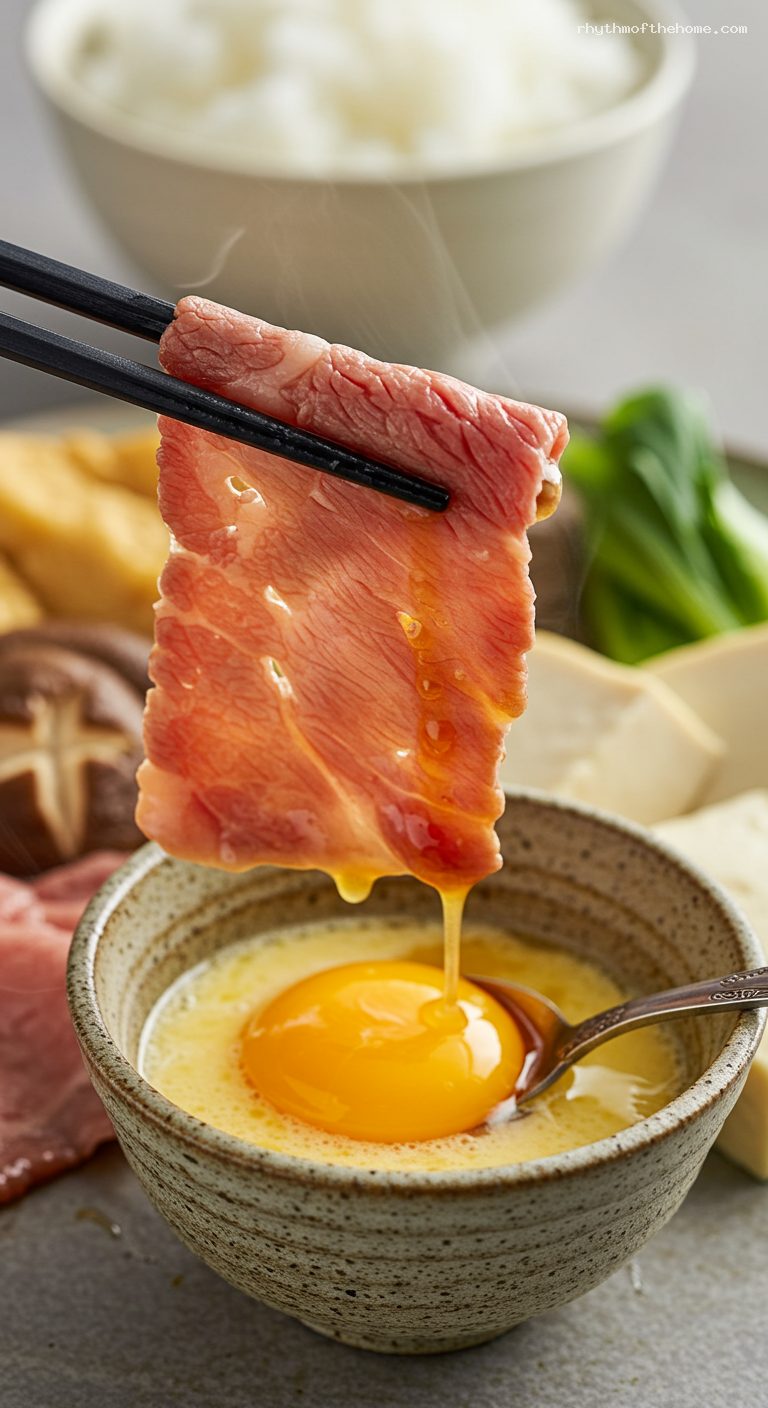
Step 7: Dip, eat, and repeat
Transfer a few pieces to your bowl. Swirl briefly through the beaten pasteurized egg for a glossy, custardy coating, then enjoy over hot rice. Continue cooking fresh batches in the pot, replenishing warishita as needed. Keep the simmer gentle for the best texture.
Pro Tips
- Use pasteurized eggs for dipping; keep them chilled until serving and discard any leftover egg in bowls.
- Partially freeze beef for 20–30 minutes to slice paper-thin if cutting at home.
- Blanch and dry shirataki well; keep it near vegetables rather than directly on raw beef to avoid toughening the meat.
- Cook in small, neat sections rather than stirring—presentation stays beautiful and ingredients cook evenly.
- If the sauce reduces too much, dilute with a few tablespoons of water to maintain a gentle, glossy simmer.
Variations
- Kansai-Style Sukiyaki: Rub the pot with beef suet, sprinkle in 1–2 tsp sugar and a few beef slices to caramelize, then splash with soy and sake before adding vegetables. Use less premixed warishita.
- Vegetarian Sukiyaki: Double the tofu and mushrooms (shiitake, enoki, maitake, and king oyster). Use kombu-based dashi and a touch more mirin to balance.
- Chicken Sukiyaki (Tori-Suki): Substitute 1 lb (450 g) boneless, skinless chicken thighs cut into bite-size pieces; simmer 8–10 minutes until cooked through.
Storage & Make-Ahead
Warishita can be made up to 7 days ahead and refrigerated in a sealed jar, or frozen for up to 2 months. Leftover cooked sukiyaki (without egg) keeps 3 days in the refrigerator; reheat gently to a simmer. Do not store or reuse egg that has been used for dipping. Cook rice fresh, or refrigerate leftover rice up to 2 days and reheat covered with a splash of water.
Nutrition (per serving)
Approximate values, including 1 cup cooked rice and 1 egg: 680 kcal; 36 g protein; 70 g carbohydrates; 22 g fat; 3 g fiber; 1700 mg sodium. Actual values will vary based on beef cut, sauce consumption, and vegetables used.

Leave a Reply