
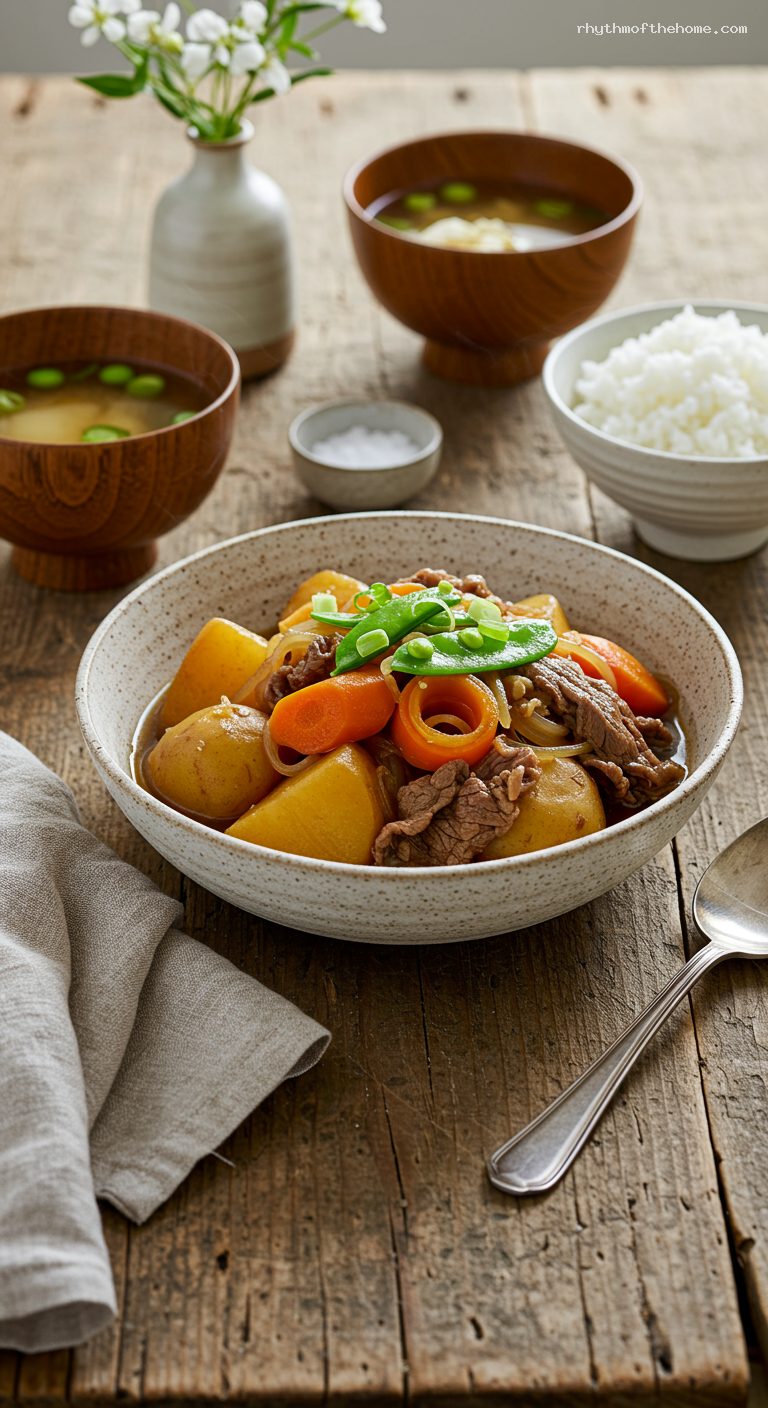
Quick Recipe Version (TL;DR)
Quick Ingredients
- 400 g thinly sliced beef or pork
- 600 g Yukon Gold potatoes, peeled, chunked
- 2 medium onions (300 g), wedged
- 1 large carrot (150 g), roll-cut
- 200 g shirataki noodles, rinsed
- 1 tbsp neutral oil
- 2 cups (480 ml) dashi or water + dashi powder
- 1/4 cup (60 ml) soy sauce
- 1/4 cup (60 ml) mirin
- 1/4 cup (60 ml) sake
- 2 tbsp (25 g) sugar
- Pinch salt; snow peas or scallions for garnish
Do This
- 1. Rinse shirataki; blanch 1 minute in boiling water, drain, cut into 10 cm lengths.
- 2. Prep potatoes, onions, carrot. Mix dashi, soy, mirin, sake, sugar, and a pinch of salt.
- 3. Heat oil in a Dutch oven; quickly sear meat 1–2 minutes. Add half the onions; soften 2 minutes.
- 4. Add potatoes and carrot; pour in braising liquid. Bring to a boil, skim foam, cover with a drop-lid.
- 5. Simmer 15 minutes; add shirataki and remaining onions. Simmer 8–10 minutes more until potatoes are tender and liquid reduces by about one-third.
- 6. Rest 10 minutes off heat. Garnish with snow peas/scallions. Ladle alongside steamed rice and miso soup.
Why You’ll Love This Recipe
- Classic Japanese comfort: soy-sweet, savory, and soothing.
- One-pot friendly with simple, affordable ingredients.
- Built for make-ahead—flavors deepen beautifully overnight.
- Balanced supper when served with rice and a quick miso soup.
Grocery List
- Produce: Yukon Gold potatoes, onions, carrot, snow peas or green beans, scallions (optional)
- Dairy: None
- Pantry: Shirataki noodles, soy sauce, mirin, sake, sugar, dashi (or dashi powder), neutral oil, salt
Full Ingredients
Stew
- 400 g thinly sliced beef (ribeye/chuck) or pork shoulder
- 600 g Yukon Gold potatoes (about 4 medium), peeled and cut into 4 cm chunks
- 2 medium onions (about 300 g), cut into 8–10 wedges each
- 1 large carrot (about 150 g), roll-cut into 2 cm pieces
- 200 g shirataki noodles, rinsed and blanched 1 minute
- 1 tbsp neutral oil (canola or rice bran)
- 12 snow peas or a handful of green beans, blanched, for garnish (optional)
- 2 scallions, thinly sliced, for garnish (optional)
Braising Liquid
- 2 cups (480 ml) dashi stock (or water plus dashi powder per package)
- 1/4 cup (60 ml) soy sauce
- 1/4 cup (60 ml) mirin
- 1/4 cup (60 ml) sake
- 2 tbsp (25 g) granulated sugar
- 1/2 tsp kosher salt, plus more to taste
To Serve
- 600 g cooked Japanese short-grain rice (about 3 cups cooked)
- 4 small bowls miso soup (prepared separately)
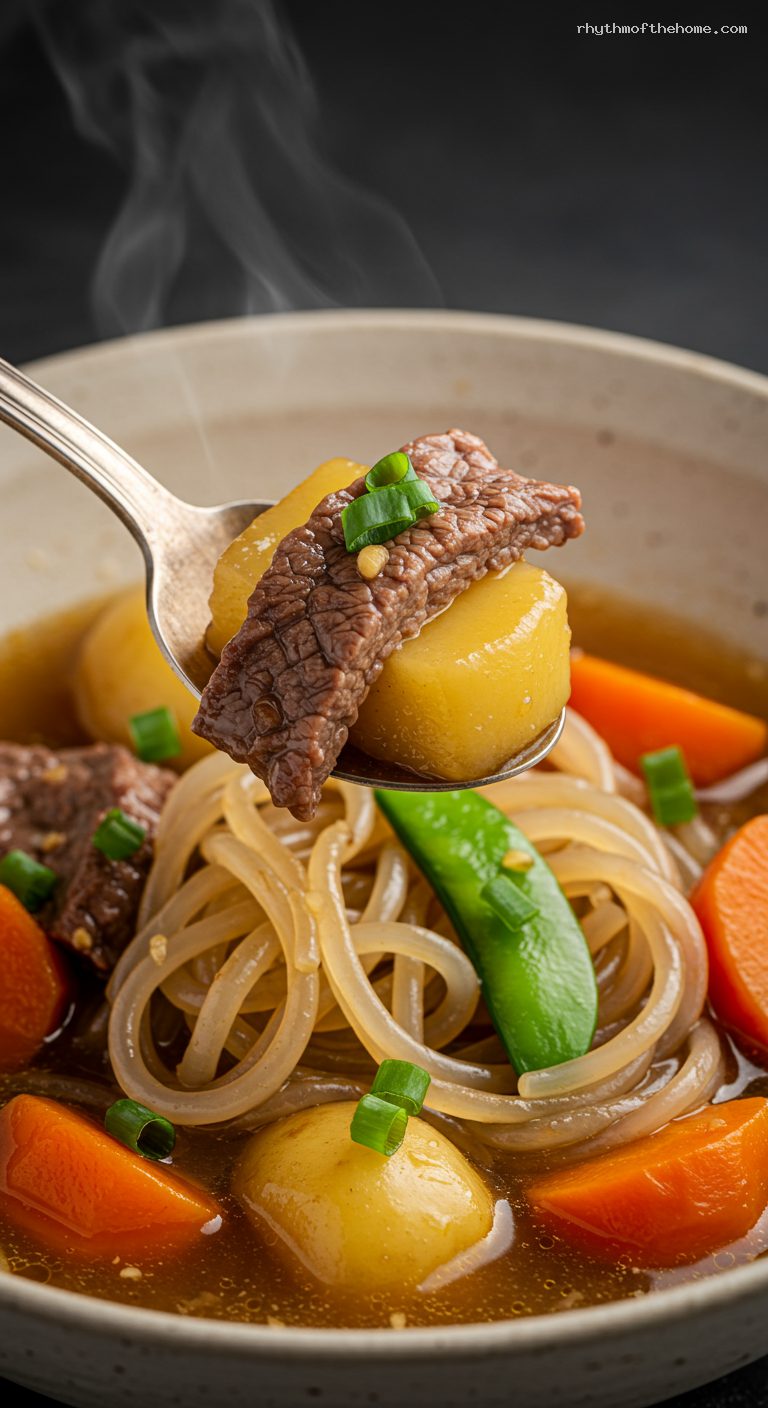
Step-by-Step Instructions
Step 1: Prep vegetables and noodles
Peel and chunk the potatoes into roughly 4 cm pieces. To keep them from breaking apart as they simmer, lightly bevel the sharp edges with a paring knife. Cut the onions into sturdy wedges. Roll-cut the carrot into 2 cm pieces. Rinse the shirataki, then blanch in boiling water for 1 minute to remove any odor. Drain well and cut into 10 cm lengths.
Step 2: Mix the braising liquid
In a measuring jug, combine dashi, soy sauce, mirin, sake, sugar, and salt. Stir until the sugar dissolves. Keep this beside the stove—it goes in all at once.
Step 3: Sear meat and soften aromatics
Heat a heavy pot or Dutch oven over medium-high. Add the oil, then the sliced beef or pork. Sear, stirring, just until the meat loses most of its pink, 1–2 minutes (it will finish cooking in the broth). Add half of the onion wedges and cook 2 minutes more until lightly translucent and sweet.
Step 4: Add roots and bring to a simmer
Add potatoes and carrot to the pot, then pour in the braising liquid. Bring to a strong simmer over medium-high and skim any foam that rises. Lay an otoshibuta (drop-lid) or a parchment round directly on the surface to keep ingredients submerged and the heat even.
Step 5: Gentle simmer until tender
Reduce to a gentle simmer and cook for 15 minutes. Remove the drop-lid, add the blanched shirataki and remaining onion wedges, and continue simmering 8–10 minutes, until the potatoes are tender when pierced and the liquid has reduced by about one-third. Avoid vigorous stirring; instead, gently swirl the pot to prevent potatoes from breaking.
Step 6: Adjust and rest
Taste and adjust seasoning with a splash more soy for salt or a pinch of sugar for roundness. Turn off the heat and let the stew rest 10 minutes so the flavors settle and the sauce clings.
Step 7: Garnish and serve
Garnish with blanched snow peas or green beans and sliced scallions. Ladle the nikujaga into warm bowls and serve alongside steamed Japanese rice and hot miso soup.
Pro Tips
- Use waxy potatoes (like Yukon Gold) so they hold their shape during the simmer.
- A parchment drop-lid keeps ingredients submerged for even cooking and a glossy finish.
- For the thinnest slices, partially freeze meat for 20 minutes before cutting.
- Always blanch shirataki; it removes odor and helps the noodles absorb flavor.
- Even better tomorrow: chill overnight, then rewarm gently for deeper, more integrated flavors.
Variations
- Pork Nikujaga: Use thinly sliced pork shoulder; the sweetness pairs beautifully with the sauce.
- Vegetarian: Swap meat for firm tofu cubes and mushrooms; use kombu or shiitake dashi.
- Curry Twist: Stir in 1–2 tsp Japanese curry powder with the braising liquid for a cozy curry-nikujaga.
Storage & Make-Ahead
Refrigerate cooled nikujaga in an airtight container for up to 4 days; flavors improve by day two. Reheat gently over low heat until steaming, adding a splash of water if needed. Freezing is not recommended due to potato texture; if you must freeze, do so without the potatoes and add freshly cooked potatoes when reheating.
Nutrition (per serving)
Approximate values (without rice or miso soup): 500 calories; 27 g protein; 47 g carbohydrates; 20 g fat; 5 g fiber; 1,200 mg sodium. Actual values vary by cut of meat, soy sauce brand, and reduction level.

Leave a Reply