
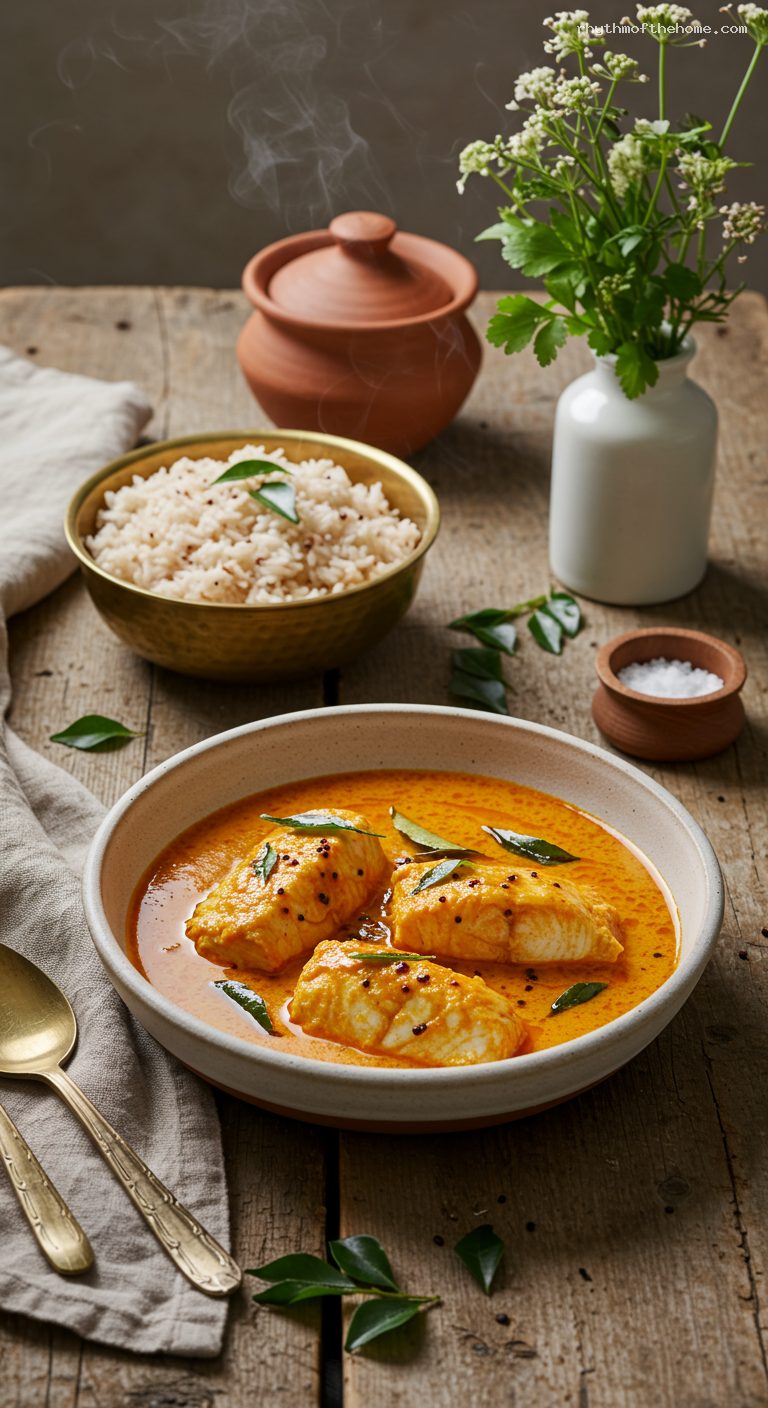
Quick Recipe Version (TL;DR)
Quick Ingredients
- 1 lb (450 g) firm white fish, cut into 2-inch pieces
- 1 tsp kosher salt, divided; 1/2 tsp ground turmeric, divided
- 2 tbsp coconut oil
- 1 tsp black mustard seeds; 1/4 tsp fenugreek seeds
- 10 small shallots (about 1 cup/120 g), thinly sliced
- 2 green chilies, slit; 3 garlic cloves, sliced; 1-inch (15 g) ginger, julienned
- 1.5 tsp Kashmiri chili powder; 1 tsp ground coriander; pinch more turmeric
- 1 can (13.5 fl oz/400 ml) full-fat coconut milk
- EITHER 1.5 tsp tamarind paste mixed with 3/4 cup warm water OR 3 kodampuli pieces soaked in 1 cup hot water
- 2 sprigs curry leaves (about 20 leaves)
Do This
- 1. Soak kodampuli or mix tamarind with warm water; marinate fish with 1/2 tsp salt and 1/4 tsp turmeric for 10 minutes.
- 2. Heat coconut oil over medium; crackle mustard seeds, add fenugreek 10 seconds, then half the curry leaves.
- 3. Add shallots, ginger, garlic, and green chilies; sauté until translucent with golden edges, 5–6 minutes.
- 4. Stir in chili powder, coriander, and a pinch of turmeric for 30 seconds.
- 5. Pour in tamarind/kodampuli liquid (add the kodampuli pieces if using) and 1/4–1/2 cup water; simmer 5 minutes.
- 6. Slide in fish; cover and simmer gently until opaque and flaking, 6–8 minutes.
- 7. Stir in coconut milk; warm on low 2–3 minutes without boiling. Season to taste, rest 5 minutes, and serve over steamed rice.
Why You’ll Love This Recipe
- Authentic Kerala flavors: mellow coconut, fragrant curry leaves, and a tangy tamarind or kodampuli finish.
- Silky, gently spiced sauce with tender, flaky fish—comforting yet light.
- One pot, weeknight-friendly, and dinner-ready in about 40 minutes.
- Flexible souring options and heat levels to suit your pantry and taste.
Grocery List
- Produce: Small shallots, fresh curry leaves, green chilies, garlic, ginger
- Dairy: None
- Pantry: Firm white fish, coconut oil, coconut milk, black mustard seeds, fenugreek seeds, Kashmiri chili powder, ground turmeric, ground coriander, kosher salt, tamarind paste or kodampuli, rice for serving
Full Ingredients
Fish and Quick Marinade
- 1 lb (450 g) firm white fish (cod, halibut, snapper, sea bass, or kingfish), cut into 2-inch (5 cm) chunks
- 1/2 tsp kosher salt
- 1/4 tsp ground turmeric
Souring Option (choose one)
- Option A (tamarind): 1.5 tsp tamarind paste mixed with 3/4 cup (180 ml) warm water
- Option B (kodampuli/gambooge): 3 small pieces soaked in 1 cup (240 ml) hot water for 10 minutes
Curry Base
- 2 tbsp coconut oil
- 1 tsp black mustard seeds
- 1/4 tsp fenugreek seeds
- 2 sprigs fresh curry leaves (about 20 leaves), divided
- 10 small shallots, thinly sliced (about 1 cup/120 g)
- 2 green chilies, slit lengthwise
- 3 garlic cloves, thinly sliced
- 1-inch (15 g) fresh ginger, julienned or minced
- 1.5 tsp Kashmiri red chili powder
- 1 tsp ground coriander
- 1/4 tsp ground turmeric
- 3/4 to 1 tsp kosher salt, to taste
- 1 can (13.5 fl oz/400 ml) full-fat coconut milk
- Up to 1/2 cup (120 ml) water, as needed to adjust consistency
To Serve
- Steamed rice (Kerala matta or basmati)
- Optional: 1 tsp coconut oil for final drizzle
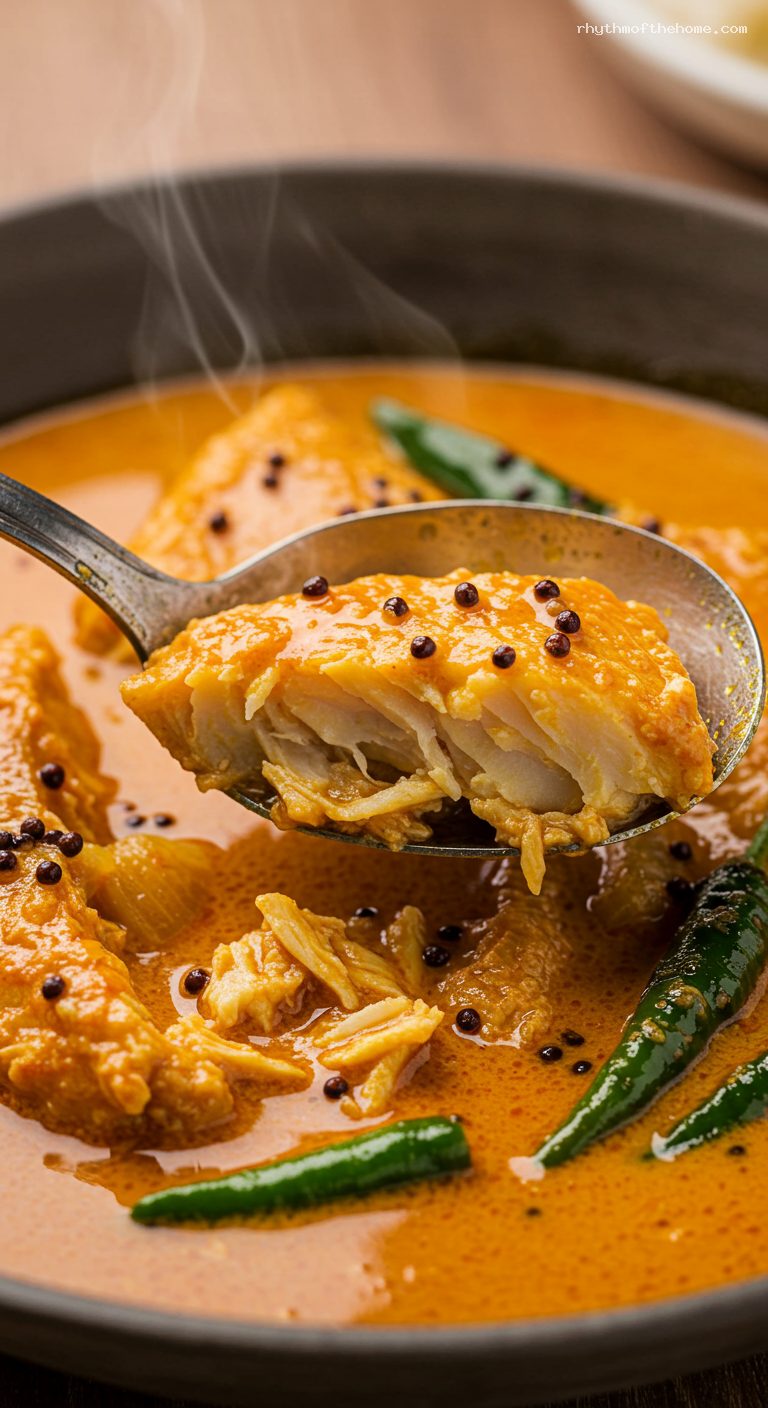
Step-by-Step Instructions
Step 1: Prep the souring agent and marinate the fish
Mix tamarind paste with warm water or soak kodampuli in hot water. Set aside. Pat fish dry, then toss with 1/2 tsp salt and 1/4 tsp turmeric. Marinate 10 minutes at room temperature while you slice shallots and prep garlic, ginger, chilies, and curry leaves.
Step 2: Temper the whole spices in coconut oil
In a wide saucepan or clay pot over medium heat, warm 2 tbsp coconut oil. Add mustard seeds; when they crackle (about 30 seconds), add fenugreek seeds and fry just 10–15 seconds until fragrant. Immediately add half the curry leaves (they will sputter).
Step 3: Soften the aromatics
Add sliced shallots, green chilies, garlic, and ginger. Cook, stirring often, until shallots turn translucent with light golden edges, 5–6 minutes. Regulate heat so nothing scorches.
Step 4: Bloom the ground spices
Sprinkle in Kashmiri chili powder, ground coriander, and 1/4 tsp turmeric. Stir constantly for 30 seconds to bloom in the oil; the mixture should look glossy and smell aromatic. Do not let the spices darken.
Step 5: Build the gravy and simmer
Pour in the tamarind liquid (or the kodampuli soaking liquid and the softened pieces). Add 1/4–1/2 cup water to reach a thin, pourable gravy. Season with 3/4 tsp salt to start. Bring to a gentle simmer and cook 5 minutes to meld flavors and soften any sharp sourness.
Step 6: Poach the fish gently
Slide in the fish pieces in a single layer. Reduce heat to medium-low, cover, and simmer without stirring vigorously until the fish turns opaque and flakes at the edges, 6–8 minutes. Fish is done when it flakes easily or reaches 140°F/60°C in the center.
Step 7: Finish with coconut milk and rest
Lower the heat to low. Stir in the coconut milk and warm gently 2–3 minutes; avoid boiling to prevent curdling or splitting. Adjust salt and sourness (add a splash of hot water for a looser gravy or a pinch of sugar/jaggery if too tart). Add the remaining curry leaves and, if you like, a final 1 tsp drizzle of coconut oil. Turn off the heat and rest 5–10 minutes; the sauce will settle and coat the fish beautifully. Serve hot with steamed rice.
Pro Tips
- Use Kashmiri chili powder for rich color and gentle heat; substitute with a blend of sweet paprika and a pinch of cayenne if needed.
- Gently swirl the pot instead of stirring to keep fish pieces intact.
- Fenugreek seeds turn bitter if overfried—add just after mustard seeds crackle and fry briefly.
- If using kodampuli, you can leave the softened pieces in the curry for deeper flavor or remove them before serving for a cleaner look.
- A traditional clay pot (manchatti) adds earthy flavor and steady heat, but any heavy saucepan works.
Variations
- No-coconut red curry: Omit coconut milk, increase water to 1–1.25 cups, and simmer a little longer for a brighter, spicier gravy.
- Prawn version: Swap fish for 1 lb (450 g) shrimp, peeled and deveined. Poach only 3–4 minutes before adding coconut milk.
- Green mango swap: Use 1 cup sliced raw green mango instead of tamarind/kodampuli; simmer in Step 5 until just tender.
Storage & Make-Ahead
Refrigerate leftovers in an airtight container for up to 2 days; flavors deepen by day two. Reheat gently over low heat until steaming—do not boil vigorously or the coconut milk may separate and the fish may overcook. For best texture, do not freeze the finished curry. Instead, make and freeze the base through Step 5 (without fish or coconut milk) for up to 2 months; thaw, then add fresh fish and coconut milk to finish.
Nutrition (per serving)
Approximate values: 380 calories; 26 g fat; 9 g carbohydrates; 28 g protein; 600 mg sodium. Rice not included.

Leave a Reply