
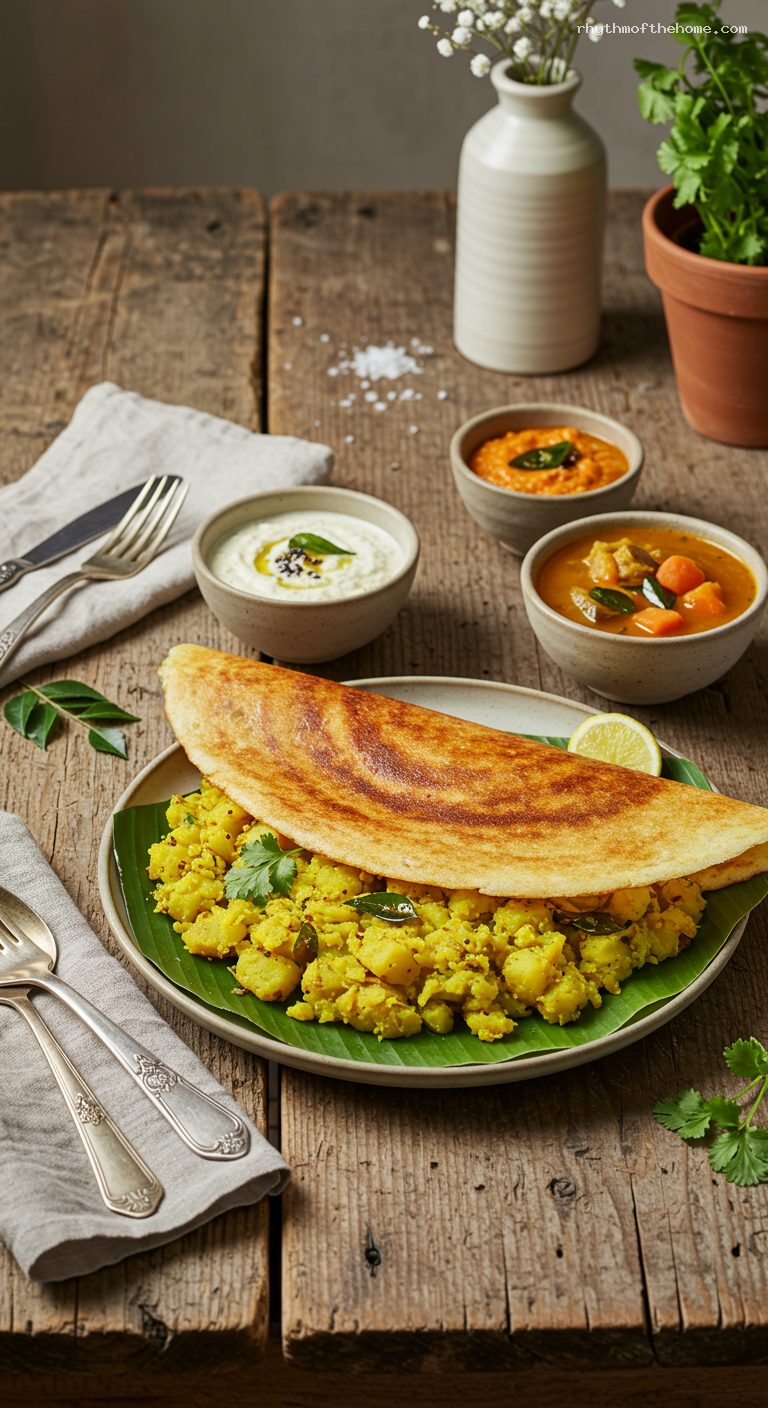
Quick Recipe Version (TL;DR)
Quick Ingredients
- Idli/parboiled rice 2 cups (400 g)
- Whole urad dal 3/4 cup (150 g), chana dal 2 tbsp, fenugreek seeds 1/2 tsp
- Flattened rice (poha) 1/4 cup (20 g, optional)
- Fine salt 1 1/4 tsp, water ~2 cups (475 ml) for grinding
- Ghee or neutral oil 3–4 tbsp for cooking
- Potatoes 1 1/2 lb (680 g), onion 1, green chilies 2–3, ginger 1-inch, curry leaves, mustard seeds 1 tsp, urad dal 1 tsp, chana dal 1 tsp, turmeric 1/2 tsp, lemon 1, cilantro
- Fresh coconut 1 cup (80–90 g), roasted chana dal 2 tbsp, green chili, ginger, cilantro; tempering: mustard seeds, curry leaves, dried red chili
- Toor dal 1/2 cup (100 g), mixed veg 2 cups (carrot, eggplant, tomato, onion), tamarind 2 tsp, sambar powder 2 tbsp, jaggery 1 tsp, mustard and cumin seeds
Do This
- 1. Rinse rice, dals, and fenugreek; soak separately 6 hours (soak poha 20 minutes before grinding).
- 2. Grind dal smooth; grind rice slightly coarse; combine with poha, add water to a pourable batter; ferment 12 hours at 75–85°F until doubled and bubbly.
- 3. Blend coconut chutney; temper with mustard, curry leaves, and dried chili.
- 4. Boil potatoes; temper mustard/urad/chana dals; sauté onion, chilies, ginger, curry leaves; add turmeric, potatoes, salt; finish with lemon and cilantro.
- 5. Pressure-cook toor dal; simmer with veggies, tamarind, sambar powder, jaggery, and salt; finish with a mustard–cumin–curry leaf tempering.
- 6. Heat tawa to 400–425°F (medium-high); spread 1/2 cup batter thin; drizzle ghee; cook until lacy and deep golden.
- 7. Fill with potato palya, fold, and serve hot with coconut chutney and sambar.
Why You’ll Love This Recipe
- Restaurant-crisp dosa with a tender center and lacy, ghee-brushed edges.
- Classic turmeric-spiked potato palya plus a fragrant coconut chutney and a cozy bowl of sambar.
- Clear, step-by-step guidance for reliable fermentation at home.
- Perfect for breakfast-for-dinner and easy to scale for a crowd.
Grocery List
- Produce: Potatoes, onion, tomatoes, carrot, small eggplant, green chilies, ginger, cilantro, curry leaves, lemon
- Dairy: Ghee (or use neutral oil for dairy-free)
- Pantry: Idli/parboiled rice, whole urad dal, chana dal, poha (optional), fenugreek seeds, toor dal, coconut (fresh or frozen grated), roasted chana dal, mustard seeds, cumin seeds, dried red chilies, turmeric, asafoetida (optional), sambar powder, tamarind, jaggery, salt, oil
Full Ingredients
Dosa Batter
- Idli/parboiled rice: 2 cups (400 g)
- Whole urad dal (skinned black gram): 3/4 cup (150 g)
- Chana dal: 2 tbsp (18 g)
- Fenugreek seeds: 1/2 tsp (2 g)
- Flattened rice (poha), thin variety: 1/4 cup (20 g, optional for extra crispness)
- Fine sea salt: 1 1/4 tsp (7 g), added after fermentation
- Water: about 2 cups (475 ml) for grinding, plus more as needed to adjust consistency
Potato Palya (Masala)
- Potatoes (Yukon Gold or russet): 1 1/2 lb (680 g), peeled and cubed
- Neutral oil: 1 1/2 tbsp (22 ml)
- Black mustard seeds: 1 tsp
- Urad dal: 1 tsp
- Chana dal: 1 tsp
- Curry leaves: 10–12
- Green chilies: 2–3, slit lengthwise
- Ginger: 1-inch piece (15 g), grated
- Onion: 1 medium (150 g), thinly sliced
- Turmeric powder: 1/2 tsp
- Asafoetida (hing): pinch (optional)
- Water: 1/3 cup (80 ml), as needed to moisten
- Fine sea salt: 1–1 1/4 tsp (6–7 g), to taste
- Lemon juice: 1 tbsp (15 ml)
- Cilantro: 1/4 cup (10 g), chopped
Fresh Coconut Chutney
- Fresh or frozen grated coconut: 1 cup (80–90 g)
- Roasted chana dal (daliya): 2 tbsp (16 g)
- Green chili: 1, to taste
- Ginger: 1/2-inch (5 g)
- Cilantro: 2 tbsp (6 g)
- Fine sea salt: 3/4 tsp (4 g)
- Water: 1/2–3/4 cup (120–180 ml), for blending
Chutney Tempering (Tadka)
- Oil: 1 tsp
- Black mustard seeds: 1/2 tsp
- Urad dal: 1/2 tsp (optional)
- Dried red chili: 1, broken
- Curry leaves: 6–8
- Asafoetida: pinch (optional)
Quick Vegetable Sambar
- Toor dal (pigeon peas): 1/2 cup (100 g), rinsed
- Water: 2 cups (480 ml) for pressure-cooking dal + 1 1/2–2 cups (360–480 ml) for the sambar
- Carrot: 1 small (80 g), sliced
- Eggplant: 1 small (150 g), cubed
- Tomato: 1 medium (120 g), chopped
- Small onion: 1 (80 g), sliced
- Tamarind paste: 2 tsp (10 ml)
- Sambar powder: 2 tbsp (14 g)
- Jaggery: 1 tsp (5 g, optional)
- Fine sea salt: 1–1 1/4 tsp (6–7 g), to taste
Sambar Tempering
- Oil: 1 tbsp (15 ml)
- Black mustard seeds: 1/2 tsp
- Cumin seeds: 1/2 tsp
- Dried red chili: 1, broken
- Curry leaves: 8–10
- Turmeric: 1/4 tsp
- Asafoetida: pinch (optional)
To Cook the Dosa
- Ghee or neutral oil: 3–4 tbsp, for brushing
Step-by-Step Instructions
Step 1: Soak rice and dals
Rinse the rice in several changes of water until mostly clear. In a separate bowl, rinse the urad dal and chana dal together. Soak the rice with the fenugreek seeds covered by 2–3 inches of water for 6 hours. Soak the urad/chana dal separately for 6 hours. If using poha, soak it in water for the last 20 minutes of the soaking period, then drain.
Step 2: Grind a smooth, airy batter
Drain the dals and grind with 1/2–3/4 cup (120–180 ml) water until very smooth and light, 2–4 minutes in a high-speed blender (or 15–20 minutes in a wet grinder). Transfer to a large bowl. Grind the rice (and soaked poha) with about 1–1 1/4 cups (240–300 ml) water until slightly coarse, like fine semolina. Combine both pastes; the batter should be thick yet pourable. Cover, leaving room for expansion.
Step 3: Ferment until bubbly
Ferment in a warm spot at 75–85°F (24–29°C) for 12 hours, until doubled with a sweet-sour aroma and visible bubbles. Tips: Use an oven with the light on or an Instant Pot on Yogurt mode (Less) for 8–10 hours. After fermentation, gently fold in 1 1/4 tsp (7 g) salt. Adjust consistency with a splash of water so it flows off a ladle like heavy cream.
Step 4: Make the coconut chutney
Blend coconut, roasted chana dal, green chili, ginger, cilantro, salt, and 1/2 cup (120 ml) water until smooth; add more water for a spoonable consistency. For tempering, heat 1 tsp oil in a small pan; crackle mustard seeds, then add urad dal, dried red chili, curry leaves, and a pinch of asafoetida. Sizzle 20–30 seconds and pour over the chutney.
Step 5: Cook the potato palya (masala)
Boil potatoes in salted water until just tender, 10–12 minutes. Drain, cool slightly, and roughly crush with a fork. Heat 1 1/2 tbsp oil in a skillet on medium. Add mustard seeds; when they pop, add urad dal, chana dal, and curry leaves; sauté until the dals turn golden. Stir in onion, green chilies, and ginger; cook 3–4 minutes until translucent. Add turmeric and a pinch of asafoetida, then the potatoes, salt, and 1/3 cup (80 ml) water. Toss to coat and heat through, 2–3 minutes. Finish with lemon juice and cilantro. Keep warm.
Step 6: Make the quick sambar
Pressure-cook toor dal with 2 cups (480 ml) water for 8 minutes at high pressure; natural release 10 minutes, then whisk smooth. In a pot, combine the cooked dal, carrot, eggplant, tomato, onion, 1 1/2 cups (360 ml) water, tamarind, sambar powder, jaggery, and salt. Simmer until vegetables are tender, 10–12 minutes. In a small pan, heat 1 tbsp oil; add mustard seeds, cumin, dried red chili, curry leaves, turmeric, and a pinch of asafoetida. Sizzle 30 seconds and stir into the sambar. Adjust thickness with more water; balance salt and tamarind.
Step 7: Cook crisp, lacy dosas
Heat a well-seasoned cast-iron tawa or nonstick griddle over medium-high for 4–5 minutes until a drop of water skates and evaporates instantly (about 400–425°F / 205–220°C on an electric griddle). Lightly wipe with a few drops of oil. Stir the batter gently. Pour about 1/2 cup (120 ml) batter onto the center and, using the back of a ladle, spiral outward into a thin 9–10 inch circle. Drizzle 1–2 tsp ghee or oil around the edges and a few drops on top. Cook without moving until deep golden with lacy edges, 1 1/2–2 minutes. For extra crispness, do not flip; for a slightly softer dosa, flip for 10–15 seconds. Repeat, regulating heat as needed.
Step 8: Fill, fold, and serve
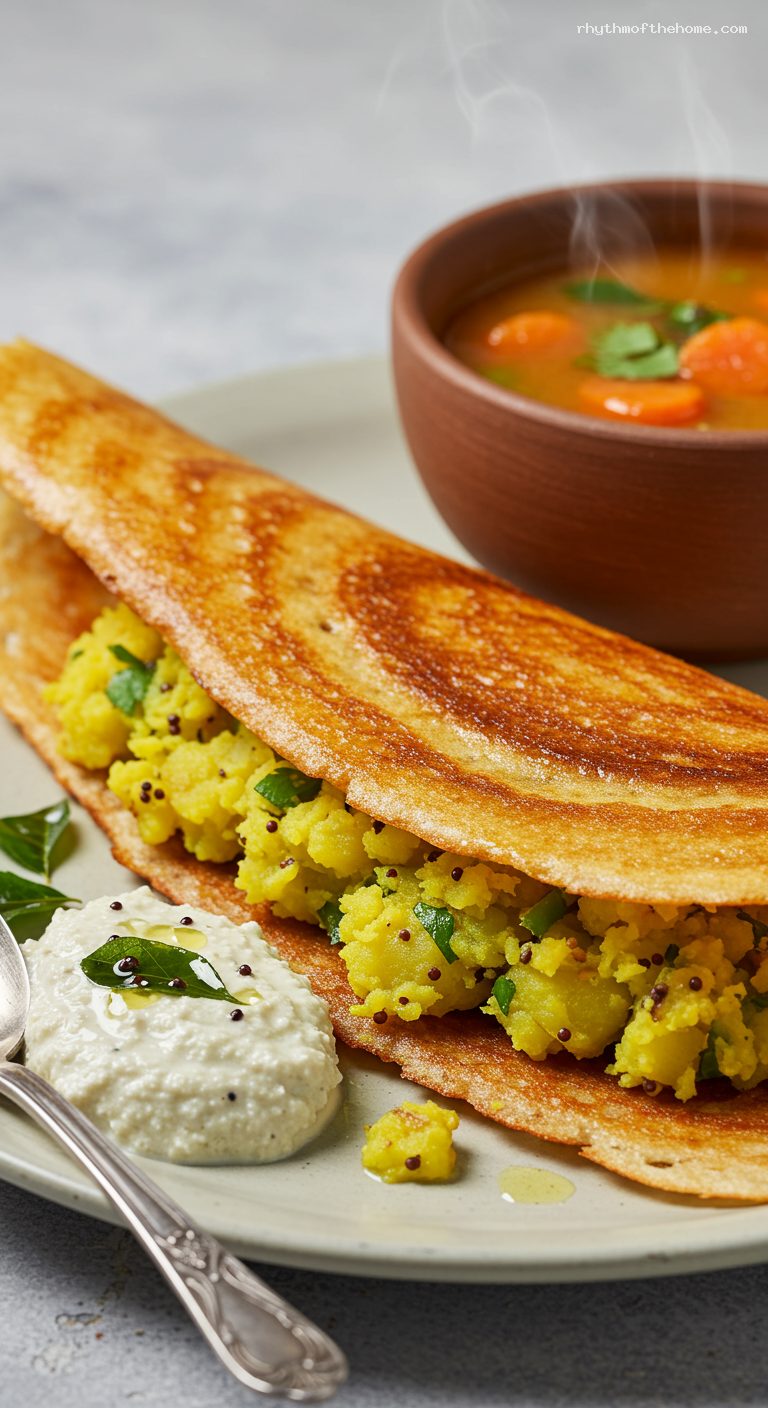
Spread 1/3–1/2 cup warm potato palya over half the dosa. Fold into a half-moon or roll into a cylinder. Serve immediately with coconut chutney and a ladle of hot sambar. Eat hot while the dosa is maximally crisp.
Pro Tips
- Fermentation sweet spot: Aim for 75–85°F (24–29°C). In cool weather, use your oven with the light on or a proofing box.
- Right batter texture: After fermenting, adjust to a heavy-cream consistency for easy spreading and lacy edges.
- Tawa temperature: Too cool equals pale, soft dosas; too hot makes batter seize. A water drop should sizzle and evaporate in ~2 seconds.
- Swirl technique: Pour, then quickly spiral with the ladle in one continuous motion; do not overwork or the dosa will tear.
- Ghee for flavor: A small drizzle around the edges amplifies crispness and aroma. Use oil for a dairy-free version.
Variations
- Mysore Masala Dosa: Brush the dosa with a thin layer of spicy red garlic chutney before adding the potato filling.
- Paper Dosa: Thin the batter with 2–4 tbsp water and cook longer over slightly lower heat for ultra-crisp, wafer-thin dosas.
- Veggie Spin: Add peas to the palya, or swap in paneer cubes for a richer filling.
Storage & Make-Ahead
Fermented batter keeps 3–4 days in the refrigerator; thin with a splash of water before using. Freeze batter up to 1 month; thaw overnight in the fridge. Potato palya stores 3 days chilled; rewarm with a spoon of water. Coconut chutney is best fresh but keeps 1–2 days refrigerated. Sambar keeps 4 days chilled or 2 months frozen; reheat and adjust water/salt. Dosas are best cooked to order—prep fillings and batter ahead, then griddle fresh.
Nutrition (per serving)
Approximate for 1 serving (2 dosas with palya, chutney, and sambar): 680 calories; 22 g fat; 102 g carbohydrates; 16 g protein; 10 g fiber; 900 mg sodium.

Leave a Reply