
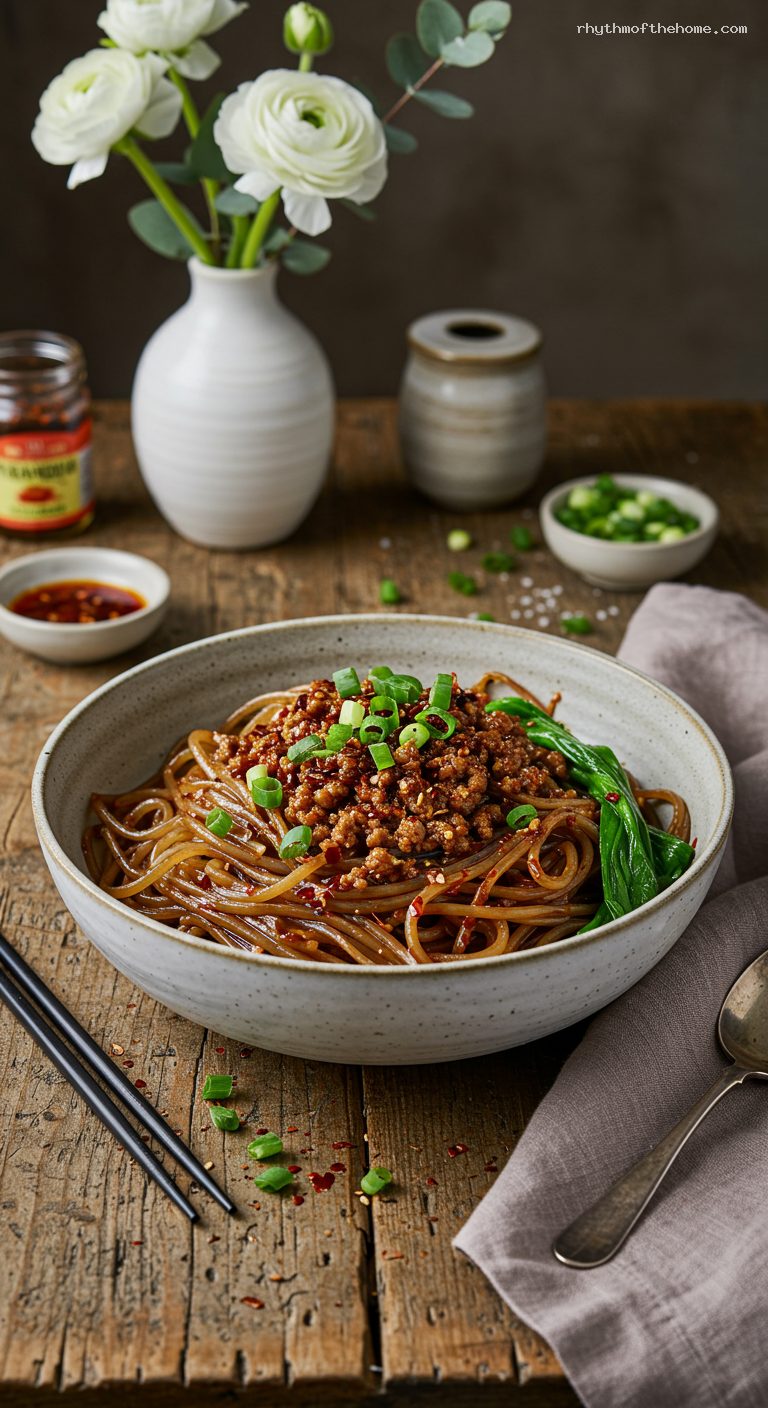
Quick Recipe Version (TL;DR)
Quick Ingredients
- 160 g mung bean glass noodles (vermicelli)
- 250 g ground pork (15–20 percent fat)
- 2 tbsp doubanjiang (Pixian chili broad bean paste), finely chopped
- 3 garlic cloves, minced; 1 tbsp minced ginger
- 4 scallions, whites and greens separated, thinly sliced
- 1.5 tbsp neutral oil
- 1.5 cups low-sodium chicken stock (or water)
- 1 tbsp light soy sauce + 1 tsp dark soy sauce
- 1 tbsp Shaoxing wine + 1/2 tsp cornstarch (for pork)
- 1 tsp sugar
- 2 tsp toasted sesame oil
- 1–2 tsp chili oil, to taste
- Optional: 1 tsp fermented black beans (douchi), chopped; 1/2 tsp ground Sichuan pepper
Do This
- 1) Soak noodles in warm water 10 minutes; drain and snip into 15–20 cm lengths.
- 2) Marinate pork with Shaoxing wine, cornstarch, and a pinch of white pepper 10 minutes.
- 3) Heat oil; fry doubanjiang 60–90 seconds until red oil blooms. Add garlic, ginger, and scallion whites; stir 30 seconds.
- 4) Add pork; cook 2–3 minutes, breaking up until just browned.
- 5) Add stock, light and dark soy, sugar (and douchi if using); simmer 1 minute.
- 6) Add noodles; simmer and toss gently 3–5 minutes until sauce is mostly absorbed and noodles turn mahogany.
- 7) Off heat, stir in sesame oil, chili oil, and scallion greens; season to taste and serve.
Why You’ll Love This Recipe
- Deep, savory flavor from doubanjiang that stains glass noodles a gorgeous mahogany.
- Weeknight-fast: 30 minutes, one pan, and pantry-friendly staples.
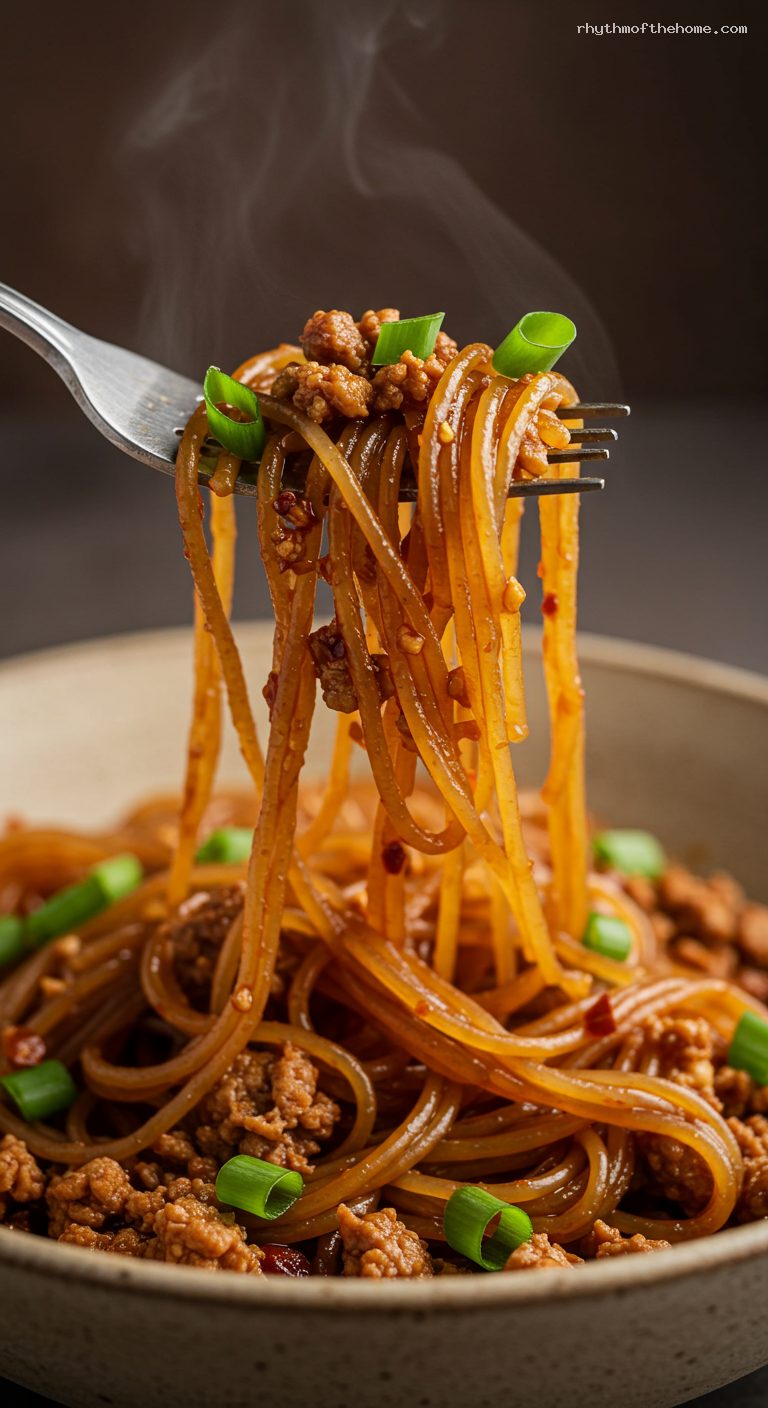
- Springy, silky noodles with juicy morsels of pork in a glossy, chili-kissed sauce.
- Easy to customize: dial the heat up or down and swap proteins if needed.
Grocery List
- Produce: Garlic, ginger, scallions
- Dairy: None
- Pantry: Mung bean glass noodles, doubanjiang, neutral oil, chicken stock, light soy sauce, dark soy sauce, Shaoxing wine, cornstarch, sugar, toasted sesame oil, chili oil, optional fermented black beans, optional Sichuan pepper
Full Ingredients
Glass Noodles
- 160 g mung bean glass noodles (also labeled bean thread vermicelli)
- Warm water for soaking
Pork and Quick Marinade
- 250 g ground pork (15–20 percent fat)
- 1 tbsp Shaoxing wine
- 1/2 tsp cornstarch
- 1/4 tsp ground white pepper (or black pepper)
Aromatics and Paste
- 1.5 tbsp neutral oil (peanut, canola, or grapeseed)
- 2 tbsp doubanjiang, finely chopped
- 3 garlic cloves, minced (about 1 tbsp)
- 1 tbsp minced ginger
- 4 scallions, whites and greens separated and thinly sliced
- Optional: 1 tsp fermented black beans (douchi), rinsed and chopped
Sauce and Simmering Liquid
- 1.5 cups low-sodium chicken stock (or water)
- 1 tbsp light soy sauce
- 1 tsp dark soy sauce
- 1 tsp sugar
Finish
- 2 tsp toasted sesame oil
- 1–2 tsp chili oil, to taste
- Optional: 1/2 tsp ground Sichuan pepper (for a citrusy-numbing finish)
Step-by-Step Instructions
Step 1: Soak and snip the glass noodles
Place the glass noodles in a large bowl and cover with warm tap water. Soak for 10 minutes until pliable but still springy. Drain well and use kitchen scissors to snip into 15–20 cm (6–8 inch) lengths, which makes them easier to toss and eat.
Step 2: Marinate the pork
In a small bowl, combine the ground pork with Shaoxing wine, cornstarch, and white pepper. Mix thoroughly to coat and let sit for 10 minutes while you prep the aromatics. The cornstarch helps the pork stay tender and cling to the noodles.
Step 3: Bloom the doubanjiang and aromatics
Heat a wok or large skillet over medium-high heat. Add the neutral oil. When shimmering, add the chopped doubanjiang and stir-fry 60–90 seconds until the paste darkens slightly and releases red oil. Push it to one side, then add the garlic, ginger, and scallion whites. Stir-fry 30 seconds until fragrant.
Step 4: Brown the pork
Add the marinated pork. Stir-fry 2–3 minutes, breaking it into small crumbles, until just browned with no pink remaining. Keep the heat brisk so the pork sears rather than stews.
Step 5: Build the sauce
Add the stock, light soy sauce, dark soy sauce, and sugar. If using fermented black beans, stir them in now. Bring to a lively simmer for 1 minute to meld flavors and reduce slightly.
Step 6: Simmer the noodles until mahogany and springy
Add the drained, snipped glass noodles to the pan, pressing to submerge in the sauce. Reduce heat to medium and simmer, tossing gently with tongs every 30–45 seconds, for 3–5 minutes. The noodles will drink up the sauce, turn glossy mahogany, and become pleasantly springy. If the pan looks dry before the noodles are tender, splash in 2–4 tbsp more stock or water.
Step 7: Finish and serve
Turn off the heat. Stir in the toasted sesame oil and chili oil. Sprinkle in the scallion greens and, if desired, the ground Sichuan pepper. Taste and adjust: add a pinch of sugar if too salty, a dash of soy if it needs more depth, or a little more chili oil for extra heat. Serve immediately while steamy and glossy.
Pro Tips
- Chop the doubanjiang before frying so it distributes evenly and releases its red oil quickly.
- Snip the soaked noodles; long strands clump and are harder to coat with sauce.
- Use medium-high heat to bloom the paste and sear the pork, then lower slightly to braise the noodles without scorching.
- Adjust liquid on the fly: glass noodles are thirsty; keep a little hot stock nearby to maintain a saucy sheen.
- Season last: doubanjiang brands vary in saltiness, so taste before adding extra soy.
Variations
- Vegetarian: Swap pork for 250 g finely chopped shiitake mushrooms and 200 g crumbled firm tofu; use vegetarian doubanjiang and vegetable stock.
- Different protein: Ground chicken or turkey works well; add 1 tsp oil extra during browning for richness.
- Extra numbing heat: Toast and grind 1 tsp whole Sichuan peppercorns and add half while simmering, half at the finish.
Storage & Make-Ahead
Refrigerate leftovers in an airtight container for up to 3 days. Reheat gently on the stove over medium heat with 2–4 tbsp water or stock to loosen the noodles and re-gloss the sauce. The dish does not freeze well (glass noodles can turn mushy). You can marinate the pork up to 24 hours ahead and keep it refrigerated.
Nutrition (per serving)
Approximate: 420 calories; 18 g protein; 40 g carbohydrates; 22 g fat; 3 g fiber; 1040 mg sodium. Values will vary with brands of doubanjiang, stock, and chili oil.

Leave a Reply