
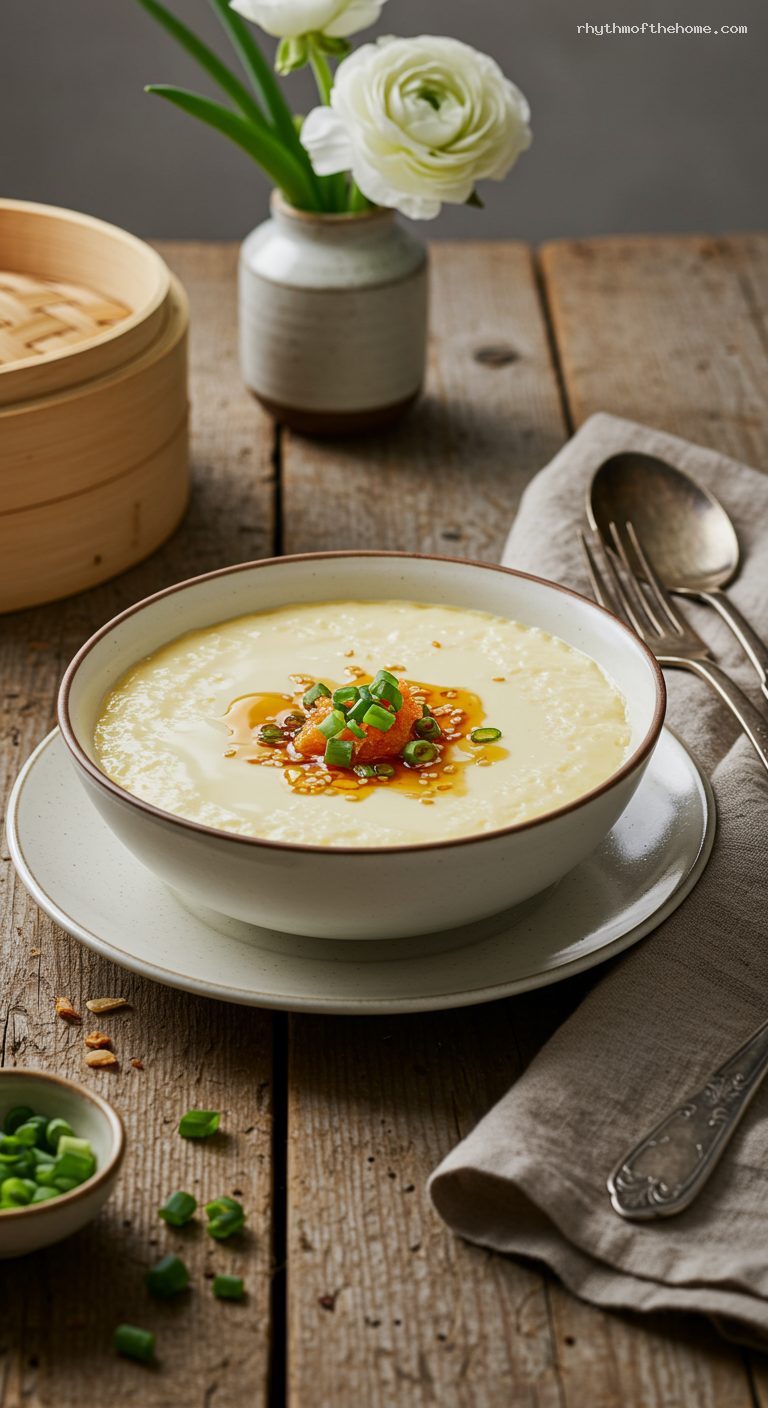
Quick Recipe Version (TL;DR)
Quick Ingredients
- 3 large eggs (about 150 ml beaten)
- 1 1/4 cups (300 ml) warm low-sodium chicken stock or dashi (120–140°F / 50–60°C)
- 1/4 tsp fine sea salt (reduce if stock is salty)
- 1/8 tsp ground white pepper
- 1–2 tsp light soy sauce, to finish
- 1 tsp toasted sesame oil, to finish
- 1 small scallion, thinly sliced
- Optional: 1 tbsp dried shrimp, soaked 10 min in hot water and chopped
Do This
- 1. Bring steamer water to a bare simmer (190–195°F / 88–90°C); warm stock to 120–140°F.
- 2. Gently beat eggs until just mixed; avoid foam.
- 3. Whisk in warm stock, salt, and white pepper; strain through a fine sieve.
- 4. Scatter optional soaked dried shrimp in a 6–7 inch heatproof bowl; pour in custard; skim bubbles.
- 5. Cover tightly with foil or a heatproof plate.
- 6. Steam over a gentle simmer 10–12 minutes (7–9 minutes for small ramekins) until just set; rest 2 minutes.
- 7. Uncover; drizzle soy and sesame oil; top with scallions; serve warm.
Why You’ll Love This Recipe
- Restaurant-smooth texture using simple home techniques: gentle heat, straining, and a light cover.
- Comforting and quick—on the table in about 20 minutes.
- Flexible base: keep it minimalist or add dried shrimp, mushrooms, or seafood.
- Light yet satisfying, with a savory broth backbone and aromatic sesame finish.
Grocery List
- Produce: Scallions
- Dairy: Eggs
- Pantry: Low-sodium chicken stock or dashi, light soy sauce, toasted sesame oil, fine sea salt, white pepper, foil (or heatproof plate). Optional: dried shrimp.
Full Ingredients
Custard Base
- 3 large eggs (about 150 ml when beaten lightly)
- 1 1/4 cups (300 ml) low-sodium chicken stock or dashi, warmed to 120–140°F (50–60°C)
- 1/4 tsp fine sea salt (adjust to stock)
- 1/8 tsp ground white pepper
Toppings
- 1–2 tsp light soy sauce (start with 1 tsp, taste, then add more if needed)
- 1 tsp toasted sesame oil
- 1 small scallion, thinly sliced
Optional Add-Ins
- 1 tbsp dried shrimp, soaked 10 minutes in hot water, drained well, and finely chopped
- (Optional alternative) 2–3 fresh shiitake caps, thinly sliced and briefly sautéed
For the Steaming Setup
- Wok or pot with lid, plus a steaming rack or trivet
- 1–2 inches of water (keep at a gentle simmer, not a rolling boil)
- Heatproof bowl (6–7 inch diameter) or 2–3 small ramekins
- Foil or a heatproof plate to cover the bowl
Step-by-Step Instructions
Step 1: Set up the steamer and warm the stock
Place a steaming rack in a wok or deep pot and add 1–2 inches of water. Bring to a bare simmer—tiny bubbles and light steam only (190–195°F / 88–90°C). Meanwhile, warm your stock to 120–140°F (50–60°C). Warm stock blends smoothly with eggs and reduces bubbles.
Step 2: Beat the eggs gently
Crack the eggs into a medium bowl. Using chopsticks or a fork, gently beat in one direction just until the whites and yolks are fully combined, about 30–45 seconds. Avoid vigorous whisking; foam introduces bubbles that cause pockmarks in the custard.
Step 3: Combine, season, and strain
Whisk the warm stock into the eggs in 2–3 additions, then add the salt and white pepper. Taste a drop (if you’re comfortable) and adjust salt based on your stock. Pour the mixture through a fine-mesh sieve into a measuring jug to remove chalazae and foam. Skim any lingering bubbles from the surface with a spoon.
Step 4: Prepare the bowl and pour
If using dried shrimp, soak 10 minutes in hot water, drain, and pat dry thoroughly. Scatter in the bottom of a 6–7 inch heatproof bowl (or divide among ramekins). Pour in the strained custard to about 3/4 full. Cover tightly with foil or a heatproof plate so condensation won’t drip onto the custard.
Step 5: Steam gently until just set
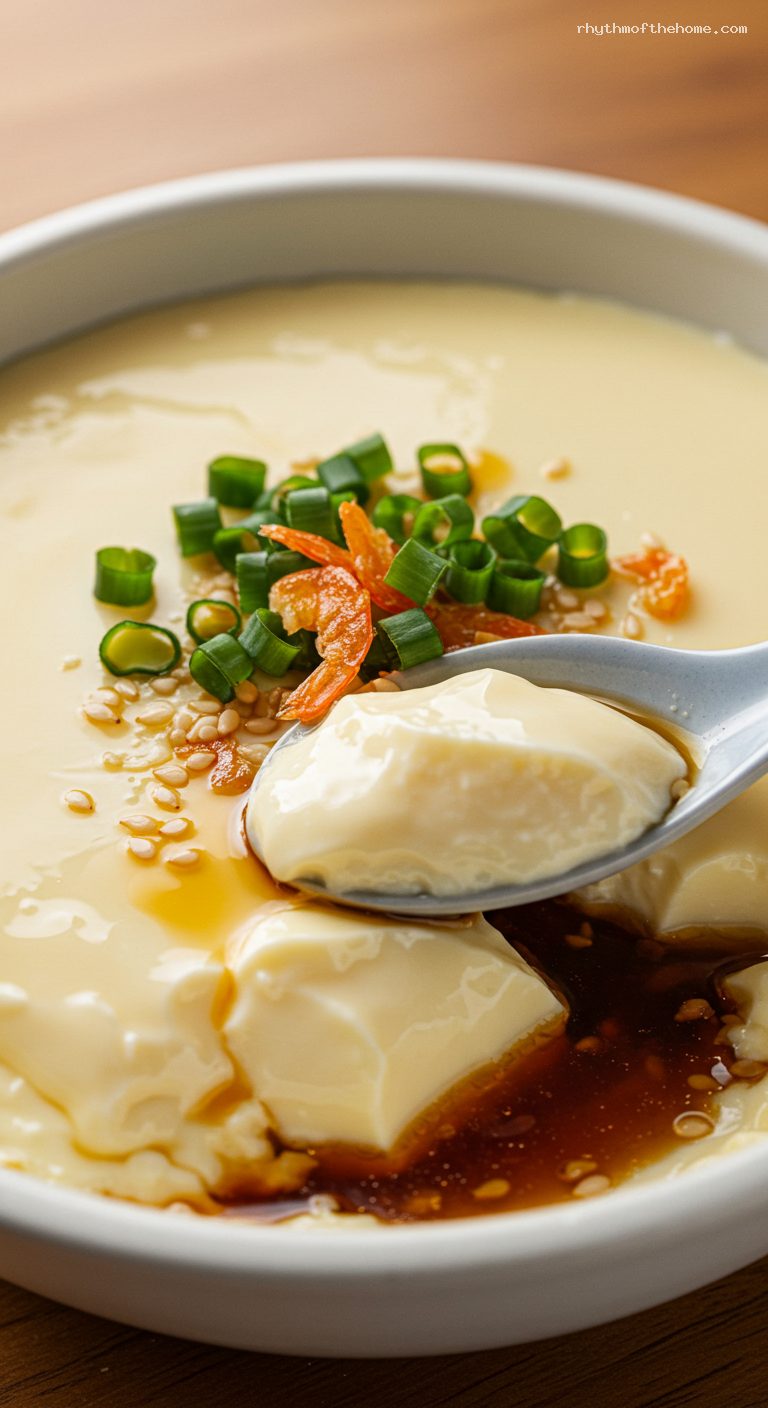
Place the covered bowl on the steaming rack. Cover the pot and steam over a gentle simmer for 10–12 minutes for a single 6–7 inch bowl, or 7–9 minutes for smaller ramekins. Keep the water at a barely simmering state—if it boils hard, lower the heat. The custard is done when the surface looks glossy and the center quivers like soft gelatin when nudged. Turn off the heat and let it rest, covered, for 2 minutes.
Step 6: Finish and serve
Carefully remove the bowl. Uncover, then drizzle 1–2 teaspoons light soy sauce and 1 teaspoon toasted sesame oil over the surface. Top with sliced scallions. Serve warm, scooping gently with a spoon to reveal the ultra-smooth texture.
Pro Tips
- Use a 1:2 ratio by volume (egg:liquid) for silky custard. Three beaten eggs are about 150 ml, so use ~300 ml stock.
- Strain the mixture and skim bubbles to prevent pockmarks and ensure glassy-smooth results.
- Gentle heat is key: maintain a bare simmer and keep the bowl covered to avoid water droplets on the surface.
- Check doneness by jiggle: the center should tremble, not slosh. Overcooking creates holes and a spongy texture.
- At high altitude or with a taller, deeper bowl, add 1–2 minutes to the steaming time.
Variations
- Vegetarian dashi: Use kombu-shiitake dashi instead of chicken stock, then finish with soy, sesame oil, and a few drops of chili crisp.
- Seafood upgrade: Add 4–6 small raw shrimp (peeled) or a few flakes of crab to the bottom of the bowl before pouring in the custard.
- Mushroom and corn: Scatter 1/4 cup sautéed shiitake and 2 tbsp sweet corn kernels in the bowl for pops of umami and sweetness.
Storage & Make-Ahead
Refrigerate leftovers, covered, for up to 2 days. Reheat gently by steaming for 2–3 minutes over a bare simmer, or microwave at 50% power in short bursts until just warm (avoid boiling hot spots). The uncooked custard base can be mixed and refrigerated up to 12 hours in advance; re-stir gently and strain again before steaming. Not recommended for freezing.
Nutrition (per serving)
Approximate for 3 servings: 95 calories; 6–7 g protein; 6–7 g fat; 1–2 g carbs; 470 mg sodium (with 2 tsp soy sauce; sodium will vary with stock and soy).

Leave a Reply