
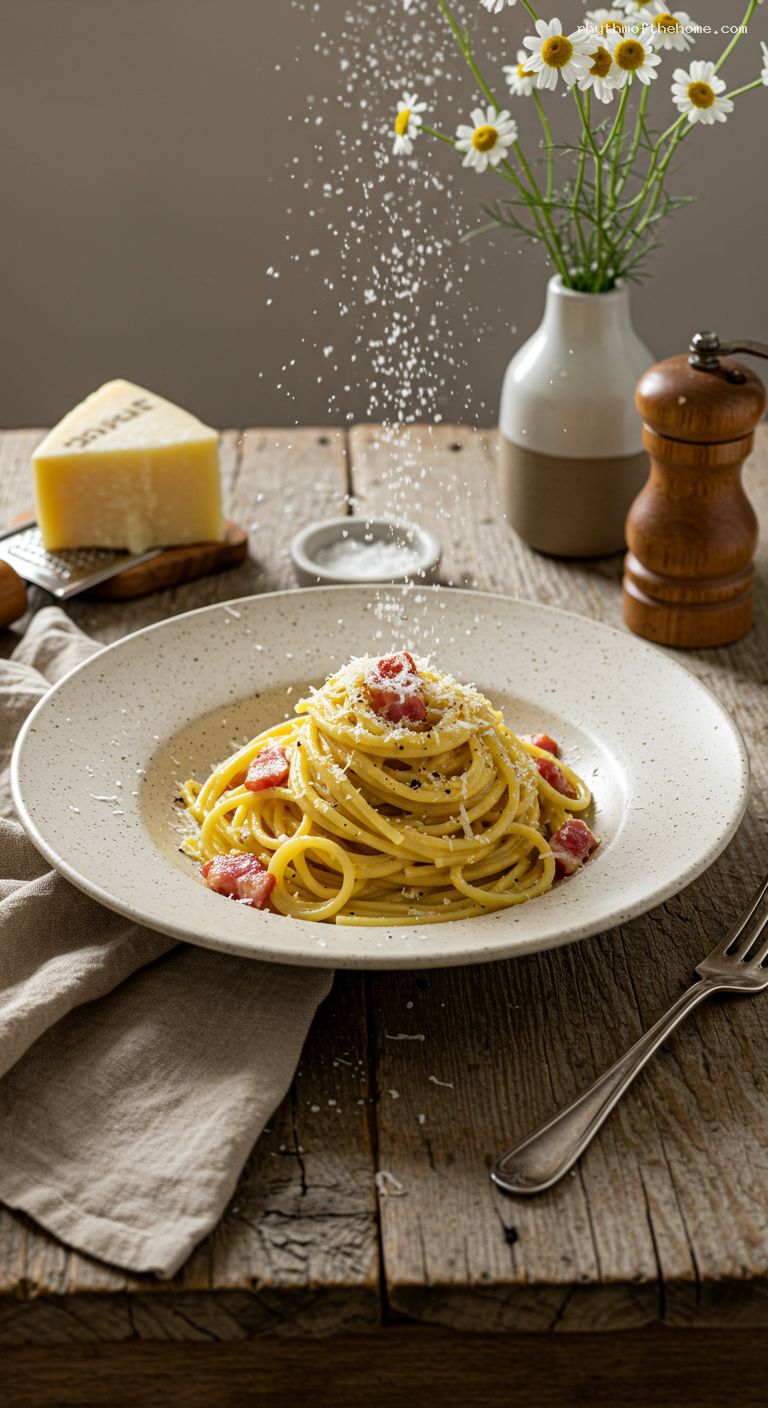
Quick Recipe Version (TL;DR)
Quick Ingredients
- 12 oz (340 g) spaghetti
- 4 oz (115 g) guanciale or pancetta, cut into 1/4-inch lardons
- 2 large eggs + 2 large egg yolks (room temperature)
- 1 cup (85 g) Pecorino Romano, very finely grated, plus more to serve
- 1 1/2 tsp freshly ground black pepper, divided
- 2 tsp fine sea salt (for pasta water)
- About 1 1/4 cups (300 ml) reserved pasta water
Do This
- 1. Bring 3 quarts (2.8 L) water to a boil; add 2 tsp salt.
- 2. Whisk eggs, yolks, 3/4 cup cheese, and 1 tsp pepper until smooth.
- 3. Cook guanciale in a wide skillet over medium heat until crisp, 6–8 minutes; bloom 1/4 tsp pepper in the fat for 30 seconds. Remove from heat.
- 4. Cook spaghetti until just shy of al dente; reserve 1 1/4 cups pasta water and drain.
- 5. Toss hot pasta in skillet with rendered fat and 1/2 cup pasta water; let cool 30 seconds off heat.
- 6. Vigorously stir in egg mixture off heat, adding more pasta water as needed for a glossy, silky sauce (aim 150–160°F/65–71°C).
- 7. Fold in guanciale, finish with remaining cheese and pepper, and serve immediately.
Why You’ll Love This Recipe
- Classic Roman technique yields a silky, no-cream sauce that coats every strand.
- Deep flavor from crisped guanciale or pancetta and freshly bloomed black pepper.
- 30 minutes, one pot + one skillet, and a handful of ingredients.
- Step-by-step temperature cues help you avoid scrambled eggs.
Grocery List
- Produce: None
- Dairy & Eggs: Pecorino Romano; large eggs
- Pantry & Deli: Spaghetti; guanciale or pancetta; whole black peppercorns; fine sea salt
Full Ingredients
Pasta
- 12 oz (340 g) dry spaghetti
- 3 quarts (2.8 L) water
- 2 tsp fine sea salt (for the pasta water)
Pork & Pepper
- 4 oz (115 g) guanciale or pancetta, cut into 1/4-inch (6 mm) lardons
- 1 1/2 tsp freshly ground black pepper, divided
Egg & Cheese Mixture
- 2 large eggs (room temperature)
- 2 large egg yolks (room temperature)
- 1 cup (85 g) Pecorino Romano, very finely grated (Microplane-fine), plus extra for serving
Step-by-Step Instructions
Step 1: Set up and heat water
Fill a large pot with 3 quarts (2.8 L) water and bring to a rolling boil. Once boiling, stir in 2 teaspoons fine sea salt. Keep the water at a steady boil while you begin the sauce components so it’s ready for the pasta.
Step 2: Whisk the egg-cheese base
In a medium bowl, whisk together 2 large eggs, 2 large egg yolks, 3/4 cup (about 60 g) of the Pecorino Romano, and 1 teaspoon freshly ground black pepper until the mixture is smooth, creamy, and slightly thick. Set aside the remaining 1/4 cup cheese for finishing.
Step 3: Crisp the guanciale and bloom pepper
Place the guanciale or pancetta in a wide skillet over medium heat. Cook, stirring occasionally, until the fat renders and the meat turns deeply golden and crisp, 6–8 minutes. Reduce the heat to low and add 1/4 teaspoon freshly ground black pepper to the rendered fat; cook 30 seconds to bloom the spice. Turn the heat off. Using a slotted spoon, transfer the crisped pieces to a small plate, leaving all the flavorful fat in the skillet.
Step 4: Cook the spaghetti
Add the spaghetti to the boiling water and cook until just shy of al dente (usually 1 minute less than package directions), 8–10 minutes. Before draining, reserve about 1 1/4 cups (300 ml) of the starchy pasta water. Drain the pasta well.
Step 5: Coat pasta in rendered fat
Return the skillet with the rendered fat to low heat, add the drained spaghetti, and toss to coat. Pour in 1/2 cup (120 ml) reserved pasta water and toss vigorously for 30 seconds. Remove the skillet from the heat and let the pasta sit for 30 seconds to cool slightly—this helps prevent the eggs from scrambling in the next step.
Step 6: Create the silky emulsion off heat
With the skillet off heat, slowly stream in the egg-cheese mixture while tossing or stirring continuously with tongs. Add more reserved pasta water a splash at a time until the sauce is glossy and clings to the noodles. Aim for a sauce temperature between 150–160°F (65–71°C). If the sauce seems too thin, briefly return the skillet to the lowest heat and stir constantly for 10–20 seconds. If it thickens too much, loosen with more pasta water. Avoid exceeding 160°F to prevent curdling.
Step 7: Finish and serve
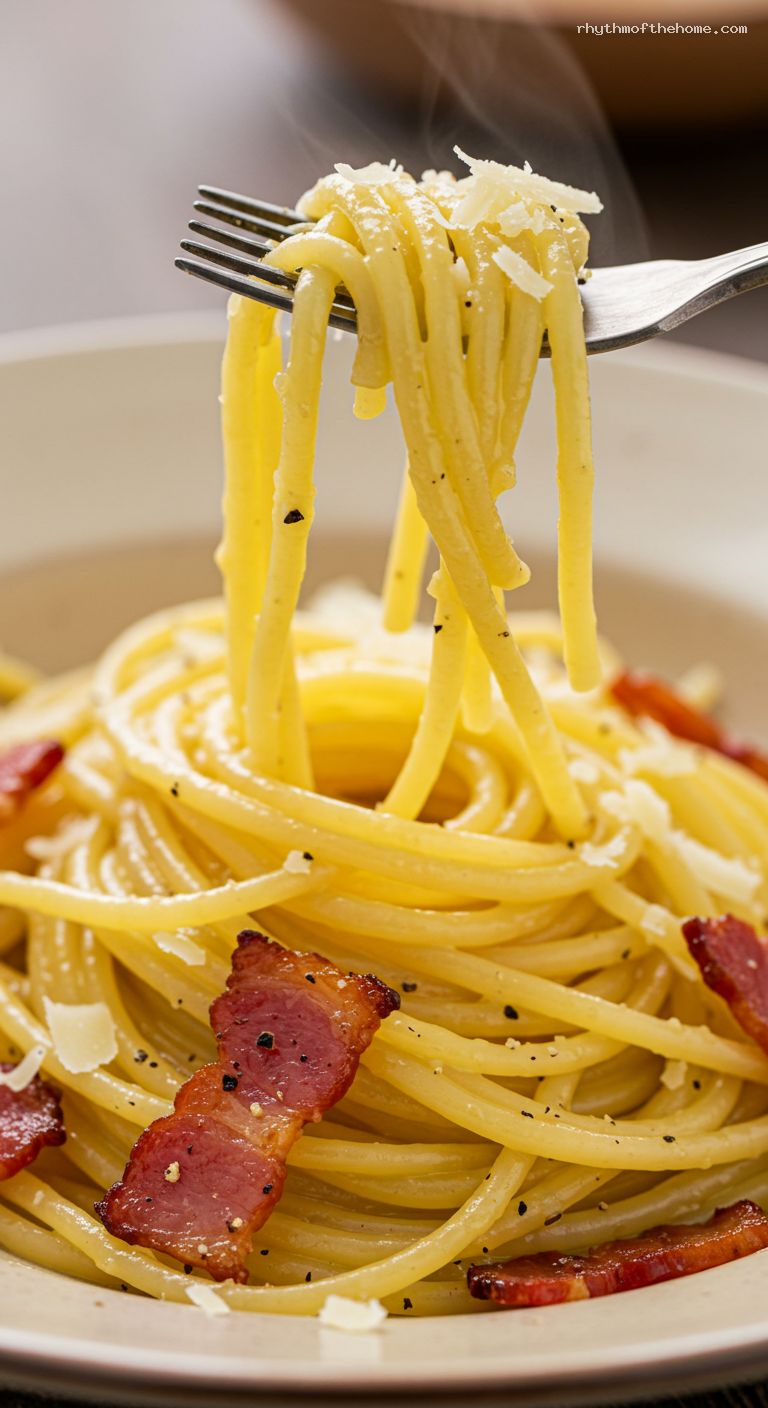
Fold in the crisp guanciale, then sprinkle in the remaining 1/4 cup Pecorino and the remaining 1/4 teaspoon black pepper. Toss to combine. Taste and adjust with a pinch more pepper or cheese. Plate immediately in warm bowls, and finish with extra Pecorino and cracked black pepper to taste.
Pro Tips
- Use very finely grated Pecorino Romano (Microplane-fine). Finer cheese melts faster and creates a smoother emulsion.
- Room-temperature eggs minimize the temperature shock and help prevent scrambling.
- Blooming black pepper in the rendered fat unlocks deeper, toasty pepper flavor—don’t skip it.
- Keep it off heat when adding eggs; use the lowest heat only in short bursts to adjust thickness.
- Warm your serving bowls with hot water so the sauce stays silky as you plate.
Variations
- Pancetta Swap: Use pancetta in place of guanciale for a slightly milder, less funky flavor.
- Cheese Blend: Try 70% Pecorino Romano and 30% Parmigiano Reggiano for a rounder, slightly sweeter finish.
- Shape Shift: Bucatini or rigatoni work beautifully—just keep the doneness and water-reserve steps the same.
Storage & Make-Ahead
Carbonara is best eaten immediately. Leftovers can be refrigerated in an airtight container for up to 1 day. Reheat gently in a nonstick skillet over very low heat with a splash of hot water, stirring constantly, just until warmed and glossy—do not boil. For prep-ahead, cube the guanciale and grate the cheese up to 3 days in advance (refrigerate in sealed containers). Whisk the egg mixture only right before tossing with the pasta.
Nutrition (per serving)
Approximate: 620 calories; 26 g protein; 27 g fat; 61 g carbohydrates; 3 g fiber; 880 mg sodium. Values will vary based on exact ingredients and salt levels.

Leave a Reply