
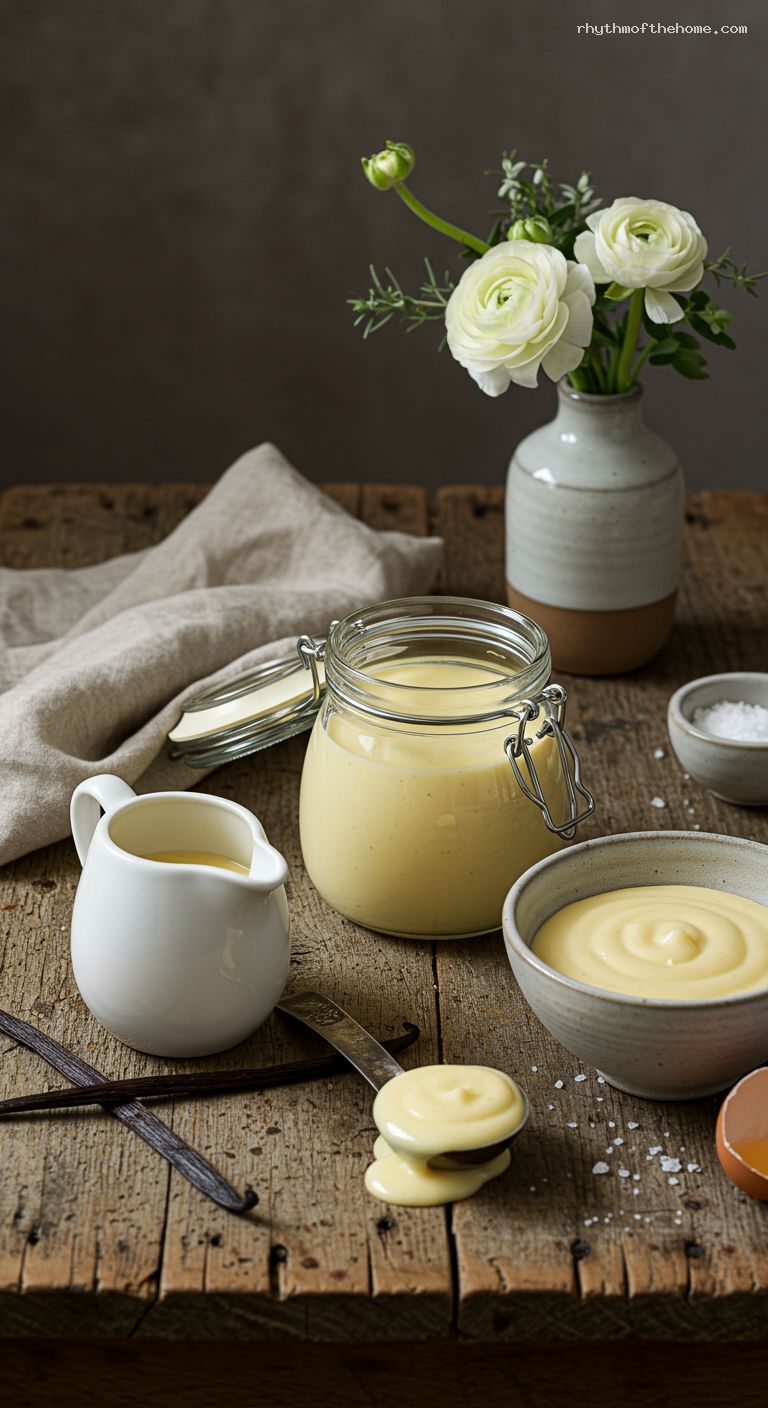
Quick Recipe Version (TL;DR)
Quick Ingredients
- 1 cup (240 ml) whole milk
- 1 cup (240 ml) heavy cream
- 1 vanilla bean (split and scraped) or 2 tsp vanilla bean paste or 2 tsp pure vanilla extract (add after cooking)
- 5 large egg yolks (about 90 g)
- 1/2 cup (100 g) granulated sugar
- 1/8 tsp fine sea salt
Do This
- 1. Set an ice bath and place a fine-mesh strainer over a clean bowl.
- 2. Heat milk, cream, and vanilla bean/paste in a saucepan over medium until steaming (about 180°F/82°C); do not boil.
- 3. Whisk yolks, sugar, and salt in a bowl until slightly thick and pale (30–60 seconds).
- 4. Temper: slowly whisk in half the hot dairy, then return mixture to the pan with the rest.
- 5. Cook over low heat, stirring constantly with a spatula, until it coats the back of a spoon and reads 175–180°F (79–82°C), 3–5 minutes.
- 6. Strain into the bowl; stir in vanilla extract if using. Cool in the ice bath to 70°F (21°C), then chill.
Why You’ll Love This Recipe
- Silky-smooth, restaurant-quality vanilla sauce that’s surprisingly simple at home.
- Tested, precise temperatures for perfect thickening without curdling.
- Versatile: serve warm or cold with cakes, pies, berries, or bread pudding.
- Makes ahead beautifully and keeps several days in the fridge.
Grocery List
- Produce: None
- Dairy: Whole milk, heavy cream, 5 large eggs (you’ll use yolks)
- Pantry: Granulated sugar, fine sea salt, vanilla bean or vanilla bean paste or pure vanilla extract
Full Ingredients
Vanilla Crème Anglaise
- 1 cup (240 ml) whole milk
- 1 cup (240 ml) heavy cream
- 5 large egg yolks (about 90 g)
- 1/2 cup (100 g) granulated sugar
- 1/8 tsp fine sea salt
- Vanilla (choose one):
- 1 plump vanilla bean, split lengthwise and seeds scraped, or
- 2 tsp vanilla bean paste, or
- 2 tsp pure vanilla extract (stir in after cooking and straining)
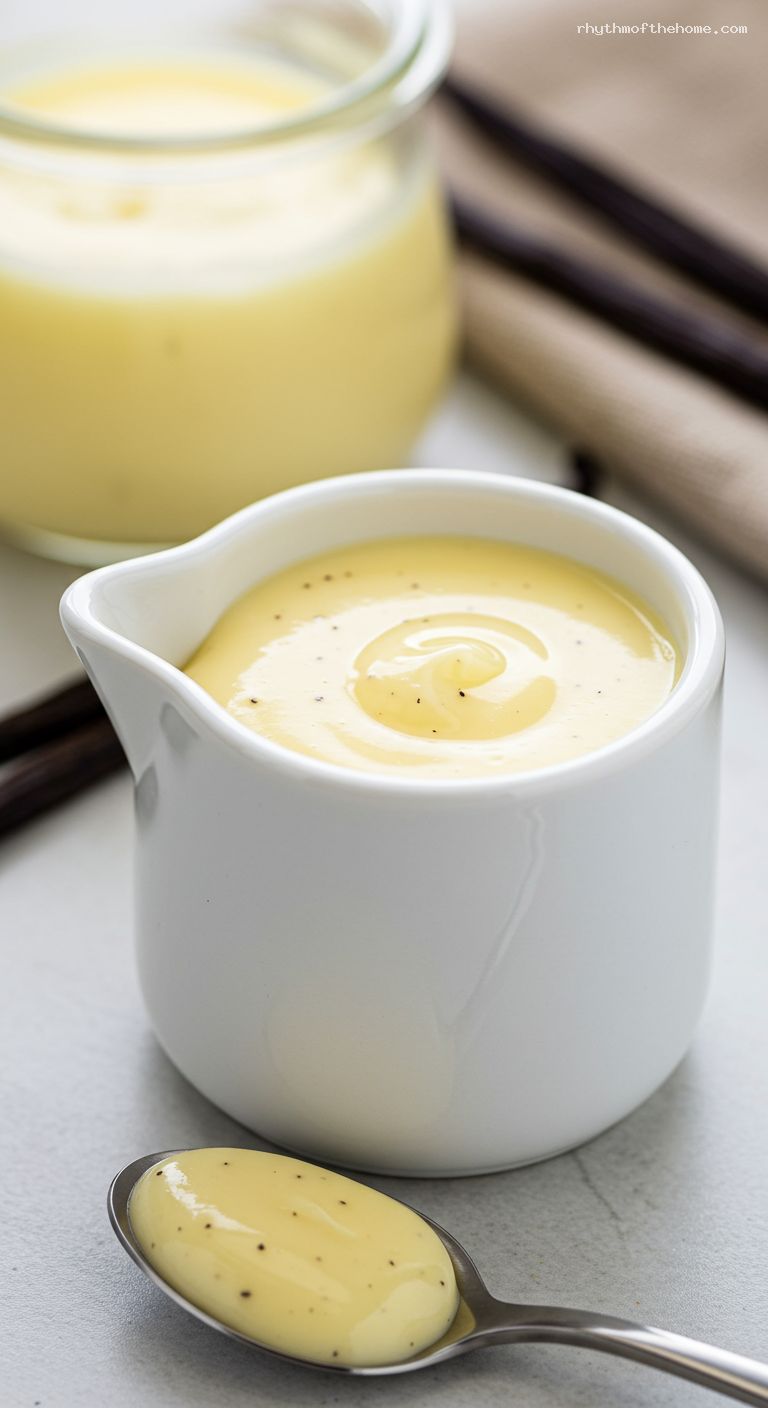
Step-by-Step Instructions
Step 1: Set up an ice bath and strainer
Fill a large bowl halfway with ice and a little water. Nest a smaller, heatproof bowl inside to create an ice bath. Place a fine-mesh strainer over the inner bowl. This setup stops the cooking quickly and guarantees a silky finish.
Step 2: Warm the dairy with vanilla
In a medium saucepan, add the milk and cream. If using a vanilla bean, scrape the seeds into the pan and add the pod. If using paste, whisk it in now. Heat over medium until the mixture is steaming and tiny bubbles appear at the edges, about 180°F/82°C. Do not boil. Remove from heat once steaming.
Step 3: Whisk the yolks, sugar, and salt
In a medium bowl, whisk the egg yolks, sugar, and salt until the mixture looks slightly thickened and a bit lighter, 30–60 seconds. Whisk immediately after adding sugar so the yolks don’t form lumps.
Step 4: Temper the yolks
While whisking the yolk mixture constantly, slowly stream in about half of the hot dairy. This gently raises the temperature of the yolks to prevent curdling. Pour the tempered yolk mixture back into the saucepan with the remaining hot dairy, whisking to combine.
Step 5: Cook to nappe (175–180°F)
Return the pan to low heat. Switch to a heatproof spatula and stir constantly, sweeping the bottom and corners to prevent sticking. Cook until the sauce thickens slightly, coats the back of a spoon, and registers 175–180°F (79–82°C), usually 3–5 minutes. Do not let it boil. To test, drag your finger across the coated spoon; a clean line should remain.
Step 6: Strain and cool
Immediately pour the custard through the strainer into the bowl set in the ice bath, pressing gently to get every drop. If using vanilla extract, stir it in now. Continue stirring over the ice bath until the sauce cools to about 70°F/21°C, 5–10 minutes.
Step 7: Chill or serve
For the silkiest texture, cover the surface directly with plastic wrap and refrigerate until cold, at least 2 hours. Serve cold or gently rewarm to 100–110°F (38–43°C) over a water bath before serving. Transfer to a pitcher, spouted measuring cup, or squeeze bottle for easy pouring.
Pro Tips
- A digital thermometer is your best friend. Pull the sauce at 178°F (81°C) for a perfect nappe without scrambling.
- Use a spatula, not a whisk, while cooking; the spatula lets you constantly sweep the bottom so nothing sticks or overcooks.
- If it looks slightly grainy, blend it smooth with an immersion blender and strain again.
- For bold vanilla flavor, use a whole bean and let the pod sit in the hot dairy while you whisk the yolks.
- Always add vanilla extract after cooking; heat dulls its aroma.
Variations
- Citrus Crème Anglaise: Add 2 tsp finely grated orange or lemon zest to the milk/cream while warming; strain before chilling. Optional: stir in 1 tbsp Grand Marnier off heat.
- Coffee Anglaise: Add 1 tbsp crushed espresso beans or 2 tsp instant espresso to the hot dairy; steep 5 minutes off heat, then strain and proceed.
- Almond-Rum Anglaise: Replace vanilla with 1 tsp pure almond extract and 1 tbsp dark rum added after straining.
Storage & Make-Ahead
Refrigerate in a covered container with plastic wrap pressed directly on the surface for up to 4 days. Do not freeze (the custard can split). To serve warm, reheat gently over a double boiler or low heat, stirring, until 100–110°F (38–43°C). If it thickens too much after chilling, whisk in 1–2 tbsp cold milk to loosen. Always keep below 40°F (4°C) when storing.
Nutrition (per serving)
Approximate for 1/4 cup: 200 calories; 14 g fat; 16 g carbohydrates; 3 g protein; 40 mg sodium. Values will vary with exact products used.

Leave a Reply