
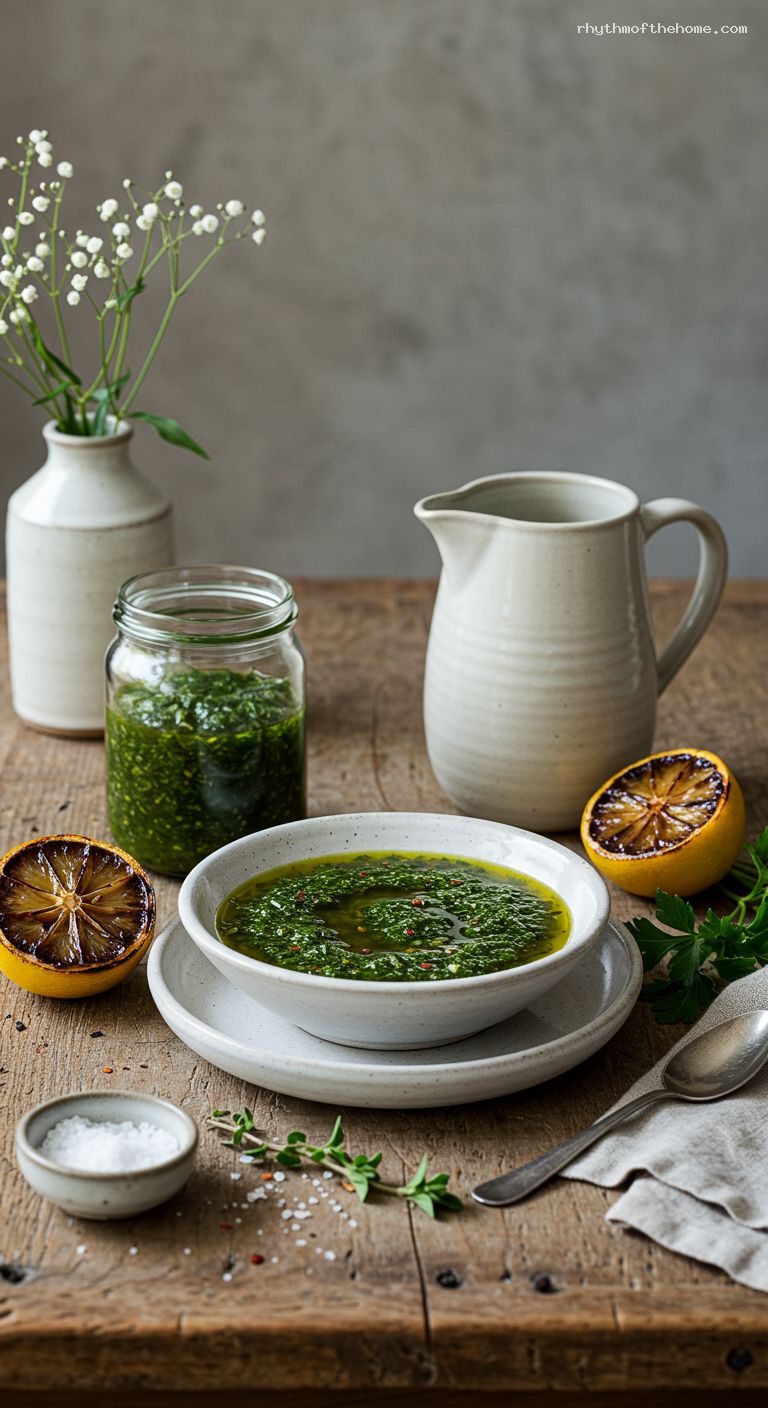
Quick Recipe Version (TL;DR)
Quick Ingredients
- 1 large lemon, halved
- 1 cup packed flat-leaf parsley (about 30 g), roughly chopped
- 2 tbsp fresh oregano leaves (or 2 tsp dried)
- 3 garlic cloves, roughly chopped
- 1/2 tsp red pepper flakes
- 1/2 cup extra-virgin olive oil
- 2 tbsp red wine vinegar
- 1/2 tsp kosher salt, plus more to taste
- 1/4 tsp freshly ground black pepper
- Optional: 1/2 tsp honey; 1–2 tbsp water to thin
Do This
- 1. Char the lemon halves cut-side down in a very hot cast-iron skillet over medium-high heat (about 450–500°F surface temp), 4–5 minutes until deeply charred; cool 3 minutes and remove seeds.
- 2. Roughly chop parsley, oregano, and garlic.
- 3. Coarsely chop the charred lemon (peel and flesh).
- 4. In a food processor, add lemon, herbs, garlic, red pepper flakes, vinegar, salt, and pepper; pulse 6–8 times.
- 5. With the machine running, stream in olive oil; pulse to a coarse, spoonable sauce (do not puree smooth).
- 6. Taste and adjust: more salt/vinegar, a pinch of honey if bitter, and 1–2 tbsp water if too thick.
- 7. Rest 10 minutes for flavors to marry; serve or jar.
Why You’ll Love This Recipe
- Bold, bright, and smoky: charred lemon peel adds depth you do not get from juice alone.
- Chunky, spoonable texture that clings beautifully to anything it touches.
- Ready in under 20 minutes with simple pantry ingredients.
- Versatile: perfect for grilled meats, shrimp, roasted potatoes, or vegetables.
Grocery List
- Produce: 1 large lemon, flat-leaf parsley, fresh oregano (or dried), garlic
- Dairy: none
- Pantry: extra-virgin olive oil, red wine vinegar, red pepper flakes, kosher salt, black pepper, optional honey
Full Ingredients
For Charring the Lemon
- 1 large lemon, halved
- 1 tsp neutral oil (for the skillet) or cooking spray
For the Charred-Lemon Chimichurri
- 1 cup packed flat-leaf parsley leaves and tender stems (about 30 g), roughly chopped
- 2 tbsp fresh oregano leaves, roughly chopped (or 2 tsp dried oregano)
- 3 garlic cloves (about 15 g), roughly chopped
- 1/2 tsp red pepper flakes
- 2 tbsp red wine vinegar (30 ml), plus more to taste
- 1/2 cup extra-virgin olive oil (120 ml)
- 1/2 tsp kosher salt, plus more to taste
- 1/4 tsp freshly ground black pepper
Optional Balancers
- 1/2 tsp honey or sugar (if the peel tastes too bitter)
- 1–2 tbsp water (to loosen the sauce if needed)
Step-by-Step Instructions
Step 1: Preheat your charring surface
Heat a dry cast-iron skillet over medium-high for 3 minutes until very hot (target surface temperature around 450–500°F / 230–260°C if using an infrared thermometer). Lightly oil the pan. Alternatively, preheat your broiler on high (about 500°F / 260°C) and line a sheet pan with foil.
Step 2: Char the lemon
Place the lemon halves cut-side down in the hot skillet and press lightly for even contact. Cook 4–5 minutes without moving until the cut faces are deeply charred, with blackened edges and caramelized centers. If broiling, place cut-side up and broil 5–7 minutes until well charred. Transfer to a plate and cool 3 minutes, then remove and discard any visible seeds.
Step 3: Prep the aromatics
While the lemon cools, roughly chop the parsley, oregano, and garlic. This helps the processor grab everything evenly and keeps the final texture pleasantly coarse rather than pureed.
Step 4: Chop the charred lemon
Coarsely chop the charred lemon halves—peel and flesh together—into 1/2-inch pieces. The peel brings smoky bitterness and perfume; removing the seeds is key to keeping that bitterness in check.
Step 5: Pulse the base
In a food processor, combine the chopped lemon, parsley, oregano, garlic, red pepper flakes, red wine vinegar, kosher salt, and black pepper. Pulse 6–8 times, scraping down the sides once, until everything is finely chopped but still distinct.
Step 6: Stream in the oil
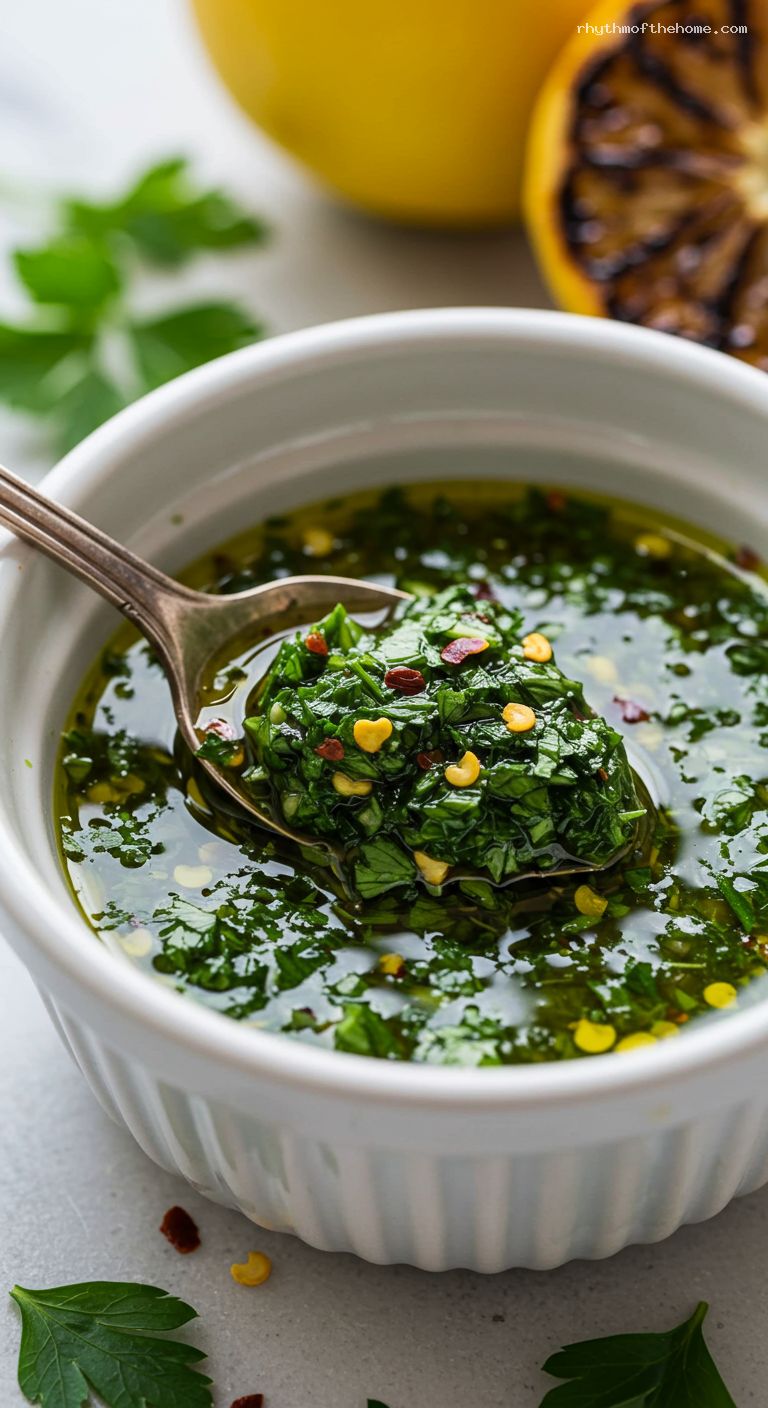
With the processor running, stream in the olive oil and pulse a few more times until the chimichurri looks glossy and spoonable with a nubbly texture—think tiny green flecks, visible red pepper, and specks of char. Do not blend it smooth.
Step 7: Balance and rest
Taste. Add salt or vinegar to brighten, a 1/2 teaspoon of honey if the peel reads too bitter, and 1–2 tablespoons water if you prefer a looser sauce. Let the sauce rest 10 minutes at room temperature for flavors to marry before serving or jarring.
Pro Tips
- Dry herbs thoroughly after washing; excess water can dull flavor and make the sauce thin.
- Remove all lemon seeds after charring to avoid harsh bitterness.
- Char deeply but not all the way to ash—aim for dark brown with black edges for smoky complexity.
- Pulse, do not puree; chimichurri should be coarse and glossy, not a smooth paste.
- If sensitive to bitterness, start by adding only 3/4 of the chopped peel, then adjust to taste.
Variations
- Cilantro-Lime: Swap half the parsley for cilantro and use 1 charred lime (or 2 if small) instead of the lemon.
- Smoky Chile: Add 1/2 tsp smoked paprika or 1 tsp minced chipotle in adobo for extra warmth.
- Briny Boost: Pulse in 2 anchovy fillets or 1 tbsp chopped capers for savory depth.
Storage & Make-Ahead
Refrigerate in a clean glass jar up to 5 days; press plastic wrap directly onto the surface and finish with a thin layer of olive oil to minimize oxidation. For longer storage, freeze in ice cube trays, then transfer cubes to a freezer bag for up to 2 months. Thaw in the fridge and stir; if thick, loosen with a splash of warm water or olive oil. Bring to room temperature before serving for best flavor.
Nutrition (per serving)
Approximate for 2 tbsp: 110 calories; 11 g fat; 2 g carbohydrates; 0.5 g protein; 140 mg sodium.

Leave a Reply