
Quick Recipe Version (TL;DR)
Quick Ingredients
- 1 whole duck (5 to 6 lb), giblets removed
- 2 1/2 tsp kosher salt; 1 tsp baking powder; 1/2 tsp black pepper
- 2 oranges (zest of 1; segments from 1 for garnish)
- 3 garlic cloves; 4 sprigs thyme; 1 small sprig rosemary
- 1/4 cup granulated sugar; 3 tbsp white wine vinegar
- 1 cup fresh orange juice; 1 cup low-sodium chicken stock
- 1/4 cup Grand Marnier; 1 shallot, minced
- 2 tbsp unsalted butter, cold
- Optional: 1 tsp cornstarch mixed with 1 tbsp cold water
Do This
- 1. Pat duck dry; score skin, prick all over. Season with salt, baking powder, pepper, and orange zest. Stuff cavity with garlic, thyme, rosemary, and an orange half. Dry-brine uncovered in fridge 8–24 hours (optional).
- 2. Preheat oven to 300°F (150°C). Set duck breast-side up on a rack in a roasting pan; add 1 cup water to pan. Roast 1 hour, draining fat halfway.
- 3. Flip duck breast-side down; roast 45 minutes, draining fat again.
- 4. Meanwhile make glaze: caramelize sugar to deep amber; carefully whisk in vinegar. Add shallot, orange juice, stock, Grand Marnier, and a pinch of zest; reduce to 1 1/4 cups. Whisk in butter; thicken with cornstarch slurry only if needed.
- 5. Increase oven to 425°F (220°C). Flip duck breast-side up; roast 15 minutes until skin is deeply crisp.
- 6. Brush with glaze; roast 5–7 minutes more until lacquered and the thigh reads 165°F (74°C). Rest 15 minutes.
- 7. Carve; spoon warm glaze over. Garnish with orange segments and thyme.
Why You’ll Love This Recipe
- Crispy, glassy skin with tender meat thanks to low-and-slow roasting plus a final high-heat blast.
- A classic à l’orange sauce elevated with Grand Marnier for a bright, elegant citrus finish.
- Step-by-step guidance and home-cook-friendly techniques to avoid smoke and splatter.
- Restaurant-quality results with simple ingredients and make-ahead options.
Grocery List
- Produce: Oranges (5–6 total), 1 shallot, 3 garlic cloves, fresh thyme, fresh rosemary
- Dairy: Unsalted butter
- Pantry: Whole duck (5 to 6 lb), kosher salt, black pepper, baking powder, granulated sugar, white wine vinegar, low-sodium chicken stock, Grand Marnier (or Cointreau), optional cornstarch
Full Ingredients
For the Duck
- 1 whole duck (5 to 6 lb), giblets removed
- 2 1/2 tsp kosher salt
- 1 tsp baking powder
- 1/2 tsp freshly ground black pepper
- 1 tsp finely grated orange zest (from 1 orange)
- 3 garlic cloves, lightly crushed
- 4 sprigs fresh thyme
- 1 small sprig fresh rosemary
- 1 orange, halved (one half for cavity; reserve the other half for garnish or juice)
- 1 cup water (for the roasting pan)
Grand Marnier Orange Glaze
- 1/4 cup granulated sugar
- 3 tbsp white wine vinegar
- 1 shallot, minced
- 1 cup freshly squeezed orange juice (about 3–4 oranges)
- 1 cup low-sodium chicken stock
- 1/4 cup Grand Marnier
- 1 tsp finely grated orange zest, plus extra zest strips for garnish
- 1/8 tsp kosher salt, or to taste
- 2 tbsp cold unsalted butter, cut into cubes
- Optional: 1 tsp cornstarch whisked with 1 tbsp cold water, if you prefer a thicker glaze
For Serving
- 1–2 oranges, segmented (supremes) or thinly sliced
- Fresh thyme leaves
- Flaky sea salt (optional)

Step-by-Step Instructions
Step 1: Prep and dry-brine the duck
Pat the duck very dry with paper towels and remove any excess fat around the cavity. Using a sharp paring knife, score the skin in a shallow crosshatch pattern over the breasts and thighs, taking care not to cut into the meat. Prick the skin all over with a clean skewer or needle to help render fat.
Mix the kosher salt, baking powder, black pepper, and 1 tsp orange zest. Rub the mixture evenly over the duck, including the cavity. Stuff the cavity with the crushed garlic, thyme, rosemary, and one orange half. Tie the legs loosely with kitchen twine. For best results, set the duck uncovered on a rack over a tray and refrigerate 8–24 hours to air-dry the skin (optional but highly recommended).
Step 2: Start roasting low and slow
Preheat the oven to 300°F (150°C) with a rack in the middle. Place the duck breast-side up on a rack set inside a roasting pan and pour 1 cup water into the pan to minimize smoke. Roast for 1 hour. Halfway through, carefully drain off rendered fat into a heatproof jar (save it—liquid gold for potatoes) and prick any spots on the skin where fat is pooling.
Step 3: Flip and continue roasting
Flip the duck breast-side down and roast for 45 minutes more at 300°F (150°C). Again, drain off fat as needed. The skin should be taking on color and feel taut.
Step 4: Make the Grand Marnier orange glaze
While the duck roasts, make the glaze. In a medium saucepan over medium heat, cook the sugar without stirring until it melts and turns deep amber, 4–6 minutes. Immediately and carefully add the vinegar (it will sputter), whisking to dissolve the caramel. Stir in the shallot and cook 30 seconds.
Add the orange juice, chicken stock, Grand Marnier, and a pinch of orange zest. Simmer briskly until reduced to about 1 1/4 cups, 12–15 minutes. Whisk in the cold butter until glossy. Taste and season with a pinch of salt. If you prefer a thicker, clingy glaze, whisk in the cornstarch slurry and simmer 30–60 seconds more. Keep warm on low.
Step 5: Crisp the skin
Increase the oven temperature to 425°F (220°C). Flip the duck breast-side up and roast for 15 minutes until the skin is deeply browned and crisp. The skin should look glassy with tiny bubbles.
Step 6: Lacquer with glaze
Brush a thin, even layer of the orange glaze over the duck and roast 5–7 minutes more to set the lacquer (do not walk away; sugar burns quickly). The thigh should register 165°F (74°C). Transfer the duck to a carving board and rest 15 minutes.
Step 7: Carve and serve
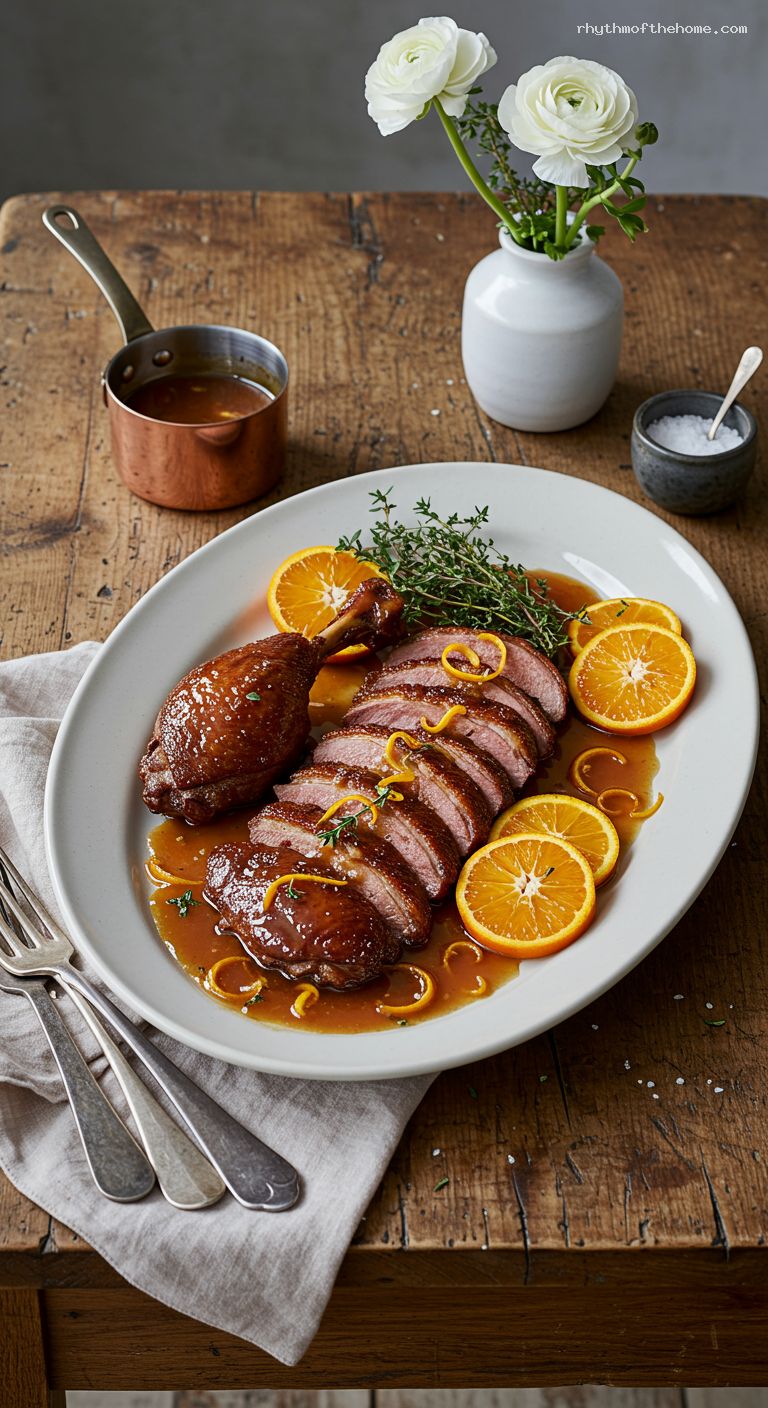
Carve off the legs and separate into drumsticks and thighs. Remove the breasts and slice across the grain into 1/2-inch slices. Arrange on a warm platter. Spoon additional warm glaze over the meat, then garnish with orange segments, a few zest ribbons, fresh thyme leaves, and a sprinkle of flaky salt if desired.
Pro Tips
- Baking powder in the dry rub raises pH and helps the skin crisp dramatically.
- Prick the skin, not the meat. A fine skewer or clean sewing needle is ideal for releasing fat without losing juices.
- Add water to the roasting pan early to limit smoke; keep pouring off fat into a jar and refrigerate for future cooking.
- Glaze late. Apply during the final minutes so sugars set without burning.
- Glaze consistency should coat the back of a spoon; if too sharp, add a knob of butter; if too sweet, balance with a splash more vinegar.
Variations
- Duck Breasts à l’Orange (weeknight): Use 2 large duck breasts. Score and sear skin-side down 8–10 minutes to render, flip 3–5 minutes to 130–135°F. Rest, slice, and serve with the same glaze.
- Five-Spice Twist: Add 1/2 tsp Chinese five-spice to the salt rub and a star anise to the glaze for a warm, aromatic profile.
- Blood Orange & Sherry: Swap in blood orange juice and 2 tbsp sherry vinegar; add 2 tbsp dry sherry for deeper, winey notes.
Storage & Make-Ahead
Dry-brine the duck uncovered up to 24 hours ahead. The glaze can be made 3 days in advance; refrigerate and rewarm gently, thinning with stock or orange juice as needed. Leftover duck keeps 3–4 days refrigerated. Re-crisp skin in a 375°F (190°C) oven for 10–12 minutes. The glaze keeps 1 week refrigerated or 2 months frozen. Strain and refrigerate rendered duck fat for up to 3 months.
Nutrition (per serving)
Approximate values: 760 calories; 50 g fat; 45 g protein; 22 g carbohydrates; 980 mg sodium. Actual values will vary with portion size and how much glaze is used.

Leave a Reply