
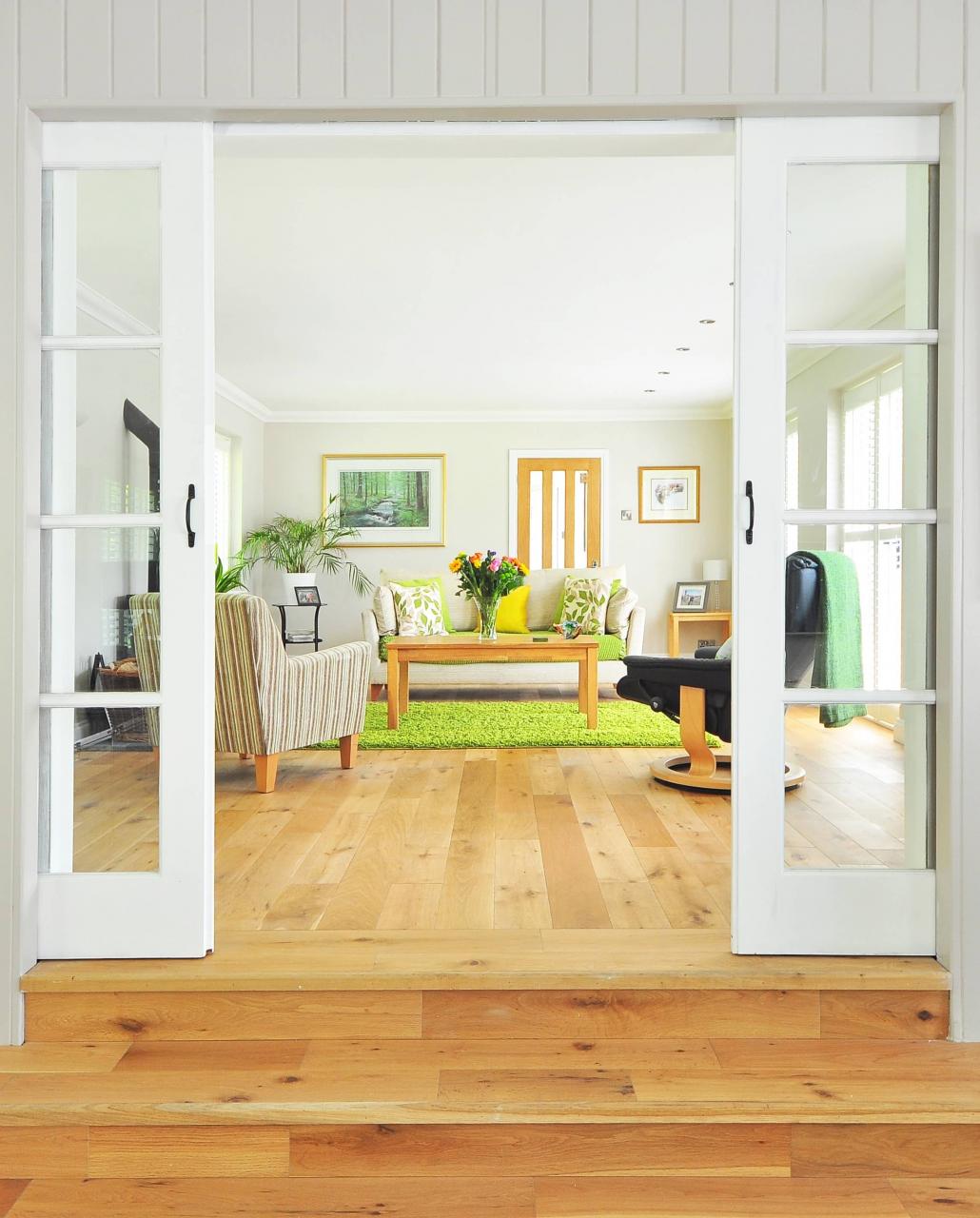
If you like the idea of having an interior door for separating different rooms or areas of the home, you’ve probably heard about pocket doors. These doors are more practical than alternatives because they add privacy without taking up a lot of space. A pocket door is designed to slide away when it’s not in use. This makes it extremely convenient for many homes where an interior door occupies too much space with its wide swing area.
Pocket doors are typically installed for smarter storage in closets and bathrooms. Although they’re usually used in small areas, these types of doors are now becoming very popular for other areas such as living rooms or dining areas. Some pocket door projects can be fairly complex and include elaborate double doors to showcase stylish aesthetics. For many homeowners, a pocket door can be more than just a simple practical addition to their home.
1. Installation Difficulty for Pocket Doors
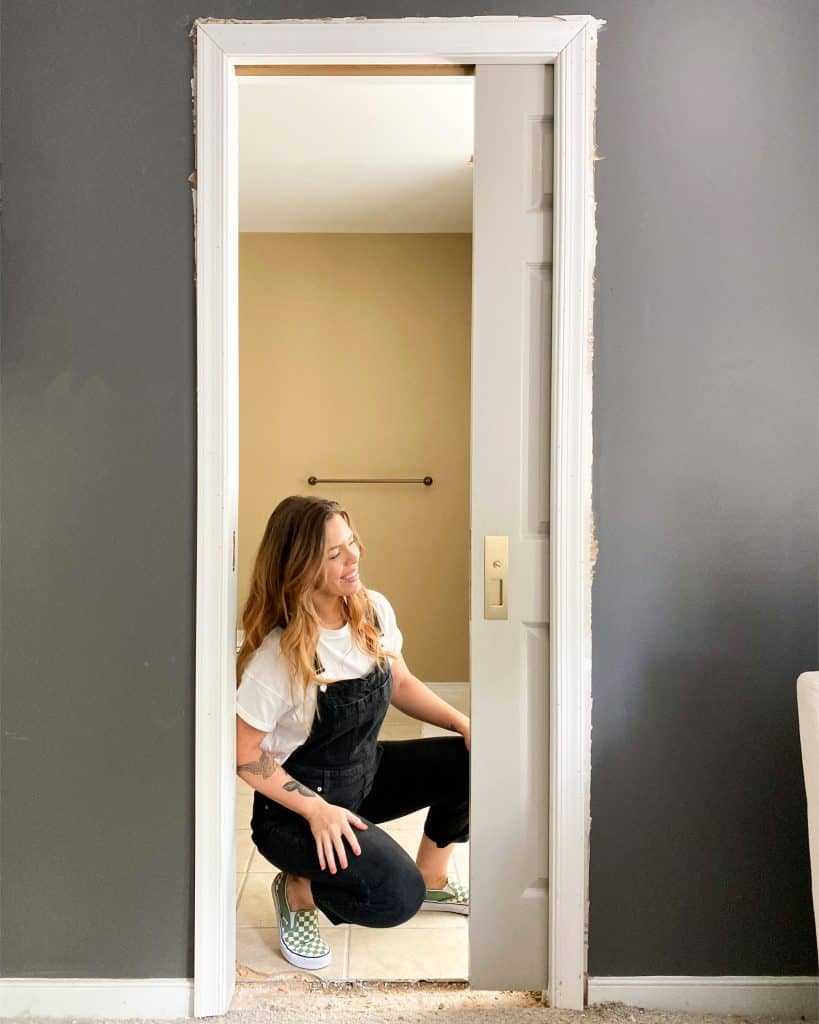
As you’ve probably guessed, pocket doors can be quite difficult to install. One important aspect is the requirement for sufficient space inside the wall. The door slides on an overhead track in a stable frame. Your wall has to be able to accommodate the traveling pocket door and make way for it without the presence of plumbing or wiring. This kind of requirement can make it very hard for DIYers to install pocket doors.
Installing pocket doors can be considered an advanced-level project because many homeowners will need to make room for the door as well as allocate several days for the entire process. It’s typically recommended to use the services of a professional contractor to install a pocket door, especially if you work with load-bearing walls. The contractor can also help you with purchasing the right pocket door frame and other necessary parts for a successful installation.
2. The Best Location for Installing a Pocket Door
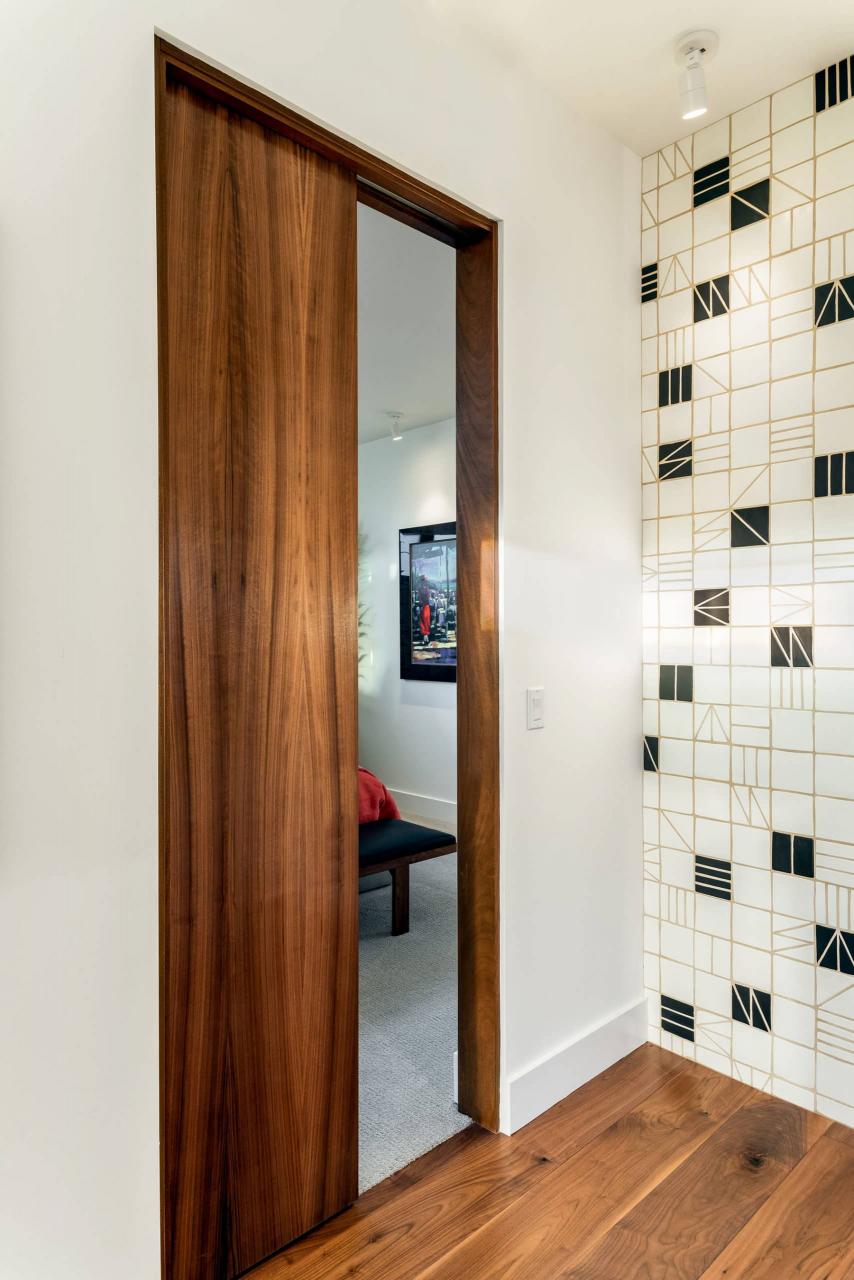
While pocket doors can be added to a wide range of areas in your home, most installations are done in the following rooms:
-
Pantry
The pantry is one of the most popular locations when it comes to installing a pocket door. It’s not hard to see why considering the limited space here and the potential of a pocket door to fit the style of the kitchen more effectively than other types of doors.
-
Master bedroom
Pocket doors are often used for creating a sleek separation between the open bathroom area of a master bedroom. This kind of door can upgrade the level of privacy considerably without taking up too much space.
-
Kitchen
Many homes feature spacious kitchen designs that include an open dining area. This is another location where a pocket door can become handy. It’s able to create a more private dining room to accommodate guests more comfortably without an exposed kitchen where you prepare food.
-
Laundry room
Not everyone has the available space in their home for a dedicated laundry room. A pocket door can be installed to separate an area and organize your laundry more efficiently.
-
Home office
Working from home can be quite challenging when you’re trying to find a bit of privacy to get your tasks done. Pocket door systems allow you to enjoy a new level of separation by creating a small home office that lets you be productive in a family environment.
3. Advantages of Pocket Doors
The main advantage of a pocket door is its ability to save up precious square footage in your home. It’s estimated that you can recover around 10 sq. ft. of space when opting to switch from a conventional swinging door to a pocket door. This isn’t just practical for tight areas lacking in clearance. You can also gain precious space that would normally stay hidden behind the door. Sliding barn doors can also work but pocket door systems are the most inconspicuous.
Pocket doors are highly recommended as flexible partitions. They can be ideal for separating large areas and creating small rooms such as a laundry room. It’s generally agreed that pocket doors are amazingly practical for those areas in your home where the door is opened quite frequently. Just slide it inside the wall when needed without having a sense of sacrificing space.
4. Disadvantages of Pocket Doors
If you’re thinking about installing a pocket door, it’s also important to be aware of some potential drawbacks. This kind of door system is often incompatible with certain locations in the home so they’re only practical as long as they can be properly accommodated. Although pocket doors provide some decent privacy, they can’t really measure up to traditional swing-style doors.
Another aspect that you need to consider is the flimsiness of the locking mechanism. Pocket doors can’t keep the space private as easily as regular interior doors. There’s also the matter of the thin material of the door that allows noise to permeate through quite easily. If you want a high-quality pocket door, it’s safe to say that an inexpensive frame system may not be good enough. You’ll most likely need to spend extra to get a sturdy pocket door with smooth sliding performance while offering better installation flexibility.
5. What to Expect During the Installation of a Pocket Door
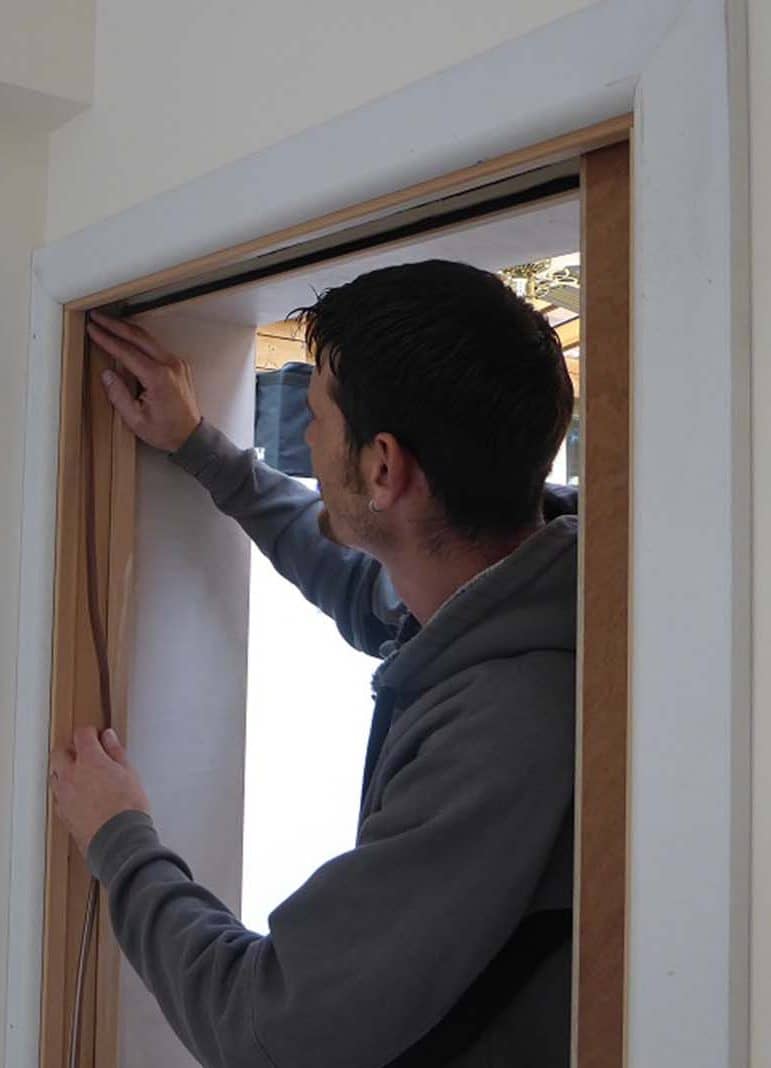
If you still insist on installing a pocket door by yourself, some important steps need to be taken. You will need to take careful measurements to figure out whether you have sufficient wall space needed to use a pocket door. Also, make sure the space can accommodate the full size of the door without having any obstacles such as pipes or electrical wires.
The next task to deal with is the purchase of the correct pocket door kit. This is the best way to install this type of door because it will simplify the project a lot. You get all the essential prefabricated parts such as the track system and all the necessary hardware. These kits will also contain instructions to ensure a smooth installation process. Check out this commercial-grade pocket door kit on Amazon.
Keep in mind that most pocket door kits are designed for standard door sizes. It takes some extra effort if your situation needs additional customization. In any case, you can expect to have to remove the drywall to set up the pocket door within the chosen walls in your home. The installation project also involves the removal of the studs for the framework. This is easier to do if your home is under construction.
A pocket door project is only recommended if you’re planning some major remodeling because the framing is quite complicated work. Another thing to consider when installing a pocket door is whether the building code permits it. There aren’t many situations that require special permissions for a pocket door. However, it’s best to check with the local building authority before going ahead with this kind of project.

Leave a Reply